My ‘Newsweek Korea’ Cover Story: A Defense of Obama’s ‘Strategic Patience’ on North Korea

Newsweek Korea cover 2

Newsweek Korea asked me to participate in a cover story debate on Obama’s strategic patience. A friend of mine wrote against it; I wrote in defense. Here is the Korean language text at the NWK website. Below is my original English language version.

In brief I argue that NK is so hard to pin down, that big strategies never work with it, provoke North Korea into lashing out, and raise impossible expectations on democratic decision-makers. So Obama is acting responsibly, IMO, by not promising more than he can deliver and by not giving a reason for NK to act out.

After 20+ years of negotiating on more or less the same topics, it should be pretty obvious that NK is insistent on not being placed in some box by outsiders. It will not be treated as some technocratic ‘problem’ to be ‘solved’ by a conference of experts, like global warming or something. And it will lash out if necessary to remind us of that. Hence, I argue for ‘muddling through,’ and that we should stop expecting our policy-makers to have some great NK strategy that will fix the issue. That’s not gonna happen. We all know that. We just have to wait for China to stop paying NK’s bills. Until then, all the sweeping declarations (‘agreed framework,’ ‘sunshine’,’ the ‘axis of evil,’ the current big idea du jour of ‘trust’) are rather pointless and raise impossible expectations among voters in SK, the US, and Japan. Let’s be a little more honest about what we can expect from North Korea.

Here we go:
Continue reading

Agree with Heinlein’s ‘Citizens vs. Civilians’? then this US Military History is for you: Book Review

Starship-Troopers-starship-troopers-13578603-1024-768

I was asked by a participating member of the H-Diplo/ISSF network to review The American Culture of War. Here is the original link to my review, but it’s off in some far corner of the internet, so I thought I’d repost it here. In brief, I found the book a pretty disturbing rehearsal of right-wing tropes about the military in a democracy, especially from an academic, and there’s no way I’d ever use it with undergrads as Routledge suggests. The underlying moral driver is the ‘chicken hawk’ principle – that those without military experience are not morally qualified to lead DoD and should otherwise defer to uniformed military. At one point the author actually says that, because the US Army ‘distrusts’ Congress, the Army should ‘guide’ Congress. Yikes. Do Americans (and the author) really need to be told civilian authority runs the other way, and that that’s in the Constitution? I find that sort of military elitism democratically terrifying and reflective of the post-9/11 militarization of America that is now the single most important reason, IMO, to end the war on terror.

I would just add the following update: Both the book and review were written before Petraeus’ resignation, but it should come as no surprise that the text lionizes Petraeus. It is therefore a pleasing schadenfreude for the frightening post-9/11 military hero-worship of the US right to be taken down a notch. Here we go:

Continue reading

Could the Youth Protests of the EU, Middle East, Turkey, and Brazil Spread to Asia’s Corrupt Democracies?

brazil-confed-cup-protests_jpeg3-1280x960

Jay Ulfelder and I had a Twitter conversation on this question in the last few days (here and here). But Twitter has such limited space, I thought I would break out our discussion on the blog and ask what others thought.

Watching all these riots – driven heavily by youth dissatisfaction, it seems – is making me wonder if this might spread to Asia’s democracies. A lot of the problems these protests are identifying exist in spades in Asia: high-handed, out-of-touch governments; election-proof pseudo-technocracies that act as unaccountable oligarchies; shallow, clique-ish political parties that provide no meaningful transmission belt of citizen preferences; massive government and business corruption; wasteful white-elephant spending to capture global ‘prestige’ while everyday services like health care and education are underfunded; closed political opportunity structures that regularly reward insiders and large corporations with crony connections to the state; wealthy, de-linking elites with 1% lifestyles wildly at variance with the rest of the population… That’s Asia too; there’s more than enough sleaze to go around.

Jay asked which countries might this apply to in Asia. My first thoughts were India, the Philippines, and South Korea among the democracies (given the obvious problems street protests face in non-democracies). Are those countries really governed better than Brazil? I doubt it. Anna Hazare pushed this sort of agenda in India a few years ago, and South Korea, which Asian case I know best, has all those Brazil problems particularly – and probably even worse than in Brazil. I’ve wondered for years why there isn’t more populist anger and protest over the cronyist, Seoul-based chaebol oligarchy that is Korean democracy. (I’m usually told it has something to do with ‘Confucian’ or ‘Asian’ values.)

It’s terribly hard to predict outbreaks of mass street protest of course, but if I’ve identified the broad structural conditions of the current wave correctly, and if protest in one locale seeds it in another (“cascades”), (two huge “if”s to be sure) then Asia’s oligarchic, corrupt democracies are/should be next.

My ‘Diplomat’ Interview: the Inter-Korean Talks Collapsed over a very Korean Hang-up over Rank and Status

korea-talks

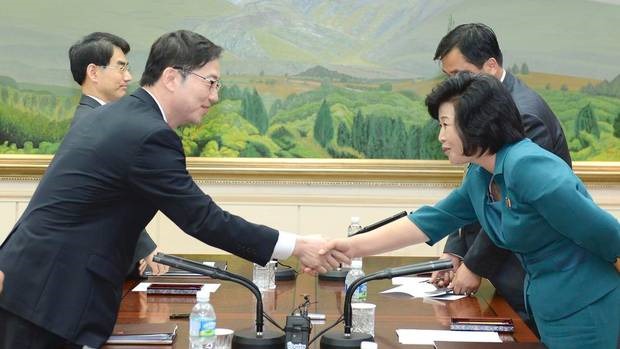
I write for the Diplomat magazine occasionally, and they just interviewed me on the collapse of the recent high-level inter-Korean talks. This is a re-print of that interview. It might seem ridiculous to non-Koreans, but Koreans take rank and status pretty seriously (because Korea is such hierarchical culture IMO). So a break-down over who out-ranks who (which is what happened) is not too extraordinary given the shared cultural context. Here’s that interview:

Continue reading

Abenomics is Not more Dangerous than the North Korean Missile Program

okRegular readers know that I write now-and-again for the Diplomat web-magazine. This post is a re-print of my June column. Abenomics is still dominating Korean business news, and I continue to be amazed at how few people want to admit that Japan’s revival is really good for democracy in Asia and the prevention of Chinese regional primacy.

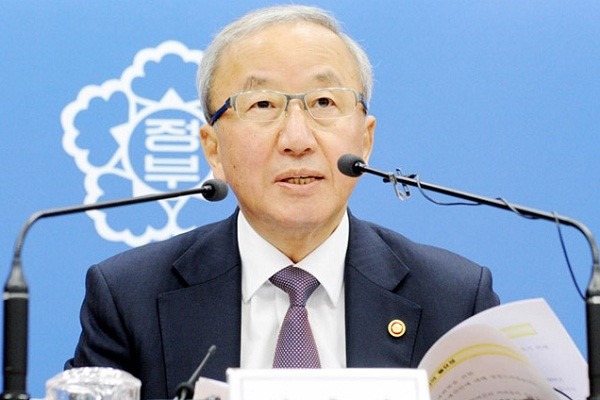
As I discuss below, no less than the SK finance minister (pic) actually said Abenomics is more dangerous to SK than the NK missile program. Wait…what??? Did you know the mic was on? Does anyone genuinely believe that the worst totalitarianism in history gets a pass when the Bank of Japan prints a lot of cheap money? Come on. Are Korean officials so deeply bought by the chaebol that they actually have to say stuff like that? Honestly if Minister Hyun really believes that (I doubt that though, see below), he should probably resign. This is just a travesty, hugely embarrassing – so if this post reads a little rant-ish, that’s why.

Continue reading

My ‘Korea Times’ Op-Ed on what Korea Needs from its New Prez: Liberalization

ParkBefore President Park’s inauguration, the Korea Times asked me to participate in a forum of ‘foreign experts’ (don’t laugh too hard) on her incipient presidency. We were asked to make one direct suggestion for the new president. Here is the section at the KT website. I know several of the authors, and some of the op-eds are pretty good (too many are shameless pandering though). Unfortunately, my accepted submission was not published in this section, published after the inauguration, and edited far too heavily. (They never told me why; maybe this.)

Anyway, below is the original version of the op-ed, where I basically argue that Korean democracy is becoming a Seoul-based oligarchy of wealthy, similarly-schooled, intermarrying business and political elites  – basically the dark side of Kangnam style. Someone in Korean politics needs to turn this around, or under-40s in this country are going to ‘drop out’ Timothy Leary-style. There’s a quiet crisis of youth alienation brewing, but no one in ‘Kangnam world’ seems to care.

Continue reading

Admit it: South Korean President Lee Myung-Bak Was Pretty Good

PD*26038004

So President Lee has been out of office for a bit now, and the retrospection will begin soon. And while he left with really low approval ratings, I always thought that was pretty unfair. I am pretty sure history will be kinder to him than the SK public was during his tenure. Particularly the growing critique on the South Korea left that current President Park Geun-Hye’s many staffing gaffes means she is out of her depth also suggests that LMB was at least ready and professionalized enough for the responsibilities of the office. The essay below is a longer version of an op-ed I wrote for the JoongAng Daily.

In passing, I should say that yes, I am aware that this is the sort of column that drives folks like Glenn Greenwald, whom I really admire, up the wall. If you’re convinced, like my students, that I’m a conservative pretending to be a moderate, here’s your evidence. Call it shameless right-wing hackery, sycophantic shilling for the powerful, craven attention-seeking, but it’s also true: Lee Myung Bak was a lot better than most Koreans give him credit for and is probably Korea’s best president in its democratic history.

Continue reading

My ‘JoongAng Daily’ Op-Ed: Don’t Fear Abenomics, Korea

kuroda

A few weeks ago in the JoongAng Daily, I co-authored the following editorial. (My co-author is one of my finest students, who can be found here on Twitter.) The temperature is rising in Korea on Abenomics. The government is coming out strongly against it, but I still think the basic arguments we present below are undamaged.

In brief, Abenomics is important because Japan is the world’s third largest economy and therefore systemically (i.e., globally) important (Korea is not; it’s too small). So Japan’s reflation is about a lot more than just Japan; it impacts the region and the globe. Also, the Korean won is ridiculously undervalued and the Bank of Korea has itself gimmicked the won exchange rate a lot in the past, so it’s not exactly fair for Korea (or China, who is even worse) to complain. Finally, in the medium-term, a functioning Japan is far more in Korea’s interest than Korea’s nationalist japanophia will allow anyone here to admit. That is a shame. I’ve argued this a lot, but no one listens.

So bring on the K-hate-mail, but please do recall that I have already rejected Abe the nationalist. Koreans are absolutely right about the comfort-women and Yasukuni. But Abenomics is not about history; it is a last-ditch, throw-everything-including-the-kitchen-sink effort to get Japan on its feet again so that it can prevent Chinese primacy in Asia. Keep your eye on the big picture of South Korea’s interest, and a few lost sales of Samsung TVs to Canadians pale in comparison.

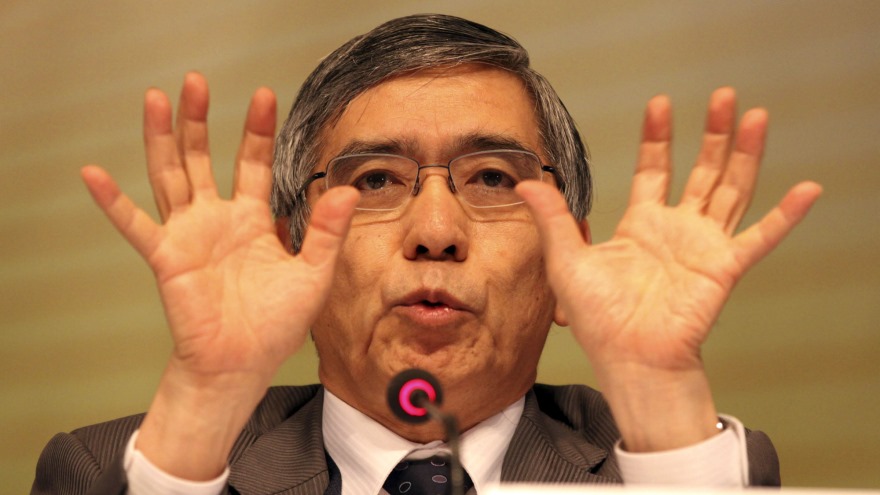
Just to avoid referencing Abe again – he’s become such a lightning rod in Korea – the picture is Hiruhiko Kuroda, the (awesome) governor of the Japanese central bank. (Someone form the Bank of Japan really ought to be put in charge of the IMF one day soon.) I’d like to think Kuroda’s hand reference in the pic means he wants to dectuple the Japanese money supply. Hah! – ‘Just wait a year, PM Abe, and I will chop down every tree in Japan and print so much cheap yen, that we’ll wallpaper our houses with it!’ Think of Kuroda as the flip side of Paul Volcker. If Japan’s economy weren’t such a mess, it’d actually be kinda funny. But honestly, let’s all – Koreans included – hope Abenomics works.

Continue reading

My Joint ‘Newsweek Korea/Japan’ Story: Do US Alliances Create Moral Hazard in Asian Conflicts?

Newsweek Korea coverI am pleased to say that the following essay was printed simultaneously in this week’s Korean and Japanese editions of Newsweek. It think it is critical for both sides to think about the issues I present, and it is pitched to both communities as American allies, no matter how sharp their disagreements.

In brief, I argue that – contrary to the conventional wisdom that US alliances in Asia tamp down conflict by re-assuring everyone that they need not arms-race against each other – US alliances may in fact be freezing those conflicts in place by reducing the incentives of all parties to solve them. The US reassures Asian states not just against each other, but also against their own reckless nationalist rhetoric and racially toxic historiographies. I think the Liancourt Rocks fight is a particularly good example of this ‘moral hazard’ mechanic, as is the recent comment by no less than the South Korean foreign minister (!) that Abenomics’ threat to Korean export competitiveness is a greater danger to SK than North Korea’s nuclear program. That kind of preposterous, reckless myopia can only be explained by taking the US security umbrella for granted. (Or how about SK officers’ golfing during last month’s nuclear crisis?)

I realize the argument will be somewhat controversial, even to Americans given that we are ‘pivoting’ to Asia, but I think it needs to be said and genuinely researched. As with my other Newsweek pieces, there are no hyperlinks because this was intended for print:

Continue reading

Good Survey of Students of International Relations: Please Complete if Relevant to You

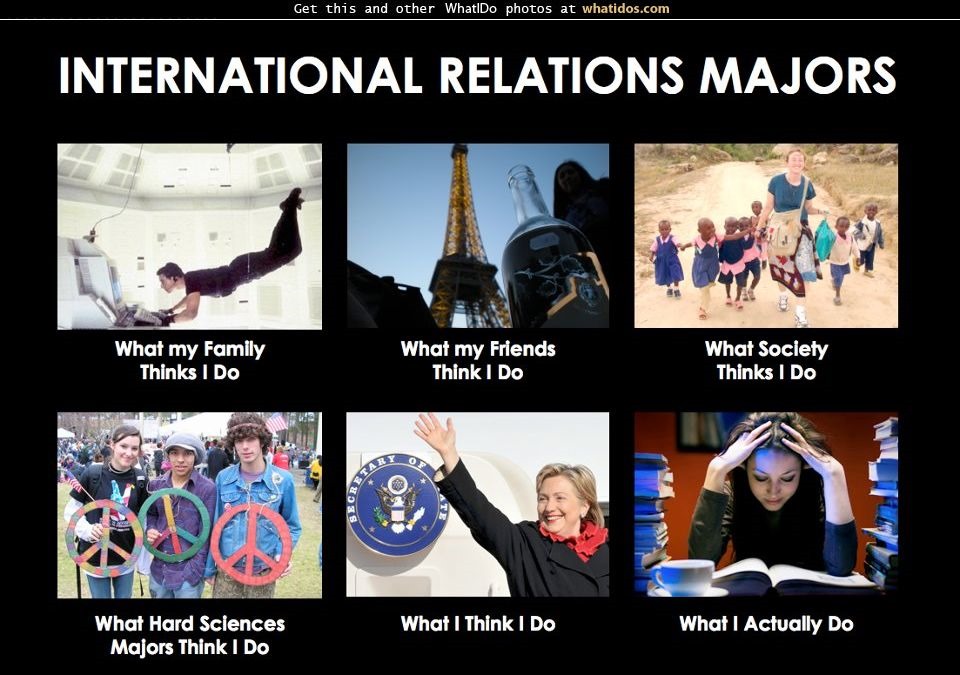
IR majorsDaryl Morini, an IR PhD candidate at the University of Queensland whom I know, has put together an interesting global survey for undergraduate and graduate students of international relations. It looks pretty thorough and might make a pretty interesting student couter-point to the Teaching and Research in International Politics (TRIP) report on scholars’ attitudes. Eventually the goal is an article on our students’ attitudes toward the discipline; here is the full write-up of  the project at e-IR. So far as I know, nothing like this has been done before (please comment if that is incorrect), so this strikes me as the interesting sort of student work we should support. Daryl’s also made an interesting effort to use Twitter as a simulation tool in IR, so I am happy to pitch this survey for him. Please take a look; Daryl may be contacted here.

PS: That pic is dead-on accurate.