Back from Africa – Quick Impressions

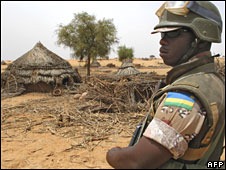
So I admit this has nothing to Asian security, but off we went to southern Africa for what is likely one-time exposure to some of the most dysfunctional countries on the planet. We visited South Africa, Namibia, Botswana, Zimbabwe, Zambia, and Mozambique. Here are some political science observations:

1. Passport-stamping to reinforce sovereignty. In all my travels, I don’t think I ever got stamped, photographed, or ID’d as much I did in Africa. Mozambique alone made me pay $80 for a ridiculously garish and oversized tourist permit, plus entry and ext stamps that took up two pages. But it occurred to me that for many of these states, just being a functional state is pretty d— challenging. Mozambique’s HIV infection is 21% and Maputo looks like Baghdad. So one subtle way to reinforce your ‘stateness’ is elaborate border controls.

2. African streetnames as the last bastion of Marxism. Nothing beats a relaxing stroll down Maputo’s Kim Il Sung Avenue, poking between the proliferating trash and yawning potholes, except perhaps scurrying as fast as possible away from Windhoek’s cringe-inducing intersection of Fidel Castro and Robert Mugabe Avenues. I used to think the apartheid South African government’s line about Marxist revolutionaries in the black front-line states was just an excuse for its front-line destabilization policy. But not after visiting these capitals and their national museums. The national museum of Namibia in Windhoek is a Marxist-Cold War throwback in tone, and Mozambique so completely transplanted the East Bloc-model, it still feels today like East Germany in Africa – crumbing concrete everywhere, half-finished rusting buildings, brownouts, purposeful disdain of ancien regime architecture, and even a scary, commie-inspired national logo with a AK-47 on it! Having grown up in the 80s, there was something vaguely familiar to all this stuff, but for the world growing up on globalization and iPods, maybe its time to take down down those pictures of Erich Honecker, huh?

3. Please stop trying to rip me off. This was probably the most depressing part of the experience. Although you are traveling in genuinely third world countries, your sympathy quickly dissipates when you are confronted with routine and blatant efforts to scam you at almost every turn. As a foreigner you are seen as a min-gold mine by just about everyone and you become a magnet for noxious money changers and street hawkers determined to ruin your day. After a few weeks, it becomes a depressing reflex to rudely blow off almost anyone speaking to you on the street, because you know it is a time-wasting scam. Taxi drivers, hostel owners, waiters, street kids and dealers, clerks of almost every variety, airport porters, etc, etc. – all of them seek to charge outrageous prices for faux, nonservices like you showing you where your luggage arrives.

4. White enclavisation. The safari companies run from one ‘white’ enclave to another, in a depressing recognition that the most tourists don’t want to see the black parts of the country and that these are likely too dangerous for a group of ignorant, western newbies. One after another, we hit Swakopmund, Walvis Bay, Vilankulos, and places like that, and they just look liked western resorts. About the only thing ‘African’ was the guy serving you drinks in the disturbingly neocolonial dining experience you regularly have in Africa – that is, hordes of obese white tourists ordering game meat from black waiters in white-owned restaurants ‘safe’ for the companies to take you to. Creepy!

5. Nature tourism is about all there is to do. With only one world-class museum in all of southern Africa, and a cultural life far below what you get in wealthier societies, basically all the tourists go to the bush. It really hit me when one traveler said to me, ‘yeah, we did Botswana in about a week – we hit Chobe and Okavango, and that’s basically all there is to see there.’ In other words, the white people fly in, run around the bush looking at water, flora & fauna, and rock formations, and then take off. You spend more time talking to the other white people in your safari truck then you ever do talking to the native black population of any of the places you visit. Even creepier, the tour companies have realized that the western tourists don’t really want to do that anyway. That’s why the companies bounce you from one resort to another like a chain across the landscape. You are never too far away from a bar that offers Jack Daniels and western food.

6. The Afrikaners are even creepier than you thought; conversely black South African restraint is astonishing. Invictus does a good job showing you how restrained the black majority was in South Africa after 1994, but you don’t realize how extraordinarily generous South Africa’s blacks have been till you visit Pretoria. It is littered, still, with all the old monuments to white domination, topped off by the astonishingly racist Voortrekker Monument. The Voortrekkers were the Calvinist, Dutch-descended Boers who broke from British control of the southern cape and ‘trekked’ inland in search of their (slavery-practicing) ‘free states.’ All of this is presented in the most heroic terms, whitewashing (literally), 1) that the Boers broke from the British primarily because they wanted to continue to enslave Africans, not because of trumped-up British high-handedness, and 2) the massive cultural disruption the Boers brought to black tribes in their path – instead the museum literally says the “Voortrekkers brought the light of civilization to the interior.” The Battle of Blood River is portrayed, inevitably, as a triumph of Christianity and sturdy white rural folk – the marble imagery is brutally classical – and vindication of the civilizing mission.

Honestly, I found the presentation shocking, appalling. It was like some museum glorifying the Old South had somehow survived. Stunned, I asked our black tour guide what he thought. I told him that in Eastern Europe, after the revolution, they tore down all those statues of Lenin, and the Iraqis pulled down Saddam’s statue. But he was remarkably stoic about it. He genuinely seemed concerned that whites in South Africa feel like they belong. That was probably the most impressive sentiment I saw in our entire trip. If I were the president of South Africa, I would dynamite the Voortrekker Monument immediately, even if I weren’t black.

Summer Reading – We’re off to Africa – Back in August

200px-Big-risingsun

I have been blogging non-stop for a year and several months. I need a break for the summer. So we are off on safari to the southern cone of Africa. Too bad the State Department has a travel warning for Kenya, but Victoria Falls, the Serengeti, and Olduvai Gorge sound pretty great…

So here is some reading for you. The following is heavy beach stuff – i.e., it is not so dumb for the beach that it wastes your time, but it is not so serious that you need to read it with a pen and can’t take it to the beach to begin with.

1. Rising Sun, by Michael Crichton, 1992. This is the ‘best’ book I have read about Asia in the last year, in that I enjoyed it a lot for the sheer paranoia and camp value of it. If you want to read seriously about Asia, there are lots of good books out there, but nothing gets to Western paranoia about ‘rising Asia’ in such an entertaining way as this. I remember reading 20 years ago, when people actually believed it. It freaked me out then too, but now, it is just a laugh riot: Japanese cowboy-wannabees buying up the Great Plains, the Japanese businessmen ‘Tuesday meeting’ where they control the US economy, omnipresent surveillance at work, sell-out American pols. It’s all there, so much campy goodness. It’s like the Red Dawn-version of Asian business. Who can’t enjoy this nationalist feeding frenzy that, today, looks irresponsibly badly researched? And no, the movie can’t replace the sheer camp, japanophic paranoia of the book.

2. The Conservative Soul, by Andrew Sullivan, 2006. This is the best book on US conservatism I have read in a long time. I used to think of myself as a conservative in the 90s, but W was so bad, that I drifted. This is the best analysis of what happened. I see myself as conservative in temperament, but disgusted with the course of the Republican Party in the last decade. Bush was a nadir in the history of the presidency. Many serious conservatives know this. Sullivan and David Brooks particularly played a critical socratic gadfly role for the American right during the Bush years. Occasionally I watch Fox for an ‘ideology fix,’ and I leave consistently disturbed at what passes for conservative commentary on the right’s central media organ. But I left the book saddened. Sullivan’s image of the conservative as doubter and skeptic was accurate to my mind, but also enervating and tragic. It presents what Charles Lindblom famously called ‘muddling through’ – depressingly mundane enough – plus, a tragic eye thrown backward on what we have lost both in civilization and in our own personal lives. This vastly transcends the Fox-Palin variant that has taken over in the US with the Tea Party and such. It is as insightful as Lind or Phillips’ work, but much philosophically richer.

3. China Rising, by David Kang, 2008. Ok, this one is a little academic, but it is the best title I have read on Asia in awhile, and that is all I read these days. Way too much of the literature on Asia is journalistic and boosterish, with titles like ‘China will rule the world soon,’ or the ‘inevitable power shift.’ Too often, CNN-style trend-spotting substitutes for analysis, and I troll through far too much of that c— everyday in my daily reading. Yawn. I am sick of being told about power shifts, tectonic changes, new orders, etc. in an easy journalistic fashion (maybe that includes my blog…). How about some rigorous analysis for a change? Kang is one of the best Asian IR scholars, and I think this book gets a lot right, even if China worries me more than him.

4. Guns, Germs and Steel, by Jared Diamond, 2005. If you haven’t read this, then you have missed one of the most important popular social science books in the last decade. The prose is elegant. The case work exciting, new, and reasonably convincing. But most importantly, it is good macro-theory, which is so rare these days. Macro-theory is easy; anyone can pose as Hegel or Marx and claim to ‘unlock’ world history, with just a few variables, but usually it is self-serving bunk (think religious fundamentalism, e.g.). Diamond actually does it convincingly, and he can reach the non-social scientist. You’ll never get a better explanation for the sad fate of so many indigenous peoples. It can be heart-breaking.

5. Civilization, by Kenneth Clarke, 1969. I am an amateur in art, but if I read the above stuff all day, my head would explode – so here is something that has absolutely nothing to do with Asian security or US foreign policy. Clark connects meaning to art in way that really helps you understand why so much art is ‘great’ when you really don’t know why yourself. You’ve heard the Mona Lisa is amazing your whole life, but it just looks like a smiling woman, right? I have this same problem, which is why I am a social scientist I imagine. But Clark will walk you through it, teach you what you don’t see in so much of what you have been told is a ‘classic.’ By the time you finish, you’ll think about just how pointless your profession really is compared to the timelessness of the something like Chartres or Guernica.


I will try to post a bit from the travels, but I imagine that will be hard. Check back again in August.  REK

The Chiang-Mai Initiative is Freaking Out the IMF

 imf-logo

For some basic details on the IMF’s relevance in this post-Great Recession world, try here. Or read the IMF’s own publication, Finance & Development, which obsessively navel-gazes over the IMF’s own role.

So last month, I was a selectee for an internal IMF research project on its continuing relevance in Asia. Yikes! That should set off alarm bells. Neither the cover letter nor the interviewer mentioned the Chiang-Mai Initiative (CMI), but it was clear as day if you know about Asian attitudes toward the IMF. In short they loathe it. In fact, they loathe it so much, they want to build their own local version. After the Asian financial crisis (AFC), Japan proposed an “Asian Monetary Fund” (AMF), which the US shot down. At the time, the US was the indispensible nation at the end of history. What all that ‘America-is-awesome’ rhetoric really meant was that we were the uncontested hegemon with our fiscus in order, so we could push the Washington Consensus pretty hard. Today though, the US is a mess, and Asia is feeling its oats. So here we are again.

It was pretty easy to see from the questions that the IMF is really nervous about this. CMI is basically the AMF warmed over, although no one wants to come out and say so. Asians want it, because when the AFC hit, the IMF conditions on the bail-outs were tough. But unsurprisingly they were necessary – really necessary actually. Asian economies are far too export-dependent, mercantilist, corrupt, and oligarchic, and the Fund helped somewhat loosen the death-grip of politically-connected conglomerates on the economies out here. As usual, the Fund was demonized for providing good advice that was necessary. One reason why the AFC was so short, and the region’s economies bounced back so fast, was the IMF’s necessary pain. But no one ever thanks the Fund. It’s far easier to blame it for domestic political point-scoring.

So this time, the Asians are going to create their own currency pool, with their own Asian rules – whatever that means. In a way, one could see as part of the Great Recession-inspired fantasy of ‘de-coupling.’ (Tell me how you decouple from globalization and not fall behind lightning fast?) But they say, Asia should look inward, with its own rules and such. The irony, of course, is that conflict has already erupted between the likely lenders (China and Japan) and the likely borrowers (ASEAN) over what the rules over the loans should be. It’s the clash over conditionality all over again – except far more demur and behind-closed-doors, because of ‘ASEAN Way’ sensitivities that Asian countries should not publically criticize each other (lest that open the door for Western lecturing and preening). Asian leaders love the CMI for the distance it creates from the West and the Fund, but the fight over rules-set will mirror those of the Fund. The other big benefit for Asia, or rather for its elites, is that an neo-AMF/CMI will be far kinder toward ‘state-capitalism’ – all the rage now, as it is supposedly superior to liberal economics. The CMI will provide bail-outs and conditionality which push Southeast ASEAN borrowers to modernize as Northeast Asian donors have – directed state investment, aggressive mercantilism, (semi-)closed politics.

This is unfortunate to my mind for two reasons:

1. Obviously, propping up authoritarians capitalism has an anti-democratic ring to it. The last thing, politically, that Southeast Asia needs is more cheerleading to concentrate political-economic power in a small, almost-closed elite. Insofar as the Fund promotes economic neoliberalism, there has always been an oblique pressure to openly politically therefore as well. This will now be lost, as the CMI is certain to follow the ‘ASEAN Way’ of no political commentary.

2. If you bracket this political concerns, there are clear economic worries. A CMI fractures the global financial system, just as the proliferation of free trade areas in Asia is fracturing the WTO universal trade system, and Chinese pressure increasingly threatens to regionalize the Internet. This year’s ‘multilateralization’ of the CMI means it is now a genuine systemic-institutional threat to the Fund. This is almost certainly the proximate cause of the worried IMF survey on its relevance.

So I felt bad for the Fund (who EVER says that?) All the questions from the interviewer were about the Fund’s continuing relevance, what its role in Asia should be, and perhaps most telling, should it have a role? That inspired real discomfort.  I can only imagine what interviewer heard from Koreans – who feel they were turned upside down by the IMF even though the bail-out probably prevented street rioting – and Indonesians- where the AFC did end in street rioting and government collapse. The prime minister of Malaysia at the time even said the AFC was caused by ‘Jewish speculators.’

I should only add in the Fund’s defense that when I talk with Koreans and other Asians, most have no good sense of what the IMF should do differently, because most have no grasp of what it actually does. All will tell you that it should reform, but like most of the anti-globalization protestors, their ideas are vague or indicate that they don’t understand the, albeit highly technical, IMF. (I even wrote my dissertation on this topic.) Most seem to think that the bailouts should come cost- and change-free, but all that does it move the costs somewhere else – to the OECD taxpayers providing the Fund’s bailout resources – nor does it help clear up the problems that created the crisis in the first place. The great irony is that although Asians loathe the Fund, they actually learned the appropriate lessons from it in 1997 and were much better able to withstand the next crisis in 2008, the Great Recession. Pity the Fund. It does its job pretty well, but everyone hates it anyway

“Somebody’s Got To Stand Up to the Experts,” or Why US R&D Outsources to Asia

garden 

Now that I have worked in Asian education for awhile, one question I field again and again from Americans concerns why Asians seem to test so much better than non-Asian Americans. (How much better?: “an Asian American student must score a whopping 450 points higher on the combined math and verbal sections of the SAT to have the same chance of being admitted as an African American applicant.”) But the difficulties of Asian education – conformism, authoritarianism, rote-learning – are well-known and should close the gap, right? Increasingly, I think the culture in which the system is nested matters, and here too much of the US is downright wacky: Christian paranoia increasingly makes it hard for US teachers to do their job.

Nothing channels your standard issue, Bush-era Christianist lunacy like the title quotation from the 2010 Texas school board’s resistance to evolution in state textbooks: "somebody’s got to stand up to experts." Hah! That’s just classic: an educator saying, ‘Boy, all the readin’ and writin’ done wrecked yoh mind…’ Here’s the link. So we have an educator warning against too much education, insofar as deep education makes one an feared ‘expert’ in some area, like, oh, biology or physics. The irony of an educator declaiming ‘too much’ education is so rich, it would be comic if it weren’t so disturbing…

It’s the decline of western civilization here, folks. You wanna know why biotech jobs flee to Singapore and South Korea? You wanna know Asians outscore Americans time and again in science?

Well, if you treat science as an Islamo-liberal conspiracy to hide Obama’s Kenyan communist plot to impose evolution through Nazi-health care on God-fearing patriots rooted in the good earth of the heartland, then there you go. You think the Chinese or Indians are having science-stunting debates in which elected officials, not licensed experts, decide what ‘science’ is? They’d laugh you out of the room over here if you tried that.

Or how about the picture above, available here from the Creation ‘Museum’ in Kentucky? (Sorry, but  I had to put museum in quotes. I visited it last year – at $20 a ticket! – and it’s basically US Protestant creationism. They couldn’t even be ecumenical enough to include Catholics. What a hoot!) Anyway, the above pic is a recreation of the Garden of Eden. Find on the bottom, about one-third in from left, a penguin. Yes, I couldn’t believe that either when I first saw it in the museum, and it sure takes guts to even include the ‘Garden of Eden penguin’ in the museum’s advertising. Penguins were running around Mesopotamia 6000 years ago; it’s all about the ideology, baby!

If that doesn’t answer your question about US decline, I don’t know what will…

Global Security in 7 Minutes! (3. Solutions)

euro-flag

The following are from remarks I made in a lightning 7 minute whirlwind on global security threats. Part one is here; part two is here.

Let’s start with three institutional/multilateral solutions that aren’t:

1. The UN and regional organizations. Pity the UN. I want it to work as much as anyone. I used to belong to the UN Association of the USA, but one must be brutally honest that the UN is not a global security architecture that works. UN collective security has only been used twice (Korea, the Gulf War), and in Korea it happened only because the Soviets were boycotting the UNSC at the time. Never again would they make that mistake. But what has the UN done about Iran, terrorism, NK, or, arguably, Israel? The UN has no army; it cannot raise money independently. Its few military engagements have been ham-strung by the dual-key command problem. UN peacekeeping’s record is mixed at best. Robust missions are generally rejected; the blue-helmets never have the weapons, logistical support, or great power commitment to really be decisive. To be fair, the UN was designed to fail. The states wanted a weak body unable to infringe on their sovereignty and dependent on them for resources. You get what you (don’t) pay for. The same applies to regional bodies like the OAS or AU. Even NATO now is a joke. Does anyone really believe European members would war for islamizing Turkey, or that the US would rescue Lithuania from the Russians?

1.a. The greatest disappointment here must be the EU. It is the most robust international organization out there, so inevitably hopes for multilateralism as a security solution look to the EU. And what a lost opportunity! Nothing would improve freedom and democracy in the world so much as a second liberal superpower. That would take the US face off of democracy promotion. It would help the US climb down from its extreme GWoT overextension. But the EU just cannot seem to get its act together, and the Greek flap is just an embarrassment. There is no integrated military command, no united nuclear command, no common foreign policy voice, no single UNSC seat. I would trust the Korean military to be more professional and committed at this point than any EU military but France and Britain. This is simply pathetic. The EU is becoming greater Switzerland, unable to act meaningful to defend the values it so regularly espouses.

2. Denuclearization/Disarmament. This strikes me as a chimaera. First, the nuclear-haves not meaningful moved toward denuclearization, despite a 40 year NPT commitment to do so. This is why proliferation is a problem to begin with; the nuclear-haves brought this on themselves by cheating on their NPT requirement. Obama may be trying to earn his Nobel Prize with serious denuclearization, I’ll believe it when I see it. Cuts to zero by the great powers would not eliminate the technology, but simply open them to blackmail; this flies in the face of so much of our experience about IR. Second, nukes, lasers, tanks, etc. are all just technologies. As the NRA likes to say, people kill, not guns. Consider nukes in Korea. No one would care if SK has them; everyone cares that NK has them. Unless everyone could be verifiably disarmed, this is wishful thinking.

3. League of Democracies. This has been my great hope the last few years, but it seems like this is fading now. I really thought a close friendship and working partnership among the liberal democracies could really help stability by making clear to rogues (and China) that there was a common front, that you can’t pick off democracies here and there and play them against each other. But this has failed. The democracies just do not seem to be able or willing to work together on security. The EU is a mess; Japan and Korea can’t talk to each other. Consider the piracy issue – tailor made for liberal democratic cooperation, but it hasn’t really happened, and that is an easy issue compared to tough ones like Taiwan or NK.

So, call me totally unimaginative, but below is the best I’ve got:

4. National power: the US . The US is the clear backstop for security since the Gulf War. This worked for awhile in the 1990s. The US budget was improving, and others were content to free-ride on the US. Simultaneously, American exceptionalism has always provided ‘last best hope for mankind’ narrative of US power that justifies and glorifies the US use of force to Americans. In other words, Americans were tempted by empire, while others were content to let them reach for it (because it was cheaper). This system, of great power quiescence and superpower exertion could continue, but it requires the great powers start paying for the US to be the policeman. The US is broke now – $9T debt and $1T budget deficit. You just can’t be the colossus when your population won’t pay for it. In the context of Korea, I often tell my Korean students that the US is so broke now, that in the next few years, Korea can either choose to pay for almost all of USFK, or the US will probably retrench, because the money just isn’t there anymore. The same applies more broadly; if you want to keep the US globocop (because you don’t want to go to Afghanistan yourself), then you will probably have to start paying it. QUICK PREDICTION: No will accept this, and the US will eventually retrench. That includes the hollowing out of NATO, as well as the US withdrawal from Korea.

5. Economics: Globalization. Thomas Barnett has influence my thinking a lot here. He regularly argues, like Friedman, that trade brings with it all sorts of pacifying effects. He doesn’t think a war with China is likely, because globalization is remaking China by connecting it with the world. So there is a race here, can the world globalize enough to build common interests in stability for trade, before the US hegemon, currently backstopping the order, runs out of cash and energy to keep doing it? This is a great master’s thesis waiting to be written.

If you noticed the paucity of good ideas, it is true. I don’t really have any. I think the world is becoming more and more complex, because of globalization and rising middle powers with a big prestige grudge toward the West. The Kantian-Europhilic vision of an international order that maintains peace through collective security is bogus. It is really premised on US power. Without the US, there would have been no UN involvement in Bosnia, the Gulf, Korea, etc. You can dress up US power in blue-helmets and euros, but ultimately, it is the US nation-state, not some collaborative/cooperative/mutual security organization that has done the organizational work and most of the fighting when it came to it. Given how much trouble the US has now (its deficit is the same size as its national security spending), I think retrenchment is coming. Such ‘multipolarity’ may feel more ‘just’ and less ‘imperialist’ to the risers, but it will almost certainly be more chaotic – as it already is if you compare the 1990s to the 2000.

Global Security in 7 Minutes! (2. The Bad)

060706-modern-pirates_big

Part 1 (the good) is here. Part 3 (solutions) is here.

The following were my comments to a global ‘freedom and democracy’ group last week. After arguing that the world is slowly getting safer especially as viewed from 1945 or even 1990, here is the 7-minute list of the big ‘new’ problems:

1. Proliferation. This has been slow-boiling for awhile now, but 9/11 threw the hysteria into overdrive. W was right when he argued that the nexus of WMD and fanaticism is the single biggest threat to global security today. I tend to think that this a problem we have to live with, rather than something we can solve. But regardless, it would probably be better if fewer states had WMD (although deterrence theory says maybe not). But we really don’t have good tools for addressing this. No one wants to invade every nuclearizing state (more Iraqs anyone?).  The Non-Proliferation Treaty regime doesn’t work too well, primarily because the nuclear-haves have reneged on their end of the deal. (They are supposed to give up WMD eventually in exchange for others not going for them, but the allure of nuclear discrimination is too much to resist.) AQ Khan-types will try and try to hawk this stuff, and they only need to succeed once for WMD to find their way to terrorists. And the Proliferation Security Initiative is only just be tested now, and honestly, makes me kinda nervous. I heard a nuclear theorist argue a few weeks ago that the PSI is a neo-con/John Bolton idea cooked up to provoke incidents on the high seas with rogues in order to justify the use of force. Finally, I think the biggest proliferation issue, that no one ever talks about, is actually small arms. The AK-47 has killed more people than all the high-tech toys you see in the Transformers. If you really want to reduce global killing rapidly, how about a small arms embargo on much of Africa?

2. China’s gangster pals. This too is a growing issue. My thinking on China is in flux. I still think that a conflict with the democracies is likely, but China is so variegated now, its foreign policy language and behavior so mixed, it is d— hard to make an educated guess. But we do know that China is looking the other way on some of the world’s worst nasties, whether for geopolitical interest (thwarting the US in NK and Iran) or for its neo-mercantilist resource scramble (Sudan, Zimbabwe). FP had a good essay on this recently. It will only make global security problems worse if the world’s rogue states feel that they have a new backer (the old one being the East bloc), who will bail them out and block UN votes. But then the US sorta has this coming by enabling Israel’s worst instincts too.

3. Pushy middle powers. A clutch of ‘rising’ middle powers are increasingly defining their interests as poking a finger in the eye of the leadership of the liberal trading order. Mead has nice piece on this; here is the book-length version. No one minds if others get rich. So much the better. Many of these ‘second world’ powers had terrible poverty in the past, so their rise is a net good. Many people are wealthier, healthier, better educated, etc. as Brazil, South Africa, etc, get their act together. But prestige is a big driver in IR, far bigger than our research indicates. The primary interest of these states, newly brought to the top table as a part of the G-20, is to gain stature acceptance from the older, more prestigious states. Wealth and military power are nice, but they are getting those now, so their real interest is getting attention – getting their diplomats interviewed on CNNi, photographs with Obama at the White House, posturing at Davos about the ‘power shift away from the West,’ etc. The best way to get this sort of attention is to provoke the hegemon. Hence a truculence toward the US and the world order it backstops will be a growing problem. In going from the G-7 to the G-20, you increase the number of players at the top table, so it will become that much harder to organize efficient, coherent action to security threats like civil war in Africa, terrorism, piracy, trafficking, etc. Game theory predicts ever greater coordination problems as the number of players rises, contrary to Obama’s belief that the G7-to-G20 shift will bring greater burden-sharing. Unipolarity was safe and easy (even if it was unjust), and it is starting to look like the game theorists were right.

Global Security in 7 Minutes! (1. The World is Getting Safer)

ln3_1275634757

 Part 2 (the bad) is here. Part 3 (solutions) is here.

So last week, I went off to speak at a soft right-wing regional INGO in Asia. The World League for Freedom and Democracy gave me seven minutes to summarize major successes and threats to global security. You gotta love conference organizers for such hurculean demands, especially in the afternoon panels when everyone’s sleepy from lunch and the weak A/C. So here goes:

Good:

1. The Long Peace. We are now in the 65th year of systemic peace, ie, no general war that pulls in all the main global players into an ‘us-vs-them’ planetary bloodbath. No one really expected this in 40s and 50s. Everyone thought another war – most likely between the US and USSR – would happen rather soon. The depressing familiarity of inter-state war showed no signs of abating. Consider the following missing wars (from the perspective of 1950): US-USSR, US-China, USSR-China, Germany-France, Germany-Russia, Japan-China. Anyone of these would have been a reasonable prediction in 1950 for the next 60 years. Yes, things like Rwanda or Bosnia were brutal, but there were ‘better’ than WWII with its 70 M casualties.

2. Nuclear Pacification. Here again is something wholly unanticipated in the early Cold War when ‘the bomb’ lead to paranoia from Bertrand Russell and Stanley Kubrick about the end of civilization. In fact, quite the opposite has happened. Nukes have had a wholly unanticipated pacifying, status-quo preserving effect. Instead of Mad Max (love the shoulder pads), we got the Nuclear Peace. Why? Because nukes make the costs of war extraordinarily high. There is no possible benefit to be gotten from invading someone else that would outweigh just a few nuclear detonations in your cities (although one or two might be acceptable). In other words, nukes drive up the cost side of the cost-benefit war ledger so high, that it no longer pays to war.

3. Democratic Peace. Here is yet another wholly unanticipated outcome. Policy-makers only lately picked up on this, and it underlay W’s argument for the ‘regime change’ in the Middle East. But it is a pretty robust finding now that democracies don’t war on each other. This is generally thought because liberals don’t believe in using war against other liberals (the normative explanation). Or because democracies’ institutions are slow to war and very transparent, so it is much easier for democracies to credibly manage security problems between each other (the institutional argument). This idea also underlay Clinton’s argument for slowly expanding the ‘democratic zone’ of the world. (It’s too bad that Clinton’s idea got tied to W’s ‘democratization by force,’ because I think it should be western strategy to slowly widen the democratic space in the world.)

4. We’re winning the GWoT, slowly. For as difficult and controversial as the war formally known as the GWoT is, I do think we are winning. Consider the following non-events: There has not been another 9/11 scale attack. There has been no WMD attack. (Given what we thought in 2002, Madrid 2004 should have been a gas or radiological attack, but it wasn’t.) Islamism has not spread to Southeast Asian Islam, a hugely underremarked success of the GWoT. Iraq has not turned into the Democratic Republic of the Congo (which we all feared in, say, 2005). Consider the following progress: Middle Eastern states have slowly begun to turn against the radicals. In the past, these guys were seen as useful ways to hit back at the West, modernity, capitalism, etc., but this tiger has increasingly turned on its master too. Egypt, Saudi Arabia, and Pakistan have all begun to realize what happens if you look the other way on the salafis. Iran is now the primary sponsor of the ideology, but this is awkward alliance of convenience, because your standard issue binladenist is a Sunnite reactionary, who thinks that the Shiites are schismatics who should face the inquisition.

5. East Asia is its most peaceful since the Opium Wars (1839-41). The arrival of western power in Asia brought all sorts of trouble. It ended the Confucian peace, and deeply divided Asians against themselves. It introduced ‘Westphalian’ sovereignty and decentered the traditional Chinese order. Most importantly, it opened the door for Japanese revisionism and Russian meddling. China was lain prostrate and the land/privileges grab began. The next century and a half was brutal. Japan and China competed viciously. The Japanese committed biological atrocities on Chinese civilians. Mao oversaw 25 million deaths and decades of chaos and self-destruction. Nuclear weapons were used. The Khmer Rouge killed 1/3 of Cambodia’s population. Yet today, most of this has faded. NK is still a huge threat, and Asian nationalism is deep, exclusivist, and sometimes racist. But the traditional Sino-Japanese competition is the coolest it has been in a long time. Both basically accept Korean independence, a huge tension-reducer. The worst excesses in SE Asia of the 60s and 70s are over. China and Taiwan are getting along reasonably well. Consider that in 1950, it would have been another easy prediction to foresee in Chinese invasion of Taiwan in the next 60 years. But it hasn’t happened. Democracies in the regions (India, Japan, SK, Taiwan) are strong and lasting. Democracy can no longer be castigated as a white or western import (as it can be in the ME).

So despite the GWoT and the continuing dysfunction in the Middle East and Africa particularly, I think one can say the world is slowing becoming a safer, less violent place, certainly by the benchmarks of 1945 or 1990.

The World to the American Right: PLEASE TRAVEL!!!

 world-map

You have to feel bad for so many of the highest officials of the Bush years. Iraq, torture, Katrina, Rovism, etc.  permanently damaged some of the finest resumes in country, including Rice, Rumsfeld, Wolfowitz, and most especially Powell (who should have been the GOP prez instead of the boy-king). For some, like Powell, this is a genuine tragedy, a dirtying of his high reputation to serve coarse politicization. I admire Powell’s willingness to take his punishment and retreat from public life, and his rectitude in the face of Bush’s cold-blooded exploitation of his credibility highlights Rovism’s deviousness even more.

But that must be hard for so many…so what to do when you are an ex-Bush flack, once respected for quality pre-Bush work, but now a known defender/obfsucator of torture? How about writing cloying op-eds, sheltering yourself under the banner of military courage, while insulting the rest of the planet by reciting that most nationalistic, exceptionalist, and self-serving of Lincoln’s comments: ‘America is the last best hope of mankind.’ Mukasey could slide right into the hack neo-con universe of all-too-easy American exceptionalism that flatters rather than challenges the reader.

Like so many other Bush figures, Mukasey was a respected, serious operator. The temptation to reach for power must be so great, the belief that you could change things so high… but in the end, Rove-world corrupted so many of them. Consider that none of Bush’s national security officials have the reputation that Cyrus Vance does. Vance had the courage to resign out of conviction (regardless of one’s opinion of it), and this principled stand has served him well in history. I can’t imagine many Bush officials will enjoy this; speaking truth to power was never a virtue of the W years, and that sullied several, like Wolfowitz or Rice, who could have been truly historic public servants in a Powell administration.

How nice and easy it must be to write for the Wall Street Journal when the simplistic invocation of mawkish Americana plus a Bush-era vita get you op-ed space. I think the right-wing think-tank industrial complex has a machine that simply recombines expressions like ‘America,’ ‘amazing,’ ‘hero,’ ‘greatest,’ ‘unique,’ ‘freedom,’ etc. into ever-changing combinations of pro-American blather. It’s like the music-machines boy bands use, only with hawkish Americana the output instead of junk-pop. I used to read the Journal, because I thought it was a firewall against the populist nonsense of Hannity & co. I figured that the readership – presumably serious, money-making, educated broker-types – had little time for the flat-earthism of the Palin wing. You’d think a journal so insistent on the virtues of international trade would actually care more for the rest of the world than the populist GOP types…

I guess not.

I have said this before, but WILL US CONSERVATIVES PLEASE LIVE OUTSIDE THE US FOR A LITTLE WHILE BEFORE THEY TALK THIS WAY! You have no idea how insulting it is to the rest of the world, when America’s claim the mantle of World Historical Amazing Awesomess so easily and consign the rest of the planet to the ‘Old World.’ All that does it tell you how extreme American nationalism can become, and how little the writer knows about the world beyond the US. Pluralism is an American value too, and that means seeing the rest of the world as more than just a cipher for tired banalities of Americana. Please travel!!!!

South Koreans are not Neo-cons

Neocon Ideology vs Korean reality: Modern SK is a commercial trading state with zero interest in a war with the North. More than anything, they just want it to go away so that they can get back to more important things like K-pop (above). The social values on display above in no way connect to the constructed ‘axis of evil’ reality neo-cons want South Koreans to live in.

Rodger Payne, at the IR theory blog Duck of Minerva, had a good post on the all-too-predictable ramp-up on neo-con rage on NK regarding the Cheonan. But the South Koreans are not neo-cons. It is cloying, self-serving cultural hubris for Cheney, the Wall Street Journal, John Bolton, the Kagans, Max Boot, Brookings, and all the rest of the usual suspects to speak so sanctimoniously on SK’s behalf. South Koreans do not see NK the way Americans do and do not even know the tenor of the American debate on NK. The US right uses its all-too-convenient sympathy for SK and NK’s oppressed to push for policies that South Koreans do not want, and, worse, for neo-con ideological reasons that South Koreans do not understand at all. I have tried, believe me, to explain the Bush/Fox News view of the war on terrorism here, and Korean students don’t get it at all. They think W was a loopy, rogue Christian imperialist.

Koreans are far less casual about recommending the use of force or even sanctions. A sizeable minority do not accept that the Cheonan was sunk by NK. The majority think the sinking demonstrates the incompetence of the current Lee government more than NK’s belligerence. North Koreans are ethnic brothers (against whom the use of force is a problem), while simultaneously, South Korean interest in reunification is fading (it is not worth fighting for). As the above video should make clear, this is not a militaristic society itching for a fight. Koreans don’t like and don’t understand ‘axis of evil’ talk, and they certainly won’t accept patronizing US analysysts telling them that’s how they should think.

For all these reasons, there is no surge in neo-con anger as manufactured at AEI or the WSJ. The ease with which this faux-anger and one-size-fits-all ‘axis of evil’ schtick emanates from the Washington-based think tank-industrial complex disgusts me. US political language regarding NK fits neither the mindset nor changing interests of SK. Given that South Koreans must carry the costs of neo-con truculence, how about asking them how they see it? Because you wouldn’t get answer that fit the American frame of NK, so it’s best to just ignore. This is the best English-language article I have seen yet that actually tells you how South Koreans themselves see their interests in this mess.

My point is not to say that the neo-con analysis is  philosophically wrong. Maybe Koreans should be neo-cons prepared to risk war for regime change. But that is not my point. Instead, I am disturbed at how quickly the standard issue Washington attitude toward NK circulated with no examination of Korean public opinion. Nobody bothered to think about that, because the think-tank industrial complex of US foreign policy already knows the answer. Maybe South Koreans should be neo-cons, but they aren’t; Koreans neither understand nor accept that analysis. So it is terribly wrong for the neo-con set to invoke the moral weight of Korean nationalism and NK tyranny without ‘permission’ from Korean public opinion. I’m sure the neo-cons would say that South Koreans should be outraged by the Cheonan and ready to risk war for regime change. But they aren’t, and trying to manipulate SK by cloyingly invoking its own tragedies is extreme bad faith.

For my previous thoughts on the Cheonan, click here.

Off to China… 4) Impressions

P100528006

So last weekend was my first trip to China. As I said a few days ago, actually being there did change my mind a bit. I was pushed a little from the ‘China threat’ to the ‘peaceful rise’ school. I imagine this is natural. Travel humanizes other people and makes one less suspicious…

So here some relevant observations:

1. Tiananmen Square has a  Mao mausoleum, just like Red Square has the Lenin mausoleum. I have visited both, and I can genuinely say they are some of the strangest, creepiest political artefacts I have ever seen. You go in well-dressed and walk in silence around the embalmed body kept under glass. (What must they do to preserve it one wonders.) It is like visiting the Vatican for commies. As communist ‘holy relics,’ they are conceptual oxymorons. Russians used to tell me that Stalin killed God, so he took him out of heaven and put him in Red Square mausoleum as Lenin. Communism could destroy individuals religions like Christianity, but not the religious impulse – which of course was a central point in Marxism. These mausoleums, in deifying communist founders, betray a central principle of the movement. On top of that irony, they sell red kitsch of Mao inside the mausoleum. So after you see the Great Helmsman and think Great Thoughts about China, you can buy Mao cufflinks and playing cards in the on-site giftshop. Hah! If that doesn’t make a mockery of the whole point of the mausoleum… Mao is now a tourist attraction, not a communist patron.

2. The Great Wall really spurs the imagination about big, Will Durant-style topics like ‘Civilization vs barbarism.’ It is hard not to be swept away by the romanticism of it all. You can easily picture some Ming guard pacing in the cold night suddenly looking out at some vast swarthy horde like the Teutons from the beginning of Gladiator. The Great Wall is built along dramatic mountain ridges, so it grips the imagination as Hadrian’s Wall does not. It is also more intact and much larger than Hadrian’s.

3. The Forbidden City, like the Winter Palace or Versailles, explains why republican and communist revolutions happen. The opulence is just astonishing. Wow. I was just blow away by how big it was. As you go through, you keep thinking that this court or that room will be the last one, but no, it keeps going and going. The emperor even got his own individual tunnel to exit and enter. (Ie, the place is so huge, that there are multiple giant tunnels through the walls, not just one, and the emperor got one all to himself.) I visited Versailles and Winter Palace as well, and every time I see these megalomaniacal monuments to a ‘sun-king,’ it is easy to see why these guys get tipped at some point and frequently executed. I also think that is terribly hard for moderns raised in a democracy to feel the moral weight of such places. To us, they look more like criminal waste of national resources than the necessary glorification of the unity of man, state, and god in the sung-king’s person, which contemporaries must have seen.

4. The Mao portrait on the Forbidden City is a symbol of communist modernity’s defeat of feudalism. This did not really hit me until I went there. Once you see the size of the Forbidden City, and then the huge portrait placed right on top of it, you get the idea. How ironic then that China is now digging around in its history for its post-communist nationalist identity. Chinese language institutes are called the ‘Confucius Institute,’ even though Mao loathed Confucius as a reactionary. Communist modernity failed, so now China’s feudal past is being reworked as a tourist attraction and cause for nationalism.

5. You can see the two Chinas phenomenon everywhere. Any rapidly developing state is going to have this kind of social fracture, as the young and globalized pull away from the older and traditional. This is happening in India right now also. You can see the older parents – smaller, worse teeth and skin, plain clothing – and the increasingly US teenager-looking kids in bluejeans and t-shirts. This must be quite a culture clash in the home, and it makes me wonder if that is the reason China emphasizes harmony so much. The social cleavage is wide, and both sides have strong claims. The young represent the future and wealth of China; the old built the place (however mixed that accolade might be) and are deeply vested in the party-state that ended the ‘national humiliation.’

6. China’s scholars are reveling in big talk about the changing balance of power. At the conference I attended at the China Foreign Affairs University, speaker after speaker made sure to tell us how China was rising and the US needed to make room for China’s ‘legitimate interests.’ I heard this a lot last year too, but this time I was on the home-turf, so it was even more self-congratulatory than before. At one point, I just couldn’t take it anymore, and got into a major scrap over the Cheonan. I told them everyone in SK knows that China is propping up NK. The response was more obfuscation – maybe the ship hit a rock, we need ‘calm’ on the peninsular. Bleh…