My H-Net Book Review of Acharya’s ‘The End of the American World Order’

images

If you don’t know H-Net, you probably should. It is a great way to keep up to date with what is being read and discussed in the humanities and social sciences. They seem to offer mostly book reviews and roundtables. I find them particularly good in my area – the intersection of history and political science. H-Net has a general qualitative bent also, so its reviews are mercifully readable.

Over the summer, they asked me to review Amitav Acharya’s book, The End of the American World Order. Here is the link to review on the actual H-Net site. I have re-printed it below. In brief, he argues that the US is in terminal relative decline, and that a world order without a domineering American role must be discussed. He sketches a few (unconvicing) alternatives.

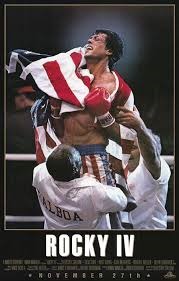
And being the child of the 80s and its so-bad-it’s-awesome film, what image of American World Order could surpass Stallone beating the crap out of commies while draped in an American flag? Awesome! Go Rocko! I remember cheering in my seat when Rocky beat Drago. We won the Cold War and kicked some russki butt! Hah! I think I was 12. Good times, which I guess Acharya is taking away from us…
My Submission on Dodko to the University of Nottingham’s Blog Symposium on Asian Territorial Disputes

Dokdo

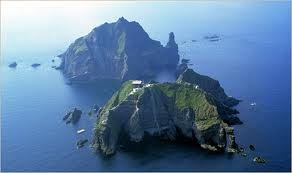
The China Policy Institute of the University of Nottingham in Britain is running a blog symposium – cool idea! – this week on Asia’s territorial disputes. Here is the series page, and here is my submission. I’d like to thank the CPI blog director, my friend Jon Sullivan, for inviting me to submit. Not surprisingly, I was solicited to write on Dokdo/Takeshima/Liancourt.

Regular readers of my work will notice some of my preferred themes – that Korean claim is probably stronger; that a Japanese acceptance of that is nonetheless necessary to legitimate that sovereignty claim; that Korea wildly overblows the importance of this conflict because ‘anti-Japanism’ is central to modern South Korean identity.

The other entries in the series are worth your time if this area interests you. I was happy to participate. Below the jump is my contribution:

My October Diplomat Essay: Russia between Empire and Modernity

Bt5OjLdCYAA4N0n

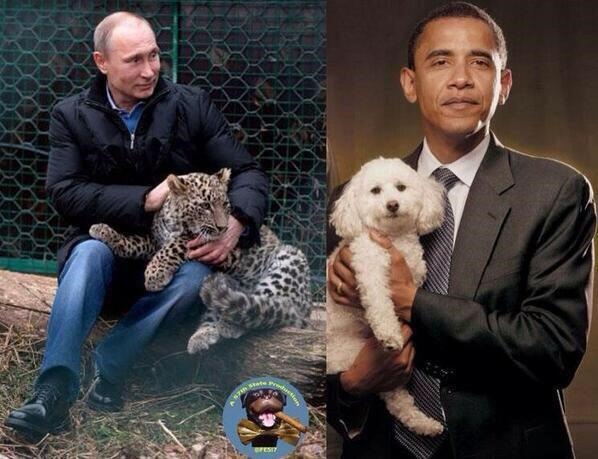
This is a re-up of an essay I just wrote for the Diplomat (posted here). And that image to the left comes from this famous (notorious, really) tweet. If that doesn’t capture the values clash between Putin and modernity – real men have tigers as pets, while Obama is a well-dressed wus – I don’t know what would. If you ever wondered where feminism in the study of international relations came from, there you go.

Russia is a bit outside my normal purview, but I’ve always had a running interest. I studied Russian in grad school and spent a few summers there learning the language. I enjoyed it a lot and like to think I am sympathetic. Like a lot of post-Soviet analysts, I find it tragic how badly misgoverned Russia has been for so long – literally back to Ivan the Terrible. Russia has so much human capital; if only it was governed properly, it could be a serious emerging market player like China. But instead its one megalomaniac czar after another – whether they be imperial, Soviet, or Putin – wrecking the economy for their own vanity and nationalist unwillingness to accommodate the West.

Putin would rather posture and bluster like a bully on the school parking lot than whip Russia into shape. Everyone knows what’s needed – real elections, press freedom, an anti-corruption campaign, and so on. But I guess if Western analysts say these things, the ‘Russian’ way for Putin must be to do the opposite. So we’re back to 19th century ‘Dostoyevskyan’ images of Russia as an Orthodox, anti-western nationalist power with a unique mission (read it for yourself, then compare it to Alexander Nevsky). That may sate the ideological cravings for global status of Russia’s nationalists, but it won’t help Russia rival the West in the medium-term, will scare non-Russians along Russia’s borders, especially Muslims, and will not impress Beijing, which long ago learned how to profit from globalization and capitalism (while corruption is destroying Russia).

Here’s that essay after the jump: