Unknown's avatar

About Robert E Kelly

I am a professor of political science at Pusan National University. I write mostly on international relations in East Asia.

5 Biggest Strategic Errors of the Emperor: a Contribution to Spencer Ackerman’s ‘Battle of Hoth’ Debate

You can’t defeat a rebellion with counter-insurgents like these


Technically, I am supposed to be on vacation, but I couldn’t miss this.

An international relations theory website I also write for has gotten into an excellent debate with Wired’s Spencer Ackerman on the Empire’s blown opportunity to stamp out the Space Vietcong Rebellion at Hoth. William Westmoreland spent 5 years trying to nail down the VC in set-piece battles where US firepower could be brought decisively to bear and end the Vietnam war. Here was the Emperor’s similar chance, but Darth Vader and Admiral Ozzel blew it (mostly because the Empire’s officer corps was filled with grandstanding self-promoters, as Ackerman rightly points out).

But as the respondents noted, the larger context does a better job explaining why the Empire’s massive advantages seem to fail repeatedly (Yavin 4, Hoth, Bespin, Endor), beyond just the poor tactical leadership at Hoth. The larger strategic context is counterinsurgency, and obviously the Emperor spent too much time cackling in the Senate to watch The Battle of Algiers. So here are the five big structural problems in the background:

1. Trusting the Bloated, Showboating Navy to do Counterinsurgency

Navies are big, blunt instruments with hugely expensive platforms vulnerable to swarming, as at Yavin and Endor, and only useful for large, ‘target-rich’ enemies. They scream national vanity, and they’re terrible for hunting rebels. Why does the Empire need a massive, and massively expensive, fleet after the Clone Wars? Probably because the army was staffed by clones – genetically-designed to be dull-witted – who couldn’t push their bureaucratic interest, while the navy had lots of fully human, showboating egos like Tarkin’s Death Star council.

Continue reading

My Comments to BBC TV about yesterday’s North Korean Nuclear Test

That would be the finest academic haircut in all of Asia… 😦


I spoke this morning on BBC’s Asia Business Report on the North Korean nuclear test. My quick take is:

Yes, it was a terrible idea, but no, it is not surprising. Nuclearization takes time and ‘practice,’ so these sorts of tests are expectable. This one was about half the yield (size) of the weapon dropped on Hiroshima, so they’re getting pretty good at this now. I’m continually astonished at how a near-third world state under heavy embargo nonetheless pulls this off. Wow. What are we missing?

Yes, there’ll probably by a UN resolution, but no, it won’t have any real bite. The reason is China. There’s a near consensus now in North Korea studies that China is the key here. China is the reason sanctions don’t work – because the Chinese don’t enforce them. And it is China that politically enables these childish North Korean stunts by not attaching any real costs of aid or diplomacy to them. That said, one of the reasons for all these NK hijinks is to keep the Chinese out of their business. We all assume the nukes are aimed at Seoul, Tokyo, and LA, but they’re also a nice deterrent to Chinese domination. The nukes signal that even though NK is now an economic satellite of China, it will never be a political one. NK will not become China’s East Germany.

The real question for the future then, is how the democracies among the Six Parties (SK, Japan, the US) can walk China back from support of NK. How do we get China to stop obsessing about retaining NK as a ‘buffer’ against the democracies? How do we get Beijing comfortable with Southern-led unification? When that happens, then Beijing will drift from the North, and the possibility of collapse becomes much more real. But that is probably one to two decades away. Yes, this drama will go on and on and on…

For my travelogue on my trip to North Korea, go here.

The video is simply my phone recording our home TV, so the quality is not so hot. Also, if you’re wondering my eyes are wandering all over the place, it’s because BBC does not provide the image back to the interviewee when you’re on Skype with them. So I am sitting there just looking at nothing – my desktop maybe – trying to find something to do with my eyes. Ah well…

On Vacation for awhile – Here’s Some New Year’s Reading – See you in March

I break from blogging twice a year, but try to compile a good list of relevant articles I’ve found over the past few months. See you in about a month. Enjoy:

August

The Atlantic runs lots of good stuff on NK it seems to me: this on how NK impossibly continues to survive and this on how just about every NK watcher has wrongfully predicted its collapse.

Mixin Pei’s important piece on why China’s rise is overrated. My own sense of this is that Pei will be proven right in the next 10-15 years, but not sooner. China’s demographic, ecological, and corruption caps strike as growing worse, not better.

A nice piece from the FT on Korea’s biggest company – too bad no one wants to plumb the far-too-close relations between the chaebol and the ROKG Continue reading

USC-CSIS Conference on Korean Unification (3): DPRK ‘Sovereignty’ is a Sino-Russian Fig-Leaf to Slow Unification and Check US Power

New_KSI_Banner_3

Here are part one and part two of this post. I spoke last Tuesday at a USC-CSIS conference on Korean unification. I learned a lot, and it was very good. If you’re interested in unification, start here with the primary report on which the conference was based. The principal investigators said a final wrap-up report will come at some point, and I’ll put up that link when it arrives.

My comments below are on the papers presented on Tuesday about neighboring states’ reactions to Korean unification. These papers aren’t publicly posted yet, so all the comments might not make sense. But in the interest of completism, I’m putting this up to round out my thinking on this excellent unification project. (For my earlier thoughts on dealing with NK, try this; for my travelogue of my trip to the DPRK, try this.)

My big beef with these sorts of conferences on NK – I go to a lot – is that inevitably outsiders, especially Chinese scholars, start laying down all sorts of guidelines, restrictions, parameters, etc. for unification, as if it’s our right to muck around in this thing. I can understand the national interest in doing so. But we shouldn’t have the temerity to try to legitimate our muddying of the waters in what is really an internal family affair. It would also help a lot if the Chinese would stop talking (not so much at this conference, but definitely at others I’ve gone to) about how Korea needs to respect its wishes, because China is big and important now, post-2008 Olympics. I heard one guy once even say that China is now the ‘veto-player’ on unification. That’s true of course in realist sense, but that sorta cockiness infuriates Koreans who’ve really soured on China in the last decade. I see the same kind of emergent Chinese bullying on unification that Southeast Asian littoral states see on the South China Sea. So I try to call that out whenever it seems necessary.

Anyway, here on my thoughts on Japan, Russia, and China’s role in this thing.

USC-CSIS Conference on Korean Unification (2): ‘One Country, Two Systems’ will not happen

CSIS Korea ProjectHere is part one of this post. The following will make more sense if you start there.

I noted that I am participating, today in Seoul (attend if you can), in a USC-CSIS project on Korean unification. This is the final ‘phase’ of their Korea Project on unification.

I thought I would post my thoughts on the USC-CSIS Phase II report (available here) which provided all sorts of suggestions for reconstruction. It’s required reading if your area is Korea and NK, but I actually disagree with a fair number of the analogies to Iraq and Afghanistan. I think Germany is a better model for what will happen here, and I think a ‘one country, two systems’ arrangement like in greater China is nearly impossible given the extraordinary deep ideological divide, which is also existentially necessary for NK to demonstrate why it must be a seperate, poorer Korean state. So it’s either implosion or stalemate.

Anyway, the rest of my thoughts are after the jump. Having read the CSIS report is not a prerequisite to understanding my arguments, but it would help.

Continue reading

USC/CSIS Conference on Korean Unification (1): it will cost WAY more than people think

Cha_Challenges__110The University of Southern California Korean Studies Institute and the Center for Strategic and International Studies are running a joint Korea Project: Planning for the Long Term (pic to the left). CSIS will hold the last of three conferences in this project at the Asan Institute on January 21st next week. If you are in Seoul, you should go. The agenda looks pretty good. (Contact the Asan Institute.) I’d like to thank USC and CSIS for soliciting my participation..

The January 21 conference is actually the last meeting of the Project. The first meeting asked Korea area experts to look at unification; the second meeting asked functional experts to do the same. This upcoming third meeting will look at regional impacts from unification. I will comment on papers from Russia and Japan. I will put up my thoughts on those papers after the Phase III conference, but for now, I thought I would post my comments on the Phase II conference (by the functional experts).

Basically I argue that  Germany is a better model for what will happen here than either the occupations of Iraq or Afghanistan, or LDCs in transition. Also I don’t buy for one second that NK will enter into a meaningful ‘one country, two systems’ arrangement like in greater China. DPRK change meaningful enough to permit a federation would be so far-reaching, that it would inevitably raise the question why the DPRK  exists at all. Ideological change is an existential threat to the regime: why be a poorer version of SK if you’re in a federation with SK? why not just join up? This is the logic that undid the GDR. So it’s either implosion or stalemate IMO.

Here is the final CSIS report on Phase II (a must-read if you want to research unification); my gloss on that follows the jump. (Here is the much shorter Phase I report.)

Continue reading

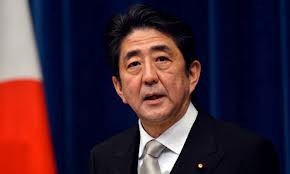
Abe’s Election, and why Korea should Not Worry (too much)

abe

Seoul English radio asked me to speak last month on Shinzo Abe’s return as Japanese prime minister. (Here is the program I speak on several times a month, and I will be on again tonight at 7:45 pm KST.) I didn’t get a chance to put up my thoughts on Abe earlier, so here we go.

Abe is fairly controversial, because he’s a nationalist and made the wrong noises in the past about Japan’s war crimes in WWII. But I also think he is tactically smart enough to avoid openly provoking the Koreas and China on that. Watch for whether or not he moves to alter the Kono Declaration. That is the big benchmark to focus on. Unfortunately Abe has grumbled about changing it, but I don’t think he will. Similarly, while he has visited the Yasukuni Shrine, he did not do so when he prime minister before. So my sense is he’s reasonable intelligent on these issues, even if the Japanese right continues to be disturbingly unreconstructed about the war. But at least Abe’s trying to talk with Korea again after the implosion of relations last year. That’s a big of progress.

Anyway, the interview follows the jump.

Continue reading

Korean Foreign Policy Year in Review 2012: So Many Grievances… (UPDATED in response)

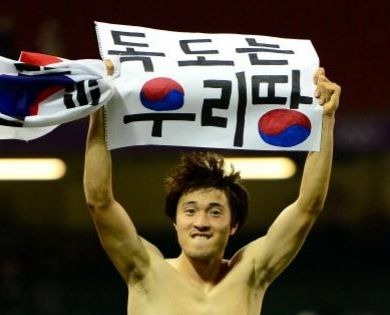
dodko

(I updated/lengthened the last section, after the jump, to respond to some of the criticisms made.)

Daniel Tudor, the Korean correspondent of the Economist (full disclosure: we are friends), just wrote a book on South Korea where he argues that Korea, despite all its success, is a discontented society. This is exactly right. (Here is a good review of the book.) Despite growing rapidly in just a generation, and capturing some global profile with things like ‘Gangnam Style’ or well-known products like Samsung gizmos, Koreans continue to have wildly unrealistic expectations of global interest in their small, linguistically unique (and difficult to learn) country culturally similar to enormous China. This generates constant geopolitical disappointment, per Tudor, and outsized sensitivities over foreign criticism – e.g., the widespread urban legend here that no Korean has yet won a Nobel Prize, because the committee is staffed by anti-Korean racists, or read this.

Four events in 2012 really seemed to capture the chip on the national shoulder, which ideally would serve to recommend a little modesty instead of yet more nationalistic grievance (but that won’t happen):

The Olympics: Some KOC official said on TV that Korea needs to ‘improve its Olympic diplomacy’ (whatever that means), even though it won a huge haul of medals for a country so small. India has more than 1 in 7 of the people on the planet, while Korea has .007%, but I guess the fifth highest pull of golds and ninth highest overall was a conspiracy of the Anti-Korean Olympics or  something. What is it with the endless chip on the shoulder? As Evan Ramstad put it, Korean officials once again had to come off sounding arriviste and aggrieved, rather than balanced and modern:

“Even so, a government sports official could be counted upon to again declare that South Korea was at last among the world’s great nations instead of recognizing that it has been there for awhile now. Second Vice Culture Minister Kim Yong-hwan was quoted in local media saying the performance in London meant that South Korea could “join the ranks of advanced nations in terms of sports and culture” and “has leapt into a higher level not only in the field of sports but also in culture and arts.”

And we had to spoil the Olympics too, with tiresome Dokdo posturing too (pic above).  That the placard violated the apolitical Olympic spirit is obvoious, but no major Korean figure came forward to denounce that action. *Sigh*

Continue reading

My ‘Newsweek Japan’ Cover Story on the Agenda for Korea’s Next Prez

Newsweek cover 2

Newsweek Japan asked me for a long-form essay on the challenges facing the new Korean president-elect for its December 26, 2012 issue (cover story to the left). Here is the link in Japanese, but I thought it would be useful to publish the original, untranslated version as well. (If you actually want the Japanese language version, email me for it please.)

The essay was actually written up before the outcome (a Park Geun-Hye victory) was known, but the argument still applies. In brief, I argue that Korea is drifting leftward. The young in Korea want chaebol reform and less political elitism at home, and abroad they want a foreign policy both less hawkish on North Korea and less influenced by the United States. In fact, if Korea weren’t aging so extremely fast, this agenda would have won. But Korea’s demography is now so skewed that ‘missing’ youth voters due to Korea’s super-low birthrate probably cost Moon Jae-In the election. (Not surprisingly, the Korean news is already reporting on youth action against against free bus fair for the elderly, because they ‘stole’ the election.) Nevertheless, the generational split is real, and the right would be foolish to govern against future voters’ wishes in the name of aging voters who will naturally pass away. Hence my prediction that Park will govern as a centrist not a conservative.

Regular readers of this blog will see themes I have emphasized before. This was intended for their print edition, so there are no hyperlinks included in the text. Here we go:

“On December 19, South Korea will have its sixth democratic election since the end of military rule in 1987. The main candidates are Park Geun-Hye of the conservative New Frontier Party and Moon Jae-In of the liberal Democratic United Party. Park is expected to win, as Moon has run a poorly organized campaign and the Korean left has split. Ahn Chul-Soo, a popular reformist liberal candidate, dropped out late in the race and only weakly endorsed Moon, while a far-left party, the Unified Progressives, has stayed in the race. All this will fragment the left’s vote, likely throwing the election to Park.

Continue reading

‘I Find your Lack of Cheer Disturbing’ – Merry Christmas

vader xmas

This is awesome. Smile