

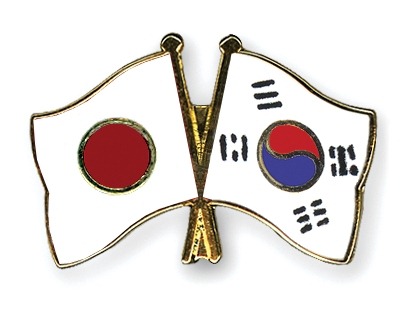
For awhile I was collecting links and such to make an argument about Korea and Japan working together on big issues like China and NK, or finally clinching the much-discussed but little worked-on FTA. Both the realist and the liberal in me wanted to see two liberal democracies working together in a tough environment with similar structural threats. Initially I had written: “This may be the biggest news of the year if it actualizes: Japan is apparently considering real defense cooperation with SK. If you follow East Asian security, this is a revolution. Try here, here and here.” But this is sorta cheating on social science, right? Looking around for any scrap of data to support an outcome we like, even though it isn’t really happening?
Well, I give up. Instead of more normative, but ultimately speculative, essays on why East Asian states should align, found an Asian Union or Community, build a local alternate to the IMF, forge a common currency, take ASEM seriously, etc., I think we should start asking why Asian states cooperate so badly. (My short answer: they’re too nationalist.)
My students bring integration up all the time. Until the euro crisis got really bad, students used to tell me all the time that Asia needs an EU or coordination against the (much-loathed) IMF. And I’ve read lots of term-papers on this. But the more I look at the most important Asian international organization (IO), ASEAN, the more it just doesn’t impress me no matter how much hype it gets (which is a lot out here at the conferences and in business advertising in the media). ASEAN is around 60% of the age of the EU and has done maybe 20% of the integration/cooperation the EU has. I argued in ISR a few years ago that lots of IOs aren’t actually about integration at all, but rather the joint self-defense of weak and/or authoritarian elites (Organization for African Unity, Gulf Cooperation Council, Shanghai Cooperation Organization). But that still doesn’t explain why Korea and Japan are so distant. And now for work, I’m revisiting Walt’s Origins of Alliances. Balance of threat feels pretty persuasive too, but I think it would struggle with the Korea-Japan case, as would the democratic peace.


 .
.
 ). And clearly China’s behavior over the last few years has raised the likelihood of at least soft containment; even the Vietnamese and the Filipinos are asking for US agreements now.
 Robert E Kelly