Here is part one, where I argued that China reasonably fits the prerequisites for Jack Snyder’s theory from Myths of Empire. Here is an application of it to China to see how it works:
2. Contra Snyder, China’s modernization is being led by the state and the party, not as much by the military. That’s true. But clearly the PLA does have something of that ‘state within a state’ feel of Germany and Japan’s military early last century. The PLA’s budget has exploded over the last two decades, and like other second world militaries (Egypt, Pakistan), the PLA has lots of business interests (including casinos I’ve even heard) that suffer little state oversight.
So I am re-reading Snyder’s Myths of Empire for an r&r. (Btw, not that this is bad book, but is anyone’s reading list in life now primarily driven by anonymous reviewers and the need to get in print for promotion? ) The book is theoretically complex (almost too many moving parts to my mind), and the cases are an exciting read. But when it was big in the 90s (when I first read it), no one really thought about China as fitting the argument. But today, it strikes me that China would be an interesting prediction case for the book. Certainly China looks a lot like the kind of expansionist state Snyder describes – rapid late developer, nationalist-militarist elites suspicious that the extant international system is keeping them down, growing factionalization, nationalist mass ideology, etc. In my grad school classes, one of the big criticisms was that the theory is not very generalizable. By Synder’s own admission in the book, it can’t explain pre-industrial empire (a pretty huge scope condition to my mind); he also has only one non-western case in the book (Japan – the others are Germany, GB, US, and USSR). But China fits a lot of the basics for the applicability of Snyder’s theory – it’s industrial, a great power, growing fast, faces possible encirclement, etc. – so here is a nice example of both theory extension – trying on a new case that ‘should’ fit – and even better, prediction. Prediction is the gold standard of social science, so what would Snyder’s Myths say about China’s future behavior? Can we test the book’s argument against China over the next decade or two?
Here is part one, where I argued that international relations as a field has become increasingly uncomfortable with the America’s post-Cold War hegemony and the level of force used in the GWoT, but…
2. We’re drifting toward R2P (the responsibility to protect)
Simultaneously, we are elated that the Libya operation worked, (against all odds given the Iraq experience and what we know about foreign intervention in LDCs generally). Lots of Duck writers supported the intervention. (I found Jon Western’s arguments last spring particularly persuasive; some of my writing on Libya is here and here.) Even if you didn’t support it, and worried that it meant more ‘empire,’ it still tugged at your heartstrings to see Libyans fighting and dying against a nasty tyrant. So you probably supported the NATO intervention even though you didn’t want to.
Taking Brian Rathbun’s advice, I was reading chapter 4 of Perception and Misperception, when it struck me that Jervis’ argument about values incongruity could be applied to the two most popular normative positions in IR today – that western power and international law can help reduce violence and nastiness in the world (R2P), and that a semi-imperial US is killing far too many people against a fairly minor threat and should retrench somewhat. But increasingly I think that retrenchment, which is traditionally associated with the left in IR (US ‘imperialism’), has become a realist position.
Part one is here, where I noted how teaching IR in Asia taught me to stop worrying and love American empire, and that American social science’ monolinguism is actually a highly responsible research technique. Here are a few more:
4. Imperial Star‘Fleet Professors,’ or why everyone seems to want to work for MOFAT. In his essay in Cooperation under Anarchy(btw, was that sorta the bible for anyone else in their first year of IR grad school?), Van Evera had that good remark about ‘fleet professors.’ The German navy, in the race with the Royal Navy, coopted professors, through money, access, and prestige, to make an intellectual case for expansion and competition. We used that term in grad school to indicate PhDs who wanted to work for the government or DoD, or more generally, had possible conflicts of interest because of relations with the state. Yet connection to the state is fairly common in Korea and smiled upon by university administration. Everyone (yes, me too) seems to have some relation to government-affiliated think-tanks and such (here, here, here). Conferences routinely and explicitly invite policy-makers and expect academics to comment on current issues. I worry about this, because government preferences inevitably influence positions, and it is so easy to get pulled into predictions for which you have little knowledge beyond a few articles you’ve read. I am regularly asked when NK will collapse, e.g., or who should own the Liancourt Rocks, but as Saideman noted, it’s so easy to put your foot in your mouth when you reach like that. It’s also kind of easy for this to turn into an academic food-fight, as it did the first time I debated a Chinese IR academic. By contrast, I find Korean colleagues quite excited to engage in the policy-making joust.
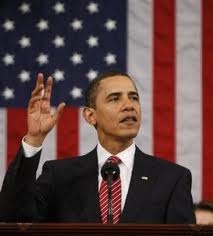
Part one of my response to Obama’s 2012 State of the Union is here.
3. The foreign policy section was weaker and more militaristic than usual. The opening bit about the Iraq war making us ‘safer and more respected around the world’ was jaw-dropping. I guess this really is a campaign speech outreach to the right, because I can’t believe any of the president’s 2008 voters actually buy that line. Does anyone really believe that anymore, except for the right-wing think-tank set or something (ok, I’ll admit I did until a few years ago, but not now)? Wow. Didn’t people vote for Obama because of exactly the kind of Bushian American hubris that can read an unjustified, unprovoked, unilateral assault on another state (which would have provoked howls of rejection by Americans if done by any other country in the world) as a great American victory? Veterans too got a pander wishlist – even though even Michelle Bachmann (!) has come to realize that VA benefits will have to be included in any budget deal.
Each year I try to write on the SotU (2010, 2011). I know they are preposterously scripted, usually forgettable, and almost meaningless as a guide for the upcoming policy season/budget debate. But the political scientist in me thinks that showing the whole panorama of democratic government in one room is hugely instructive for the both US citizenry and for foreigners interested in the US, as well as a great example of how democracies differ from oligarchies and dictatorships with their sycophantic, faux ‘legislatures.’ Let’s hope that somewhere some Chinese, or Burmese, or Syrians can see this and dream that one day they too can … play their own SotU drinking game.
This year I will be cross-posting my work on the international relations theory website, The Duck of Minerva. For readers of my site interested in social science theory in world politics, the Duck is a great place to start. Readers will also find the comments section much more vigorous than here on my own site. I encourage you to visit the Duck. The writing is fairly complex, and its contributors are excellent. I am flattered to be asked to guest-post this year. I’d especially like to thank Vikash Yadav for his solicitation.
I have been teaching IR (international relations theory) in Korea for almost 4 years. Generally, it’s a lot like teaching it in the West. The same theories get circulated, and we read the same journals. My university, a big state school, is organized a lot like any Big U in the US – dozens of departments, huge faculty, growing administration, a large middle class student body (but no student athletics). As at home, my department has theorists, internationalists, comparativists, and Koreanists. In fact, given how far away the Western system is geographically, it is almost a little too easy, too seamless. I guess this means political science really is a globalizing discipline.
So here are a few macro-lessons I have picked up teaching and conferencing IR in Asia:
Welcome to WordPress.com. After you read this, you should delete and write your own post, with a new title above. Or hit Add New on the left (of the admin dashboard) to start a fresh post.
It’s time for a break. Blogging is pretty time-consuming, so I need some down-time. I will be back in mid to late January, and I will be cross-posting at the academic international relations blog The Duck of Minerva. After 2.5 year of blogging, I am excited to step up to something with greater visibility next year. Academic readers especially will find that site a good one, and I want to thank the Duck’s outreach guy, Vikash Yadav, for inviting me.
So while your guzzling too much eggnog for New Year’s, I have tried to put together a list of stuff from 2011 that is worth your time. I try to avoid academic articles and stick to informed journalism that is easier to digest. Here we go:


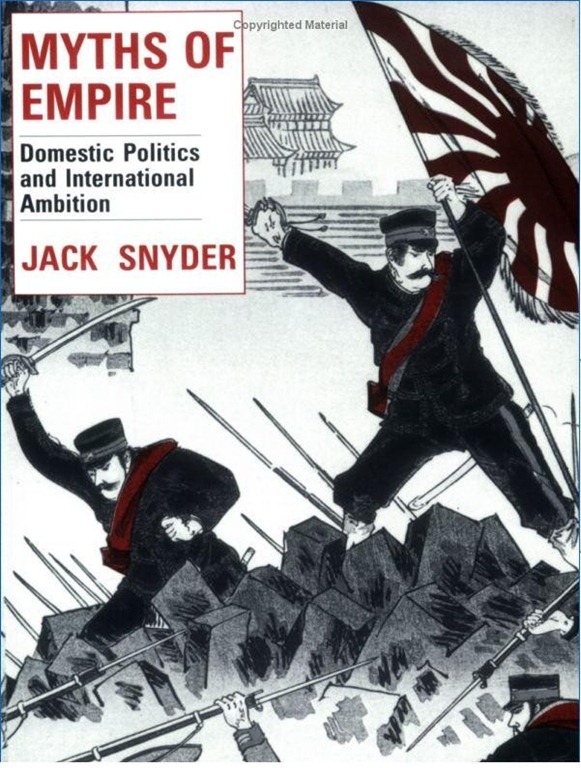
 ) The book is theoretically complex (almost too many moving parts to my mind), and the cases are an exciting read. But when it was big in the 90s (when I first read it), no one really thought about China as fitting the argument. But today, it strikes me that China would be an interesting prediction case for the book. Certainly China looks a lot like the kind of expansionist state Snyder describes – rapid late developer, nationalist-militarist elites suspicious that the extant international system is keeping them down, growing factionalization, nationalist mass ideology, etc. In my grad school classes, one of the big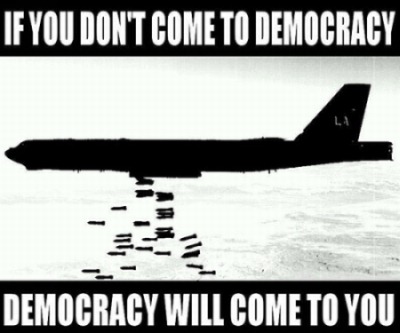


 Robert E Kelly