Unknown's avatar

About Robert E Kelly

I am a professor of political science at Pusan National University. I write mostly on international relations in East Asia.

Korean Nat’l Identity (2): 4 Simultaneous Sociological Transformations

In part 1, I tried to offer some comparative national cases (France, Israel, US) by which non-Koreans can get a handle on Korea. Today, I thought it would be useful to use some conceptual, rather than national, benchmarks. I can think of at least four sociological conflicts through which Korea is moving simultaneously, and hence make it such a boisterous place to live:

Continue reading

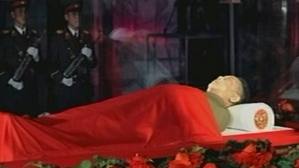
Kim Jong Il, the Don Corleone of North Korea, has Died

images

Or was it Dr. Strangelove?

Some friends from Reuters asked me to comment on KJI’s death with these questions:

How stable is North Korea today, with the news of Kim’s death?

Pretty stable actually. When Stalin and Mao died the whole show didn’t tip over. Insiders took a bit more power from the now-missing center but more or less followed their previous roles initially. The Kim family network all have an obvious and deep interest – at least now, before the sorting out of the new pecking order – in preventing implosion. They’re all deeply vested in a brutal, human-rights abusing regime, and they would face SK post-unification courts with access to the death penalty if it all came apart. So the chance of civil war or implosion in the coming days is pretty close to zero. The real test will be in the next 6 to 12 months as the factional conflict heats up over the distribution of gains, particularly access to the badly-strapped national budget, in the nouveau regime. I think China after Mao is a good analogue here.

How prepared was the North for this scenario?

Better than we’d think, but still not too well. Highly personalized regimes, by definition, are institutionally poorly prepared for transition at the top, because the ‘sun-king’ has structured the system that way. Like Bismarck, Hitler, or Mao, they keep the underlings jockeying and guessing, but when they go, the hole in the middle is big. It took KJI years to solidify his rule after his father Kim Il Sung,  and even KJI could only do that by leading the army personally, likely to forestall a coup. That said, NK has gone this through before, and familialism of its elite and dynasticity of its succession alleviate some of the factional tension authoritarian successions generate. Ie, because they are all related to each other (like any good mafia), they are less likely to turn one another. That is the whole point of appointing relatives to high positions. But nepotistic grooming didn’t have the full time to play through, because Kim Jong Un hasn’t been the dauphin long enough. NK is much less well-prepared than in 1994 (KIS’ death).

How prepared are Seoul, Washington and Beijing?

Not very. As General Secretary Leonid Brezhnev’s health declined slowly, the West had time to adjust to rising factionalism and stagnation in the USSR. Brezhnev showed up less and less in public; the faces on the stage at Red Square changed to show who was up or down. This barely happened in NK; KJI was travelling and walking around in Russia just 4 months ago. My sense is that most of us thought KJI had recovered reasonably well from the stroke and might hang on for a few more years. This was a sudden heart attack that caught everyone by surprise.

How ready is the young Kim Jong-un to take over?

Not very. 1) He is young, which cuts against Korean cultural-Confucian standards of age matched to authority. 2) He has no experience in the military, which is now the central institution of the regime. 3) He does not have the years of ‘training’ and experience in Pyongyang backrooms to groom the connections necessary to govern a mafiaosi-like kleptocracy. Indeed, he seems to have no real political, military, educational, scientific, or other training for this role at all. The name is all he’s got, but that is central for the regime’s legitimacy given its hyper-patrimonialism and ideology. So my guess is that he will be kept for continuity and legitimacy but will basically become a figurehead for an emergent soft military junta (like Myanmar).

Who are the real leaders, now Kim Jong-il is dead?

The Korean People’s Army top brass and the National Defense Commission, because KJU is weak and they have the guns.

What role does the military have right now?

Regime Stabilizer. The extended Kim family is like the Corleones in charge of a whole country – shaking down SK, the US, the UN, China, and anyone else for aid and cash, counterfeiting currency, committing insurance fraud, dealing drugs, etc. Try to imagine that Brando’s Godfather character took over a whole state and ran it like a corrupt casino to rip off just about everyone – most obviously the NKs themselves. The nukes are just the biggest gun pointed at the world to force an offer no one can refuse.

But it is the military that keeps the internal peace and wards off the outside world to keep this whole racket running. So long as the KPA gets to keep their constitutionally exalted position (‘military first’), and their generous access to privilege and the budget that it entails, I see no reason to think the KPA will overthrow KJU. Why not keep him as a figurehead, and the Kim family in general as the fall guys in case the whole thing does collapse? Let them face the angry Southern courts and swing from the gallows. That said, I do think the army’s role will increase substantially. We know  that there was some resistance to yet another dynastic succession, and that the Kims seem given to megalomania and a god-complex which the army must know is hugely dangerous. So my thinking leans towards an emergent junta with the Kims as a figleaf.

I have written a lot on NK. Here is the whole list. Here are some of the better ones: post-KJI as a military dictatorship; policy options (all bad) for dealing with NK; Arab Spring and NK; and the parallels between Korea and Germany on unification. For some humor on those famous NK traffic cops, try this.


Korean National Identity (1): Comparisons to Israel, France, and the US

imagesCA0EEEZ1

isfrimagesCAYPLPUQ

Part two is here.

I get lots of questions from Western readers about this or that aspect of Korea in comparison. We don’t really know about Korea too much, but Americans often use it as an example for some larger political point they want to make. Here are a just few examples: 1) Obama: SK is kicking our butt on education and tech; 2) Obama: SK is an example of a country that modernized but didn’t westernize; 3) Michael Crichton and Amy Chua: SKs and other East Asians are work robots who will take over America and cost your kids a job; 4) John Bolton: Long-suffering SK gives us an excuse to stomp on NK.

Of these, I really think only the second is valid. A few years here can rebut the others without too much trouble:

1) Korea has huge educational problems that Americans don’t really know about. After taking insanely difficult tests in high school in order to place into a good universities, Korean college students often slack and party as a ‘reward.’ Too much of university here is about building the informal social network that will carry you through your professional life and not actually clamping down to do the work. Korean students are also not the readers that college education demands, which is why they often struggle in US graduate programs. And far too much of K-12 is focused on rote memorization, so plagiarism is a huge problem. Also, in case you ever wonder why Korea is so wired (which Koreans love to brag about), recall that Koreans live in very dense urban clusters, frequently in high rises. These are very cheap to wire, compared to the far more diffused American population and the high expense of the US ‘last mile.’ (That said, my broadband here is awesome and is about to get even better.)

3) As for Crichton and Chua, gimme a break. America’s inability to balance its budget, control its imperial temptations in the developing world, fix its K-12 schooling mess, reduce hyper-inequality and high crime, etc. are the reasons for US ‘decline.’ Asians like the Japanese, Koreans, or Singaporeans don’t have some magical growth formula. I will agree that East Asians are better ‘socially disciplined’ (crime here is mercifully low), but not the way Amy Chua’s ridiculously racist domestic fascism would have you think. I’ve been here close to 4 years, and I have never seen anything like what Chua describes in the Korean side of my family. As for the ‘Asians-as-work-robots’ idea so popular in the US in the 80s and 90s, once you’ve experienced the East Asian post-work business culture of hard drinking and debauchery, you know that’s bunk too. I have seen enough Korean ‘salary men’ lean out taxi windows on Friday night to vomit while the driver waits complacently to know that the whole ‘Asian values’ schtick is a fraud.

4) Bolton: I resent the way neo-cons manipulate SK unhappiness about national division to suit pre-existing ideological preferences for regime change and US military activism. This is cloying, pretended sympathy in service to American, not Korean, goals; that’s extreme bad faith. I have noted before that SK want nothing to do with ‘Axis-of-Evil’ talk.

Given this mediocre record of popular comparison, here are a few comparative classifications of SK with countries western audiences might recognize better. Compare and contrast is a basic social science method. And comparative politics in political science is always looking for similarities among states on which to build generalization. So here are the ones that have leapt out to me:

1. Like Israel, Korea is a barracks democracy striving for international normalcy. Both are democracies but under long-term siege. Both would like to join the global economy, get rich and be normal, but can’t. Both struggle to maintain civil liberties in an threatening environment with inevitable slippage. Korea, for example, blocks internet access to NK websites; in Israel, Israeli Arabs can’t join the military. Both are trapped in partial or incomplete states. Korea is half a country, and Israel’s borders are up for debate. Both are too militarized for a democracy, but still, they are doing a really good job balancing a huge military role in society with democratic freedoms. By comparison, look at simlarly over-militarized democracies like Indonesia, Pakistan, or Turkey.

2. a. Like France, Korea has aloof, farily corrupted political class in a too-cozy, corporatist relationship with business. Both also have weak political parties and weak legislatures. So voting doesn’t really make much difference; political participation looks for other avenues.  As a result, both have a vibrant street protest tradition. Working for serious change within the system feels pointless because of an entrenched, circulating elite, toothless opposition, close party-state relationship, and a bureaucracy rather insulated from popular pressure. So when Koreans and French are most angry, they turn to extra-parliamentary means. They march on the streets. Immobilist, scandal-ridden politics channels real political grievance onto the streets.

b. Also like France, Korea is extremely centralized on the national capital. Seoul dominates Korean life, vacuuming up talent, wealth, and prestige from around the country. The goal of just about everyone is to go ‘up’ to Seoul, whether for school, the best jobs, or the best cultural life. You even see it among the expats. Even we foreigners in Busan say we wish we had a Seoul gig! And, as Paris does to the provinces, the rest of Korea is impoverished by this.

c. Finally, both Korea and France are semi-presidential systems. Both have a tradition of a megalomanical ‘father of the nation’ who created a super-presidential post above ‘grubby’ politics. In France, de Gaulle directed the ship of state from a constitution he set up for his own personal benefit as the living embodiment of France. In SK, Park Chung-Hee did the same thing. In both countries though, political institutions are weaker than you’d think because of their ‘great man’ origins. Eventually a succession must occur – no one lives forever – and both France and SK have struggled to tame the office of the president and build more routinized, democratic institutions open to the public. To date, France has succeeded better. Korea remains a very presidentialized semi-presidential system. Ironically, that may help Korea, because the rise of the prime minister in French semi-presidentialism has effectively created a bifurcated executive, particularly when the PM and president have different party affiliations. In Korea, the reduction of the PM to essentially the first cabinet minister has helped unify its executive.

3. The cultural gap between the West and East Asia is wider than the between the West and Latin America, Russia, or even the Middle East. In terms of food, music, religion, and language, the differences are far greater. So it is therefore all the more surprising how Americanized Korea is. English is everywhere – in the schools, on street signs, music, TV. Its institutions, especially military ones, are heavily patterned on the US; until 1981, the Korean version of the CIA was even called – the KCIA! Today there is still the K-FDA. Koreans watch lots of American TV and film. They eat our fast food and junk food (and are getting heavier for it). And they are beginning to pick up the American culture wars. They fight increasingly over stuff like abortion and the death penalty as we do. Korean evangelicals (yes, they are here too) even say that God has a special mission for the US no less! (Now that really is brainwashing.) My own personal guess for why Korea is so Americanized, is that if Korea can close the cultural distance between it and the US, the US is more likely to honor its alliance commitment and fight for SK. In other words, cultural Americanization is a national security strategy to reduce the ‘otherness’ of Korea to average Joe American, in order that he will agree to fight here. Kinda smart if you think about it.

Don’t push any of these analogies too far, but Obama mentioned Korea five times in the 2011 State of the Union, so I thought this might help.

Continue to part two.

The Korean-German Unification Parallel; plus Blackwater … the Game?

Quick IR test: name that dictator!

Regular readers will know that I have blogged about the parallels between Germany and Korea at length before: here and here. This week the Korean Journal of Defense Analysis published the long-form version of my argument. It is available here for free in PDF. KJDA is a great little publication in east Asian security is your area, and it is offered for free too. Very nice.

Comments on the argument are always welcome. I thought because everyone always implicitly compares NK to EG, and possible Korean unification to Germany’s experience, it would help to formalize the comparison at length. The bumper sticker version is that NK is about 10x poorer than EG, so unification will be way harder and more expensive than the German experience.

A foreign IR professor in Seoul argued to me that starting from the German analogy is an error, perhaps one that is flattering and preferred by Koreans because it turned out so well. A better parallel might be Yemen’s reunification, which worked out far less well. That seems pretty harsh to me. SK is a lot more like WG that either of the Yemens. For other comparison cases to Korean unification, try this.

Here is the summary section from the PDF:

To recap, domestically, there are more North Koreans than East Germans,
and they are much poorer as well. There are fewer South Koreans than West Germans,
and they are (albeit less so) less wealthy also. South Korea’s state capacity is lower
than West Germany’s, while North Korea today is dismal by even the former East
Germany’s standards. In sum, fewer people with less wealth in a weaker system will
support more people with less wealth from a worse system. That domestic calculation
is punishing, on top of which the international balance of forces is worse now than
in 1989 too.

Internationally, today’s external patron (the United States) of the free Korean
half is weakening, while the external patron of the communist half (China) is
strengthening. The opposite was true of the United States and West Germany, and
the USSR and East Germany, in 1989. Today’s northern patron (China) is trying to
push further into the continent (Asia), while yesterday’s eastern patron (USSR) was
looking for an exit (from central Europe). Nor is there is a regional encouragement,
revolutionary wave, or democracy zeitgeist that might accelerate the process. The
incentives for China to meddle (because of the greater importance of North Korea to
China, than of East Germany to the USSR) and the greater ease of such meddling
(because the United States and South Korea today are weaker than the United States
and West Germany were then, while China is much stronger today than the USSR
was then) mean Chinese intervention is likely. It will almost certainly seek to structure
any final settlement. The major policy question emanant from this paper’s analysis is
therefore: Will South Korea forego the U.S. alliance if that is required to remove
China from peninsular affairs? Will South Korea exchange neutralization for unity?

————————————–

So I got my wife a Kinect for Christmas (yes, it is very cool, but it’s a pain to set up your living room for it). While browsing for it, I found ‘Blackwater – the Game.’ Wow! Mercs for kids! Phenomenal! Who came up with that idea?! Recall that the Kinect is meant for the non-gamer types and kids (like the Wii). I understand that there are already lots of military-style shooters at home, and some of them are genuinely brutal and extreme. Yet Blackwater of course is/was a real firm, implicated in some of the most controversial moments of the Iraq War, and the game is on the wii-like Kinect. So do you really want your kids playing hired guns in Iraq? At least in most shooters you play a ‘public-spirited’ character (ie, a soldier); here you’re just killing people for money – a great lesson for little Johnny, I geuss.

Blackwater of course is gone now. Its called Xe today, but apparently former CEO Erik Prince owns the rights to the name and I geuss he needs the money. I’m just not sure what to think. On the one hand, I think realism and/or edginess improve gaming and make it less ridiculous; that’s why I don’t mind Grand Theft Auto or Halo, and I thought Bioshock was super. But mercs for kids is probably a new low. In any case, the game is terrible apparently.

And here is another nice item for the Korean-watchers. We bought a TV mount for the Kinect. It costs $20 on Amazon, and $36 in Korea. Yet another example of how Korean mercantilism and the weak won policy are killing Korean consumers by making everything pointlessly, outrageously expensive here. What possible explanation besides politics can there be for an 80% (!) price differential like that on such a mundane, irrelevant product? Ugh.

Competing Maps of Eurasia: Mackinder vs Barnett & the US Asian ‘Shift’

mackindersworldCore Gap

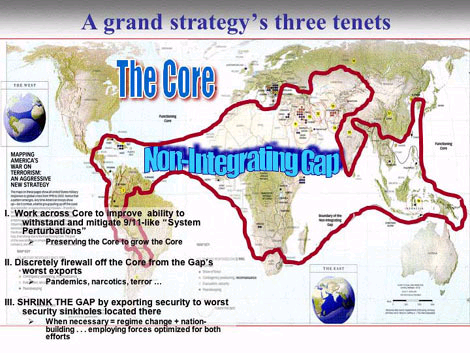
Mackinder’s famous map is on the left; Barnett’s is on the right. Here is Mackinder’s famous article; here is Barnett’s book.

It is a slow fall for Asian stuff. China is behaving better; Japan and SK are quiet; NK always seems like its building a new military installation somewhere, but it’s fairly quiet too. If you missed KJI’s birthday though, click here. The big recent new is the US decision to ‘shift’ toward Asia and the placement of US forces in Australia. Last year, I predicted that the US would lead a containment ring around China (yes, I realize that that is not a very gutsy ‘prediction’ at this point in the game). I see this as the first step. So here are some big geopolitics thoughts on the US shift, because I was re-reading Mackinder for work.

Halford Mackinder practically founded the field of geopolitics single-handedly with his famous article and the above map. It became the informal basis of US strategy in WWII and to certain extent, justified Cold War containment: keeping the Soviets penned into Northeast Eurasia. So it’s easy to roll this over to China. Mackinder’s map privileges land power. Mackinder thought the center of Eurasia constituted the ‘heartland’ that would be the pivot of global dominance. (China could arguably be a part of that, as it is far more populous than Siberia.) His famous quote was: Who rules East Europe commands the Heartland; Who rules the Heartland commands the World Island; Who rules the World Island commands the World.” Generations of German, Russian/Soviet, and (to a much lesser extent) American cold war strategists, took this as established wisdom. And indeed, I argue similarly in my Geopolitics article. The US is safe behind two big oceans, so long as no one controls all of Eurasia. If Napoleon, Hitler or Stalin had managed to control that whole stretch though, then a transoceanic invasion of the US might actually be possible. (Inter alia, it was Mackinder who coined that term ‘Eurasia.’) Probably the most famous exposition of the heartland theory’s importance for the US was from Frank Capra (yes, the guy who made It’s a Wonderful Life.)

Barnett comes more from the traditional American school privileging seapower, best known from the work of A T Mahan. Mahan thought (and Teddy Roosevelt agreed) that a powerful US navy was a the shield of the nation against the chaos of Eurasia. There is no need to get into long wars about the heartland; off-shore balancing is possible. The long US naval tradition is why the heartland school was never as dominant in the US as in Eurasia. Even though the US invented the nuke and has fought a land war in Asia for a decade now, the US is still firstly a naval power. I also think Barnett’s map reflects the American infatuation with technology and capitalism. Mackinder’s image is very traditional or realist: big states with big industries build big armies to conquer big spaces. This is a recipe every land strategist from Sun Tzu to Clausewitz could love. Barnett goes around all that to re-write geopolitics politically not militarily. In post-industrial economies, the control of land isn’t so important anymore (people’s brains are a lot more important than their manual labor in the fields of Ukraine). The critical divide is then between those states that function and those that do not. The functioning ones join globalization, get rich in the process, and then can use their wealth to set the rules. The nonfunctioning ones can’t grasp the benefits of globalization, generate all sorts of asymmetric problems, and are therefore the locus of military conflict. Policing failing states as spaces is more important the conquest of strategic territory. In Barnett’s world, Iraq, Somalia, Afghanistan, etc. are the threats of the future; in Mackinder’s China should start bullying central Asia and maybe Russia soon.

Has Barnett’s vision of Eurasia divided into functioning and failed states replaced Mackinder’s land-power realism? It seems to me that this is a good test of whether or not globalization is really changing a lot. If China and Russia become status quo powers, then yes.  Then the only big issues will be integrating the periphery and rogues into the world economy. In this environment, salafism and other ‘remnants of war’ becomes the biggest challenger (headache really) to the US. But Russia, and especially China, pursue major changes in the land order in Asia, then score one for the realists. And America’s decision to base in Australia now too says Obama is leaning against Barnett-Mahan offshore balancing, toward forward deterrence of Asia domination.

I would add to other factors to this macro-musing:

1. A strong test of these competing maps is Chinese and Russian behavior if US power weakens. Radical Islamists, driven by the fear of God, will assault the West regardless of the chances of victory. So in that sense, Barnett will always be correct. But Russia and China are more rational. If US unipolarity holds, they are not likely to challenge the US, so then we’ll never know if the Russians and Chinese have changed because of globalization or were just deterred. But if the US declines, if military power genuinely disperses, and multipolarity emerges, then look for a challenge. As Beinart notes, “Offshore balancing, by contrast, reemerges when the money and bravado have run out.”

2. Global warming will raise the importance of the Heartland. In 1943, Mackinder noted the importance of the river basins in the Heartland. Fortunately for the West, those that flowed into the Arctic were blocked mostly be ice. Russian/Soviet naval power was forced to the fringes – Vladivostok, Leningrad, Odessa. If the Arctic truly meets permanently, perennial land power Russia will immediately become a sea power too. This would be an unprecedented shift, as geographic obstacles like the Arctic ice pack have generally been understood to be permanent, immovable features of geopolitics.


Keeping USFK in Korea? – Soul-Searching after the Sexual Assaults

2011-11-01T135312Z_01_BTRE7A012L900_RTROPTP_2_KOREA


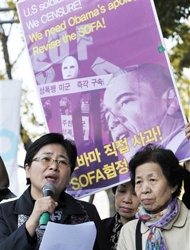
In the wake of the recent sexual assaults on Koreans by US soldiers in Korea, I was asked by the Korea Herald to participate in a debate about whether US forces in Korea should leave. (On the assaults try this and this. For NK manipulation of this as evidence of US “fascism,” try this.) It is terribly awkward in the wake of three assaults to argue that USFK should stay, but ultimately I think Korea benefits enormously from the US commitment.

My op-ed on the subject was published here on Tuesday, and is reprinted below:


USFK is in Korea’s Interest, but US Budget Pressures are Growing Fast

Whenever US soldiers in Korea misbehave egregiously, Koreans naturally soul-search on whether USFK should withdraw. This is proper; soldiers sexually assaulting teenagers is horrific. The debate also usefully signals to the US that Korea not be taken for granted. But in the end, Koreans have always hewn to the US, even after George W Bush famously alienated South Korea by placing NK on the ‘axis of evil.’ South Korea is the overwhelming beneficiary of a very one-sided relationship and terminating the alliance would dramatically weaken Korea in a very difficult neighborhood.

Korean foreign policy is structured by its dismal geopolitics. The traditional saying that ‘Korea is a shrimp among whales’ is accurate. Middle-power Korea is surrounded by three great powers with a history of intervention and bullying, and bordered by one of the worst tyrannies in history. As such, an alliance with a powerful external partner (the US) gives Korea critical leverage where it would otherwise be dominated. For the all US misbehavior in ROK history – from questions around the Kwangju suppression to the personal issues of ‘ugly American’ behavior – no serious ROK policy-maker has ever wavered from the belief that the US partner critically boosts SK autonomy against local encirclement. Because the US alliance gives Korea desperately sought local leverage, the US in turn has significant leverage over Korea. This is a cause of great consternation among proud, nationalist Koreans and explains enduring anti-Americanism, especially on the SK left. Conversely, it is the reason the Korean government so dramatically emphasizes English acquisition and exposure to the US. Americanization of what is otherwise a Sinic-Confucian culture reinforces Korean cultural compatibility with the critical US ally.

The contrast for the US is quite sharp. With the end of the Cold War, the utility of the Korean alliance to America has fallen significantly. A widely unappreciated fact in Korea, almost a willful blindness, is that a NK victory over SK would not dramatically impact US security. As a fellow democracy, the US would of course lament such an outcome, but with the end of expansionist Leninism as a threat to the US homeland, there is no longer an East-West balance in which Korea is a central weight. The Korean division is now a more local problem, to which the US is devoting fewer resources. It is well-known that USFK has shrunk over the years; the Combined Forces Command will be shortly abolished; and USFK is no longer stationed in a ‘hair-trigger’ posture on the DMZ. To Americans, with many global concerns including terrorism, nuclear proliferation, failed states, the drug war, climate change, and so on, Korea is one theater among many. Surveys of US public opinion by the Chicago Council on Global Affairs have found since the mid-2000s that only 40% of Americans want the US to fight in Korea, even if NK attacks first. A major conflict in Korea would be vastly more destructive than the recent war on terror, possibly involve nuclear weapons, and pull the US into a massive, unwanted post-war nation-building project, especially if SK is devastated by nuclear strikes. Given how badly the war on terror has flown off the rails in the last decade, American reticence about getting ‘chain-ganged’ by an alliance into another major war in Asia is predictable.

In short, the alliance is dramatically balance-positive for Korea, but increasingly neutral for the US. It is no longer clear what the main US benefit from the alliance is (this applies to many US alliances actually). Typically, the answer is that Korea is a central node in the American alliance network in Asia. But that just raises the next question of why the US needs a large, expensive Asian military footprint. Typically, the (unspoken) further step is that this will help contain China. But again, why the US should contain China is unclear. From an American national security perspective, China is primarily a local Asian dilemma. States like India, Japan, Australia, and Korea should really be dealing with that first, unless one believes the US should be a semi-imperial ‘globocop.’

‘Globocop’ hegemony may appeal to US allies in tough places (Korea, Israel, Afghanistan, Georgia), and it may be ideologically attractive to US neoconservatives, but is also very expensive, pulls the US into many conflicts of marginal value to US security (Iraq, Vietnam), and, most disturbingly, makes America morally culpable for violence, however justified, around the planet, including the deaths of non-combatants. In short, the US is flirting with empire, and the history of empires is often unhappy – too many wars, too much borrowing, over-extension leading to national exhaustion and institutional decay. Today, the US is on this path. By almost any definition, the US is overstretched. The military has been fighting continuously since 2001. The budget deficit is a staggering 10% of GDP; total debt is $10 trillion. National security spending is 25% of the budget. Post-Great Recession economic growth is anemic. For years the US disregarded its own values and tortured prisoners.

In such an environment, the US will eventually have to make hard choices about foreign commitments. Some measure of global retrenchment will likely happen, if only because the US is dallying with bankruptcy. Those Koreans who would like USFK to leave may be pleased to see the US pushed to the edge of insolvency, with a looming USFK retreat under budget pressure. But far more widespread will be anxiety about whether US relative decline will semi-abandon Korea in a tight neighborhood increasingly overshadowed by Chinese power. Do Koreans want to go it alone?

Foreign Policy of the GOP Debate (2): the Creepy Relish for Violence

This is the second GOP national security debate, from November 22.

Part one of my thoughts on the foreign policy discussion in the Republican primary is here.

4. At least Gingrich, Romney, Santorum, and Huntsman know what they are talking about. If the primary was just about foreign policy, the race would narrow fast. Huntsman is obviously the only one talking as if he would run the country’s foreign policy as an institution in the real world, rather than a Rambo movie. I do wish he would get some traction. I’d love to give him a shot. Gingrich, while I do think he’s brilliant (I know, I know –  most people think he’s a charlatan), has morphed into a disturbing superhawk on Iran and the faux ‘due process’ of the drone war even though I think he knows better. (Full Disclosure: I worked for the GOP in Congress during Gingrich’s Speakership.) Romney sounds increasingly like what the Japanese, Indians, Koreans, and Australians want us to be – containers of China. I still think this should be their job first, if containment must happen, and Huntsman was right to warn him off. Santorum shocked me the most. His answer on Pakistanis loose nukes was downright intelligent, especially from the guy most famous for saying this. Hm. Not quite sure what to make of that…

5. Ron Paul is my new … gah, I can’t say it, please help … hero in the primary, at least on foreign policy professionalism. While his ‘let-em-die-without-healthcare’ creepiness, loathing for the Fed, and love of the gold standard (?!) terrifies me on domestic policy, his foreign policy answers were, to be perfectly honest, the most consonant with the rule of law, and the legal and moral constraints the president does and should face  – despite his isolationism which I don’t care for. He stuck to the Constitution and insisted that the Congress, not the prez, declare war. (Thank god someone still says that after Korea, Vietnam, Iraq 1, and Iraq 2). He rejected the legality of  hellfiring Awlaki (a US citizen). He defined waterboarding as torture (that is just how low the bar is now,  good god). And he argued against striking Iran, which would almost certainly chain-gang us into yet another horrible conflict in the ME. Throughout the debates, he has rejected empire, rejected GWoT legal games, spoken regularly of our growing inability to pay for all these wars, bases, and other exertions, and counseled legal and financial restraint in the face of the Republican adulation of the imperial presidency, which even Obama has expanded (sooo disappointing that). Here’s Sullivan on Paul’s foreign policy importance as well.

6. ‘I will consult with my generals’ is becoming the biggest dodge of tough questions in the race, and it gets used so often, that it’s making me wonder if GOP questions the supremacy of civilian authority. Why don’t we just nominate David Patraeus instead? Indeed, if you listen carefully to the debates, the attitude toward the military is almost sycophantic (note how the armed forces are used as a touchstone), which reinforces my growing suspicion that the GOP equates American greatness overseas with the use of force. Contrast that with the extreme niggardliness of the contenders on foreign aid (Perry’s zero-based budgeting). So we might occupy your country or fly drones over it, but we wouldn’t dare build you a functioning sanitation system. What a terrible signal to send the rest of the world!

The locution ‘our men and women in uniform’ has a become an applause line, a throw-away pander to the red-meat Tea Partiers, conveniently shoe-horned in to defend almost any possible position – waterboarding, killing Iranian scientists, intervening in Pakistan, whatever. Yes, we support the military, and yes, we should provide it with the resources needed when tasked with missions. But we are more than a nation of armies, indeed, we are/should be an open, relaxed democracy FIRST. I would much prefer that the the primary face of our global image be the Peace Corps than men with guns. What is it with the GOP and uniforms and firearms? Didn’t we learn anything from the insurgency in Iraq? I would much rather that foreigners think of America as a place of great artists, musicians, entrepreneurs, poets, etc. than the regular diet of militarization on tap with the GOP since 9/11. Did anyone else notice in the emailed-in question about opposing torture, that the questioner felt obliged to say he was a veteran in order to have the moral standing necessary to question GOP dogma? ‘Service guarantees citizenship!’

7. And there is yet another sycophancy – toward Israel. Again, the pandering was almost embarrassing. The candidates seemed to fall all over themselves to proclaim fealty to even the most maximal positions on Israel, the Palestinians, and Iran. Again, yes, we want Israel to survive and be prosperous and all that. But we are two different states; our interests don’t always align, and the current Israeli administration is surely the most irresponsible and needlessly aggressive in a long time. But here, Israel is the 51st tea partier state.

8. And then, worst of all, there is – there had to be I guess in this primary season of ideological purity – the bloodlust – the relish in the use of force and pain. This more than anything else has scared me. The cheering and clapping from the audience has goaded the candidates to ‘outhawk’ each other; in fact, that is probably too generous – ‘out-brutality’ each other is more accurate. Bachman has her nuclear war. Paul would let people die if no charities came forward to help with medical bills. Perry came off almost bloodthirsty on the Texas death penalty and yet again on waterboarding (“I’ll be for it until the day I die”). Does Perry, previously a somewhat normal guv, really want to be remembered this way? As the ‘guy who loves the death penalty and waterboarding’? (This is what I mean by the Tea Party audience members goading these guys into extremism; Perry is clearly being pushed by this race into rashly saying lunatic things about the Fed, Israel, wateboarding, etc.) But for Paul and Huntsman, the rest endorsed waterboarding and ‘enhanced interrogation techniques’ too. On Israel, Iran, and Pakistan, the pressure to reach further and further to extremes is so obvious. Even Huntsman, desperate to look ‘tough’ on anything, said he send special forces into Pakistan to chase loose nukes, after even Santorum (!) said that was a bad idea.

There must be a limit. What would the GOP reject? Can the president use drone strikes inside the US? Should he use nuclear weapons in the GWoT? I think it would really help the rule of law if the moderators could tie down the candidates to some framework, but the audience won’t have it. Its too late. The Tea Party understands the GWoT in the Jack Bauer way – the rule of law is for lawyers and sissies; real men carry guns and inflict righteous pain even if its illegal. Terrifying.

Foreign Policy of the GOP Debates (1): We couldn’t care less @ Foreigners

The ‘foreign policy’ debate

MEDIA UPDATE: On November 8, I published a brief write-up on the US-Korean alliance with the East Asia Forum. EAF is a good outlet for readers of this site. The piece was based on longer writings here on the blog earlier this fall. Comments are welcome.

——————

There have been lots of these GOP debates (here is the whole schedule), and the one above, from Nov 12, is the most relevant for readers of this site. Here is a decent write-up on that debate, and after months of them, there is enough said to provide something to say on the (otherwise scarcely discussed) foreign policy edge of the primary.

1. Any first foreign policy comment must be, paradoxically, that foreign policy isn’t really much of an issue. No one at the primary stage really cares about foreign policy, beyond Israel, which increasingly isn’t seen as foreign policy at all, at least by the GOP, and a general chest-thumping of American awesomeness. This is not news for Americans. US observers all know that domestic politics, especially the economy, pretty much determines elections. When you are a superpower you have the luxury to disdain and ignore foreigners. But foreigners don’t know this as well, and US allies especially often build-up (self-serving) images of themselves as ‘critical’ to the US, even though monolinguistic, untravelled Americans couldn’t care less about these countries (poor Georgia; the entirely ginned-up Korean belief that K-pop is a ‘wave’ in the US; a self-important German colleague once told me that America should never force Berlin to choose between Washington and Paris – oh please! like we care, dude!). Indeed, Hermann Cain’s rise and his staggering ignorance about the non-US world tells you that disinterest in the world – presumably because we are so exceptional and powerful that we don’t need to care – is almost welcomed by the Tea Partiers who hate IOs, illegal immigrants, and US bargaining with foreigners. Build the fence higher! And electrify it!

2. For all the hype about the US switching its focus to Asia, you wouldn’t know that from the debates. Do you really think that the average tea party white guy voter cares about SK or Japan? The Middle East was far more dominant. Iran, Pakistan, Israel, and the rest of the usual suspects were everywhere. I think I heard Gingrich mention NK once in this debate. The China stuff between Huntsman and Romney was flat. India wasn’t even mentioned, but waterboarding (of GWoT detainees) was a disturbingly hot topic. Again, this isn’t news to US observers who know how many Americans, especially Christians, take a fairly apocalyptic, clash-of-civilizations view of the GWoT. Bachmann even warned of a global nuclear war against Israel (god, she’s a terrifying flake). Elites may want an Asian turn in US focus (as I think would also be a good idea), but the ‘Christianist’ GOP electorate remains focused on the ME, and we should expect that to continue to dominate US time, even if we don’t want it to. Terrorism, oil, and Israel aren’t going anywhere.

Asians are bound to be disappointed, because of the deep-rooted belief (desire, actually), verging on desperation, that the US should pay attention more to them. (Read this and this – apparently India and Southeast Asia are ‘indispensible’ for the US. Oh, and so is Latin America. — Not! Americans just don’t care. Elites aren’t the voters. Build the fence higher!) What this tells you is that the Asia hype is a lot more hollow than Asians want to admit, because it requires US attention to be justified. So America is still the unipole whether you like it or not (natch), and the ‘new Asia’ schtick is more about Asian insecurity and desire for prestige, than it is about empirical shifts. (Yes, the shift is happening, but a lot slower than the ‘Asia is the future’ types I meet here all the time will admit.) I have argued before that Americans just don’t care than much about Asia, no matter how many Asians tell us we should. Israel or even ‘old Europe’ Ireland is a lot more recognizable to Americans than Shanghai or Bangalore. Further, so long as India, Japan, China, and the rest out here are all balancing each other and competing, the US doesn’t really need to get sucked into the maelstroms of the Korean peninsula or the South China Sea anyway. The Asian hype that the US should pay more attention out here is really an effort to get the US to help locals contain China, which bait we should not take, IMO.

3. Cain, Bachmann, and Perry are way out of their depth. By now everyone knows Cain’s ‘U beki beki stan stan’ remark and Bachmann’s off-the-wall assertion that the ‘ACLU runs the CIA.’ (Yes, the same Agency that runs the drone strikes that now kill US citizens.) But even Perry can’t seem to give good answers – that he ‘commands’ the national guard and has friends in the Defense Department are qualifications for the White House. That’s all he’s got after 3 months on the trail? What happened to Perry? He seemed so imposing back in August, and he has just crashed. He comes off more clueless and lost in the woods, after his pre-scripted reply sentences run out, than even Bush. It’s amazing how weak this field is (which is why Romney is running away with this thing, even though no one likes him).

Part two will go up in three days.

Happy Thanksgiving – Some Korean Humor – See You Next Week

I love this special. Enjoy.

For my passing thoughts on western holidays in Korea, try these for Christmas, Halloween, and Thanksgiving. The short answer is that US holidays have made only minor inroads, so we should be skeptical of antiglobalizers’ claims that globalization is really cultural Americanization/homogenization. Despite 5 decades of huge US cultural influence in Korea, local cultural integrity is pretty intact. I don’t see too much homogenization here; it’s more like hybridization.

So here is a little Westerners-lost-in-Asia humor to tide you over for a week.

Among the expat community here, lots of these ‘You know you have been in Korea too long, when…’ lists circulate on email. Here is a mish-mash of the many I have received over the years. Some are a little punchy; just try to laugh a little. They are meant to be fun and exaggerated.

You know you have been in Korea too long, when…

When you no longer wait for the subway on/off pell-mell to clear; instead you plow in and contribute to it.

When you bow to foreigners too.

When you wear high heels to the beach.

When you fear an imminent Japanese invasion of Pusan.

When you demand steel Korean chopsticks even when you eat at Chinese and Japanese restaurants.

When you use chopsticks even when your Korean dinner partners use a knife and fork.

When you tell your far-too-hot-for-you Korean girlfriend that she needs plastic surgery, and she accepts it without complaint.

When you tell your family that Korean food improves your blood circulation.

When Korean directions – ‘make a left turn at the mountain and go straight for awhile’ – are crystal clear.

When normal women from your home country suddenly appear overweight and underdressed.

When you agree that there are too many foreigners in Korea.

When you bring a dictionary on a date.

When you use your fan’s timer at night.

When you no longer pity the live crabs boiling in the pressure cookers at the street market.

When you prefer Korean beef to ‘imports.’

When you put a picture of yourself on your cell phone instead of your loved ones.

When you enjoy watching street vendors decapitating live shellfish.

When you no longer feel embarrassed talking back to the little kids who point and call you ‘foreigner.’

When you’ve mailed pot to yourself (probably from Canada).

When you smoke in your office and don’t worry or care you’ll get caught.

When you drink in your office and don’t worry or care you’ll get caught.

When you eat meals at FamilyMart.

When you know the HomePlus jingle by heart.

When you’ve stayed a love motel.

When you prefer love motels, because they’re cheap.

When you stop being surprised by ‘service-e-e,’ start expecting it, and then get unhappy when you don’t receive it.

When you automatically assume you should buy all your electronics from Samsung, even though you bought Sony at home.

When you find Arirang TV network a realistic portrait of Korea.

When you finally acquiesce to your Korean girlfriends’ insistence that you wear a tie with sparkles.

When you start agreeing that air-drying your clothes is better than your tumble dryer at home.

When you stop caring that your students laugh at your terrible Korean.

When drinking till memory loss on a work night constitutes ‘improving your network.’

When you stop worrying that your apartment security guard sleeps all night and never seems to be at his desk.

When you start to sort your trash in your apartment.

When you own gold formal chopsticks.

When you’re no longer embarrassed to hit the salons after work; instead you egg your Korean friends to take you with them.

When you keep sandal house shoes at your office.

When you no longer find National Assembly riots hysterical.

When you complain about the quality of the kimchi at restaurants.

When you sit out all night at a small food stand and get loaded with the other ajeossis.

When you start speaking Kongrish-e-e instead of English.

When you have a statue of the happy Buddha on your shelf.

When you keep a bottle of liquor in your office.

When your intestines finally make peace with red pepper at every meal.

When you start styling your hair like Rain.

When you start calling other foreigners ‘wae-guks.’

When you start believing in ghosts, spirits, demons, forest gods, the ancestors, and the 4th floor.

When you re-watch ‘Poltergeist’ for home defense instructions against the ghosts.

When you know who Dangun and the Su-ryeong are.

When you believe in Dangun and tell your students to call you Su-ryeong.

When you actually care about the fate of Dokdo.

When you think making out in the DVD bang is a normal part of a date, not a deportable offense.

When you unthinkingly speak of the “East Sea” to non-Koreans.

When you agree that movies like ‘D-War’ are a global cinema event.

When you no longer miss the Halloween-Thanksgiving-Christmas-New Years holiday season.

When you stop holding doors for people.

When you push through a crowd as well as an ajumma does.

When your cell phone danglies outweigh your cell phone.

When you can perform the full Buddhist bow without your knees cracking.

When you accept that kimchi really does ward off SARS/bird flu/Ebola/swine flu/mad cow disease.

When you do mental addition with your one hand on the palm of the other.

When you expect and want kimchi with your breakfast.

When you prefer soju to ‘imported’ liquor.

When you have watched TV on your cell phone.

When you have bought 2 cell phones in less than 1 year.

When you stare back unfazed at school girls smirking at you.

When loudspeakers on fruit trucks add ‘local color’ instead of ‘noise pollution.’

When ‘home’ is one room 40 stories off the ground with no air conditioner.

HAPPY THANKSGIVING.

Let’s Get Ready to Ruuuumble!!!!! — Korean Style over the US Trade Deal VIDEO UPDATE: Tear Gas (!); Deal Passed

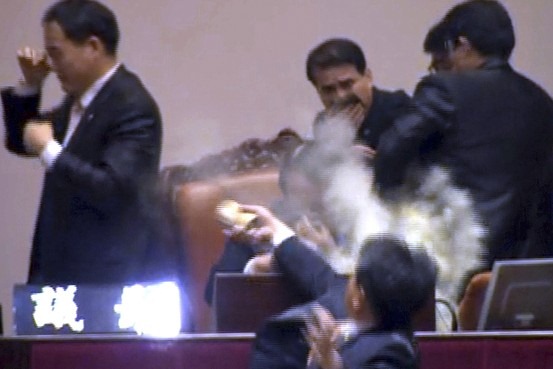
OB-QR705_tearga_G_20111122042710


My original post is below, but the Korea-US Free Trade Area vote came up on the afternoon of the 22nd. The ruling Grand National Party pushed it through (thank god – because imports here are ridiculously overpriced and NTB’d).

But the opposition tried to block with what must be a new tactic in the history of legislative rioting – tear gas! Wow. Who saw that coming? In my original post, you’ll see that I expected hair pulling and chair-throwing, but not this. As Otter would say, ‘it’s a new low.’ For all my disdain of the modern American right at home, I still can’t understand the SK left. The Democratic Party here strikes as me so unbelievably immature – leaving aside the DP’s inability to see NK as more threatening than the US to SK sovereignty, why would an obviously trade-dependent state like Korea, where the trade surplus is reported on religiously every month, reject an FTA? And what is with all the rioting? These brawls happen now at least once a year. (Read this on the Korean case for the FTA, which is much stronger than for the US.)

But still the video is pretty hysterical. Enjoy with your Thanksgiving turkey:

A new low in the storied history of legislative rioting


————————-  ORIGINAL POST FROM YESTERDAY  BELOW ————–


Democracy Rocks !! LOL


The opposition Democratic Party is getting ready to physically block the Korus FTA legislation from floor consideration in the National Assembly this week. Read this. Time to riot! Just check youtube in a few days for flying chairs, fire extinguishers, and hair-pulling. Awesome.

If you’ve never seen an Asian parliament riot, you’ve missed one of the great pleasures of life in Asia. The above is a nice vid, from South Korea. But the Taiwanese have the best ones. Rumor has it they have breathalyzer tests before the biggest Taiwanese debates. Hah! I love it. Just type ‘parliament fight south korea’ or ‘taiwan’ into youtube and watch them for awhile. They’re hysterical. Here are a few. For my speculation on why these ridiculously embarrassing meltdowns happen, read this.