Unknown's avatar

About Robert E Kelly

I am a professor of political science at Pusan National University. I write mostly on international relations in East Asia.

Yeonpyeong Shelling Summation (1): Context and Causes in Hindsight – UPDATED: More in the Comments


Yeonpyeong-island_1768397i

Last week, I noted that I was drafting an interpretation of the NK shelling of Yeonpyeong island on November 24 for the Korean National Defense University. I am grateful for the many comments on received. My posting this week will represent my full thinking after three weeks of posting and comments and will be submitted for publication early next week. I would appreciate comments and thoughts no later than Monday. Thank you.

Part 2 is here; part 3 is here

ABSTRACT

I identify four likely causes for the recent North Korean (NK) shelling of Yeonpyeong Island and argue nonetheless for a policy of retaliatory restraint. Two short-term causes are, 1. the regime’s domestic need to bolster the non-existent military credentials of Kim Jong-Un in order to ensure a successful transition in a hyper-militarized political system, and 2. to embarrass South Korea (SK) after the successful hosting of the G-20, which implicitly contrasted with NK’s worsening dysfunction and poverty. A third, structural cause is the regime’s permanent, post-Cold War legitimacy crisis – NK’s existential requirement for regular tension with SK in order to explain its continued existence as a separate poorer, unhealthier, unhappier Korean state despite the collapse of communism and, especially, of East Germany. A fourth, ‘permissive’ cause is China’s continuing refusal to leverage its influence over NK in order to indefinitely prevent the emergence of a unified, populous, wealthy, nationalist, democratic, American-allied Republic of Korea on its border. Unfortunately, SK’s post-Yeonpyeong responses are tightly constrained by the extreme vulnerability of South Korea’s enormous northwestern (Incheon-Seoul-Gyeonggi) urban agglomeration. 50% of SK’s population lives within 50 miles of the Demilitarized Zone; escalatory, kinetic tit-for-tat scenarios from loosened rules of engagement place them in tremendous jeopardy. I counsel short-term restraint coupled with a medium-term decentralization of SK out of the northwest, significant military expansion, and refocused government effort to build genuine popular, not merely formal-constitutional, commitment to win a grinding Cold War-style stalemate eventuating in NK’s collapse (akin to America’s slow reduction of the USSR).

_____________________________

1. Context: Nothing New

North Korea (NK) has a long history of provocations against South (SK), in which context the Yeonpyeong shelling is better understood as neither unique nor a step toward war. Much of the media commentary has exaggerated the escalatory potential of this crisis, generating a clear possibility for a self-fulfilling prophecy. That is, hyperbolic commentary that SK ‘honor’ is at stake in the ‘worst crisis since the war’ raises pressure on SK elites to respond with sterner measures, thereby worsening the very crisis they seek to de-escalate. Indeed, given that more casualties were suffered in the Cheonan incident (46) than Yeonpyeong (4), and that NK knew more clearly that a surprise-attack sinking would kill more South Koreans than the more random artillery fire against Yeonpyeong, NK is far more culpable for the earlier attack. SK rage this time is disproportionate to NK’s track record of such behavior.

A few incidents are worth recalling which diminish the uniqueness of the Yeonpyeong shelling and therefore mitigate the calls for looser rules of engagement (RoE): the 1968 attempt to assassinate Park Chung-hee, the 1976 tree-cutting incident, the 1983 cabinet bombing, the 1987 KAL 858 bombing, the Yellow Sea skirmishes of 1999, 2002, and 2009, and the 2010 Cheonan sinking. None of these incidents led to war; many were far worse than Yeonpyeong; despite humiliation, post-hoc restraint was ultimately the safest course given SK vulnerability (point 3.1 below).

2. Four Causes

Causal attribution of NK behavior is classic kremlinology, subject to large information failures due to NK secrecy and disinformation. My reasoning below is historical (previous NK behavior as indicators of the future) and analogical (how other late stalinist systems and aging dictatorships generally behave). I posit four causes:

2.1. Short Term 1: The Kim Family Transition

Since NK’s mid-1990s move toward ‘military-first’ politics, military prowess, whether genuine or manufactured, has become central to legitimizing rule in NK’s increasingly militarized polity. Kim Jong-Il rules not as president or prime minister, but as the chairman of the National Defense Commission (NDC). The North Korean People’s Army (KPA) is increasingly the central prop in a regime notably lacking a justifying ideology in the wake of the collapse of communism (point 2.3 below). Military factionalization is common in aging communist systems, and dictatorships generally, and the next Kim, Jong-Un, desperately requires military credentials to hold the rickety, corrupt system together when his father passes. Jong-Un has never served in the KPA, and his youth conflicts with traditional Korean norms of authority, in which age and experience legitimate hierarchy. To compensate, he was promoted to four-star general this fall and placed on the NDC last year. Manufacturing crisis like Yeonpyeong burnishes his minimal credentials further, and the Korean Central News Agency (KCNA) has hyped him as an artillery expert, suggesting a clear tie to the recent shelling. The leadership transition is likely to be more unstable this second time, as the Jong-Un is far less groomed and known in the relevant bureaucracies (KPA and the North Korean Workers Party [KWP]), and the economy is yet worse than in 1994.

2.1. Short Term 2: The G-20

Elites in both Koreas face a unique legitimacy problem, insofar as a second Korean political alternative exists for a people with a clear history of national unity. As with the previous divisions of Germany, Vietnam, and Yemen, both Koreas explicitly compete to be ‘the’ Korea and delegitimize the other. An important SK tactic in this competition has been to host major international functions such as sporting events, trade associations, and leadership conferences which bolster its global reputation as the ‘real’ Korea. This strategy has succeeded. NK is quite aware of the legitimacy threat it poses, and it has responded angrily, most notably in 1987, when it attempted to dissuade SK from holding the 1988 Olympics by bombing KAL 858. The long-term NK planning for the Yeonpyeong shelling indicates premeditation yet again (invalidating the KCNA claim that it was a response to local SK drills). The shelling clearly dampens the SK global afterglow of successfully hosting the G-20 the previous fortnight. SK regarded both 1988 and 2010 a global coming out. The 1988 Olympics showed that a previously poor underdeveloped country torn apart by war had bounced back through an economic miracle (two decades of double-digit GDP growth) and was wealthy and stable enough to hold a major international event. The contrast with brutalized, still poor NK was obvious.  In 2010, the Seoul G-20 was also regarded in SK as proof of Korea’s rank in the elite G-20. And now, NK is even poorer and worse off than in 1988. The comparison is quite stark. Some pique of NK responsive anger was likely in order to signal that the KPA is still the central force to be reckoned with in peninsular affairs.
The New, Looser SK Rules of Engagement – One Scary Step Closer to War – UPDATED: Comments Requested

20101206_110134_101206-koreadm

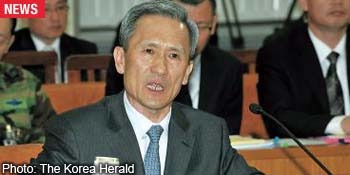
The new SK defense minister, Kwan-Jin Kim

UPDATE: I’ve been commissioned by the Korean National Defense University to draft an initial assessment of the Yeonpeyong incident and possible options. I would welcome serious reader responses to the whole mess. My previous writings on it are here, here, here and here, plus below. My sense broadly is that there are no good short-term options (see below), and that, because of extreme population vulnerability and public disinterest, SK must suffer these sorts of humiliations until it seriously reconfigures local defense around throttling NK in a long-grind Cold War-style stalemate (“hanging tough” in Gaddis’s famous expression). That means decentralization, bigger defense budgets; lots of investment in command-and-control, intelligence (including satellites), and the networked battlefield; and far greater domestic popular commitment to a long-term victory over NK in place of the current, tacit acceptance of the status quo. To my left, I reject accepting the status quo as immoral, because it dooms the long-suffering North Koreans to perpetual brutalization, and to my right, well, God forbid this sort of outburst become policy…

UPDATE II: Contrary to my argument below (point 4), there is data to suggest that South Korean more broadly want counter-strikes. But the title of that article is more aggressive than the actual report, so read it carefully. Nor is it clear to me that South Koreans would support the escalation spiral that might ensure; i.e., if NK hits, and SK then hits back harder, and then NK hits back harder still, then should SK keep going? Fire and counter-fire in a limited time and space (like Yeonpyeong, which counter-shelling I supported), is different from the likely degenerative spiral that would ensue with airstrikes and some of the tougher countermeasures under discussion.

_________

I got a number of comments and emails asking for my opinion on the new SK rules of engagement (RoE) post-Yeonpyeong.  I got some criticism for being too sanguine and dismissive of the whole thing. The new rules are emerging now; the new defense minister is in-post now only one week. For some early write-ups on the new rules, try here, here, and here. For a discussion of the RoE on Yellow Sea naval clashes, try here. I’ve also caught some of the debate on TV. In general, the drift seems to be to lower the threshold for permitting counterfire (less NK aggression necessary before return-fire is permitted), enhance the amount of force used in counterfire (beyond proportionality), permit greater on-site commander authority to shoot back, open up strike-back packages to include NK targets beyond the immediate crisis zone, and use air power.

My initial response is that all this is too risky, particularly in combination (Yeonpyeong local commanders calling for airstrikes on the NK mainland, anyone?).  It brings SK closer to war the next time a provocation happens, which it most certainly will. NK is dependent on military bravado as a legitimation in its ‘military-first’ polity. Expanding tit-for-tat combat beyond the immediate crisis time and space risks challenging the ‘manhood’ of the North Korean People’s Army (KPA) in a system where that is absolutely central for regime identity. Openly challenging the KPA over its ability to defend the North is tantamount to asking for them to hit-back, and yet harder. Strike-backs also reinforce the regime ideology, which is dependent on the domestic perception of SK as major national security threat. SK responses, however justified, feed this last remaining ideological prop of the regime. Finally, SK is so vulnerable to an escalating tit-for-tat spiral of strike and counter-strike, that I just don’t think it is worth the risk, even if it is humiliating. Restraint not only demonstrates SK’s seriousness to the rest of the world, especially China, but is, quite honestly, more in SK’s medium-term national interests than the short-term ideological satisfactions of shooting back.

1. I have discussed in detail elsewhere the extreme vulnerability of SK’s population centers to NK. As such, if loosened RoE lead to a serious, degenerative spiral (escalating strike and counter-strikes) pushing toward war, the likelihood of disaster for the South is huge. If SK can move some of its population away from the DMZ, so that likely civilian casualties from a serious flare-up diminish, then I would consider looser RoE. But SK has painted itself into this corner by allowing so many people to live so close to NK. Almost any national humiliation like the Cheonan or Yeonpyeong is preferable now to risking hundreds of thousands of lives in a NK shelling of Kyeonggi province.

2. NK faces a permanent legitimacy crisis. During the Cold War, Korea’s division could be explained, like Germany’s, by competing visions of economic justice (socialism vs capitalism). And indeed, I believe Kim Il-Sung actually believed in socialism. But the son clearly does not; the Cold War is over; East Germany is gone. Hence the only possible justification for the existence of separate, poorer, unhappier, unhealthier NK is that SK is a revanchist puppet of the imperialist US. This is why NK gins up these sorts of incidents to begin with; the regime existentially requires tension with SK. So if the looser RoE bring expanded attacks, or even bombing, with its instant memories of devastating US airpower from the war, then you just play into the regime’s hands. You give it yet more reason to explain itself to (and clamp down on) its otherwise disconsolate citizenry. In short, restraint is the best long-term answer in the ideological stalemate.

3. NK’s regime ideology against the Southern and American aggressors is now the ‘military-first’ policy, in which NK is reconceived as a ‘national defense state.’ Socialism went out the door in the 1990s constitutional revisions; it was a deadletter anyway with the end of the Cold War. In this increasingly militarized system, military prowess (real or manufactured) is legitimation for rule in politics. Hence, the wide belief among analysts, that the Cheonan and Yeonpyeong incidents were to burnish the empty CV of the next Kim, Jong-un. If we accept this hyper-militarization, then any tit-for-tat sequence from looser RoE would generate enormous ideological and bureaucratic pressure in the North for escalating ‘tats.’ The KPA, to justify its dominance and generous budgetary privileges, requires ‘victory’ in these sorts of flare-ups. It is highly unlikely to turn-away from a fight, instead hitting back each time, and probably harder too. In short, I gravely doubt that NK has the ability to control a serious tit-for-tat spiral. The outcome is a much greater likelihood of war.

4. Do South Koreans even support these loose RoE? The media line seems to be that South Koreans are ‘outraged’ that the military can’t seem to protect SK. Ok, but please show me the public opinion data that says that South Koreans therefore endorse more aggressive escalatory responses, including the hugely risky proposal for airstrikes. The two don’t necessarily connect. A few angry older Koreans demonstrating in Seoul, while enough to convince the neo-cons, is hardly a show of support for the new risks Minister Kim wants. In my own dealings with Koreans at work and in private, I see a lot of fear and concern about where this is going. Myers calls the SK electorate ‘pacificist,’ and that is my experience too.

5. The looser RoEs create more possibilities for accidents that could spin out of control, and then events, not policy, would drive, further escalation. Remember that the everyone was terrified in the Cuban Missile Crisis that local Soviet commanders in Cuba might have authority to use battlefield nuclear weapons (they did, in fact), or that local commanders might slip the noose and force one side’s hand by a provocation, as almost happened when the Cubans shot down an American U2 on October 27, 1962. We assume and hope that SK’s new expanded counter-force would be both limited and decisive in order to halt escalation, but what if it isn’t? What if one of those ‘amazing’ F-15Ks gets shot down? Then we have SK pilots behind enemy lines on the run, sure to be executed if they get caught. This would create yet further pressure for escalation. Or what if a local commander with new counter-fire authority shoots back at mainland NK with artillery and kills civilians by accident (SK artillery fire wasn’t that accurate in the Yeonpyeong incident)? Then what? You’ve given NK yet another excuse for its very existence (bloodthirsty SKs), as well as justification for them to shoot back yet again.

6. Another provocation is almost certain, so looser RoEs are basically a prediction of the future. It is almost certain NK will do something dangerous yet again. Per point 3 above, tension with the South is ideologically required, so try to imagine NK sinking a SK fishing boat in the Yellow Sea in the next few years. I dare say when the current unhappiness passes, South Koreans will think twice about whether they think airstrikes and all the ‘kinetic’ risks thereby entailed are really worth it. Honestly, the answer is no. That is why this time too, for all the unhappiness, there is no summer 1914 war fever here. It is just too risky, far too risky, in fact to challenge NK into some kind of Cuban Missile Crisis style stand-off. Until SK reconfigures itself to win a long-term stalemate through a major military build-up, then it will be very vulnerable to Northern asymmetric strikes and, ultimately, wisely, too fearful to respond. It may seem ‘wimpy’ to neocons Iraq warriors in DC think-tanks, but it is the smart thing to do. The risks are just too great.

The Korea-US Free Trade Agreement Serves Korea more than the US – UPDATED

080107_p05_election

UPDATE (December 6, 2010): Just yesterday, the deal got a lot closer , but the comments below still hold, insofar as the US and Korean legislatures must now approve the deal, and legislatures are historically more protectionist than executives.

UPDATE II (December 7, 2010): This is why I would have voted for Lee Myung-Bak if I were a Korean. Well done! Lee has the wisdom to see the long-term benefit of the Korus FTA – keeping the US engaged in Korea at a time of Tea Party disdain for huge government, US imperial overstretch in Iraq and Afghanistan, record US debt and deficits, and increased NK truculence. So if Korean car-makers have to wait a year or two, wth difference does that make when you live next to the last, worst stalinist slave state? Get real; look at the bigger picture. Lee is light-years ahead of the SK left on Korea’s extreme geopolitical vulnerability – small, encircled by historical opponents, desperately in need of US power to maintain its autonomy in such a tough neighborhood. Generally I think he has been a good leader for Korea. And again this time. Good job, and shame on the US for leveraging Korea like this for concessions.

___________

Reflecting on the recent G-20, I think more and more that the continuing impasse on the Korus (Korea-US) FTA (free trade agreement) is the biggest disappointment. The impasse between deficit and surplus countries is a huge, long-term headache that will take years, perhaps even generational change, to break. A ‘culture of export’ grips especially the Asian exporters, where a trade surplus is viewed mercantilitistically as a national victory in a global competition and something not to be surrendered even if it jeopardizes the whole global trading framework. (For why that is both wrong and destructive, start here.) The FTA by contrast was more doable – the issues are smaller and easier, and the US and Korea are long-standing allies. But the US has insisted on re-negotiations, and President Lee dropped the ball on global leadership by caving to domestic protectionists. So now the whole thing is up in the air again. This jeopardizes Korea more than the US, but I am struck by how little of the Korean commentary sees the dramatic asymmetry of benefits toward Korea, as well as obvious national security linkage behind the deal.

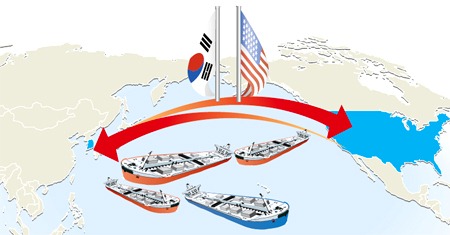
1. As the image above makes clear, Korea is substantially smaller than the US. Demographically, Korea is 6.5 times smaller than the US. In GDP, it is 15 times smaller. In terms of sheer scale, opening the American door for Korea exports means far greater breadth of possible export reach than vice versa. In the same way that Mexican firms could suddenly operate across a huge North American expanse after NAFTA, tiny Korea should reap significantly greater rewards than US firms exporting to a smaller (and comparatively poorer) market with a strong history of nationalist buying and tacit import discrimination. Indeed, given that, I am surprised the American business community even cares that much.

2. Korean GDP per capita is about 75% of that of the US. Hence the convergence benefit of the FTA for Korea is quite clear. When economic entities at very different stages of wealth accumulation are put together in a free trade environment, the majority of the benefits accrue to the poorer of the two, as investment races to the location of highest return. Poorer economies catch-up, or ‘converge.’ This happened after the American South was forcefully reunited with the Union; it is happening again in Mexico after NAFTA and eastern Europe after EU accession. It is happening more generally in East Asia, as it has joined the WTO in the last 20 years. (By contrast, the US-Canada FTA of 1988 had little dramatic impact on either side, because they were already fairly similar.) In short, the biggest beneficiaries of free trade spaces are almost always the poorer states; rapid convergence is commonly understand as an ‘economic miracle’ (Germany in the 50s and 60s, Korea in the 70s and 80s). So US exporters will benefit at the margins in a small and poorer economy, but Korea’s benefits will be much greater.

3. The Korea market is far more closed than the US. Opening it up will create for greater disruption, therefore, for established winners like the chaebol (hence the general ambivalence of the Korean business community to the FTA), but the rewards to consumers here will be enormous. A wave of healthy competition from American imports will force Korea’s sluggish providers to ramp up services while bringing down Korea’s ridiculously high consumer prices. An obvious example is smart phones. Smart phone technology – available in the US for almost a decade – only came to Korea this year, because the Korean telco duopoly (KT and SK at 90% market share) had no incentive to make better phones and used their market power and government connections to block imports (particularly the Nokia, Apple, and Microsoft). Only the possibility that ‘backward’ China might get the i-Phone before ‘advanced’ Korea finally kicked the ROKG into facing down the duopoly and opening the door last year. And now suddenly, smart phones are the rage. [Yet I find that Koreans are so devoted to the success of the chaebol, that they seem unwilling to act as rational consumers pushing for more choice (imports) and lower prices (due to import competition). It was national prestige – that Korea should beat less advanced China – that finally got the i-Phone in. This is frustrating to no end as a consumer here – it would sure be nice if a bottle of Heinekin didn’t cost $2.50 in a grocery store. But the Korean media – also a massive corporate monster tied to government elites – have disseminated this myth that what is good for Samsung is good for Korea, and Koreans have drunk that agit-prop kool-aid to the dregs.)

4. Korea really needs to bolster the US alliance in the wake of the spiraling costs of the GWoT. Here is where Korean myopia is the worst, and where Korea is so badly served by its self-congratulatory, parochial media that doesn’t report on the rest of the world they way it needs to. Most Koreans are blithely unaware of their extreme geopolitical vulnerability, which I blame on a media relentlessly dedicated to overhyping Korea’s importance in world politics. The US is Korea’s most important ally – it’s only really. The US alliance backstops Korean security in what is a terrible geographic environment. Korea is small, divided, encircled by great powers, and has poor relations with all its neighbors. Without the US in the background, Korea would have lost the Dokdo squabble years ago, e.g. To make it worse, the US is burned out after two wars and a brutal recession. Only 41% of Americans now believe we should fight for Korea anymore. USFK has gotten smaller and smaller in last few decades, and it is repositioning itself away from the DMZ in order to avoid getting immediately pulled into any conflict. And there is a coming defense retrenchment in the US too, because US defense spending is simply incommensurate with the size of its budget deficit. I would be surprised if the US still has forces here by 2020, unless they are completely subsidized by the ROK. The national security case for the FTA strikes me as so obvious, that claiming US beef has BSE or that US cars are ‘low quality’ is just suicidally foolish.

Media Alarmism and Self-Fulfilling Prophecies about War in Korea

Scheuer should stick to Al Qaeda and his Middle East expertise…


For the last week , I have read and watched a lot of the coverage. Most of it was pretty good, to my great surprise, although the international media were too, almost intentionally, alarmist, with little coverage of the fact that South Korean citizens all but ignored this and went on with their daily lives. I didn’t even know about the shelling until my classes had ended that day and a BBC reporter told me. South Koreans have become inured to these outbursts, because they happen so often. This life-went-on-normally story needs to compete with all the images of smoke from the island and the USS George Washington deployment. The Korean media noted this problem as well.

There was a clear tone difference between international media outlets like CNN, Reuters, SkyNews, Fox (above), and the NYT, and the local Korean media. Friends in the US emailed me after watching US news coverage, because they thought a war was imminent. (What are the networks telling you guys?) I get CCN International in my house, and the initial coverage was unhelpful too, with flashy graphics of ‘Breaking News!’ and its on-site reporters got a little carried away with the claim that Korea is close to all-out war. More generally, the tone seemed to be that this was one of the  worst crises since the war. Really? You mean that? Do you see Koreans running around with their hair on fire? Didn’t everyone just stay to work that day and the next? Did they run civil defense drills? Did the KOSPI drop? Does Scheuer (above, whom I think is quite good on Middle East) really think we should sink the NK navy? Interviewing expat English teachers in Seoul whose mothers don’t know anything about Korea and are freaking out is not reporting. It was noticeable and disappointing that none of the foreign outlets hit the news conferences at the MND or MOFAT or Blue House, where an admirable restraint and seriousness prevailed. There is an obvious audience-expansion incentive to hyping the shelling (it’s World War III in Korea!), but the blowback problems created for policy-makers are serious and threaten a self-fulfilling prophecy: they don’t look ‘tough’ if they don’t hit back in a CNN-hyped crisis, so they hit back, thereby worsening that very crisis.

So please don’t portray the Yeonpyeong situation like the first step toward war in a wholly unique provocation. It was neither. NK does this stuff all the time; the NK elite doesn’t want a war because they will lose and all hang afterwards (this is why SK retains the death penalty which they almost never use at home anymore); NK frequently does these things for internal, intra-NK in-fighting reasons that have little to do with the rest of world; SK doesn’t want a war, because it doesn’t want its rich democracy nuked. So please, control the hype and hysteria. If it is both unwarranted and a bit dangerous, because it pushes SK’s elites toward macho, George-Bush-style decision-making so they don’t look ‘weak.’ Raising the temperature artificially to gain viewership is unethical and retards de-escalation.

Korea has ALWAYS been geopolitically tense in this manner. NK has regularly bullied SK; SK’s belligerent rhetoric has never been seriously followed-up; the US routinely steps in to back up its ally; there have been lots of these sorts of crises before, and many far worse: the tree-cutting incident (1976), the cabinet bombing (1983), the KAL bombing (1987), the Cheonan (2010), plus lots of little Yellow Sea skirmishes before (1999, 2002, 2009). NK is always saying they will bomb SK and turn Seoul into a sea of fire. So come on, wae-guk-sarams; put in some context, as if you are genuinely a qualified Korea expert and didn’t just fall off the plane from Tokyo or Hong Kong. For my previous thoughts on CNN, which broadly apply this time around, try here.

By contrast, I was struck by how good the Korean media was on this. I watched a lot of the KBS and SBS TV reports in the last week. They were very informative, full of interviews with government officials and academics, with lots of imagery and maps and such. They walked you through exactly where the NK rounds came from and which SK units returned fire, what the rules of engagement are, who might have been responsible in the KPA. They explained in detail about the in-theater US and Korean forces. So far as I have seen, none of this detail was presented in external media, although I tried. The context I mentioned above was fully presented, as most Koreans roughly know this history anyway. All sort of talking heads from universities and think tanks were rolled out to give lots of perspective and policy suggestions. There was no scary music or quick-cut graphics, although you can always read the Chosun Ilbo for your saber-rattling fix. Usually I am pretty tough on the Korean media on this site. Among other ills, they are endlessly jingoistic, fact-check even less than Dan Rather, are far too statist and deferent to elites, and tilt toward xenophobia on the English teachers here (underqualified, pot-smoking child molesters from Canada, they tell me). But this time they were measured, focused, and professional, maybe because of the gravity of the situation. Hear, hear.

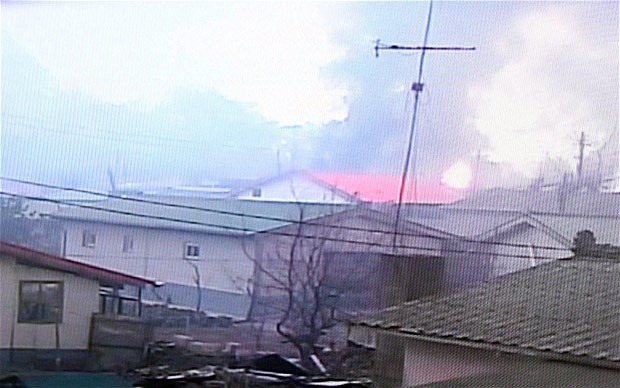
So everyone should relax. If Glenn beck sounds off on the Rapture and North Korea, ignore him (in fact, ignore almost everything Beck, or worse, Palin on NK, says). If the neocon-industrial complex fires up on the necessity of NK regime change and starts claiming Obama is weak, don’t listen to them either. By Korean standards, this is not scarcely a crisis yet (you’d be amazed how blithe they are about these sorts of things), so let’s not raise the pressure on them for ratings or politics. This stuff is far more manageable than those early images of smoke rising from the island lead you to believe.

NB: if I sound to too sanguine, here is the threshold when you should indeed panic about Korea: when South Korea shoots back. Then  you can run your Michael Bay war-time stories, because SK is super-vulnerable to NK. Hence if they still shoot back, they are taking a huge risk and that means the debate here really has shifted. To date, SK has never struck back militarily after one of these sorts of things (no airstrikes, port mining, etc). So that is the real benchmark for ‘Krisis in Korea on Fox!’

NB2 for US readers in Korea: in event of a war, the embassy plan is for us all to head for Pusan and then be flown/shipped to Japan. You can bring your Korean spouse too, but not her family (so I won’t be going Sad smile). You will be notified via the embassy’s email registration system. Sign up here if you haven’t already. No joke on this info, btw.
What the Yeonpyeong Shelling Taught Us

Not quite… He actually ducks a little


Actually, not a whole lot. Mostly, it just reinforced stuff we already know. I said the same thing after the Cheonan was sunk earlier this year.

1. Koreans take this stuff in stride. It was more the international media that portrayed this as a major crisis. In Korea, everyone went about their regular business. The stock market didn’t drop. There was no rush on food-stuffs in grocery stores. No one is digging bunkers. It’s not evolving into the Cuban Missile Crisis. The Korean media reported rather well on the crisis, without the level of overstatement – ‘Korea on the brink of war!’ – that was common from the international media in the first few days especially. This is far from the worst crisis with NK in the history of the stand-off.

2. These sorts of things re-galvanize the flagging US-Korea defense relationship. This may be the biggest benefit to South Korea from the whole mess. Although US political and military figures regularly invoke the alliance as shoulder-to-shoulder (which of course you would expect them to say) both here and in the US, the reality is that the American position here is shrinking and moving away from the hot-spots under substantial US budgetary pressures at home (a $1.3 trillion deficit!). USFK (US Forces in Korea) has shrunk substantially over the years. US nukes are out. The Combined Forces Combined (CFC) is schedule for termination. The number of bases has shrunk. The US is no longer deployed along the DMZ (the big bases will be around Pyeongtaek, south of Seoul, in the future). The massive US fiscal mess will make it even harder to retain what we still have here. Defense budget cuts are coming – in a big way if we want to save Medicare, Medicaid, and Social Security – and US overseas deployments are an obvious place to cut (Iraq, Afghanistan, Korea, western NATO especially, unless the hosts want to pay 100% of the costs – which option the Koreans should genuinely consider as a part of point 3 below). Here is my fuller commentary on this. Also here and here.

Korea particularly is a tempting place to cut. Korea is wealthy and has a capable military. It can afford to spend even more on defense (below), while the US most certainly cannot. Nor is Korea really a core US defense interest. Unification on Northern-terms would have little impact on the US now that the Cold War is over; Korea is more a regional issue now, not a global one. Korea hardly ranks against Japan, Canada, Mexico, (Israel?) or Western Europe as obvious ‘core commitments’ to American security. This does not mean I want the US to abandon Korea, only that the likelihood is growing, because the costs to the US of an ROK defeat/reduction are low for the US. Nor do Americans really want to fight in Korea (only 41% now), especially after all the misadventures of the 10-year war on terrorism. Read this as well on this issue.

So if you are Korea, these sorts of scrapes are secretly valuable from a medium-term national defense view.  They put NK back on page 1 for the US voter. They force the US to say yet again in public, that the US will defend Korea. This creates greater ‘audience costs’ for US elites should they try to slip out of the alliance commitment in the future. After the Cheonan, the dissolution of the CFC was delayed for 3 years. Note here that Obama talked around Barbara Walters’ excellent question, ‘is an attack on SK  an attack on the US?’ The president ducked that one (video above). These kinds of public comments make it harder for the US to retrench (even though we really need to), and that is good if you are SK.

3. SK needs to spend more on defense. SK only spend 2.7% of GDP (according to the CIA). I hate to sound like an uber-hawk, but honestly, that is really not enough if you live next to NK and are number one on the hit list. By now it should be clear to almost everyone except the most unreconstructed SK leftist, that dealing with NK is only possible from a position of strength. The North cheated a lot during the Sunshine Policy years, even demanding a big cash payment for Kim Jong Il personally to get him to attend the inter-Korean summit. And in the last few years, the North has gotten even nastier – with the nuke and missile tests and more of these sorts of asymmetric strikes. But Koehler has a series of good links and analysis here that SK has not adjusted well. The US is broke; SK is not. The time for burden-sharing is here.

But you say this is just arms racing. Everyone will just run faster and faster to stay in place. More Southern weapons will scare the North into further wild behavior and yet further punish the much-suffering NK taxpayer. Maybe, but the NK military functions as a state-within-a-state already, and its stringencies on the NK citizenry derive as much from its internal as external insecurities. And NK policy-makers are so irresponsible (Brzezinski went so far as to call them insane), that the causal connection between lower SK defense spending and better NK behavior seems loose at best, while the costs – like the Cheonan and Yeonpyeong – are very clear. Among other things, South Korea might want to consider militarizing more areas north of Seoul and depopulating them gradually, expanding the navy, as these flashpoints occur mostly in the Yellow Sea, paying for more of USFK, even for its expansion, conscribing women as well as men (as Israel does), and possibly – I hesitate to say – signaling renewed interest in nuclear weapons. That last one is hugely controversial, but given the growing likelihood of US retrenchment and the expanding Northern nuclear program, it should probably be discussed.

Another Laugh-Riot Asian IR Video, on the Currency War

And you thought economics was the dismal science…


It is Thanksgiving week, so here is something light. If you aren’t watching Charlie Brown Thanksgiving, get to it. See you next week.

(Should you actually want to ruin your holiday with serious reading on this issue, my previous thoughts are here, here and here.)

Hat-tip to Daniel Nexon on Duck of Minerva for this one.

This is great, yet another clever inside joke for the field. Here a few thoughts:

1. This is yet more evidence that IR needs some kind of serious treatment of alternative media presentations of what we do. Movies, video games, and now videos like this or the Chinese professor ad, all bolster my growing belief that we are missing something by not seriously examining media and IR. Reading – what IR-types do all day, cause its all we did in grad school – is obviously competing with lots of other sources of information in our digital age. Anyone who has taught undergrads for more than a few months knows that they don’t like doing the reading, but they love digital media. In the same way we now teach more and more IR film courses, we more generally need to adapt our pedagogy to the multifarious ways our students absorb information. NB: This is not an argument to dumb-down the field with video; it is a pedagogical concern. IR grad programs will still be the chilling, totalist, never-exercise, read-all-day, live-on-cigarettes-and-microwavable-food boot camp for you brain.

2. I am impressed how much knowledge of detail the authors of the video assume. Insofar as this is meant for a general audience, that reflects a fair amount of economic literacy in your average Joe viewer. Consider all this insider jargon: ‘capitalism with Chinese characteristics,’  DoT Secretary Geithner is only referred to as ‘Timmy G,’ ‘reserve currency,’ ‘currency manipulator,’ the list of Chinese premiers, the joke that GM means ‘government motors,’ Argentina’s 2002 default/meltdown, ‘buyer of last resort,’ ‘dollar denomination.’ That is a nice compliment to how much about econ the general public has learned since the Great Recession broke.

3. Great jokes: Uncle Sam dances and fires a machine gun in the air as Obama wears ‘USA No. 1’ bling. Somehow they managed to build a rhyme with ‘capitalism with Chinese characteristics.’ Did anyone else notice that the Chinese panda looked like Panda from Tekken? Obama’s dog died from lead in the Chinese dog food, complete with a green cloud around the dog. Adding the macarena dance from the 1990s was superb. I am embarrassed to admit that I thought the macarena was pretty cool dances moves back in the 1990s golden age…

The North Korean Shelling

Here is the frightening video if you haven’t seen it yet…


So much for the quiet week on blogging because of Thanksgiving. Yesterday NK started shelling Yeonpyeong Island in the Yellow Sea (what Koreans call the West Sea). It’s all over the news of course, but here is a good place to start, particularly on the possibility of a hawkish SK response. Here is a write-up from a more left-leaning Korean newspaper. For a good IR theory take on this, try here. I spoke yesterday on the BBC World Service “Newshour” program about this. Here is the link. My comments begin at 10:10 and conclude at 17:45 (this is ‘chapter 1’ of the listed choices). Here is the podcast (please refer to the download entitled “North and South Korea Exchange Fire 23 Nov 10”).

Here are my thoughts (fuller than my BBC remarks). All the links below connect to my previous posts on NK. Please see them for greater detail which this post summarizes:

1. I am surprised that this has evoked so much concern given that the Cheonan cruiser sinking in March was worse (46 deaths then vs 3 this time). The Cheonan sinking very clearly would entail many deaths, whereas yesterday’s artillery strike was less certain to do that. To my mind, NK is more culpable in the spring than this time, but the rhetoric is more belligerent from the ROKG this time than last. Even though fewer died, this might be explained by a ‘straw that breaks the camel’s back’ logic: SK has just had a enough of these sorts of out-of-the-blue strikes (point 3 below), and this time they are going to hit back regardless of the costs. This incident is also somewhat different from past provocations, because it openly is targeting South land territory, and the North Koreans knew that. The other Yellow Sea skirmishes were on the water. Also, there were civilians on the island – and only one firetruck – so it looks perhaps more egregious than attacking a warship. (Although the Cheonan sinking was wholly undeclared and the Yellow Sea islands have been disputed for a long time, so I still find the greater outrage this time confusing.)

2. NK is almost certainly miffed and unhappy at all the global press SK got for the G-20. This is a way to hit back and play the spoiler of SK’s afterglow. NK did something similar in in 1987, when it blew up KAL 858 in order to discourage SK from holding the 1988 Olympics. In both cases, SK regarded the event as a global coming out. In 1998, the Olympics showed that a previously poor underdeveloped country torn apart by war had bounced back through an astonishing economic miracle (2 decades of double-digit GDP growth) and was wealthy and stable enough to hold a major international event. The contrast with brutalized, still poor NK was obvious.  In 2010, the G-20 was also regarded in SK as a major coming out for Korea as a big economic player inside the elite G-20. And now, NK is even poorer and worse off than in 1988. The comparison is pretty stark. So my kremlinological guess is that NK is once again showing its displeasure and that it is still a major force on the peninsula.

3. NK has a history of these sorts of provocations against SK. These sorts of things are practically ritualistic now. While these things are disruptive (to say the least), they are not actually unpredictable. In fact, they follow a pretty established pattern of NK brinksmanship though asymmetric outlashings at SK from time to time. These strikes show the North’s unhappiness at something in the South (like the G-20 last week) or to bolster the CV of NK insiders (like Kim Jong-un today) jockeying for influence inside a fairly corrupt regime with pretty murky rules and shallow institutions. Just in the last 12 months, North Korea sank the SK Cheonan cruiser in the Yellow Sea (March 26, 2010) and fought a naval skirmish in the same area (November 10, 2009). There were also skirmishes in the same area in 1999 and 2002. So this stuff is pretty common actually.

4. This probably won’t escalate, because the South Koreans have little appetite for war against NK. The sinking of the Cheonan was a far worse provocation (46 sailors died), but the SK military did nothing, because most South Koreans just want to forget about NK. They don’t want their wealthy comfortable democracy trashed in a war with a ruler they consider a quack. So South Koreans just put up with this stuff. Their tolerance for NK pain is quite high, because the costs of war and reunification are frightening. Also, South Korea’s hands are badly tied by the extreme exposure of SK population centers to NK retaliation. 50% of the SK population lives within in 50 miles of the DMZ, and NK has stationed thousands, perhaps 10-20,000, canon and rockets with striking distance of those cities for the purpose of holding SK hostage. So NK can act out all these provocations with little fear of retaliation. It is just too risky for the South to hit back.

5. Finally, the Kim family transition in the North itself generates huge uncertainty. These kinds of strikes demonstrate the NK military’s relevance to all involved – not just in the South, but also China, whom they don’t want to dominate them, and to the leader-to-be, Kim Jong-un. This sort of thing reminds him who is boss in the regime, or at least, who is a competitor for power.

Asia’s Improved IMF Quotas — Wake Up! It’s not that Boring…

images

Here is a subject that could put anyone to sleep but is probably the best thing to come from the otherwise poor G-20 summit last week. The voting shares of the IMF were reweighted to reflect Asia’s expanding size in the global economy. Here is good write-up; for Asian self-congratulation, try this. This puts it in context for Korea.

The quota represents the percentage of control that a state has over IMF decisions. Big decisions are made by the IMF’s Board of Governors, the national representatives who collectively control the institution. On the Board, each country receives a weighted vote whose size (quota) is roughly in line with its national percentage of global GDP, crossed against the importance of exports to national GDP (its ‘openness,’ in IMF-speak). (The voting formula is ridiculously arcane for non-experts. There are endless proposals to reform it. Here it is in the words of the IMF itself.) In short, the bigger your quota, the more sway you have in IMF decisions (about loans, the creation of Special Drawing Rights, IMF responsibilities for the global economy, etc.). The biggest quotas, inevitably, belong to the US, Japan, and the Europeans. However, given Asia’s expansion of the last few decades, pressure is rising to re-weight the votes to Asia’s favor. In practice, that means giving China a bigger voice at the expense of the Europeans, who are resisting quite selfishly it must be said, for all their talk about cooperative global governance and multilateralism. US and Japanese shares will be scarcely affected. Korea’s share will reweighted a little bit as well (1.4% to 1.8%).

For Korea and other emergent economies’ share to get even bigger, they would need explosive growth like China’s, as well as a major demographic expansion. Neither will happen realistically. Globally speaking, Korea is just too small to have a much bigger quota, although a 0.4% jump is 30% quota expansion, which is actually pretty good. The really big quota fight is between China and the EU, with India coming down the pike as well. In short, global economic institutions are adjusting, albeit painfully, to the rise of Asia. The increasing equality of wealth between Asia, Europe, and North America means that the voting weights of each of those regions are slowly equilibrating.

States are sensitive about quota size, because it is a zero-sum game. If Korea gains .04%, that means some other state loses 0.4%. Hence the Fund can never be made large enough to make all feel confortable. Instead, control of the Fund will always be relative – if I have 0.0001 percent, then you do not have it. While global GDP expansion is positive sum, Board control of the IMF (and World Bank) Board is not. And inevitably, the size of a national quota is interpreted as a general sign of global clout and importance. One can see that in the Europeans’ strenuous efforts to delay and obfuscate the re-weighting, for they will lose in that process. It is like the veto rights of the permanent 5 members of the UN Security Council. That is widely considered as a signal of their great prestige, and even though the French and British empires are long gone, it is unrealistic to think that they will give up their P-5 status.

So Korea’s quota increase is good for Korea, in a small way, and it is just, insofar as Korea has grown more rapidly than the EU in the last few decades. But it is not really that important, because 1. Korea’s relations with the IMF are quite chilly anyway, and 2. Korea is simply too small economically and demographically at the global level. More interesting would be Korea’s ‘quota’ in the emerging Chiang Mai Initiative, which is like a local Asian version of the IMF.

Generally, we should be pleased that the IMF was able to evolve like this. The more it looks like the actual world economy, the more it can meaningfully intervene. Contrast that with the UN Security Council, frozen in time (1945), with three veto-wielding ‘great powers’ (Russia, France, and Britain) that are no ‘greater’ than a lot of other countries now. Unable to adapt – again, primarily because of European selfishness (France and Britain will not a agree to consolidate their veto into one for the EU) – the Security Council is sliding into irrelevance. If the IMF – the supposed global tyrant – can adapt, how about the UN?

Asian Myopia on the Imbalances – Deficit Importers will Revolt in Time…

Suominenfig1

This week, I explained the issue of imbalances in my classes, as well as the general failure of the Seoul G-20. For all the talk of Korean ‘leadership’ at the G-20, it fizzled. Instead of leading by example to actually push through a deal, Korea ethnocentrically took the G-20 as an opportunity to grandstand to the world that “Koreans are great.” So self-congratulatory G-20 concerts took the place of any real leadership on the most obvious thing Korea could have done – finish the US-Korea free trade agreement (FTA) – to help unwind those imbalances. Instead, President Lee choose to sink the FTA at the behest of rabidly protectionist, consumer-punishing Korean auto and agricultural interests. So, with no help from Korea’s ‘world leadership,’ global imbalances have worsened this year.

So let’s go over this once again – with economic logic in the place of raw nationalism.

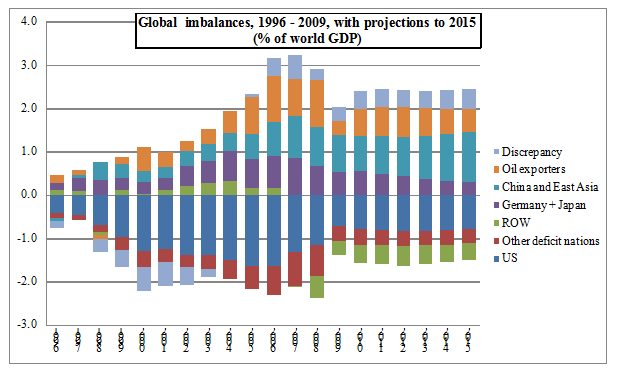
1. In a closed system, like world trade, some one needs to buy stuff. Everyone cannot export; everyone cannot run a permanent trade surplus; it is mathematically impossible. We cannot export to the moon or God. There must be global demand somewhere, and for much of the last two decades, the US was that anchor – so much so that we even re-packaged the business term  ‘buyer of last resort’ to apply to the US. So, as my students protested, it is true that the US government and consumers, as well as many EU countries, went wild in the last decade with their credit cards and created their own debt problems. But it is also true that without their demand, Asia and the Germans would have nowhere to export to. Now that the US and many other places are deeply in debt, it is obviously time to return the favor. The old exporters should become new importers in order to restore some balance to the system. ‘Diffuse reciprocity’ in trade is a basic requirement, in order that no one feels too much like they are being rooked by the other side. Without rough balancing over time, political disruption ensues (think Greece this year). This threatens the whole system in the long-term. Why is the Korean media too myopic to not see that?

2. The near permanent trade surpluses (above graph) in Asia are not, NOT, natural. It is mathematically all but impossible that a free-trade environment would return a situation where Korea, Japan, China and Germany would run 30 years of trade surpluses while the US ran corresponding deficits in the hundreds of billions USD. Why is this nearly impossible? Because the currency of such super-exporters would go up and up as their exports went up and up. In laymen’s terms, if the whole world wants to buy your stuff (Japanese cars, Korean TVs, Chinese everything), then the whole world needs more and more of your currency to buy all those amazing exports. So all those foreigners buying your stuff exchange their currencies for your currency. All this bidding to buy your currency (so they can buy your exports) means that the price of your currency goes up and up. So if you are permanently exporting more than importing, your currency should be permanently rocketing to the moon as foreigners scramble to buy it. Of course this has not happened. If you look at east Asian currencies, they all are pretty soft against the dollar, frequently moving downward. This is mathematically impossible to square with a permanent trade surplus. The only possible explanation is currency interventions to keep their currencies undervalued. In other words, cheating. And this is in fact well documented. China’s currency is pegged at a ridiculously low value to the dollar (estimates rage around 40-50% undervaluation!), and the Koreans and Japanese regularly ‘sterilize’ their currencies’ appreciation through massive dollar purchases. The Korean central bank’s euphemism for such raw mercantilism is ‘fine-tuning.’

3. Trade must be a two-way street in the medium-term, or the permanent deficit countries will eventually revolt. Here the Korean media is totally unhelpful with its nationalist and short-termist thinking that Korea’s success requires a surplus. This is also logically incorrect. There is no especial value to piling up dollars. Foreign currency cannot be spent in another country, so why stockpile hundreds of billions of dollars, or in China’s case, trillions, of someone else’s currency? If you don’t spend it back by importing, then at some point your export targets run out of money. And this is precisely what has happened in the great recession. The importers of yore are broke, and they need some of their dollars recycled back as export sales. But if you politically refuse to countenance a trade deficit by buying imports from your trade partners, then eventually you anger them: you are trade manipulator, and you provoke trade conflicts. Japan learned this the hard way. Its currency and trade gaming lead to two US backlashes – first when the US broke the Bretton Woods system and inflated in the 1970s, and then again the 1980s with the Plaza Accord. And this is what the Fed’s current quantitative easing is today. The US, unable to convince the surplus countries (esp. China) to import for the collective good of the system, is going to force them to do so, or they will see the value of their dollar reserves evaporate in inflation. Quantitative easing is a declaration of war by the Fed on the People’s Bank of China. This is extremely risky for everyone, as it throws the dollar’s reliability in the air, but it shows you just how head-in-the-sand obstinate the surplus countries are. In order to maintain short-term trade surpluses, they risk the inflation of the very currency they have stockpiled.

Korea and the G-20: An Exercise in Koreaphoria

P101025001

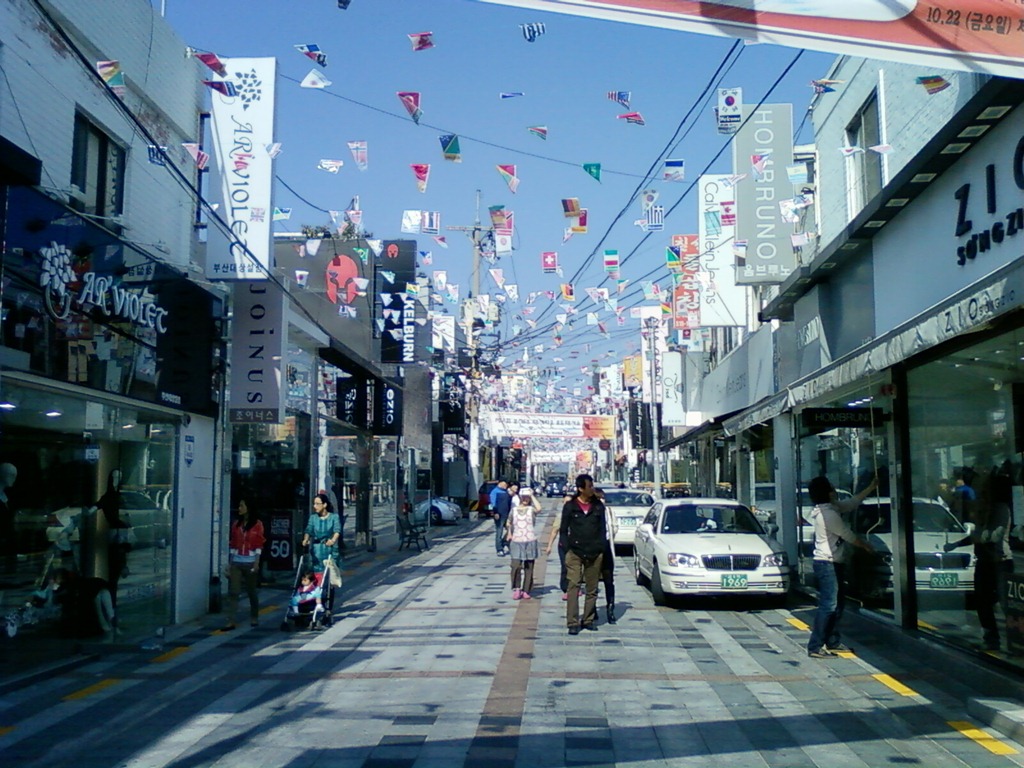
A street near my house got festooned with G-20 flags for a week.

There has been lots about the G-20 in the major financial press, but little on the way in which Korea has rewritten the meeting, at least to itself, as a global homage to Korea’s arrival. Most Koreans haven’t the slightest clue what the G-20 is. Nor do they really care much for OECD trading norms – which, of course, is the whole point of the G-20. In fact, they flagrantly violate those norms (as just about every western businessman I have met in Korea reminds me at every conference I go to). The ROK is irritatingly mercantilist, and Americans are right to think Korea cheats on trade. So if Koreans actually wanted the G-2o to be a success, how about dialing down the protectionism and currency ‘fine-tuning’ (i.e., sterilization of inflows to favor big exporters like the ship builders)? I am hardly one to defend the US auto industry for making cars that no wants to drive and that wreck the environment, but Ford nails it with this write-up. So the Chosun Ilbo says Korea should be a good global citizen, but that’s not what Korea really cares about in the G-20.  In Korea-land, the G-20 is an opportunity to preen, not what it actually is suppsed to be – a global economic coordinating body. In the words of no less than the SK president, the G-20 in Seoul means, “Koreans are great and that the world is now recognizing that fact.” Somehow I doubt that is what Medvedev, Singh, Kirchener, and all the rest had in mind. *Sigh*

The Korean press is nothing if not unprofessional and arriviste, aggressively desperate for recognition that Korea is a ‘player’ or, in the locution most preferred by the jingoistic media here, an ‘advanced country‘ (with the obvious implication that other countries are therefore ‘below’ Korea – ask Koreans what they know about Africa, e.g.) Start here and here, in order to learn that the G-20 in Seoul means that the whole world is watching Korea, that Koreans should be proud, that Korea is a global player, a powerhouse, a model, blah, blah, blah. Among other narcisisstic disinformation was the media line that Korea was the ‘first’ non-G-7 state ‘ever’ to host the G-20 leaders. Technically this is so, but the G-20 leaders have only met 4 times before, so it’s hardly as unique as it sounds. (This is preceisely the kind of faux statistic the ROKG and media love to create in lieu of something meaningful; try here for a simliarly desperate non-category – that Korean is a ‘top five food.’) But nothing could stem the self-congratulation. For the three weeks previous, there was a media countdown to ‘D-Day’ – yes, that’s what they called it. Literally, in the top left corner of the major TV networks’ broadcasts, there was a permanent ‘D-15’ (day minus 15) or ‘D-3’ graphic counting down to the big day the whole world would swoon over Korea. Perhaps my favorite moment in this bathos of self-absorption was the televised message on ‘D-1,’ by no less than the mayor of Seoul, that Koreans should be nice to visiting foreigners if they meet them on the street. Hah! How about the rest of the time for those of us who live here, huh? The last thing already hyper-nationalistic Koreans need is to be told that they should be even more proud.

I have said it lots of times before, but Korea is a really nice place to live actually – a lot better than the Central Valley – but then Koreans insist on spoiling that with over-the-top insistence that Korea is unbelievably awesome, and using almost anything to argue that Korea’s ‘brand’ – whatever that means – is on the rise. If all this sounds like the Tea-Party’s hysterical American exceptionalism it should.

For a more serious take on the G-20, one that actually recognizes Korea’s small size and its consequent limits, try this piece by a friend of mine at the Korea Times. Cho admits what Koreans know in their hearts, but adamantly refuse to admit to foreigners: that Korea is a bit-player, that it faces severe constraints in the future, and that Korea’s super-growth days are over. In short, Korea is a middle power, will remain one, and Koreans should accustom themselves to this rather than demanding, Uncle-Tom style, that resident foreigners recite a mawkish Koreaphoria.