Unknown's avatar

About Robert E Kelly

I am a professor of political science at Pusan National University. I write mostly on international relations in East Asia.

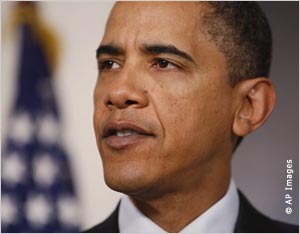
Another Unassuming State of the Union that Ducks the Debt Issue

Obama Haiti Earthquake

For my take on last year’s state of the union, go here and here for the Republican response.

I thought this year’s speech was pretty good – not exciting or gripping, but fairly solid. This seems to be an Obama characteristic, perhaps in response to George W. Bush’s penchant for soaring metaphysics in his SotUs. Increasingly I admire that. I knew the W’s SotUs were generally theater, but Obama’s feel more professional. My sense is that Obama the lawyer believes words matter more than W, who thought instincts mattered more than troublesome vocabulary.

Here are a few thoughts:

1. For a country supposed to be the ‘global leader,’ the president focused overwhelmingly on domestic policy. I imagine this is electorally-driven, but the foreign policy bit was painfully short. Most of it focused on the GWoT, although Obama maddeningly refuses to call it that. But there was little on the real future challenge to American power – the rise of Asia and a whole clutch of middle income states elsewhere that all constrain America’s freedom to move. Barnett calls the wealthy East Asian tier the “new core” of the global economy (the ‘old core’ being the North Atlantic). I heard nothing about how to react to these risers, should we accommodate, contain, ignore, etc. Instead, we got yet more bromides about how no one in the room would rather live in another country and how great America is. Sigh. Pandering to Americans’ nationalism is not analysis, doesn’t slow China’s growth, doesn’t get US kids better educated in math and science,  doesn’t diminish our addiction to Chinese money and Saudi oil, etc. The world is getting more crowded and wealthier, and the sovereign debt crisis in the West is reducing our ability to push others around (a bad thing if you are a westerner, good if you are not). We need to think about our place in a more equal world, but Obama gave you nothing on that. Instead, it was how he cleaned up W’s messes.

The GOP responses were even worse: Michelle Bachmann had the gall to recite Madeleine Albright’s old expression, ‘the indispensible nation,’ sure to anger any foreign listener, and her description of the battle of Iwo Jima seems informed by video game posturing, not history. (The battle was very late in the war; the Japanese were outnumbered and outgunned, without air or naval support, had no hope of relief, and were fighting for an obviously lost cause. Kinda seems more like they were really courageous, huh? Oops! Maybe she should stick the standard issue right-wing example of American heroism – Normandy.)

2. Obama really tried to reach out. It speaks to how visceral the Republican opposition has become that Obama tried so hard to pull in Republicans. But I don’t believe the GOP bought it. Speaker Boehner sitting behind him could barely get out a smile, smirking and looking bored most of the time, a pretty poor showing to my mind. His obvious disinterest and smirks reinforced to me yet again that this GOP loathes this president – he’s a newbie, funny looking, maybe not a citizen, a socialist, etc. And Bachmann’s Tea Party response was downright disingenuous about the deficits on Obama’s watch. As with last year’s GOP response, there was no admission that the alternative to those huge deficits was another Great Depression, no admission that W started the TARP/bailout process, no admission that unemployment would probably 15% or more without the stimulus and bailout. I want balanced budgets too, but it is simply mythic to ignore that W created a huge amount of the debt while the economy was growing, and that Obama had no choice but to spend madly, because the alternative was catastrophe. I am disgusted by the give-not-an-inch trench warfare the GOP is practicing against a fairly technocratic, not ideological, Democrat.

3. There were lots of subtle hints about how ‘diverse’ or ‘multicultural’ America is. He mentioned how there are Hindu soldiers in the US (which remark must be a first in SotU history). He broke Americans down into the standard ‘5 color’ scheme – white, black, Latino, Asian, and Native Americans (so where do those Hindu soldiers fit in?). He talked about the idea that binds the ‘American family,’ presumably in response to the idea of an ethnic nation. American Muslims are loyal to the country (even though very few Americans believe that). I suspect this served to remind the Tea party, which is sort of a white conservative reaction to change, that non-whites are entrenched in American life. It is also probably a personal response to those endless attacks on him that flirt with race and nationality to delegitimize him. I find all this helpful in beating back Tea Party cultural panic, but also debilitating. I dislike the open recitation of ethnic fault lines in American discourse, because it serves to reinforce them and delegitimize things like border security as ‘racism.’ It also reinforces the noxious disunifying narrative that American is a salad bowl of nationalities rather than a melting pot. Enough! We get it already.

4. Once again, no one said anything meaningful about the debt. I am getting tired of raising this issue. I have been saying it almost since the beginning of my blog two years ago, and gave the same response a year ago. Here are a few basic principles to remember amid all the empty, if overheated, talk about reducing the deficit and eventually paying down the debt:

a. The required cuts are MASSIVE – around $1.4 trillion just for the deficit (which is bigger than the entire South Korean economy!). So forget all this cute stuff about discretionary pay freezes for government workers and such. That is a start, but a really minor one. Getting real reductions out of discretionary will likely require closing down some portion of the government altogether – that means abandoning some government services almost completely, like the Department of Education, e.g. This will almost certainly not happen.

b. The real money is in 4 places: Defense, Medicare, Medicaid, and Social Security. These represent about 70% of the budget – around $3 trillion. That is where the real conflict is, and Obama completely avoided it. All that heroic rhetoric about the guy who saved the Chilean miners was just flim-flam for the real part of the speech everyone wanted to hear, and he flubbed it – as did the two Republican responders. The budget issue is no further along than it was last year. The rest is just atmospherics to get re-elected.

c. Tax hikes are needed to fix the fiscus. The political unwillingness to admit this is simply inexcusable, especially by the GOP. No one has the courage to admit what everyone knows – that the US government needs a lot more money from its citizens. No one knows how to find $1.4 T in savings in the budget without some cut that would fundamentally alter US identity. That is, to cut $1.4T would so deeply cut into particular government services that it would render the post-cut government unrecognizable to a large chunk of the electorate. For example, we could balance the budget if we chopped the military in half and simply eliminated Social Security. But the former would end American superpowerdom as Americans have come to know (and love) it, while the latter would remove a service (retirement assistance) that most Americans now understand to be as fundamental to our way of life as the First Amendment. My point is that the cuts required, in lieu of any tax hikes at all, would force a fundamental reimaging of what the US government is and does. Unless there is a social revolution to support a dramatically smaller government – and no, the Tea Party is not that because so many of its members are Social Security recipients and nationalists committed to a huge military – then the only alternative consonant with Americans’ perceptions of what their government is, is a tax hike (and a fairly large one too).

See also Robert Samuelson of the Washington Post on the debt/deficit; I find him regularly superb on this issue.

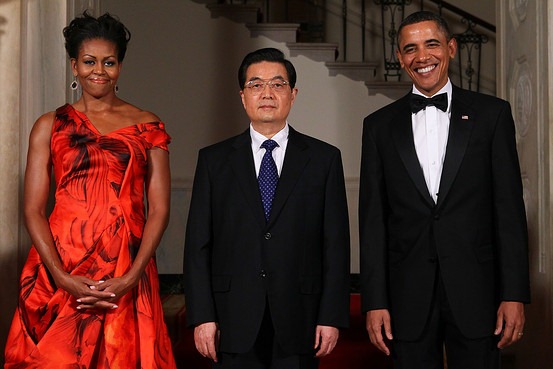
Hu, Obama, and the Chinese-Confucian Hankering for Status Recognition

0120hu01_G_20110120061748

Everyone and their mother has commented on Hu’s trip to Washington this week. I would only add a few points.

1. I kinda wonder why Hu even wanted to come. Consider all the things the US wants to talk to China about that Hu has zero-interest in discussing: democracy, human rights, Liu Xiaobo (the 2010 Nobel Peace prize winner) and press freedom, the non-float of the yuan, the forced partnerships between foreign MNCs and Chinese companies to informally coerce technology transfer, hacking, Tibet, IPR/piracy, NK, Taiwan, the South China Sea, etc, etc… You don’t need to be a sinologist to know that the Chinese Communist party (CCP) isn’t going to change on this stuff for awhile, and certainly not at the behest of foreigners. Nor does it really even want to talk about this stuff at all; hence the Chinese recitation/dodge that almost every point of contention is an ‘internal Chinese affair.’ The tide is running in China’s direction macroeconomically, meaning China doesn’t have to listen to us. So why bother to show up at all?

2. My answer is prestige. Gordon Chang pretty much nailed it for Hu himself. China’s government is a bureaucratic monster even worse than the US government. Not only is China four times the size of the US demographically – thereby requiring more people in government – but the CCP and PLA (military) are heavily involved in politics and industry, making the beast yet larger. The only possible way that Hu can try to guide this sprawling, confused, self-contradictory Titanic of a ship-of-state is through his own stature. And what better way to buttress that than through pictures with the leader of the world’s only superpower. Dictators have no means of ascertaining their domestic legitimacy, and therefore seek parallel legitimacy abroad which can be ‘reflected’ back home. So if the president of the world’s superpower is sitting next to your repressive nasty, then it must be ok to be repressive and your guy isn’t as bad as you thought.

3. But it’s more than just Hu’s tough spot back home. China’s elites deeply hanker for US recognition. China’s national ideology is grievance and nationalism – the 100 years of humiliation. When you visit Tiananmen Square, there is a huge video screen playing regular imagery of this post-1989 ‘China is awesome’ motif. Communism is dead; ‘getting rich is glorious’ is hardly bracing or communitarian enough to bind a billion people together; democracy is not a option. So a Weimar-style nationalism of grievance and national shame is the substitute (even if Chinese academics think it is bunk, as was my experience in China). So China’s got a big chip on its shoulder and satisfying this thirst for status is the reason for all the pomp and fuss of the visit, for the Rovian levels of choreography that left nothing to spontaneity (as with the 2008 Olympics), for the Chinese insistence that it be a ‘state visit’ with Obama in a tux, for the meeting with Congress, for the empty banalities of Hu’s actual comments, etc. Process, not substance, was the whole point – a process wherein the US looks like an equal to China, not a superior, wherein the leader of the only superpower bows and toasts to a Chinese, wherein ceremonialism, flags, uniformed soldiers saluting, endless fussing about who sits where, and lofty rhetoric go unsullied by real work or substance.

4. So you say, what was the whole point then?Process for its own sake sounds like a huge waste of money all around, and giving the Chinese something for nothing. This is true, but the US is now so dependent on Chinese Treasury purchases that playing China’s reindeer games is a worthwhile tradeoff to get more of their money, at least until we get our fiscal house in order. That’s the US benefit. And for the Chinese?

Atmospherics count for a lot in Asia. Asian media is more self-congratulatory, more statist, and more concerned with image and rank of their leaders aboard. This is why ASEAN meetings, an endless, do-nothing merry-go-round of photo-ops and ceremony, still happen. Little is achieved; ASEAN is 2/3 the age of the EU but has done maybe 10% of the work. Yet still it meets, because process – with consequent coverage on CNN and pictures in the Economist or New York Times – is a goal itself.  A few years ago, when President Lee of Korea met George Bush for golf, Lee drove the golf cart around. To Americans, it looked like two buddies having fun, and this was exactly the sort of downhome, buddy-buddy stuff W liked in diplomacy. But Koreans took it as Lee chauffeuring George Bush around and got miffed that it was some kind of snub by the white guy. This was between allies, and the Americans had no idea the pic would be received that way. In fact, Lee looks like he’s having a pretty good time – all the more demonstration of Asian tetchiness on perceptions of rank and social hierarchy. For China then, this is even worse, because the media is wholly state-directed and even more jingoistic than Korea.

The root of this is Asia is Confucianism. Western traditions of equality and individualism are imports here. The long cultural tradition is hierarchy, in which a junior recognizes the moral/intellectual superiority of a senior (and increasingly today, greater wealth implies the higher ranking position). Social disruption stems from the junior’s unwillingness to recognize his place (yes, just like in Plato). Hence, the endless Chinese usage ‘harmonious society’: China’s population is supposed to recognize the moral/developmental excellence of the CCP and follow its learned orders, not protest for human rights or democracy. Applied internationally, this Confucian schematic of rank and dominance layers a further moral sheen onto the realpolitik division of the world into great, medium and small powers. For a long time, the West (and whites, to be very honest) was perceived as the senior, even if the British imperialists and American administrators who embodied this, did not know it. But with EA’s recent growth, it is time, deliciously, to rebalance the hierarchy. Hence Obama has to give a state dinner to an Asian, and W should be the one driving the car. There is a lot more going in this visit than China’s growth; Western fetes of Asian leaders serve a deep, local cultural/racial desire to see Asians in place of the Confucian master/senior in interstate relationships.

5. More generally, everyone likes recognition, and recognition flows downhill. That is, stature is imparted by those ‘above’ you. Hence the president of Korea likes golfing with W, because it makes Korea look like a great power, while the US gains little prestige from the visit. For China, the only possible state than can confer rank on it is the US. Getting US peer recognition is central to the ‘we’ve-been-stepped-on-by-foreigners’ narrative of the CCP. Rising powers particularly care a lot about recognition of their ‘place in the sun’ by the old guard.

6. Also: I was pretty pleased to see the western media give Hu a hard time on human rights. The US media was made a fool of by the Bush administration. Here was a chance to get its integrity back. Well done.

2011 Asia Predictions (2): Middle East, South Asia, Russia

Russia to the World – Bite me!


For my 2011 East Asia predictions (predictions 1-3), try here.

Last year, I put up 2010 predictions for Asia and Korea. Last week, I evaluated those predictions. This week come my 2011 predictions. It’s a fun exercise, if only to see how bad you blow it 12 months from now…

4. The Middle East peace process will go nowhere.

Why: Ok, this is not a particularly challenging prediction. Yet, we can always hope, but my guess is our hopes will once again be dashed. There are no elections coming up which might open possible policy shifts, and none of the big players seem to be rethinking much. Indeed, everyone seems fairly comfortable with the status quo, the current mix of intransigence and inaction. Particularly the Israelis seem to be fairly comfortable with the drifting-toward-apartheid status quo. And Obama, like so many POTUS before him, seems burned out with trying to resolve this tangle. So I don’t see anything suggesting real movement by anybody. Indeed, I increasing think that the two-state solution is pretty much gone; as Pillar says, wth are the Israelis thinking? So the status quo is pretty much the future: stasis.

5. India will back off on Afghanistan to give some room for US success and less Pakistani paranoia.

Why: This prediction is a little gutsier. If India continues to intervene in Afghanistan to encircle Pakistan, then Pakistan will never properly democratize, nation-build itself, or repress its Islamist-Taliban buddies, because they will remain a tool to use against India and to control Afghanistan after we leave. My sense is that there is growing recognition of this ‘AfPak’ logic. Increasingly it is clear that the Afghan war is irresolvable without some kind of Indo-Pakistan rapprochement. That is not likely and not my prediction, but I do increasingly see the Indians talking as if they are already a great power. If so, then Pakistan isn’t that important anymore. If India is just a regional power, then Pakistan is big trouble. But if India is a great power, then Pakistan is just a sideshow. So if India is growing up as a great power – they got Obama to support a UNSC seat for them last year – then Pakistan is the past. Far more important for India is the relationship with China and America, and Indian moves to encircle Pakistan in Afghanistan ultimately harm the US and aid China (by pushing Pakistan toward China) – exactly the opposite of its preferred outcome if it is a global power. Yes, India wants to reduce and humiliate Pakistan as it has Bangladesh, but I reckon the Indians increasingly see the costs of such pointless ideological satisfactions. India cannot retake Pakistan. Even without Pakistan’s nukes in the way, an Indian reabsorption would be colossal expensive and permanently delegitimize it as a great power. In short, global India has increasingly little to gain by provoking regional Pakistan. Even Kashmir isn’t really worth it: poverty, mountains, and fanatics – why bother? India has already won the Indo-Pak competition, as just about everyone knows. Pakistan is a paranoid faux-democracy riven by militarism, religious fanaticism, and terrorism. India is none of those things, so it can just savor Pakistan’s implosion and move on. Pakistan to India today is less like East Germany to West Germany, and more like Mexico to the US.

6. Russia will stay a Corrupt Mess, and Putin will genuinely reemerge.

Why: For several years now we have all been hoping that Putin might actually recede from the spotlight, that Medvedev might actually become a meaningful figure, that law might slowly push back corruption there, etc. All this was captured by the Obama administration expression ‘the reset.’ By 2011, it is time to admit this is over. The signal moment for me last year was the open farce of the Khodorkovsky trial – rather than the various gas tricks with Eastern Europe, stomping on local NGOs, or journalist murders (awful as all that is) – because ending ‘legal nihilism’ (ie, corruption) was Medvedev’s signal political promise. Well here was the big chance to show that with just a bit of movement on the biggest court case in Russia in a decade, one the world was watching. A little restraint might have convinced people that Medvedev wasn’t wholly a marionette of the old man. Instead, as Ioffe notes, Putin didn’t even both trying to cover up the sham. If I were an investor, I’d dump my rubles today. Putin just gave Wall Street (and the West) the finger. So I predict in 2011, that it will become widely acknowledged that Putin is still the chief, that he will be yet more public in preparation for reassuming the Russian presidency in 2012, that Russo-US cooperation will therefore slide, and that Russia’s political economy will stay a black market nightmare. To be sure, these aren’t exactly gutsy predictions, but it does seem to me that 2010 was an important year regarding the direction of the Putin-Medvedev tag-team, and the year’s events clearly downgraded the latter for all the world to see. We now know that Medvedev is a joke. So in 2011, given the looming presidential election and Putin’s consequent need to reassert himself for it, Medvedev will fade to black.

2011 Asia Predictions (1): East Asia

Watch this if you haven’t seen it yet. It’s pretty scary.


Last year, I put up 2010 predictions for Asia and Korea. Last week, I evaluated those predictions. This week come my 2011 predictions. It’s a fun exercise, if only to see how bad you blow it 12 months from now…

1. China will back off.

Why: It has been widely noted that China seemed to suddenly get aggressive last year. They got to bullying about the South China Sea, and their behavior over the island conflict with Japan seemed extreme to almost everybody. (The video above comes from a Japanese YouTube contributor; I tried to find one that is less ideologically questionable, but generally, there is agreement now that the Chinese fisherman purposefully rammed the Japanese coast guard, per the vid above. It is worth noting that Chinese fishermen also do the same thing to the SK coastguard – only the Koreans don’t make such a big deal out of it.) But my sense is still that the Chinese aren’t foolish enough to provoke real local balancing against them – at least not yet while they are still comparatively weak. China has invested a lot over the last few decades to prevent this possibility.While I do think medium-term balancing against China is likely, I also think the Chinese think about this a lot and want to avoid it as long as possible. Events like the video above tell me that China has a big bureaucracy with multiple factions struggling to control foreign policy in a system where the chain of command is blurry and civilian control is disputed – common problems in dictatorships . My guess is last year’s belligerence was a mix of free-lancing by tougher elements to prove a point but not a conscious strategy shift toward provocation. China’s not really the ‘responsible stakeholder’ we want it to be, but I don’t think they are openly reckless suddenly either. They are likely to pull back this year toward conciliation – at least until they are stronger.

2. North Korea won’t pull any big stunts this year.

Why: Last year NK pulled some of its most foolish, dangerous tricks in years. And it got what it wanted. The whole world is once again paying attention to its noxious tin-pot dictatorship. China gave it cover, twice!, and more cash. It once again made SK look weak, vulnerable, and confused, right after the nice G-20 raised SK’s global profile. (What better way to play the spoiler of an event that made Korea look modern and normal?) Intelligent western analysts went on record saying stupid things that sound awfully close to appeasement. SK caved and once again called for the 6 Party Talks; this opens the door, yet again, for the North to play the other 5 parties off each other for gain. Not bad for a broke, dysfunctional gangster-state. So there isn’t much more to be gotten from raising the temperature further, and the costs for them are rising. The DPRK doesn’t really want to provoke a war, and SK attitudes seem to be hardening on responses. NK gimmicked its way into most of what it wants, so I anticipate calm for a while – at least until some other regime crisis (famine, currency collapse, Kim Jong-Il’s death) pushes another KPA outburst for attention and money.

3. Nothing much interesting will happen in South Korea or Japan

Why: Korea seems pretty pleased with itself as it is and should be. Inflation, unemployment, debt, deficit, tax rates, and poverty are all low. (If you are a Westerner and that sentence makes you gasp in envy, it should. Korea’s macroeconomics are miraculous). It has little reason for any major domestic shifts, while in foreign affairs it is increasingly a status quo power. That means that while it is de jure, in the constitution, committed to ending the intra-Korean stalemate, de facto, the SK population doesn’t really want to sacrifice too much for that goal anymore. They just want to be a rich trading state and for NK to go away. So expect more of the same muddling along on the NK issue, crisis-by-crisis. There are no big reasons for Korea to do anything really new this year (notwithstanding that external events might force something of course.) Japan is the opposite; it desperately needs to change. But it can’t, because its population is terrified of confronting the enormity of its troubles, and its corrupted political class is trapped in decades of merry-go-round immobilism. I see no willingness to address the spiraling debt, the overprotected sectors like retail, ag, or construction, the history and territory issues with the neighbors, or broken political system. Hugging the US alliance tight allows these issues to be pushed off indefinitely, and I see nothing to suggest Japan will finally grow-up this year. Stasis, functional and dysfunctional respectively, will be the rule on both sides of the Korea Strait in 2011.

2010 Korea Predictions: How did I do ?

I couldn’t find a good vid for this post, so here is fun Korea video clip instead…


Last year in January, I made  some predictions about Korea in 2010. It is always useful to look back at how one did. Prediction is very hard, but it is the gold standard of the social sciences. Ultimately, prediction lies behind our claims to expertise.

I also made general Asia predictions for 2010. Here is 2011 my write-up on them. I think I did better on Korea specifically than Asia generally.

So here we go:

1. Korea will grow well, having sloughed off the Great Recession with little trouble.

I got this one right. Korea grew about 6% in 2010, and its future projections are quite good. Korea’s exports rolled along – 10 straight months of trade surpluses in 2010 (which isn’t good globally of course, but is good locally). Unemployment and inflation are below 4%. No big banks blew up or otherwise had scandals in 2010; no chaebol presidents got busted for corruption. Capital reserve requirements are good here, and the banks are far less leveraged than western banks. In fact, when I read about all the trouble of the US economy, it sometimes seems like a different world. There is very little indication in Korea’s aggregate numbers – job-loss, exports, poverty, growth, the stock market (KOSPI), etc – that suggest the crisis even happened here. Even NK’s crazier-than-usual antics of last year didn’t bring gloom or capital flight. Well done! Koreas seem to loathe their president, Lee Myung-Bak, but actually I think he deserves huge credit for this. He maneuvered Korea through an economic environment that brutalized many other economies, and he even managed to ram through the US and EU trade deals last year. That’s quite a record – along with keeping Korea’s budget balanced, maintaining those good numbers discussed above, and deterring NK. (NB: the SK left is correct to note that the way Lee pushes through legislation is perilously anti-democratic. His policies are pretty good, but his mildly autocratic tendencies are disturbing.)

2. The Korea-US free trade deal won’t go through.

X

I got this one wrong, but only partially. The deal was signed in December 2010 (my prediction almost made it!). But it must still be ratified by both legislatures. Conservatives control the Korean National Assembly, so Lee can probably push through the FTA. The new Republicans in Congress should also help Obama get ratification on his side. My thinking last year was that Congressional Democrats would block this, particularly under the weight of the US auto unions. Korean cars are good, and US cars still face high, if informal, cultural prejudice here. Further, Lee and Korea wanted the deal more than the US, because Korea is more a ‘trading state’ than the US is. Korea is far more trade-dependent than the US. So I anticipated more US hesitation (which is what happened).

But no one expected both the Cheonan sinking and the Yeonpyeong shelling. This raised the need for Obama and the US to signal commitment to SK against Northern aggression. Obama may also have realized that the incoming Republicans of 2011 would make it much easier to get this through. So once the GOP won the 2010 midterms, Obama could accept the FTA. In short, Obama is probably smart enough to know why trade is good, only he couldn’t get it through a more Democratic Congress. While he certainly didn’t want the GOP to win big in 2010, he opportunistically took what he could get in the new environment. The shift to the GOP made it easier, and NK’s behavior made it more necessary.

[In passing, I find that the average Korean is more pro-trade than the average American. Koreans seems far more aware of the importance of trade, probably because they are small. Small states have high ‘comparative disadvantage’ costs when they don’t trade, so the effects of trade are more immediate here. By contrast American students generally seem surprised when they learn how much the US actually imports and exports. I’ve always thought the biggest hurdles to this deal were on the US side, even though the biggest changes will occur in Korea.]

3. North Korea won’t change a bit.

X! – It got worse!

Who would have thought that the worst state in the world could plumb the depths yet further? Somehow the loopy Corleones of Korea – the Kim family gangster-state – became ever more unhinged and dangerous. My original prediction was aimed at those who thought that Kim Jong Il’s trips to China and China’s growing ‘investment’ in NK might somehow hail a Chinese-style liberalization, at least of the economy a little. To be fair, no one expected NK to morph into a ‘normal,’ somewhat well-behaved dictatorship like Syria or Burma. But there was a mild hope that NK, finally, under the weight of economic collapse and the pressure to show results for the 2010 65th anniversary of the (North) Korean Worker’s Party, might open a little. I thought that was far-fetched, so in that sense, my prediction was right. But more importantly, I missed that NK would actually go the other way. Instead of possible better behavior, NK went overboard – provoking two major crisis – the Cheonan and Yeonpyeong – in just 7 months. Wow. Wth is going up on there?!

4. Japan won’t really come around on Korea.

This wasn’t really a Korea prediction, but it is an issue Koreans care about very deeply. This is a negative prediction, and seems like an easy one too, because it just predicts more of the same from a country trapped in stasis. But placed the context of the DPJ’s (pseudo-)revolutionary election victory of late 2009, it still seemed like a somewhat risky prediction at the time. Recall that the DPJ came in saying it would change so much – fixing the ever-sliding economy, improving Japan’s relations with its neighbors, edging away from the US, etc. All that turned out for naught. Some of this was because China seemed to flip out in 2010. China’s 2010 behavior pushed Japan back toward the US in a way the DPJ probably wanted to avoid. But on the other issues, Japan still strikes me as stuck in a terrible historical funk. It can’t seem to get beyond the fact that the glory days of its developmentalist economy (1960s-80s) are over, and that more Asian-style state intervention now just means more debt. Nor can it seem to figure out, despite the DPJ talk, that the rest of Asia is genuinely freaked out by Japan and pays attention to every change in Japan’s defense policy and utterance by defense officials. Worse, every time some disgruntled righty in Japan say the old empire wasn’t so bad after all, the neighbors go into paroxysms on incipient Japanese re-militarization. My own experience with Japanese students tells me that Japanese are just blind to this (although Japanese academics do seem aware). So my sense was that for all the DPJ chatter, there was no real popular interest in a Willy Brandt-style ostpolitik on the history issues. Nor does that seem to have changed in the last year.

My 2011 predictions will follow next week.

2010 Asia Predictions: How did I do?

new-year-image


Last year in January, I made  some predictions on Asian security. It is always useful to look back at how one did. I did ok, but one might criticize me  that I predicted too many things would not happen. That predicts the lack of change, which is easier than predicting proactive change. That is true.

But prediction is one of the great goals of the social sciences. Indeed it is our hardest chore, and no matter how much we read, data we collect, or theories we propound, we still don’t seem to do much better than the ‘random walk’ theory. Depressing, but nonetheless worth the effort. So here is a quick review of my record. (For a nice collection of the worst world politics predictions from 2010, try here; thankfully none of mine are as eye-rollingly bad as them.) Here is a nice run-down from CFR on the big (East) Asia events of 2010. Note the differences from mine below.

My review of my 2010 Korea predictions will go up on Thursday. Here are my 2010 Asia predictions in retrospect:

1. There will be some kind of power-sharing deal in Iran before the end of the year.

X!

I really blew this one. My sense 12 months ago was that Iran was really slipping toward some sort of genuinely systemic crisis. Not primarily because of the street demonstrations. Those are relatively easy for dictatorships to contain with nasty head-crackings. In the movies (Avatar), the people overthrow the powerful, but in reality it is usually other powerful who overthrow the powerful. That is, elites usually depose other elites in dictatorships. And that is what I thought we saw in late 2009: the emergence of real splits inside the regime’s elites. Particularly, I thought that the clerics’ growing hesitation on Ahmadinejad’s policy of confrontation with the West might lead to a real cleavage requiring some kind of accommodation. Note that I did not predict a revolution or major change in the regime’s Islamist character. No one really expected that. But I did think that Ahmadinejad needed the clerics for legitimacy in what is still an overtly theocratic state. Looking back, I am fairly impressed at his ability to maneuver these domestic difficult waters, while nonetheless continuing to bluff the West. Yet perhaps the external bluff is the key to that internal success. Perhaps the nuke program insulates him against clerical unhappiness. He can appeal to a Persian populist nationalism with the nuclear issue, which allows him to ideologically outflank the clerics. If this is so, then Ahmadinejad is more enduring then we anticipate.

2. Israel will not bomb Iran.

This is a negative prediction, so it was a little easier. But still, given how much noise Netanyahu and the Israel lobby in the US make on this issue, including regular veiled threats to take matters into their own hands, I do think this deserves some credit. Also, the Wikileaks revelations that Sunni Arab states might look that other way on a bombing add further weight to my prediction’s riskiness. Netanyahu is playing a tough negotiating game with the US, but this one was probably a bridge too far, although I bet the righties in his cabinet are unhappy. Still, Israel really needs the US, and that need will deepen the more it becomes apparent that the Israeli right is the primary force blocking an Israeli accommodation with the rest of the Middle East. And without US approval, unlikely on Obama’s watch, I still think the cost-benefit calculus tilts against an Israeli strike. That said, a strike is more likely this year, because the Iranian nuclear program keeps rolling along and Iran (point 1 above) has not softened.

3. Japan will disappoint everyone in Asia by doing more of the same – more moral confusion over WWII guilt and wasteful government spending that does nothing meaningful to reverse its decline.

This is another negative prediction, and seems like an easy one too, because it just predicts more of the same from a country that has been doing that for 20 years. But placed the context of the DPJ’s (pseudo-)revolutionary election victory of late 2009, it still seemed like a mildly risky prediction at the time. Recall that the DPJ came in saying it would change so much – fixing the ever-sliding economy, improving Japan’s relations with its neighbors, edging away from the US, etc. All that turned out for naught. Some of this was because China seemed to flip out in 2010 (a big positive prediction I really missed – X!). China’s 2010 behavior pushed Japan back toward the US in a way the DPJ probably wanted to avoid. But on the other issues, Japan still strikes me as stuck in a terrible historical funk. It can’t seem to get beyond the fact that the glory days of its developmentalist economy (1960s-80s) are over, and that more Asian-style state intervention now just means more debt. Nor can it seem to figure out, despite the DPJ talk, that the rest of Asia is genuinely freaked out by Japan and pays attention to every change in Japan’s defense policy or utterance by defense officials. Worse, every time some disgruntled righty in Japan say the old empire wasn’t so bad after all, the neighbors go into paroxysms on incipient Japanese re-militarization. My own experience with Japanese students tells me that Japanese are just blind to this (although Japanese academics do seem aware). So my sense was that for all the DPJ talk, there was no real popular interest in a Willy Brandt-style ostpolitik on the history issues. Nor does that seem to have changed in the last year.

4. North Korea won’t change at all.

X! – It got worse!

Who would have thought that the worst state in the world could plumb the depths yet further? Somehow the loopy Corleones of Korea – the Kim family gangster-state – became ever more unhinged and dangerous. My original prediction was aimed at those who thought that Kim Jong Il’s trips to China and China’s growing ‘investment’ in NK might somehow hail a Chinese-style liberalization, at least of the economy a little. To be fair, no one expected NK to morph into a ‘normal,’ somewhat well-behaved dictatorship like Syria or Burma. But there was a mild hope that NK, finally, under the weight of economic collapse and the pressure to show results for the 2010 65th anniversary of the state’s founding, might open a little. I thought that was far-fetched, so in that sense, my prediction was right. But more importantly, I missed that NK would actually go the other way. Instead of possible better behavior, NK went overboard – provoking three major crisis – the Cheonan, the new uranium plant, and Yeonpyeong– in just 7 months. Wow. Wth is going up on there?!

5. The US drawdown from Iraq will be softened, hedged and qualified to be a lot smaller than Obama seemed to promise.

✔/X

This one seems mixed but broadly accurate. It was a gutsier positive prediction, but the evidence is not definitive. I was genuinely surprised when the last brigades rolled out, but then, there are still 50k US troops in Iraq (more than in Korea or Japan, btw). Now that Iraq is off the front pages, and with Obama’s speech that it is all over, no one pays attention much. But we are still running around performing what really should be called combat operations, and Americans are still dying. And in Afghanistan, the Obama people are now openly moving the goal posts from 2011 to 2014 now. While I didn’t predict that, it does fit into my general sense that Obama can’t really end the GWoT quickly as he hinted during the campaign. Instead, it seems likely that it will slowly splutter out.

2010 in review – from WordPress Statistics – Thanks for Reading

The stats helper monkeys at WordPress.com mulled over how this blog did in 2010, and here’s a high level summary of its overall blog health:

Healthy blog!

The Blog-Health-o-Meter™ reads Wow.

Crunchy numbers

Featured image

The average container ship can carry about 4,500 containers. This blog was viewed about 17,000 times in 2010. If each view were a shipping container, your blog would have filled about 4 fully loaded ships.

In 2010, there were 99 new posts, growing the total archive of this blog to 220 posts. There were 192 pictures uploaded, taking up a total of 10mb. That’s about 4 pictures per week.

The busiest day of the year was November 25th with 980 views. The most popular post that day was The North Korean Shelling.

Where did they come from?

The top referring sites in 2010 were rjkoehler.com, facebook.com, blogs.the-american-interest.com, en.wikipedia.org, and lawyersgunsmoneyblog.com.

Some visitors came searching, mostly for asia security blog kelly, asian security blog, expatriate tax, robert kelly asian security blog, and stag hunt international relations.

Attractions in 2010

These are the posts and pages that got the most views in 2010.

1

The North Korean Shelling November 2010
16 comments

2

Korea’s Slow Boiling Demographic Crisis March 2010
8 comments

3

About Me August 2009

4

Do Americans Know Anything about Korea beyond the North? Not so Much… March 2010
14 comments

5

Six-Party Talks as a Game Theoretic ‘Stag-Hunt’ (1): N Korea is the Stag April 2010
3 comments

Merry Christmas – Some Asian Humor – See you in a Few Weeks

Xmas-Tree_thumb2

That’s our Christmas tree, the only one in our building…


It is the Christmas season, and I need a break from blogging. For my previous thoughts on Christmas in Korea, try here. But I certainly hope you have a nice holiday and be sure to watch Charlie Brown’s Christmas.

Next year, I will post my comments on my 2010 predictions. I did ok on them – about 50%. I will also list some new predictions and try tougher ones. My 2010 ones were a little tame and too easy.

I also want to expand my reach more beyond Korea and (less so) China. Inevitably, I seem to write on Korea a lot, because it is where I live and because of the US commitment here, as well as China just because it is so important. Next year, I am planning cooperation with the excellent Japan Security Watch to produce more stuff on Japan as well. Reader comments on the utility and direction of the blog are always welcome.

(For a bit of new content in passing, I think this article is worth pointing out to American readers. I continue to be impressed at the humanity of crime and punishment in Korea. Crime here is far less widespread and violent than in the US; Korea is wonderfully safe. And the criminal justice system and the police are more balanced and humane than the US flirtation with militarized policing and torture. Score one for the Koreans.)

So here is a little Korean-Asian humor for the winter break. Enjoy. WARNING: It includes vulgarity, but it is pretty hilarious.


MERRY CHRISTMAS

Yeonpyeong Shelling Summation (3): Responses

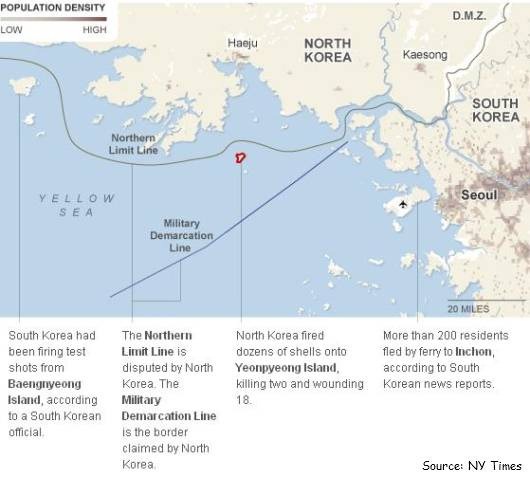
ny_times_yeonpyeong

Part one is here; part two is here.

Last week, I noted that I was drafting an interpretation of the NK shelling of Yeonpyeong island on November 24 for the Korean National Defense University. I am grateful for the many comments on received. My posting this week will represent my full thinking after three weeks of posting and comments and will be submitted for publication early next week. I would appreciate comments and thoughts no later than Monday. Thank you.

_____________________

3. Responses

SK lacks good short-term responses to incidents such as Yeonpyeong or the Cheonan. But it can develop a medium-term strategy to slowly throttle NK in a long-term Cold War-style stalemate.

3.1. Bad Short-term Choices

The Yeonpyeong shelling may be shifting the SK debate over responses to provocations. The new defense minister speaks of loosened rules of engagement (RoE). Proposals include lowering the threshold of NK misbehavior required to permit counter-fire, enhancing the amount of counter-fire force beyond proportionality, permitting greater on-site commander authority to return fire, expanding target packages to include NK sites beyond the immediate crisis zone, and using air power. This feels emotionally satisfying in the heat of the moment, because N and SK are engaged in an acute stand-off, in which both sides perceive strong, zero-sum material and prestige losses at the expense of the other. NK perceives SK status gains (point 2.2 above) at its expense and hits back; SK perceives the North to destroy its assets with impunity and presses to counter-strike yet harder. This is a classic tit-for-tat spiral, akin to Israel’s relations with the Arab states, that could easily degenerate toward war. Looser post-Yeonpyeong RoE are a misjudgment for three reasons.

First, SK is extraordinarily vulnerable to conventional Northern retaliation. One-half of SK’s population lives within 50 miles of the Demilitarized Zone (DMZ) in its enormous, high-density northwestern urban agglomeration. The Incheon-Seoul-Gyeonggi corridor contains approximately 25 million people in just 5% of SK’s land space. Many live in apartment towers dozens of stories high, very vulnerable, in the manner of the World Trade Center, to catastrophic collapse if hit by military fire. NK has stationed thousands of rockets and artillery at the closest point on the DMZ to hold this population hostage. Further, the SK government and economy are centered here. Hypercentralization and extreme exposure of the ‘Seoul-Republic’ has stayed SK’s hand in the past and likely will in the future. The risk is enormous.

Second, NK faces strong ideological and bureaucratic pressures to hit back in tit-for-tat spirals (point 2.3 above). NK is dependent on military bravado as legitimation in its ‘military-first’ polity. Expanding tit-for-tat counterforce beyond the immediate crisis time and space risks challenging the ‘manhood’ of the KPA in a system where that is absolutely central for regime identity. Openly challenging the KPA over its ability to defend the North is tantamount to asking for them to hit back, and yet harder. Counterforce also reinforces the Northern ideology, which is dependent on the domestic perception of SK as major national security threat. SK responses, however justified, feed this last remaining ideological prop of the regime.

Third, any extended, kinetic interaction between North and South will certainly generate compounding externalities of collateral damage, accidents, and misperception. Particularly in combination – Yeonpyeong local commanders calling for airstrikes on the NK mainland? – looser RoE could easily result in new incidents quickly spinning out of control. Once a tit-for-tat spiral begins, it would be increasingly difficult to halt as sunk costs mount; NK particularly may not have the command-and-control necessary to reign in the KPA once unleashed. As the accidents and misfire in the fog of war accumulate, events, not policy, would drive further escalation. A clear example is the Cuban downing of an American U2 during the Cuban Missile Crisis; local command authority nearly sparked a conflagration.

1.2. Medium-term Stalemate

With short-term options closed because of extreme exposure and escalatory insecurity, SK can improve its medium-term position to ‘win’ this long-term stalemate. By win, I understand the collapse of the North and re-unification on Southern terms, roughly modeled on German unification. Hawkish alternatives to the right, including aggressive RoE or invasion, are far too risky; the leftist, normalization alternative – permanent acceptance of the status quo of NK’s existence – is immoral, as it abandons the NK population to unending misery. Currently SK ‘muddles through,’ regularly managing NK on the short-term, crisis-by-crisis. But three medium-term policy shifts could improve SK’s long-term position of strength, with the goal of gradually pressuring NK toward collapse, much as the USSR eventually imploded under relentless allied pressure.

First, SK should de-centralize. The seat of government should move to Daejeon or Busan, far from the frontline. West Germany placed its capital far from its frontline for analogous flexibility and security. Government subsidies for residence and commerce outside of Gyeonggi could encourage a de-densification of the northwestern city-hostage, thereby untying the SK military’s hands after incidents like the Yeonpyeong. There are solid regional equity reasons for decentralization as well, but the national security benefit would dramatically tilt the intra-Korean stalemate in SK’s favor. A ‘hardening’ of northwestern SK through depopulation, improved architecture, civil defense drilling and bomb shelters, would lower the risks of escalation (point 3.1 above).

Second, Korea should expand its defense spending. 2.7% of GDP is rather low given the chronic threat NK, and it would gradually expand SK’s response options in tandem with decentralization. Specifically, SK should expand the navy, as many of these incidents occur in the Yellow Sea, and invest in the ‘networked battlefield’ technologies (C4ISR: command, control, communications, computers, intelligence, surveillance and reconnaissance) for which it leans so heavily on the US and the lack of which so clearly hampered the counterfire from Yeonpyeong. Offensive systems, most clearly armor, although controversial, would also signal to the North, that SK conventional deterrence is not simply defense-in-depth.

Third, neither of these suggestions is realizable without a much deeper electoral commitment to ‘win’ a long-term stalemate, rather than the current SK malaise to simply manage NK crisis-by-crisis and then ignore it otherwise. SK is constitutionally committed to reunification, but, like West German youth by the 1980s or the Irish today, SK younger generations are maturing with little knowledge of NK, growing fear of reunification’s costs, and increasing diffidence to the whole tangle. SK is slowly becoming a de facto status quo power in peninsular affairs; if NK can hang on long enough, South Koreans may not want unification anyway.

Active political leadership is required to prevent this drift. A national consensus to win, not just manage, would improve SK’s position of strength in what is already a test of wills and commitment. In the short-term, deterring NK’s regular, ideologically desperate provocations requires national sacrifice for decentralization and military expansion. In the long-term, a national consensus to end, not just manage-and-forget, the Northern regime would sustain these sacrifices. A grinding, expensive, and long Cold War-style stalemate in which NK is slowly throttled into collapse by relentless Southern power – on the US cold war model of slowly competing the USSR into oblivion – is the safest and most humane way to end the brutality under which North Koreans live.

Yeonpyeong Shelling Summation (2): More Causes in Hindsight

300px-Yeonpyeong_shelling

Part 1 is here. Part 3 is here.

Last week, I noted that I was drafting an interpretation of the NK shelling of Yeonpyeong island on November 24 for the Korean National Defense University. I am grateful for the many comments on received. My posting this week will represent my full thinking after three weeks of posting and comments and will be submitted for publication early next week. I would appreciate comments and thoughts no later than Monday. Thank you.

_________

More Causes

2.3. Long-Term/Structural: NK’s Permanent Legitimacy Crisis

NK faces a permanent legitimacy crisis in the wake of communism’s collapse. During the Cold War, Korea’s division could be explained, like Germany’s, by competing visions of economic justice (socialism vs capitalism). And indeed, Kim Il-Sung likely believed in socialism. But the son clearly does not; the Cold War is over; East Germany is gone. North Korean citizens increasingly know this. The post-famine explosion of private trading across the Chinese border has brought new information to the NK citizenry through (illegal) cell phones and SK VHS tapes (after-market resales due to the 1990s global switch to DVD). North Koreans now know that SK is wealthier; that Germany has unified; that USSR is gone. Indeed, the regime no longer speaks of communism or even juche much. So the obvious question for a people with no previous history of division, with substantially worse living conditions than the other national alternative, and ruled by an elite formally committed to unification is why NK cannot go as East Germany did. This existential problem ultimately destroyed East Germany after the Wall opening; its elites could find no answer and simply gave up. In Korea, unification on Southern terms would almost certainly result in a truth-and-reconciliation process given extreme Northern despotism. Post-unification courts would likely imprison or even execute senior KWP, KPA, and Kim family officials. (SK still retains the death penalty, likely for exactly this purpose.) NK elites do not want to go the way of Mussolini, Ceauşescu, or Saddam Hussein.

With communism a dead letter and unification blocked for elite security reasons, the only possible justification for the existence of separate, poorer, unhappier, unhealthier NK is that SK is a revanchist puppet of the imperialist US. NK’s last-ditch, post-communist ideology against the Southern and American ‘aggressors’ is now the ‘military-first’ policy, in which NK is reconceived as a national defense state protecting Korean national integrity. As such tension with SK is existentially required. NK must have a permanent oppositional relationship with the South, otherwise, why does it still exist? This is the structural cause of Sunshine Policy’s failure, despite heroic efforts and good-faith bargaining by SK’s liberal administrations. Normalization is simply impossible for the regime if it is to continue as it is. So even if SK does not provoke the North, then North must do so anyway; ergo, the long list of incidents in point 1 above. Something must justify deprivation, national division, and military privileges to the disconsolate, long-suffering Northern population, and ‘national defense’ incidents like the Cheonan or Yeonpyeong serve this purpose. This is why Yeonpyeong is nothing new and why something like it will happen again; it is in the structure of the regime.

2.4. Permissive: China’s Cost-Benefit Calculus

China continues to calculate that an erratic, nuclearized NK is preferable to unification on Southern terms. A peninsula-wide version of SK is the only realistic unity scenario given NK’s extreme backwardness – decrepit, corrupt NK probably could not even manage the whole peninsula – and SK’s demonstrated unwillingness to sacrifice democracy for unity. China’s continued subsidization for NK’s economy is well-known and has only become more crucial as events like the famines, failed currency reform, UN sanctions, expensive nuclear program, and continued resistance to Chinese-style reforms have effectively devastated the NK economy, all the more ironic for its autarkic claims of juche. (The CIA estimates NK’s GDP at just $42 billion for 24 million people.) China’s refusal to endorse the Security Council reprimand of NK over the Cheonan signaled that when pushed, it will choose North over South.

This opens the door for continued NK intransigence and provocation. Given NK’s extreme asymmetric dependence on China, it is highly unlikely that NK would openly cross its benefactor. One can only speculate what if any Chinese red-line warnings on provocations were given to Kim Jong-Il on his recent trips to Beijing. Yeonpyeong probably did not cross that line, as the Chinese response has been widely regarded as tepid and insufficient.

China is formally committed to Korea unification – ideologically required for its own claims to Taiwan. Yet Chinese scholars openly speak of NK as a buffer, hence instrumentalizing NK to Chinese foreign policy. China fears a ‘southernized’ peninsula – a unified, populous, wealthy, nationalist, democratic, American-allied Republic of Korea on its border. The NK buffer keeps SK and its American and Japanese allies one step further away. NK antics also serve to keep these three Chinese semi-rivals off-balance and confused in northeast Asia. Further, Manchuria contains millions of Korean-Chinese whose potential ethic nationalism China does not wish stirred by emotional, globally-evocative imagery of Korean unity.