Keeping USFK in Korea? – Soul-Searching after the Sexual Assaults

2011-11-01T135312Z_01_BTRE7A012L900_RTROPTP_2_KOREA


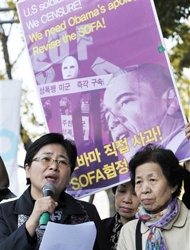
In the wake of the recent sexual assaults on Koreans by US soldiers in Korea, I was asked by the Korea Herald to participate in a debate about whether US forces in Korea should leave. (On the assaults try this and this. For NK manipulation of this as evidence of US “fascism,” try this.) It is terribly awkward in the wake of three assaults to argue that USFK should stay, but ultimately I think Korea benefits enormously from the US commitment.

My op-ed on the subject was published here on Tuesday, and is reprinted below:


USFK is in Korea’s Interest, but US Budget Pressures are Growing Fast

Whenever US soldiers in Korea misbehave egregiously, Koreans naturally soul-search on whether USFK should withdraw. This is proper; soldiers sexually assaulting teenagers is horrific. The debate also usefully signals to the US that Korea not be taken for granted. But in the end, Koreans have always hewn to the US, even after George W Bush famously alienated South Korea by placing NK on the ‘axis of evil.’ South Korea is the overwhelming beneficiary of a very one-sided relationship and terminating the alliance would dramatically weaken Korea in a very difficult neighborhood.

Korean foreign policy is structured by its dismal geopolitics. The traditional saying that ‘Korea is a shrimp among whales’ is accurate. Middle-power Korea is surrounded by three great powers with a history of intervention and bullying, and bordered by one of the worst tyrannies in history. As such, an alliance with a powerful external partner (the US) gives Korea critical leverage where it would otherwise be dominated. For the all US misbehavior in ROK history – from questions around the Kwangju suppression to the personal issues of ‘ugly American’ behavior – no serious ROK policy-maker has ever wavered from the belief that the US partner critically boosts SK autonomy against local encirclement. Because the US alliance gives Korea desperately sought local leverage, the US in turn has significant leverage over Korea. This is a cause of great consternation among proud, nationalist Koreans and explains enduring anti-Americanism, especially on the SK left. Conversely, it is the reason the Korean government so dramatically emphasizes English acquisition and exposure to the US. Americanization of what is otherwise a Sinic-Confucian culture reinforces Korean cultural compatibility with the critical US ally.

The contrast for the US is quite sharp. With the end of the Cold War, the utility of the Korean alliance to America has fallen significantly. A widely unappreciated fact in Korea, almost a willful blindness, is that a NK victory over SK would not dramatically impact US security. As a fellow democracy, the US would of course lament such an outcome, but with the end of expansionist Leninism as a threat to the US homeland, there is no longer an East-West balance in which Korea is a central weight. The Korean division is now a more local problem, to which the US is devoting fewer resources. It is well-known that USFK has shrunk over the years; the Combined Forces Command will be shortly abolished; and USFK is no longer stationed in a ‘hair-trigger’ posture on the DMZ. To Americans, with many global concerns including terrorism, nuclear proliferation, failed states, the drug war, climate change, and so on, Korea is one theater among many. Surveys of US public opinion by the Chicago Council on Global Affairs have found since the mid-2000s that only 40% of Americans want the US to fight in Korea, even if NK attacks first. A major conflict in Korea would be vastly more destructive than the recent war on terror, possibly involve nuclear weapons, and pull the US into a massive, unwanted post-war nation-building project, especially if SK is devastated by nuclear strikes. Given how badly the war on terror has flown off the rails in the last decade, American reticence about getting ‘chain-ganged’ by an alliance into another major war in Asia is predictable.

In short, the alliance is dramatically balance-positive for Korea, but increasingly neutral for the US. It is no longer clear what the main US benefit from the alliance is (this applies to many US alliances actually). Typically, the answer is that Korea is a central node in the American alliance network in Asia. But that just raises the next question of why the US needs a large, expensive Asian military footprint. Typically, the (unspoken) further step is that this will help contain China. But again, why the US should contain China is unclear. From an American national security perspective, China is primarily a local Asian dilemma. States like India, Japan, Australia, and Korea should really be dealing with that first, unless one believes the US should be a semi-imperial ‘globocop.’

‘Globocop’ hegemony may appeal to US allies in tough places (Korea, Israel, Afghanistan, Georgia), and it may be ideologically attractive to US neoconservatives, but is also very expensive, pulls the US into many conflicts of marginal value to US security (Iraq, Vietnam), and, most disturbingly, makes America morally culpable for violence, however justified, around the planet, including the deaths of non-combatants. In short, the US is flirting with empire, and the history of empires is often unhappy – too many wars, too much borrowing, over-extension leading to national exhaustion and institutional decay. Today, the US is on this path. By almost any definition, the US is overstretched. The military has been fighting continuously since 2001. The budget deficit is a staggering 10% of GDP; total debt is $10 trillion. National security spending is 25% of the budget. Post-Great Recession economic growth is anemic. For years the US disregarded its own values and tortured prisoners.

In such an environment, the US will eventually have to make hard choices about foreign commitments. Some measure of global retrenchment will likely happen, if only because the US is dallying with bankruptcy. Those Koreans who would like USFK to leave may be pleased to see the US pushed to the edge of insolvency, with a looming USFK retreat under budget pressure. But far more widespread will be anxiety about whether US relative decline will semi-abandon Korea in a tight neighborhood increasingly overshadowed by Chinese power. Do Koreans want to go it alone?
Foreign Policy of the GOP Debates (1): We couldn’t care less @ Foreigners

The ‘foreign policy’ debate

MEDIA UPDATE: On November 8, I published a brief write-up on the US-Korean alliance with the East Asia Forum. EAF is a good outlet for readers of this site. The piece was based on longer writings here on the blog earlier this fall. Comments are welcome.

——————

There have been lots of these GOP debates (here is the whole schedule), and the one above, from Nov 12, is the most relevant for readers of this site. Here is a decent write-up on that debate, and after months of them, there is enough said to provide something to say on the (otherwise scarcely discussed) foreign policy edge of the primary.

1. Any first foreign policy comment must be, paradoxically, that foreign policy isn’t really much of an issue. No one at the primary stage really cares about foreign policy, beyond Israel, which increasingly isn’t seen as foreign policy at all, at least by the GOP, and a general chest-thumping of American awesomeness. This is not news for Americans. US observers all know that domestic politics, especially the economy, pretty much determines elections. When you are a superpower you have the luxury to disdain and ignore foreigners. But foreigners don’t know this as well, and US allies especially often build-up (self-serving) images of themselves as ‘critical’ to the US, even though monolinguistic, untravelled Americans couldn’t care less about these countries (poor Georgia; the entirely ginned-up Korean belief that K-pop is a ‘wave’ in the US; a self-important German colleague once told me that America should never force Berlin to choose between Washington and Paris – oh please! like we care, dude!). Indeed, Hermann Cain’s rise and his staggering ignorance about the non-US world tells you that disinterest in the world – presumably because we are so exceptional and powerful that we don’t need to care – is almost welcomed by the Tea Partiers who hate IOs, illegal immigrants, and US bargaining with foreigners. Build the fence higher! And electrify it!

2. For all the hype about the US switching its focus to Asia, you wouldn’t know that from the debates. Do you really think that the average tea party white guy voter cares about SK or Japan? The Middle East was far more dominant. Iran, Pakistan, Israel, and the rest of the usual suspects were everywhere. I think I heard Gingrich mention NK once in this debate. The China stuff between Huntsman and Romney was flat. India wasn’t even mentioned, but waterboarding (of GWoT detainees) was a disturbingly hot topic. Again, this isn’t news to US observers who know how many Americans, especially Christians, take a fairly apocalyptic, clash-of-civilizations view of the GWoT. Bachmann even warned of a global nuclear war against Israel (god, she’s a terrifying flake). Elites may want an Asian turn in US focus (as I think would also be a good idea), but the ‘Christianist’ GOP electorate remains focused on the ME, and we should expect that to continue to dominate US time, even if we don’t want it to. Terrorism, oil, and Israel aren’t going anywhere.

Asians are bound to be disappointed, because of the deep-rooted belief (desire, actually), verging on desperation, that the US should pay attention more to them. (Read this and this – apparently India and Southeast Asia are ‘indispensible’ for the US. Oh, and so is Latin America. — Not! Americans just don’t care. Elites aren’t the voters. Build the fence higher!) What this tells you is that the Asia hype is a lot more hollow than Asians want to admit, because it requires US attention to be justified. So America is still the unipole whether you like it or not (natch), and the ‘new Asia’ schtick is more about Asian insecurity and desire for prestige, than it is about empirical shifts. (Yes, the shift is happening, but a lot slower than the ‘Asia is the future’ types I meet here all the time will admit.) I have argued before that Americans just don’t care than much about Asia, no matter how many Asians tell us we should. Israel or even ‘old Europe’ Ireland is a lot more recognizable to Americans than Shanghai or Bangalore. Further, so long as India, Japan, China, and the rest out here are all balancing each other and competing, the US doesn’t really need to get sucked into the maelstroms of the Korean peninsula or the South China Sea anyway. The Asian hype that the US should pay more attention out here is really an effort to get the US to help locals contain China, which bait we should not take, IMO.

3. Cain, Bachmann, and Perry are way out of their depth. By now everyone knows Cain’s ‘U beki beki stan stan’ remark and Bachmann’s off-the-wall assertion that the ‘ACLU runs the CIA.’ (Yes, the same Agency that runs the drone strikes that now kill US citizens.) But even Perry can’t seem to give good answers – that he ‘commands’ the national guard and has friends in the Defense Department are qualifications for the White House. That’s all he’s got after 3 months on the trail? What happened to Perry? He seemed so imposing back in August, and he has just crashed. He comes off more clueless and lost in the woods, after his pre-scripted reply sentences run out, than even Bush. It’s amazing how weak this field is (which is why Romney is running away with this thing, even though no one likes him).

Part two will go up in three days.

The Iraqis don’t Want Us in Country & We have to Accept that

iraq

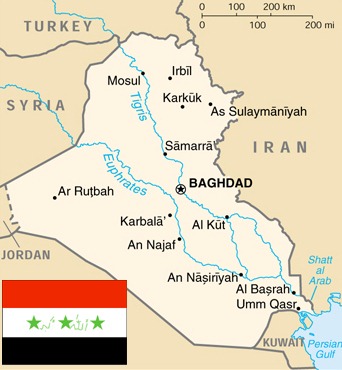
So it’s official now – or at least it really, really looks official this time. We are leaving Iraq at the end of the year. I mentioned this in class, to which I received nearly universal student skepticism. We are covering the Vietnam war now in my US foreign policy class, and we are discussing how America’s involvement there was far longer than the standard images we have from the Vietnam war movies we have all seen. From around the mid-40s to the mid-70s, the US was in Vietnam in one way or another, and most of my students simply assume that the US will be in Iraq even when we aren’t in Iraq. (Hah! Foreigners just expect US semi-imperialism and don’t believe us anyway when we say we are leaving. That in itself says something.)

And indeed it does look like we will leave behind a small army of contractors (armed in some way or other) and a large embassy staff. On top of that are the recently announced plans to beef up the US presence elsewhere in the Gulf – again creating the foggy, ‘we aren’t in Iraq but we still sorta are’ vibe that everyone is wondering about.

But removing easily identifiable, very public combat forces (i.e., warfighters on the ground) from Iraq is obviously a pretty big break. And the Obama administration very publicly wanted to stay beyond the scheduled departure date (end of 2011). But the US wanted immunity for US forces in Iraq under a new Status of Forces Agreement. The Iraqis didn’t want that, so Obama had to give, and the 2011 deadline will be held. It is worth noting that the 2011 deadline was originally set by the Bush administration in 2008 in the wake of the surge, which should dim, IMO, the criticism from the right on this one. But still, there is now the (inevitable I suppose) backlash from neocons. (Here too.)

I supported the Iraq War until around 2008, at which point it became just too clear that we were in over our heads and had drawn too much blood to justify the modest improvements in governance that resulted. (An important part of my change in thinking was this.) Like the neocons, I feel the impulse to ‘solidify’ gains in Iraq by staying. It was such a titanic effort, that if Iraq collapses again (primarily because the surge didn’t resolve the issues of Iraqi division so much as freeze them), the whole thing will look like an even more colossal failure than before. An obvious model for the neocons would be Korea, where the presence of US forces helped keep Korea on track to the point where it is basically a modern liberal democracy today capable of taking care of itself without much help.

But there are some obvious problems that I would like to hear answered about why we should stay. Read this also on why we should leave.

1. The Iraqis want us to leave. Exum’s post on this is spot-on. We may want to stay, but they clearly don’t. In fact, it is increasingly obvious that the really don’t want us there anymore.  This must weigh very heavily in any decision; indeed, it should be a deal-breaker if Iraqi sovereignty is to have any meaning. If we stay when they don’t want us to, then we really are an empire. That really is an occupation. I do wish some kind of bargain could be found. Like everyone else, I worry that Iraq will collapse in civil war, and a minor US presence could be an important brake. But honestly, we turned that place upside down. Iraqbodycount.com estimates that our intervention resulted in over 100,000 deaths, not to mention the millions wounded, internally and externally displaced, disrupted, etc, etc. We don’t really need to start debating the Green Zone or Fiasco again to know that do we? Honestly, we shouldn’t be very surprised they want us to go.

2. Can we afford this? I guess I sound like a nag on this. Like Ron Paul, I keep bringing this up again and again, and no one wants to hear it, and everyone thinks I am a scold or a bore. But it still worth nothing that we spend over a trillion dollars on national security per annum, have a budget deficit around $1.5T and $10T in debt, are cruising toward a 100% debt-GDP ration by 2020, and have an aging population that would really like Medicare and Social Security instead of aircraft carriers and occupations. At some point, we have to make some hard budget choices. Given how badly the Iraq War flew off the rails, and how much the world and Iraqis themselves want us to leave, honestly this is probably one commitment we can afford to cut in the interest of better balancing our obligations with our constraints.

3. Do we really want to stay in Iraq for 50 years, if indeed Korea, Japan, or Germany are the model? It is worth recalling that back in the 50s, Americans worried similarly about a huge, never-ending, super-expensive commitment to a small, far-away, not too important place (Korea). Now, the neocons are right to say that in the end, Korea turned out well, but it took 50 years, it is not clear how to measure if the US commitment and money spent in Korea was ‘worth it’ or not, and whether the US public would support any such long commitment to Iraq. In short, if the US had a reasonable, Korean-style shot at normalizing Iraq, but it would require 50 years of commitment, would the US public support it? Well, given that US support for the Iraq War faded after just a few years, I don’t think that question would survive a referendum. Remember that the war was not sold in 2002 as a 50 year nation-building exercise that would cost trillions of dollars. There is just no way the US voter would have supported that. Wolfowitz even admitted that WMD was the only way to ‘sell’ the war to the public, because the Bush administration knew the public wouldn’t buy a larger, ‘freedom agenda’ mission. And of course, candidate Obama explicitly ran on this plank.

So yes, we should stay involved with Iraq, through diplomacy, aid, and training. We owe them that, but we must in the end, respect both the wishes of the Iraqi and American publics. After so many years of debate on this issue in both countries, it should clear that this is not a fly-by-night poll result. Everyone knows the risks of withdrawal, and they have decided for it nonetheless.

9/11 a Decade Later (1): The Apocalypse that Wasn’t…

wtc-plane

Part two of this post is here.

The 9/11 anniversary commentary will be endless, so here are a few I thought were good.

First, a few thoughts on what to avoid:

I am increasingly suspicious of stuff from the mainstream foreign affairs crowd: Council on Foreign Relations, CSIS, Brookings, and (especially) the conservative think-tank set. They are so Washington, predictable, and establishmentarian (because the all want gigs in the next administration of their choice), that you already know what you will read: no suggestion that the 20-year US massive presence in the Gulf infuriates Muslims and Arabs and helped catalyze 9/11; laundry lists of expensive ideas for the US to ‘do more in the region’ rather than to let locals be themselves; little hint that America’s relations with Muslims would improve dramatically if we were more even-handed on the Palestinians; no suggestion that America might have been better off doing much, much less in response to 9/11; full endorsement of the liberal internationalist-neocon position that 9/11 is a once-in-a-generation justification for continuing America’s massive globocop presence after the Cold War; minimal criticism of the massive Bush national security state overkill in response; shameless exploitation of 9/11 to prevent reductions in America’s gargantuan national security budget, etc. Stick with Foreign Policy, the American Review, the Atlantic, Slate or the New Republic (sometimes) for views that at least challenge the status quo and don’t just recycle what Thomas Friedman, David Brooks, and the rest of the DC pundit class will tell you.

Next, avoid the emotional manipulative 9/11 retrospectives. This may sound callous – it was an awful day for everyone, and a truly horrible day for some. But far too often since 9/11, politicians, especially W, played to our emotions from that day, and used and manipulated them to support policy we would almost certainly not have agreed to otherwise, and which we will regret with shame in the future. Here’s the Wall Street Journal telling you that ‘Old Glory’ waved on 9/11 (you’re a patriot and love America, right?), and that’s why they called it the Patriot Act. But then the ACLU and Democrats sabotaged the GWoT, cause they hated W over the Florida recount. So the American left, completely out of power from 2000 to 2006, nonetheless made us ‘less safe’ – for a personal vendetta no less. This is Rovism, wrapped in the flag, but still manipulative and hardball. Further, I have little doubt that, just as we look back today in shame at the incarceration of Japanese-Americans during WWII, we will do the same in 20-30 years when look at how we tortured people in the GWoT. Don’t let torture’s defenders – Yoo, Cheney, Thiessen – emotionally roll you by telling you they stopped the next 9/11 and more grieving widows by ‘legalizing’ waterboarding, ‘walling,’ and generally beating the s— out of people in the name of ‘America.’ Keep your wits (and it ain’t true anyway).

In line with this resistance to inevitable grandstanding, posturing, and macho heroics, my own sense is that 9/11’s importance is wildly over-exaggerated – perhaps because I live in Asia, and I increasingly see the Chinese challenge looming for decades to come. But know this – as just about any American living in Asia can tell you – the Chinese sure are happy that we got lost in the Middle East for a decade.

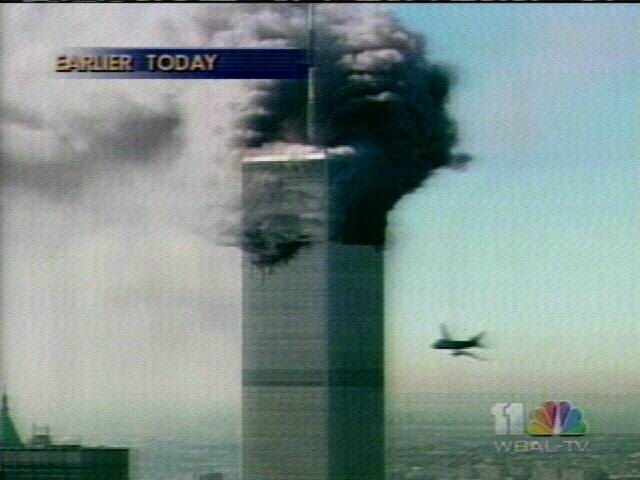
There are a million possible ‘lessons’ from 9/11, but the big one is actually a non-lesson – 9/11 actually changed very little (beyond the changes we made for ourselves, like Iraq and torture). As early as 2006, we were starting to realize just how much we had over-hyped 9/11. The tectonic plates of international relations change slowly. Al Qaeda could not in fact dent unipolarity. (China can, but that is another story.) The stock market didn’t crash. The US military didn’t suddenly collapse. The actual material loss on 9/11 was ‘only’ about $100B out of a $12T economy, and 2700 people from a citizenry of 300M+. (I don’t intend to sound cold; every life is ontologically unique and valuable. But from a national point of view, these numbers are small. Recall that almost 38,000 Americans died in car accidents in 2001.) 9/11 did not unravel NATO or US alliances. US GDP in the proximate quarters continued to expand. China and Russia did not suddenly become nice or nasty. Bin Laden’s much hoped-for Islamic revolution did not occur (one goal of the attack was to spark a global Muslim revolution with al Qaeda in a leninist ‘vanguard party’ role). The much-predicted ‘wave’ of terrorist attacks and plots against the US did not occur, at home or abroad. (Bush defenders will say this is because Bush improved US security at home, but what about the roughly 6M Americans living outside the US? If there really was a global Islamist conspiracy to kill us, there’d be kidnappings and assassinations of US businessmen, students, and tourists all over Eurasia. It never happened.) In the end, well over 99% of the population went to work the next day; unipolarity rolled on.

In short, from a national power perspective, 9/11 is more like Hurricane Katrina – an awful yet manageable one-time disaster – than Hiroshima – a city-breaking catastrophe that promised to be the first in a pattern leading to national collapse. 9/11 was a sucker-punch – a cheap shot al Qaeda managed to slip in because the US wasn’t paying attention (even though the CIA warned Rice and Bush a month earlier). 9/11 did not galvanize the Muslim world, nor provoke a fiery revolt. And given even reasonable homeland security measures (far less draconian than what we choose), repeat attacks at that magnitude are unlikely. In the end, the real reason 9/11 is seared into everyone’s mind is not its catalyst effect toward a global war or clash of civilizations – it is because it was a surprise attack, and because it targeted civilians.

That we permitted that one-shot sucker-punch to drive into us hysterics, to capture our dark imagination, zealous vengeance, and righteous fury is where 9/11 really changed things. American psychology – perhaps insulated too long from the world by US power and distance from Eurasia’s problems – is what changed, not the world.

Continue to part two.

Japan’s Defense Future (2): Actions and Initiatives

101029-N-XXXXX-004

I am out of town this week, so here is a good guest post on Japan’s grand strategy troubles from a friend at the excellent Japan Security Watch. Part one is here.


Japan’s security situation is ripe for change. There are a number of initiatives Tokyo can take to strengthen its strategic situation without markedly increasing defense spending, or reciprocating the belligerency of neighboring states.

– Greater cooperation with South Korea and the United States. The three powers share interest in areas such as counterproliferation, ballistic missile defense, protection of the sea lanes, and anti-piracy in the Gulf of Aden. Direct, one-on-one cooperation by Japan with South Korea may not be feasible at this time, but both sides may be amenable to cooperating under an initiative led by the United States. In the area of Ballistic Missile Defense, all three powers are essentially threatened by the same nuclear-armed states, so it follows all might benefit from cooperation on ballistic missile defense. While Japan already has an effective ballistic missile defense, cooperation with other countries means access to shared assets and capabilities. An organization based on the North American Air Defense Command could be established to command and control regional BMD assets to provide a common response to threats.

– Evolve an Anti-Access/Area Denial (A2AD) capability. Japan’s Self Defense Forces are highly specialized and effective in preventing an adversary from establishing air superiority over Japan, successfully executing a BMD attack, closing Japan’s sea lanes, or invading Japan outright. But in order for Chinese naval forces to sortie into the Northwestern Pacific, they must transit areas close to Japanese territory. The ability to close off China’s access to the Northwestern Pacific with mines, small missile-armed craft, and submarines would go a long way towards curbing Chinese belligerence without resorting to a conventional weapons arms race.

– Increase the ability to project so-called “soft power”. Japan should commission one or more hospital ships with the ability to rapidly send medical and humanitarian expertise overseas. These ships could be sent throughout the Pacific Rim, even into the Indian Ocean and the coast of Africa, to provide humanitarian relief and assistance. Such ships would go a long way towards cooling anti-Japanese enmity in many parts of Asia. To avoid the appearance of being part of a more expeditionary Japanese military, these ships could be placed under command of the Japan Coast Guard, which is under the jurisdiction of the the Ministry of Transportation. In addition, the Ground Self Defense Forces, which have a prodigious number of engineers, could transfer some to the Ministry of Transportation as well, to create an organization capable of doing everything from building roads in remote areas to reopening airports and port facilities after a natural disaster.

– Drop the arms export ban. There is nothing intrinsically wrong in selling arms to responsible governments, and selling arms abroad to such governments could bring in much-needed revenue. The export ban is generally not seen by the outside world as a credible way to decrease the number of conflicts worldwide. (In comparison Sweden, which is one of the biggest arms exporters in the world, is generally seen as a country that promotes peace in useful ways that have nothing to do with arms sales.)

– Joint weapons development and procurement with other countries. The spiraling cost of weapons development, as well the relatively small number of per-unit weapons purchases by the Self-Defense Forces is making weapons procurement extremely expensive. Also, although Japan has a reputation for being a high-tech nation, it does lag behind other nations in the development of certain technologies, the most critical of which being fighter development. Japan could, for example, pair with the United States, Sweden, or France to undertake fighter development, all of which are friendly countries with advanced fighter industries.

Although Japan has had a longstanding tradition of building weapons domestically, it may be time for it to simply give up certain industrial bases in the interests of cost-efficiency. Japan could, for example, purchase amphibious vessels from France, and small arms from Germany. These are just examples, but they’re examples of areas where Japanese industry is either not up to world standard or would require a significant investment to begin production. Buying off-the-shelf in some areas would allow Japan to increase investment in other, vital areas.

– Generate the ability to pre-emptively destroy existential threats. If Japan were under threat of an imminent ballistic missile attack from North Korea, the lack of offensive weapons in Japan’s inventory means it could not strike first and destroy the threat even if it wanted to. Japan’s sole strategy would be to use its’ BMD defenses to absorb the attack, and then either wait until North Korea were out of missiles or convince the United States to retaliate. Either response would be entirely out of the hands of Japan. When diplomacy has failed, Japan must have the ability to destroy threats to its existence, particularly when those involved weapons of mass destruction

– The deeper Japan’s relationships with other countries, the safer it is. The next step for Japan is joint operations with other countries. Japan’s best bet for the future is to burrow into relationships with key allies as deeply as possible, and strive for maximum interoperability. Although the United States and Japan have enjoyed a bilateral defense relationship for fifty years, joint commands between the two have been unheard of. As an example, Raymond Pritchett at the naval security blog Information Dissemination has proposed putting Japanese fighter squadrons on American aircraft carriers.

– The redefining of Japanese security policy as able to accept collective self-defense, and a pledge to defend America would give Japan the more equal alliance with the United States that the new DPJ-led government proclaims it wants, but Japan seems averse to taking the step. Nevertheless, the inherent unfairness of Japan’s stance on collective security is obvious to all and must eventually change.

Altogether, the implementation of these suggestions would not only increase Japan’s security position, they would also help bring it, in international relations terms, into the realm of modern nations. A Japan that can project hard and soft power at will, act preemptively against threats, actively defend other countries, and is fully integrated with its allies is a Japan that has all the functions of a modern state.


Kyle Mizokami is a founder and editor of Japan Security Watch, a blog devoted to Japanese security issues. He also writes for the defense and conflict blog War Is Boring.

NATO’s Biggest Problems in the Future will be Internal, not External

untitled

If you missed the flap over Robert Gates’ speech to the Europeans over defense spending, start here. I am participating in one of those forums about the future of NATO. If had a dime for every time I have been to a conference or forum on this, or read an article on it from the Council of Foreign Relations, the German Marshall Fund, Foreign Policy…

I am amazed at the endless amount of navel gazing on this issue, especially by Europeans in conjunction with the (equally tiresome, endless, and speculative) ‘future of the EU’ debate. You could write a book about the future of NATO or the EU (and many have), but a far more interesting book would be on the cottage industry and rubber chicken circuit that has grown up around these topics. Most westerners still don’t know the difference between Sunnis and Shia, but there’s always more time and money to bemoan NATO’s lack of a ‘strategic concept’ or (worse) the EU’s rube goldberg institutional structure. My guess is the real reason we don’t close NATO is because about 10,000 transatlantic security analysts would be out of a job (but me too, so I’ll shut up now).

Anyway, here we go on the big problems for NATO in the next decade:

1. Coherence: The Soviet threat forced an unnatural level of coherence on alliance members that has since faded. Salafist terror is not a substitute (nor should be – god save us from the ‘long war’ and ‘world war IV’) . The policy struggles over NATO action in the Balkans, Afghanistan, Iraq, and Libya suggest this tussle (‘alliance politics’) will be a regular feature in the future. This will tempt the US to go it alone, especially as the European members are divided among themselves as well. So NATO will look less like an alliance and more like a club of democracies. Its operations will have a more ‘a la carte’ feel as members opt in and out of what suits them, such as Germany and Turkey’s rejection of the current Libyan operation. The more NATO operations move from consensus to majority decision-making, with ‘modalities’ of mixed cooperation, the less the ‘all for one, one for all’ Article 5 will mean. This will progressively unnerve eastern European members who now take Article 5 more seriously than anyone else in NATO.

2. European military capabilities: Collapsing European defense spending reinforces the slide from alliance to club. NATO was always unbalanced with no integrated European ‘pillar’ to complement the US one. This is worsening, because of growing Continental skepticism about the morality and utility of the use of force, and because of the ‘age of austerity’ cuts being forced on all NATO militaries (including the US soon, but worst in Europe). The back-biting and buck-passing of the Libya operation is likely to be repeated as NATO’s high-minded idealistic commitments collide with its operational limitations.

3. Out of area: The big NATO debate from the mid-1990s to mid-2000s was whether to go ‘out of area’ (out of Europe). Afghanistan was the first test of that, and no one seems to like it. European commitments there are so hedged with rules of engagement limitations, that US commanders simply go around them. European publics don’t support ISAF. Perhaps Afghanistan was too far away and too contentious to Europeans for its connection to the much-disliked war on terror. Perhaps Libya, Syria or Somalia might revive the idea. But European publics seem to have little taste for large footprint operations. Minimalist ‘bombing for peace,’ as in Kosovo and Libya, seems like about all the out-of-area European publics are ready to tolerate, again reducing the ‘alliance’ character of the alliance.

4. No one in Asia cares about NATO that much anyway. I have been teaching international relations in Asia for years, and in my experience NATO is seen as just a pleasant, somewhat dated, regional organization. Any hype about NATO as a global police force for globalization would crash right into the new core’s disinterest in any such role. Forget that.

5. Ad hocery is the rule now. In the endless speculation over the future of NATO, my sense is that the organization increasing suffers from the outsized, almost mythic expectations that have accreted around it over two generations. Call it the public relations inertia of NATO’s path dependent trip in the western mind – from hastily thrown-together alliance to the single most important international organization ever (particularly to Europeans). After 60 years, the notion of ‘NATO’ has taken such a hold of the public imagination, certainly among western foreign policy elites, that we are constantly calling for big plans to ‘revive’ it with ‘strategic concepts’ and the like, and we regularly lament that it is fracturing. We have talked up NATO into a powerful image of western solidarity and community, but one which members don’t really want to pay or sacrifice for. NATO’s own self-image often gets in the way of its likely and ad hoc role in the future. No one really knows what NATO is supposed to do after the Cold War, but inertia in the West means we are afraid to close it (which is why we have been having forums like this one for 20 years now). So we keep throwing missions at NATO, wondering whether or not they will work, unsure quite what to expect. Expectations management (read: reduction) is needed. NATO is highly unlikely to forge a widely shared geopolitical consensus, as in the Cold War. But we can try various missions and experiments. Some may work, some won’t. But holding NATO together as a symbol of western political unity is not a bad thing in itself.

The Impact of Arab Spring on North Korea (2): Cleave to China even more

arab-spring 2

Part one is here.

This is the second part of a soon-to-be-published quick piece for the Korea National Defense University on Arab Spring and NK. Comments would be appreciated.

4. Find new nuclear clients, perhaps in Asia. It is widely argued that NK’s decision to nuclearize was foolishly expensive for an impoverished country. This might not have been true, as the DPRK has actively proliferated for cash – most notoriously with the AQ Kahn network and Syria. But as old autocratic buyers in the ME fade, pressure will grow to re-coup the expense of NK’s nuclear program elsewhere. Look for NK to probe new proliferation ‘friends,’ including Hugo Chavez, Mahmoud Ahmadinejad, the Burmese junta, and others; this will test the meaningfulness of the Proliferation Security Initiative.

5. Cleave to China, as the moral cover of fellow autocracies fades. Not only will there be fewer autocracies in the world as a result of Arab Spring, the remaining will be more morally intolerable. For two decades, the ME seemed impenetrable to the post-Cold War spread of liberal democracy seen in Eastern Europe, Latin America, and parts of Africa. Continuing ME dictatorships bolstered the moral ‘normalness’ of NK; if there are many dictatorships in the world, then NK is not especially odious. By contrast, if the world becomes more and more democratic, then non-democracies increasingly stick out. (This is arguably why China informally props up so many other dictatorships.) If this democratization of the ME is genuine, then many of the fellow autocrats who helped NK seem less uniquely awful will disappear, and NK’s isolation will deepen. NK already faces major restrictions on where its nationals and firms may operate. The loss of ‘friends’ like Qaddafi or Assad shrinks this further.

Worse, the debate in the West seems to be genuinely changing on the merits of looking the other way on dictators in the interest of stability. Western elites increasingly recognize the long-term unsustainability and ultimately self-defeating posture of tolerating dictatorships. As Western leaders scramble to get on the right side of history with the Arabs, their moral tolerance of dictatorship elsewhere will decline too. That obviously includes NK. If NATO can bomb for Libyans’ human rights, then why not for Ivorians, Syrians or North Koreans? This is opportune for the Lee Myung-Bak (LMB) administration. LMB’s rejection of the Sunshine Policy and tough line on NK has not been popular in the West. However, changing Western attitudes on the accommodation of dictatorships will likely generate new Western acceptance for LMB’s harder line. Post-Arab Spring, LMB’s rejection of the Sunshine Policy will go down more easily if detente is seen as coddling a dictator similar to Saleh or Assad.

If dealing with dictatorships becomes harder for democratic elites to justify and for democratic publics to accept, then the Six Party Talks are unlikely to resume, and NK will more openly become a Chinese client. It is no surprise Kim Jong Il now visits China regularly; it is all he has left to go to. Post-Arab Spring, the democracies of the Six Parties are even less likely to deal with NK. Losing its autocratic ME friends and unable to meaningfully negotiate with democracies, NK will (d)evolve into a Chinese satellite.

6. Do not give up the nuclear weapons – ever. This most obvious lesson is one Qaddafi, and before him, Saddam Hussein, learned the hard way. The CNN effect can chain-gang the West into places like Kosovo or Libya under R2P, but the West’s casualty tolerance is low. The West will not carry a war solely for human rights if casualties are high, and minimally interventionist air-power is the preferred tool. The easiest way to deter R2P interventions then is weapons of mass destruction (WMD). Libya turned away from its WMD program in 2003, for which it received an implied ‘no regime change’ deal from the Bush administration. The West then reneged on this deal, attacking Qaddafi, just as it was able to attack Hussein, because neither completed their WMD deterrent. Now with NATO insisting on Qaddafi’s ouster (likely resulting in his death at the hands of angry Libyans, as with Mussolini or Ceausescu), NK, especially the Kim family, will be that much less likely to deal on its nuclear program. If NK gives up its program today, it will be more open to democratic pressure and air campaigns tomorrow. Without nukes, one is vulnerable to R2P air interventions, but no democratic public is willing to tolerate a nuclear strike to push regime change. Bombing, yes; nuclear war, no. The lesson of Qaddafi, Slobodan Milosevic, and Hussein is that the West will only blink if you have WMD.

In sum, the overall lesson to NK of Arab Spring is, don’t change at all: permit no foreign reporters (they synergize the CNN effect), give as little information as possible to the NK people (rising expectations from the internet pushed Arab youth into the streets), push China as much as possible (it’s the only option), leave son-gun in place as a bulwark (when in doubt, massacre first, ask questions later). Indeed, this is the lesson of Arab Spring to all the world’s remaining dictatorships, and the worse the regime (Zimbabwe, Syria, NK), the more it applies. Moderately authoritarian states like China or Tunisia can flirt with reform, but for genuinely ferocious systems, like NK, any change risks a huge explosion, because so much social frustration has built up. There is no other way to maintain the state in its current configuration than to clamp down yet more. Sadly, Arab Spring’s liberatory potential in the ME is precisely why its impact in Korea will be a yet deeper freeze.

The Impact of Arab Spring on North Korea (1): When in Doubt, Repress

arab-spring1

Part 2 is here.

The following is a brief analysis of what NK will ‘learn’ from Arab Spring. The good people at the Korea National Defense University asked for a quick, non-jargony write-up. I have previously written for KNDU’s Research in National Security Affairs (RINSA) notes here (no. 70), about NK’s shelling of Yeonpyeong island last year. Northeast Asia security wonks would like RINSA.

Comments would be appreciated, as this will be published in the next few weeks. For my previous writing on Arab Spring, go here.

ABSTRACT

NK will draw six lessons from Arab Spring: 1. Quash protest as quickly as possible. 2. Give the military everything it wants. 3. Return to post-colonial ideology. 4. Find new nuclear proliferation clients. 5. Cleave to China, as the moral cover of fellow autocracies fades. 6. Do not give up the nuclear weapons – ever. In short – dig in your heel, clamp down harder, don’t change.

The Arab Spring revolts present a frightening prospect to any dictatorship. As the world’s most orwellian and repressive – Human Rights Watch has given NK its lowest score for almost forty consecutive years – the DPRK will clearly draw lessons from these events. Six ‘tips’ for NK stand out:

1. Quash protest as quickly as possible. Precisely because the Arab revolts drag on and on, they have held world attention long enough to force a major debate on the premises of Western policy in the Middle East (ME). The longer revolts continue, the harder it becomes for outsiders to ignore them and the louder calls for external intervention become. This ‘CNN effect’ – in which a steady stream of horrific images from conflict or other catastrophe raises hard, increasingly unavoidable moral questions about external intervention – precipitated US pressure on Mubarak, the French turn-around on Tunisia, NATO bombing in Libya, and a possible future intervention in Syria. The best way to keep outsiders out is absolute control. Tiananmen Square (1989), Burma’s Saffron Revolution (2007) and Iran’s Green Revolution (2009) were definitively crushed, while Mubarak tried to negotiate. Chinese overreaction to the proposed ‘jasmine revolution’ is the likely NK response to any civil protest, only yet harsher.

2. Give the military everything it wants. ‘People power’ does not undo dictatorships, splits in the regime, particularly the security services, do. Mubarak lost when the military split over the repression; Yemen and Libya’s rebels have strengthened as the militaries fractured. Son-gun was prescient in its blatant effort to buy off the KPA, even as it bankrupts the DRPK budget.

3. Return to post-colonial ideology. The growing global normative acceptance of the ‘responsibility to protect’ (R2P), the intellectual justification for external human rights-motivated intervention, narrows NK’s ideological space. R2P, for which even China and Russia voted in the UN, raises the ‘audience costs’ of the NK dictatorship. It posits that a legitimate government must meet a minimum threshold of good behavior toward its own people to preclude external intervention: some governments are so bad, they forfeit the right to rule. To date this has been used to justify interventions in Libya, Kosovo, Bosnia, and Somalia; it also impacted the debate on Darfur, Ivory Coast’s recent internal conflict, and a possible future intervention in Syria. This is an important breach of the long-standing norm of mutual, sovereign non-interference, behind which NK and most dictatorships hide.

No case more clearly meets the R2P benchmark than NK with its man-made famines, concentration camps, and extreme privation. The DPRK needs an intellectual response to this challenge, and anti-colonial nationalism is a good choice. Decolonization stirs strong feelings in the global South, the region most likely to confront R2P-motivated interventions. Qaddafi portrays the NATO bombing campaign as Western neocolonialism, with good effect in the African Union, which has repeatedly called for a NATO halt. A vigorous argument to global public opinion that SK is a US puppet bent on globalist exploitation of the peninsula would be a persuasive postcolonial counter to the ‘human rights imperialism’ critics fear in R2P. Further, ideological committed security forces, like Iran’s Basij, are less likely to split with the regime, so propagandizing the KPA complements ‘tip’ 2 above.

Continue to Part 2.

Erratum Notification for Korea Times Readers: I am not a US Imperialist

IMG_4560

On the editorial page of today’s Korea Times, a significant misprint of my writing occurred.

The editorial, “Implication of US Budget Deficit for Korean Security,” reads: “Although America should be globocop, America’s finances force the obvious question of whether it can.” It should have read: “Even if one believes America should be globocop, America’s finances force the obvious question of whether it can.” Due to this and other editorial issues, I have asked the editors to remove the electronic version and to print an erratum retraction tomorrow.

Readers interested in the original argument can refer to the original blog-post on which the op-ed was based – here.

Sorry for the misunderstanding. Thank you for visiting my website.

2 pm UPDATE: The editorial has since been republished in its correct form.

Unleash the ‘Animal Spirits’ of Korea’s Small & Medium Enterprises

chaebol

The Financial Times had an important story over the weekend decrying the emergence of a two-tiered economy in Korea, and it is getting some play in Korea. Koreans are loathe to admit this (don’t criticize the team to foreigners), but any outsider can see this almost immediately here, and just about every non-Korean social scientist I know in-country agrees that this is a huge problem.

By two-tiered I mean the enormous concentration of market power and political access concentrated in the largest 200 hundred or so Korean companies, while small and medium enterprises (SMEs) struggle to find credit, and Korean households pile up debt (now at 150% of income). Non-Koreans will recognize such brands as Samsung, Hyundai, or LG, but others include widely visible names in Korea like SK or Posco. Like Japan’s infamous keiretsu, Korean mega-companies often sprawl into many different sectors, building cross-sectoral conglomerates (the Korean word is chaebol). SK, e.g., owns a telecom service, gas station chain, and real estate distributor. The chaebol have become so massive, that they enjoy many distinctly unearned, oligopolistic benefits of size.

1. They are ‘too big to fail.’ Chaebol in trouble can usually go to the government for help, as many did in the Asian Financial Crisis (AFC). In the 1997 IMF bailout of Korea, the big IMF condition was breaking the chaebol into smaller, more competitive, less openly oligopolistic firms. The chaebol have fought this ever since, often using bribery and political connections, to re-scale the commanding heights. Even Korea’s ‘reformist’ administrations – Kim Dae Jung and Roh Moo Hyun (1997-2007) – got tarred with scandal for taking bags of cash from Korea’s biggest companies. By contrast, Korea’s small and medium enterprises have no such informal political safety net. Anyone walking down the same street in Korea for more than a year or two can see the dramatic merry-go-round of small businesses here. Korea is filled with mom-and-pop stores just one or two bad months away from bankruptcy.

2. Size means political influence. It should surprise absolutely no one that the sheer bulk of the chaebol gives them inordinate, collusive political influence. The most obvious mark of this is the pardons extended to top chaebol officials convicted of a crime. More important is the informal pressure of the government on Korean banks to loan to the biggest firms at generous rates. The not only encourages recklessness at the top, it squeezes Korea’s SME’s at the bottom. Perhaps most scandalous of all, the chaebol were able to terrify the Korean state and taxpayer into picking up the bill of the Korean AFC. The Korean AFC was not caused by reckless sovereign or household borrowing. It was the chaebol, who then, mirabile dictu, dumped their debt onto the state, which ultimately forced the government to approach the IMF. Koreans traditionally blame the IMF for the crisis, but it was in fact, because the Korean state, terrified of the consequences, ‘generously’ nationalized the debt of Korea’s corporate sector. In truth, I suspect the Korean government was bullied by the wealthiest corporate heads in 1997 talking about what will happen to Korea if the government doesn’t give them the money immediately – a shakedown.

3. Cross-sectoral holdings allow a firm to leverage success in one sector for success in another. Even within a sector, Korea is often oligopolistic. The telecom industry is dominated by just two providers (SK and KT – a duopoly), resulting in exorbitantly expensive IT/long distance rates. These sorts of oligopolistic effects are well-known. Yet worse is the regular invasion of wholly unrelated sectors, in which the market power of one sector is used to push into other. The best know example of this to westerners is Microsoft. For more than a decade, MS used its power in operating systems (Windows) and office software (MS Office) as leverage to crush rivals in other areas where MS was weaker – browsers (Netscape), instant messaging (ICQ), media players (WinAmp), etc. In Korea, it is vastly more predatory and oligopolistic, as the chaebol often expand into areas wildly unconnected to each other, a practice that can only be explained by extraordinarily weak anti-trust enforcement, regulatory ‘looking away,’ and the political connections to give an unstated veneer of approval. Even Adam Smith rejected excessive concentration (monopolies, duopolies, oligopolies), and I can think of not credible market explanation whereby SK is the country’s biggest telco, real estate holder and gas station chain simultaneously. These outcomes are so blatantly political and ridiculous, that I am amazed Korea sees so little populism.

But corruption, scale, and political influence can’t be the only reason. Korea could elect genuine progressives to push through deconcentration. Even the Reagan administration broke up AT&T, right? And here is perhaps the most insidious element of the chaebol – they have convinced Koreans, a) that they are the flag-bearer toward the rest of the world, and b) that if they went through bankruptcy that Korea’s economy would implode.

a) Corporatized nationalism. Korea is a small place, bullied often by its neighbors, with a language no one learns, a culture that’s not easily distinguishable from China or Japan, and a nuclear lunatic running half the country. But as anyone living here for about 5 minutes can tell you, they are intensely nationalistic and absolutely determined that the rest of the world know who they are. That is why Yuna Kim is a legend here – not because she is a good skater, but because she brings the world’s attention to Korea. The chaebol have masterfully exploited that absolutely desperate craving for attention.

When the EU FTA was up for debate, the government ran commercials on TV showing smiling white people in European locales using Korean goods – helpfully pointed out as from Samsung, LG, etc. In trains, airports, bus terminals, on the government TV networks, etc, one sees an endless stream of government promotional commercials and videos showing dynamic-looking Korean businessmen talking up this or that Korean export product to someone who looks like a foreigner (i.e., a white guy in a suit). The Korean news gives you a regular diet of chaebol agit-prop, as the ups-and-downs of Samsung, SK, LG, Kia, etc are reported religiously. And the dream job of just about every Korean student I’ve ever had is to be a jet-setting corporate executive for Samsung. Koreans have routed their nationalism through their MNCs, and the chaebol take advantage of this to blackmail the state when necessary – particularly soft loans from the government.

b) Korea is Korea, Inc. is chaebol-land. Almost as bad is the widespread belief in Korea that if the chaebol are threatened, then somehow Korea will collapse. I see this all the time in conversations here. Despite all the above arguments for anti-trust action, my interlocutors inevitably retrench to fear – what would Korea look like if Posco went bankrupt? That Korean demand for the products Posco used to make would persist and therefore encourage new market entrants seems to arcane. That start-ups are often more efficient and more innovative (Facebook vs Microsoft) suggests even more unnerving change. That shaking up markets usually reduces consumer prices by forcing established winners to work harder is irrelevant: Koreans are ready to pay higher prices at home if that it what is required for Korea, Inc. to carry the Korean flag abroad. In the end, Korea must have national champions – not because they are champions, but because they are national. If Korea is a divided country of minor global importance (ie, no one cares about us politically), then we must have, economically, megacompanies to broadcast our national awesomeness. In the end, if Korea must be Korea, Inc. in order to get globally noticed, then its ok to be chaebol-land.

If this is depressing, there are obvious answers that do not require the government to forcibly to delimit some areas for the SMEs and some for chaebol, nor to beg the chaebol to be nice. And these would bring Korea into greater compliance with OECD norms and best practices on corporate governance:

1. Halt easy credit for the chaebol, while creating a pool of such capital for small business, modeled on the US Small Business Administration. The Korean SME sector is the most dynamic economic force in the country, taking huge risks to build neighborhood-enriching corner shops. This is far gutsier than mega-companies with lots of government buddies producing variants on the same product every year. The Korean Jeff Bezos or Mark Zuckerberg is out there, but I guarantee he is not a mid-level salary-man at Samsung. The government needs to unleash the ‘animal spirits’ of Koreans; access to bank credit on an equal playing field is the obvious place to start.

2. Enforce anti-trust law. Oligopolies create so many negative effects that even the conservative Reagan administration broke up AT&T and achieved a 70% reduction in long-distance rates. There is no possible economic justification for consumer-punishing cross-sectoral conglomerates. Western regulators would long ago have forced chaebol spin-offs. More firms means more competition, more innovation, and lower prices.

3. Stop sterilizing the won’s appreciation. ‘Fine-tuning’ is a laughable euphemism for forcing depreciation at the behest of chaebol exporters. It creates obvious costs – 5000 won for an import beer at HomePlus – for consumers. Korea’s inflation rate is now 4.2%; an easy way to return purchasing power to Korean consumers would be for the currency to rise.