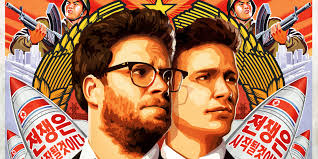
The “Interview” Fits a Long Tradition of Really Stupid US Portrayals of North Korea (but SK Film is much Better)

9inter

If you are looking to watch The Interview immediately, you can buy it on YouTube here. But the reviews on Rotten Tomatoes have been weak so far.

I am not quite sure what to make of all the hacking controversy yet, but in the run-up to the film, I wrote this quick comparison of North Korea in South Korean and US film. Not surprisingly, South Korea handles NK far more intelligently, whereas the US seems to have a weird, somewhat creepy obsession with North Korea invading America. Yes, really; read the review below: the US will have four ‘NK invades the US’ movies or video games in five years. I am still trying to figure out what that means.

Anyway, this was first written for Lowy Institute; the essay follows the jump.

My Lowy Essay on the Paranoid Anti-Americanism of South Korean Geopolitical Film

Take that English Teacher with Bad Hair!

So I watch way too many movies when I should be working, probably because I am pretty lazy. But a side benefit is noticing the various tropes and themes of movie genres. And one thing I’ve picked up watching movies in my field (international relations) in South Korea, is the regular use of stock American villains. Maybe I notice it just because I am an American, but it seems pretty pronounced to me.

It is well-known that westerners in Korean soaps are frequently used to introduce duplicity, sleaze, STDs, and so on. But in the film industry, the Americans are more nefarious, usually plotting to manipulate Korea  to serve neo-imperial goals or something preposterous like that. Amusingly, the plots are usually ludicrous to the point of laughable (Americans mass-bombing plague victims in downtown Seoul in broad daylight?! – hah!); the dialogue is risibly ridiculous as well (“Korea is independent and sovereign, and you Yankees can’t tell us what to do!” Yeah!!); and the ‘American’ characters almost always sound like Russians or non-American English teachers the movie producers just pulled off the street and stuck in a bad rip-off of a US Army uniform.

It is also noticeable that all this American manipulation of Korea is self-congratulation: if the Americans are going to great lengths to use Korea for their dastardly plots, then Korea must be pretty important to the world’s lone superpower. Better fanciful American flattery of Korea, in trying to manipulate it, than the reality of American ignorance of it.

So here is some nice holiday relaxation. Revel in the sheer laughable paranoia of left-wing Korean cinema. It’s a hoot:

Continue reading

My 2014 Hate-Mail of the Year: ‘Kelly, You’re Wrong; North Korea’s Awesome!’

North Korea 2012 279-Kelly-Viao

For my 2013 hate-mail of the year award, go here.

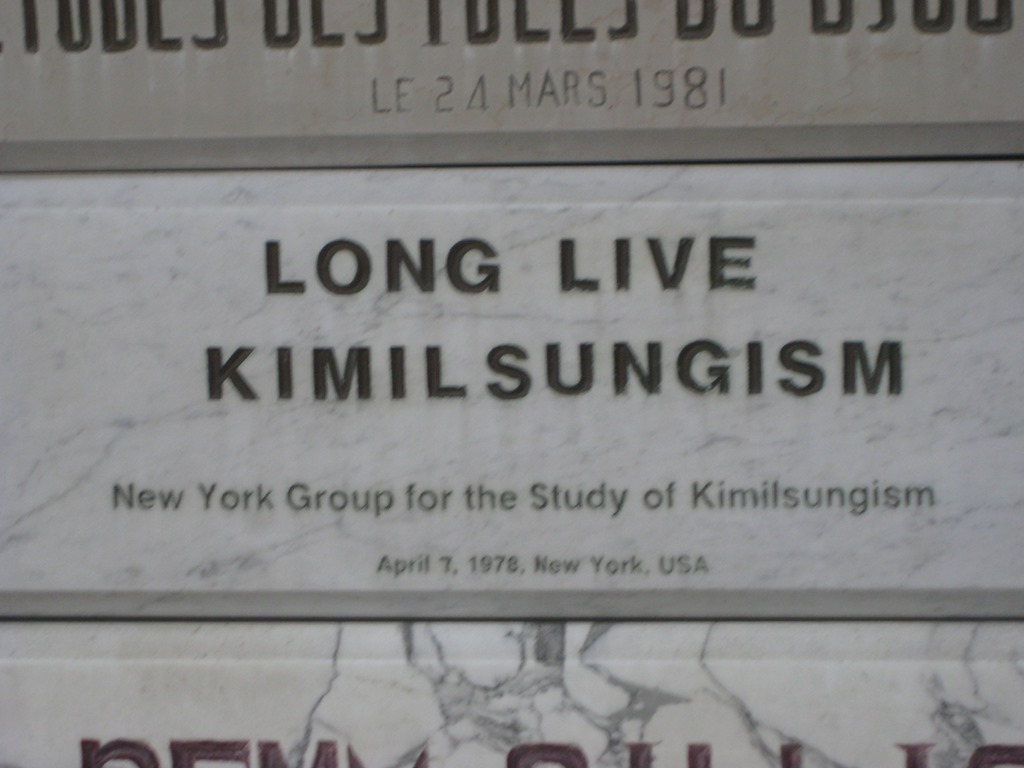
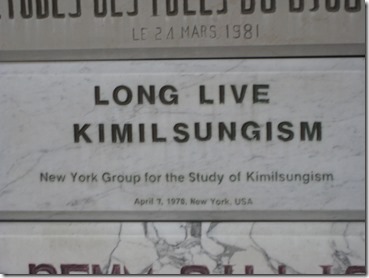
So I get a lot of weird email and comments because of my blog, or in the comment sections of my op-eds for the Diplomat. A lot of it is fairly ridiculous (‘you want the terrorists to win!’) or ad hominem (‘you’re a tool of the IMF; you’re a Muslim’), but occasionally I get pretty unique stuff like this letter below. (The image above is a personal picture of a plaque on the Juche Tower in Pyongyang. Perhaps the correspondent comes from this study group.)


“Dear Robert Kelly,

I read your column in The Korea Times with great interest and would like to share my thoughts with you.

You may think that my opinion is weird and crazy from a point of American.

Most Americans think that North. Korea is vitally harmful, threatening the world peace by shooting the missile toward America.

America had fought with North. Korea at 1950 and kept a hostile relations with it since then.

I think North. Korea is a great country, because it has shown sophisticated diplomacy against a big country.

I claim that North. Korea is less westernized and less materialized. It keeps a strong defense for people.

I also argue that North. Korea has not tarnish tradition and nature unlike South. Korea.

I wonder that you can say that all the people in South. Korea and U.S. are happy, just because they live in a democratic and capitalistic society.

I also ask you that most people in North.Korea is unhappy, because their government infringes on its citizen’s individual freedom severely.

I am sure some people may have been successful in adapting to a totalitarian society and they may have made a fortune and achieved a solid social position.

If the U.S. is a perfect society for living, I wonder why so many American came to Korea to get a job.

I have met many Americans who blamed their country and they don’t want to go back to their country.

Some American has settled down in Korea, marrying a Korean woman.

Deciding which government is better is subjective.

In a nutshell, North. Korea never collapses.

Best regards,

———“

My Lowy Essay: “OPCON Reversion is Dead – the 10-Year Soap Opera is Finally Over”

untitled

This is a reprint of an essay first published by the Lowy Institute a week ago.

The reversion of OPCON – operational wartime control of the South Korean military – to South Korea is finally over. After 10 years of endless meetings, papers, op-eds, and power-points, everyone seems to have realized it was a basically a huge mistake (which it was). The US and Korea recently agreed to push it off the 2020s, which is another way of saying it will probably never happen.

The irony is that almost as soon as reversion was agreed to last decade, the South Koreans got cold feet and tried to have it changed back. No one seems to have thought that closing down the Combined Forces Command would mean that Korea would have to do a lot more for its own defense and stop free-riding so much. Once that reality hit by the end of President Roh’s term, ‘US imperialism’ didn’t look so bad after all: it meant Seoul could continue to woefully under-invest in defense. So here we are at last, back to where we started from. And honestly, it is all for the best – if the US is going to stay here.

The essay follows the jump.

My November Diplomat Essay: If We can’t Stop Fighting in the Middle East, We’ll Never Pivot

images

You think that guy to the left cares about China or ASEAN? Gimme a break.

This is a point I have made again and again on this blog: Asia does not activate the racial/cultural/religious paranoias of Americans, especially conservatives, evangelical Christians (who are around 45% of the country), and the GOP. This is why we won’t stop fighting in the Middle East. The ‘America is a Judeo-Christian country’ crowd absolutely wants to stay and fight it out against the jihadis, because it fears/hates them in a visceral way it never will feel about east Asian geopolitics. China may be threatening in a traditional, state-to-state kinda way, but that doesn’t move people’s deep fears/beliefs/angst though. But the idea that Muslims might bring sharia to the West, build a mosque near ground-zero, or see their holidays treated equally by Western public authorities is enough see a lot of Americans into a cultural panic. Hence the huge well of public opinion support to keep fighting and fighting in the Middle East.

This is what Huntington grasped a long time ago with the clash of civilizations, but China is too different for most Americans to get excited about in a personal way. But Islam does provoke Americans like this; just watch Fox. Its focus on Islam is relentless and astonishing. So yes, the long war is still the long war, and the Chinese can sit back and watch the GOP insist that the US fight endlessly in the Gulf.

The original essay is here; reprinted after the jump:

Continue reading

My National Interest Essay on the Ridiculous Media Hysteria over Kim Jong Un’s Disappearance

untitled

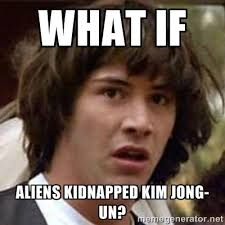
Admit it,  you miss the wild speculation about Kim Jong Un’s disappearance last month. It was lunatic fun, right? Was he dead? Was his sister in charge? WAS HE REPLACED BY ALIENS?!! Run for the hills!

To me, in retrospect, the big story was not KJU’s disappearance, but the wild, almost lunatic conspiracy-theorizing it unleashed in the West.

North Korea is a running punch-line in the West. Kim Jong Il was the villain in Team America. The story that the Norks found a unicorn a few years ago got play for weeks in the US for its sheer laugh value. So this essay was an effort to get a handle on this – why do Western media feel license to make any wild, preposterous claim they want about North Korea? Where does this bizarre obsession come from? There’s probably a good MA thesis in here actually if you were serious about it.

The following essay was first published by the Lowy Institute, and then picked up by The National Interest. This was the first time I was published by TNI, so that was pretty cool. My thanks to the TNI editor, my friend, Harry Kazianis.

My H-Net Book Review of Acharya’s ‘The End of the American World Order’

images

If you don’t know H-Net, you probably should. It is a great way to keep up to date with what is being read and discussed in the humanities and social sciences. They seem to offer mostly book reviews and roundtables. I find them particularly good in my area – the intersection of history and political science. H-Net has a general qualitative bent also, so its reviews are mercifully readable.

Over the summer, they asked me to review Amitav Acharya’s book, The End of the American World Order. Here is the link to review on the actual H-Net site. I have re-printed it below. In brief, he argues that the US is in terminal relative decline, and that a world order without a domineering American role must be discussed. He sketches a few (unconvicing) alternatives.

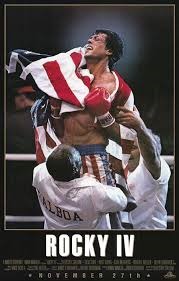
And being the child of the 80s and its so-bad-it’s-awesome film, what image of American World Order could surpass Stallone beating the crap out of commies while draped in an American flag? Awesome! Go Rocko! I remember cheering in my seat when Rocky beat Drago. We won the Cold War and kicked some russki butt! Hah! I think I was 12. Good times, which I guess Acharya is taking away from us…

My Submission on Dodko to the University of Nottingham’s Blog Symposium on Asian Territorial Disputes

Dokdo

The China Policy Institute of the University of Nottingham in Britain is running a blog symposium – cool idea! – this week on Asia’s territorial disputes. Here is the series page, and here is my submission. I’d like to thank the CPI blog director, my friend Jon Sullivan, for inviting me to submit. Not surprisingly, I was solicited to write on Dokdo/Takeshima/Liancourt.

Regular readers of my work will notice some of my preferred themes – that Korean claim is probably stronger; that a Japanese acceptance of that is nonetheless necessary to legitimate that sovereignty claim; that Korea wildly overblows the importance of this conflict because ‘anti-Japanism’ is central to modern South Korean identity.

The other entries in the series are worth your time if this area interests you. I was happy to participate. Below the jump is my contribution:

My October Diplomat Essay: Russia between Empire and Modernity

Bt5OjLdCYAA4N0n

This is a re-up of an essay I just wrote for the Diplomat (posted here). And that image to the left comes from this famous (notorious, really) tweet. If that doesn’t capture the values clash between Putin and modernity – real men have tigers as pets, while Obama is a well-dressed wus – I don’t know what would. If you ever wondered where feminism in the study of international relations came from, there you go.

Russia is a bit outside my normal purview, but I’ve always had a running interest. I studied Russian in grad school and spent a few summers there learning the language. I enjoyed it a lot and like to think I am sympathetic. Like a lot of post-Soviet analysts, I find it tragic how badly misgoverned Russia has been for so long – literally back to Ivan the Terrible. Russia has so much human capital; if only it was governed properly, it could be a serious emerging market player like China. But instead its one megalomaniac czar after another – whether they be imperial, Soviet, or Putin – wrecking the economy for their own vanity and nationalist unwillingness to accommodate the West.

Putin would rather posture and bluster like a bully on the school parking lot than whip Russia into shape. Everyone knows what’s needed – real elections, press freedom, an anti-corruption campaign, and so on. But I guess if Western analysts say these things, the ‘Russian’ way for Putin must be to do the opposite. So we’re back to 19th century ‘Dostoyevskyan’ images of Russia as an Orthodox, anti-western nationalist power with a unique mission (read it for yourself, then compare it to Alexander Nevsky). That may sate the ideological cravings for global status of Russia’s nationalists, but it won’t help Russia rival the West in the medium-term, will scare non-Russians along Russia’s borders, especially Muslims, and will not impress Beijing, which long ago learned how to profit from globalization and capitalism (while corruption is destroying Russia).

Here’s that essay after the jump:

My September Diplomat Essay: “After Six Years, Is there an Obama Doctrine? Kinda, Sorta”

Clausewitz

This is a re-post of a piece I just published at The Diplomat this week. And that picture is Clausewitz. I attended a strategy training seminar this past summer at Columbia (apply for it if you’re in a PhD track; it’s excellent). So this stuff has been on my mind a lot recently. And what would a blog about security be without ostentatiously name-dropping Clausewitz once in awhile so I look smart?

Actually I am kind of skeptical of these big ‘doctrinal’ or ‘grand strategy’ statements. Is it really even possible to burn down the complexities of US foreign policy all over the world into some kind of pithy statement, or a few paragraphs? I doubt that is even possible. I suppose if you are a micro-state like Panama or Tuvalu, these exercises are manageable. But for large states like the US, I think it is easy for such debates to become scholastic, how-many-angels-can-dance-on-a-pinhead sorts of things. And frequently, these sprawling, meta-statements fly out the window when events don’t follow the ‘strategic’ guidelines or expectations. This has certainly been the case in dealing with North Korea, where I have repeatedly defended the Obama line of ‘strategic patience’ against the critique that its lacks a ‘strategy.’ Just look at how many big ideas for dealing with North Korea have crashed and burned. It makes one wonder what the point is at all. Keeping deterrence firm and not getting rooked by the Norks is pretty good without elaborate, fanciful power-points on to disarm the KPA in 20 years.

So give Obama break. The most important thing is making the world a little more liberal, a little more democratic, a little more capitalist from presidency to presidency. There is no huge need for some major, complex intellectual edifice for that, because events will often invalidate anything more detailed than that. Just look at how President Bush more from anti-Clintonian realist to uber-Wilsonian democracy promoter overnight. Ultimately, it is US behavior that matters, not some paragraphs in the NSS that only Washington think-tankers read.

Anyway, here’s that essay:

Continue reading