UPDATED, March 22, 24: This post got a lot of traffic, due to Andrew Sullivan’s citation of it. Thank you to all those readers coming for the first time; please come again. The criticisms levelled here have been similar to those made at the Duck of Minerva, where I also blog. It seems there are three main critiques, although you may wish to scroll further down to the original post first: 1. I exaggerated; Russia is still a great power. 2. I didn’t provide enough data and links. 3. I don’t really ‘get’ Russia, or I’m just recycling western propaganda.
(In passing, I find it both curious/frustrating as an author that what I think is my more creative and fresh work in the last few months [this or this series] didn’t get nearly so much attention, whereas lamenting Russia’s postimperial decline, which so many have done before me [see all the links below], got an explosion of interest. Not quite sure what to make out of that…)
1. I overshot in saying Russia isn’t a great power anymore.
Ok, but not by much. I’ll agree that it was probably gratuitous to call Russia a ‘joke’ as a great power. But then again, be honest with yourself and tell me you didn’t laugh: when Putin rode around shirtless on horseback, when Putin stage-managed a discovery of ‘antiquities’ while scuba diving, when Putin claimed the State Department and Secretary Clinton were fomenting the Moscow protests, when Zhirinovsky “backed free vodka and the reconquest of Alaska,” when the president fired a minister on live TV (!), the minister refused (!!), and Medvedev responded with farcical lecture on Russia’s globally-regarded ‘constitionalism’ (!!!). Or just read this from Gawker on the Putin the crossbow-toting whaler and tell me you don’t burst out laughing – over a head of state with superpower pretensions?
These are the sorts of howlers and hijinks we expect from leaders like Qaddafi, with his retinue of female ‘bodyguards,’ or Idi Amin, with so many gold medals on his uniform you could store it in a bank vault. But modern states, desirous of global prestige, seeking to be taken seriously at the highest levels of the game, just don’t do this stuff. Could you imagine Wen Jiabao doing he-man photo-ops? You’d laugh, right? Well… Putin’s become a punchline, regardless of Russia’s other strengths, which is ultimately what motivated the original post.
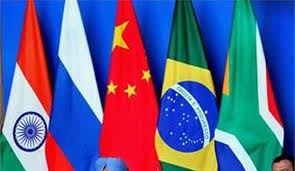
As Niall Ferguson put it last December, “Russia—who cares? With its rampant voter fraud and declining population, the country is careening toward irrelevance. …Russia isn’t quite “Upper Volta with missiles”—West German chancellor Helmut Schmidt’s immortal phrase. But it’s certainly a shadow of its former Cold War self. The U.S. economy is 10 times larger than Russia’s. Per capita gross domestic product is not much higher than in Turkey. Male life expectancy is significantly lower: 63, compared with 71 on the other side of the Black Sea. And the population is shrinking. There are nearly 7 million fewer Russians today than there were in 1992. By 2055, the United Nations estimates that the population of Egypt will be larger. Remind me: why did Goldman Sachs group Russia with Brazil, India, and China as the “BRICs,” supposedly the four key economies of the 21st century? Give me Turkey or Indonesia any day.” That’s exactly right (I know people think Ferguson is a neo-victorian apologist for empire, but hold that thought), and it should deeply worry and embarass Russians that the rest of the planet thinks this way about one of the world’s great cultures. I wrote something similar last fall when Putin announced his re-taking of the presidency, and the whole world shrugged.
Here is more from the Duck of Minerva comment section:
“My interest was more developmental than realist-theoretical. On re-reading the post, it was a bridge to far to say that Russia isn’t a great power anymore. It still is, by the skin of its teeth. Nukes compensate for other areas of decline, I suppose, as you are suggesting. De Gaulle saw this, as did N Korea.
My real goal was to developmentally differentiate between Russia and the other BRICS. That BRICS moniker is to imply some level of cosmopolitan comfort with the modern world economy and rapid growth to greater weight within that economy (hence my reference to Parag Khanna). The other 4 BRICS capture that upward trend – as do other economies like Turkey, S Korea, Mexico, or Indonesia (hence my preference for Khanna’s term ‘second world’). But Russia really doesn’t. Russia is slipping, not rising and has been, more or less, since the late 1970s. That’s quite a hegemonic decline. Its internal rot is pretty severe now. Its Transparency International score in 2011 is a staggering 143 out of 182, putting it in the company of Nigeria, Belarus, and Togo, and obviously calling into question not just its BRIC credentials, but its great power ones too. And the shirtless one’s return puts off a turn-around for another six to twelve years. Given that China rose to the ‘G-2’ in just 30 years, 20+ long years of Putinism (after 10 years of Yeltsin chaos plus late Soviet stagnation) portends a disaster for Russia. This is the real reason for the Moscow protests. They see this now.
Rotation at the top is just one marker for BRIC normalization, but other obvious red flags include the relentless xenophobia of the Putin regime, the alienation from the WTO, the huge missed opportunities of globalization, the blow-out levels corruption and state capriciousness including the murder of journalists, the third worldish reliance on carbon and weapons exports, the 19th century ‘spheres of influence’ obsession with countering the West in Eurasia, the confiscatory attitude toward private wealth most obvious displayed in the Khodorkovsky case, or Putin’s laughably ridiculous throwback-to-Kaiser-Wilhelm bravado of hunting on TV with a crossbow or fighting stage-managed martial arts contests. Does that sound like a BRIC or Khanna’s ‘second world’? Not really. It sounds like Venezuela or Iran. It sounds like an angry, Weimar-style pseudo-democracy high on petro-dollars with a ‘postimperial hangover,’ as Vice-President Biden once put it. Hence the argument that BRIC/second world is the wrong developmental category for Russia. For more of this, ‘should the R be taken out of the BRICS’ debate, try here and here. For a similar write-up on how Putin’s return will critically aggravate so many of Russia’s outstanding problems, try here.
2. I didn’t provide enough data.
Ok, so here you go. It’s pretty easy to find. Please read the links above and these below. From the Duck:
“Actually there’s lots of data on this that’s pretty easy to find with Google. I suppose I should have included more links orignally, but I thought a lot of this was common knowledge at this point. But here you go; all the following links come from the last few years:
a. On demography, I was thinking of Nicolas Eberstadt’s work. He’s been writing on this for a long time now, most recently November 2011 in Foreign Affairs. His title, ‘The Dying Bear,’ is pretty blunt about the population contraction. For more, try this.
b. On corruption so high, it’s incommensurate with being a great power, here’s that Transparency International score again.
c. It is downright heroic, if not irresponsible, to suggest that alcoholism is not a huge problem in modern Russia and severely impacting men’s health and mortality: here or here. Just look at those estimates of average male lifespan – around 60! Gorbachev even thought alcoholism imperiled the very existence of the USSR and launched a major government campaign against it.
d. On the brain drain, try here. Note the big listed reason – problems with the Putinist regime – and their profile: “vast majority of those who admitted wanting to leave were under 35 years old, lived in a major city, and spoke a foreign language.”
e. On the economic overreliance on carbon and how weak the economy really is under the hood, try this from the Financial Times just today. More generally try this and this from the Economist how post-‘reelection’ dysfunctional.
For what it’s worth, this wasn’t intended to be ‘anti-russian gloom and doom.’ I studied in Russia for a bit and spoke it reasonably well once; I’d like to think I am sympathetic. But simply denying Russia’s internal decay is not really a response – as the Moscow protestors themselves understand.”
3. I am not sympathetic enough to Russia’s unique condition/I’m just spinning western propaganda.
Maybe, but I did study there for a bit, and I could speak the language pretty well once. And none of that really changes how Putin is dragging Russia down.
From the Duck:
“On my empathy, try this, which I wrote in 2009, long before this flap. I noted how Americans vastly underestimate how much Russia did to win the Second World War and that our Spielbergian self-congratulation leads us to overlook the huge suffering of Russians at the hands of the SS: “I didn’t really realize this much until I went to Russia to learn the language and travelled around. The legacy of the ‘Great Patriotic War’ is everywhere. Everyone lost someone, and frequently in brutal circumstances Americans can’t imagine. Every Russian guide you get will tell you how Americans don’t know much about war, because we were never invaded, occupied, and exterminated. The first time I heard that, I just didn’t know what to say. You can only listen in silent horror as the guides tell you about how the SS massacred everyone with more than a grammar school degree in some village you never heard of before, or how tens of thousands of those Kiev PoWs starved or froze to death because the Wehrmacht was unprepared for such numbers and the Nazi leadership just didn’t care.” Please note that a Russian even graciously commented there about how rare it is for Americans so say stuff like that. I did study in Russia; I did have friends there; I do have some language and culture skills. So I’d like to think of myself as a sympathetic critic. My real concern is that Putin’s awful misgovernment of Russia is pushing it towards irrelevance, per Ferguson above, and as I think the protestors intuit. Putin has become a global laughingstock, and he’s pulling Russia down with it.
I don’t disagree that Russians have deep social energies that we miss by focusing on Putin and the Kremlin, but one could say that about almost any country. Most peoples like to think of themselves as proud, energetic, innovative, unique, etc. Americans love to call themselves exceptional, and Koreans regularly tell me how the ‘miracle on the Han’ proves how Korea is the most awesome, cohesive, energetic, team-work society in the world that can overcome anything. Ironically, the most consequential grassroots/civil society movement in Russia is the anti-Putin protests, which fits my argument.
Finally, you raise an interesting question about whether all the issues I discuss combine into real momentum for decline. I wonder how that could not be the case, unless the leadership changes. Russia’s traditionally been a top-down place. It’s hard to see turn-around coming from below. (Again, this is why the protests are so important; they’re trying to change that.) Russia’s been slipping for three decades now. I agree it hasn’t fallen off a cliff, like, say, the end of the Ming dynasty or something, but a generation’s worth of negative trends is slowly chewing away at Russian power. I have stepped back from the original statement that Russia is not a great power; that was overreach. But the margins are narrowing.”
———————– ORIGINAL POST ——————————————-
With Putin’s ‘return’ to the presidency, Russia is now officially a joke as a serious great power state. True, Putin has been ridiculous for awhile, what with those shirtless photo-ops that came across like desperate, bizarre geopolitical ‘ads’ that Russia is still a superpower. But this is different. Not even Chinese elites play the sorts of merry-go-round games at the top that Putin has engineered in the last 6 months. To their great credit, Chinese presidents and premiers serve and go. Russia is now the only one of the BRICS in which power does not rotate. Instead, Putin is starting to look like one of those oil-rich Arab dictators who never leaves, continually gimmicking the the ‘institutions’ and ‘constitution’ to justify how, mirabile dictu, he keeps staying in power. In the meantime, the real power structure morphs into an oil-dependent, rent-seeking, cronyistic despotism. And like those Arab dictators, Putin is facing a local resistance that increasingly realizes that Putinism is taking their country nowhere but nest-feathering. To paraphrase Helmut Schmidt, Russia’s pretty much a petro-state with nukes at this point.
Continue reading →