My CSIS-PacNet Newsletter on US Alliances in Asia: Balance-Positive, but Downsides should be Admitted Too

So I wrote my first article for CSIS the other day – for their PacNet series on Asia-Pacific issues. If you aren’t on the PacNet list-serve already, you probably should be. They have pretty good reach, and they manage to get a lot of good people to write for them – so who knows how I got a call. My thanks to the editor, Brad Glosserman for soliciting me.

This essay (below the jump) is a tweaked version my original essay for the Diplomat. The argument is the same, only Brad made it a little sharper and more pointed than in the original. So here I will take a moment to respond to some of the ‘you’re-appeasing-the-Chinese’ comments I have gotten. The point of the essay is not to suggest that the US should leave Asia. Instead,

1) We (Americans) should realize there are unintended consequences to our actions out here. I think we sometimes miss that due our nationalist blinders that an American presence in the world is an automatic good. It is almost always mixed, as we should know by now with our up-down involvement in the Middle East. This tries to illustrate that.

2) The good things that America is supposedly bringing to Asia are almost never measured. They are just assumed under a miasma of American exceptionalist awesomeness: we are awesome, therefore our presence is Asia is good for them. Instead of assuming in classic American Whig fashion, that all good things go together, how about a little more modesty?

So, yes, if your black/white alternative vision for Asia is Chinese regional hegemony, then US East Asian regional hegemony is great. Until China liberalizes/democratizes, we should probably stay, and that is probably a good thing. I agree that China is sort of a threat against which we should be hedging. (But Dave Kang makes an argument that China’s neighbors’ military spending does not actually suggest they see China as a big threat.) But, there might alternatives to a big militarized pivot and tacit cold war with China. Maybe some kind of concert with China, Japan, India and Australia, plus smaller powers, can be arranged. Also, we need a way to prevent East Asian allies (and ‘shadow-allies’ like Indonesia or Vietnam) from free-riding on us too much. (NATO free-riding is very severe and is crippling the response to Crimea, so it is actually pretty important to get US Asian allies to step-up.) I am not yet convinced that these alternatives to a Sino-US cold war are impossible – hence this essay. But yes, Chinese behavior in the East and South China Seas gives me pause too. It is hard to know the right way forward here.

Here is that CSIS essay:

Continue reading →

My Lowy Post on Obama’s Asia Trip – Watch Every Interest Group Instrumentalize it for its Own Purposes

PHOTO: Barack Obama waves as he walks down the stairs from Air Force One at Fiumicino Airport on March 28, 2014 in Rome, Italy.

So Obama is off to Asia this week for a quick trip that is inevitably being over-hyped by every Asia analyst on the planet as some major turning point in the US relationship with Asia. It’s not: below is re-printed my original, ‘watch-elites-manipulate-the-Obama-trip’ comment for the Lowy Institute. The spin will be over-the-top as every Asia pundit races for media exposure. Presidential trips are a great opportunity for the analyst community to posture and hyperventilate about how Obama ‘must’ do this, ‘has’ to do that.

Yawn.

Most of that is bunk. A lot of that is 1) analysts trying to demonstrate their own relevance and self-importance – is it surprising that Asia hands defend the Asia pivot so vociferously? But there is also 2), the unwillingness of a lot of Asia hands and hawks to admit that the US does not actually ‘have’ to do anything in Asia. America has huge freedom to move here, and Asian states – both allies and China – need the US way more than we need them. Where would Asian economies be without the US consumer? And even China might be nervous about a US forces withdrawal given the open balancing behavior that would likely spark in Japan, India, Vietnam, and the Philippines. So ignore all the commentary that the US ‘needs’ Asia; the real story is the opposite and that space which that gives the US to play hard-ball on things like Asian mercantilism and North Korea.

Continue reading →

My Diplomat Essay for April: Unintended Consequences of US Alliances in Asia

UC

So this month for the Diplomat I wrote a speculative essay on US alliances in Asia – reposted below, original here. I think some people over-read it to mean that the US should leave Asia or that I endorse Chinese regional hegemony or whatever. I don’t. As I say in the piece, I still think the US presence is balance-positive, especially as China is moving from the ‘peaceful rise’ to capacious maritime claims off its east coast. Instead this was to be a thought experiment – an effort to tease out whether US regional alliances have negative impacts, given that almost all the discussion rather blithely assumes the opposite. I think the first possible downside suggested below – that China won’t cut North Korea loose until the US leaves Korea – is particularly strong and unsettling to the conventional wisdom. Ideally, this analysis would encourage thinking on mitigating these unintended side-effects.

Here is that essay. If you follow CSIS’ ‘PacNet’ series (which you should btw), a variant of this will come out there shortly:

“The conventional wisdom on US alliances in Asia, at least in the West, Japan, and Taiwan (but not necessarily in South Korea), is that they are broadly a good thing. One hears this pretty regularly from US officials and the vast network of US think-tanks and foundations like CSIS or AEI and their many doubles in Asia. US alliances, we are told, provide stability. They keep China from dominating the region. They hem in North Korea and defend the powerfully symbolic South Korean experiment in liberal democracy and capitalism. They prevent the nuclearization of South Korea and Japan and a spiraling regional arms race. In short, they re-assure.

Continue reading →

The Contemporary China–Wilhelmine Germany Analogy, part 2: Differences

imagesHere is part one.

This is the second half of my series on the analogy of China today with Germany in 1914. This was originally written for the Lowy Institute in Sydney. China today = Wilhelmine Germany is a pretty common analogy in international relations writing, especially in the op-ed ‘literature’ on China. I thought it deserved a little more deconstruction given how much we use it. Here I argue that there are enough dissimilarities to undercut the predictive value of the analogy.

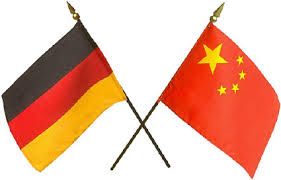
Once again, I can’t find a good image of Wilhelmine Germany and China. Someone please find me a pic that doesn’t use the modern Germany flag like this one. Here is that post:

“In my previous post, I noted that China today is often analogized to Wilhelmine Germany in the run-up to WWI. This is probably captured most famously in well-known argument observation, ‘will Europe’s past be Asia’s future?’ The basic idea is that intense nationalism, seething historical and territorial grievances, and rapid modernization might plunge Asia into a WWI-style general war, with China as the neo-wilhelmine villain provoking it all. Previously, I argued that there are four shared structural characteristics that drive the China today-Germany 1914 analogy: encirclement by suspicious powers, rapid economic expansion, grievance-driven nationalist ideology, and rapidly expanding military power upsetting the regional balance of power.

But many other, perhaps less hawkish observers, such as Timo Kivimäki, David Kang or Amitav Acahrya, have regularly noted that east Asia has enjoyed a robust peace since 1979, and that realist-hawkish predictions of Chinese aggression have been around since Tiananmen Square yet never come true. Predictions that never pass but are regularly re-warmed by saying that we should just wait a little longer, are theoretically weak and deserve re-evaluation. 1979 was the last time a serious inter-state war – between China and Vietnam – occurred in East Asia. And Kang has argued for awhile that declining military expenditures in East Asia belie the standard western op-ed page narrative of rising Chinese power and fear of it throughout Asia. Asian behavior seems not to support that contention of the ‘China threat’ school.

Continue reading →

My Latest for Lowy: “On the Contemporary China-Wilhelmine Germany Analogy, part 1: Similarities”

untitled

There is so much analogizing of contemporary China to Wilhelmine Germany (here’s yet another one), that I thought a longer treatment would be in order. I wrote this originally for the Lowy Institute, whose blog I write for. I like this post, as I feel like it takes a widely thrown-around, yet poorly elaborated meme and fleshes it out. Part 2 will go up in a week or so. And yes, I know that the German flag in the pic is the modern one of the FRG, not the old black-white-red. But I couldn’t find the two of them together…

Here’s that essay:

“Contemporary China is frequently analogized to pre-1914 Wilhelmine Germany. A host of commentators have made this comparison in the past few years: Walter Russell Mead, Martin Wolf, Edward Luttwak, and Joseph Nye, and a little further afield, Gideon Rachman, and Victor David Hansen. Similarly, it is often suggested in these analogies that East Asia today is like Europe before WWI; one famous formulation has it that ‘Asia’s future will be Europe’s past.’

So in this and my next post, I want to examine the China-Germany analogy in some detail. In brief, I think the comparisons are enticing, particularly because it is hard to find a good analogy of a ‘peaceful rise,’ as China, until recently at least, seemed to be pursuing. That is, we use Germany 1914 as an analogy in part, because we can’t find others that seem to China fit well, and we routinely use analogical reasoning in social science to improve our understanding. But I also think the contrasts are stark enough that the predictive value of the analogy is weak. Ideally, this would be pursued more seriously as a full-blown research paper, so to any graduate students reading, this is a nice IR project with an Asian empirical focus.

Continue reading →

My Lowy Essay on that New Report on North Korean Human Rights: It won’t Change the North – but It will Pressure China

UN NK

This is a re-up of a short piece I wrote for the Lowy Institute’s blog on that recent North Korea human rights report from the UN. The more I think about it, the more I think its big impact will be to raise the moral pressure on China to either rein in North Korea or start cutting it off. NK is an embarrassment to China. My Chinese grad students get flustered and sheepish whenever I mention this. I think this moral embarrassment is the best way to push China on this. And once China finally cuts off NK, then we’ll see real change at last. I also thought this analysis piece from Foreign Policy was pretty good.

“This month the United Nations (UN) told us what we all already knew – that North Korea is the world’s worst human rights abuser. Specifically, the UN Commission of Inquiry on Human Rights in the Democratic People’s Republic of Korea (the formal name of North Korea) of the Office of the High Commissioner for Human Rights released a lengthy, well-documented report that North Korean repression, in the words of the Australian chair of the Commission, Michael Kirby, is “strikingly similar” to that of the Nazis. This is a landmark finding, not only for its willingness to call out North Korea explicitly, but for its origin in a multilateral body channeling global public opinion. I see four elements in the coming fall-out from this:

Continue reading →

My February Diplomat Essay: Sketching a Sinic ‘Monroe Doctrine’ in Asia

5jm_header

The pic is President James Monroe. It comes from the White House website.

The following is a re-up of my monthly column for the Diplomat. Basically, I try to sketch what a Chinese hegemony in east Asia in the coming decades might look like. Increasingly, I think the Monroe Doctrine is a good model. I find it highly unlikely China will occupy or invade anyone, especially in the nuclear age. That strikes me as another hawk fantasy on China, the kind of thing that helps justify huge American defense budgets. But it’s not ridiculous to imagine China trying to carve out a sphere of influence. Indeed, I think it would be surprising if they did not, and that is why everyone is freaking out about the South and East China Seas clashes. Here is that essay:

Continue reading →

My First Post at the Lowy Institute: 3 Non-Predictions for 2014

logo

So this year, I am writing twice a month for the Lowy Institute – a foreign policy and international relations think-tank in Australia. My work will go on their blog-line, called the Interpreter. My author page with them is here. I’ve had Lowy in my own blog-roll (on the right side of this page) for awhile. It is a good site, particularly if you are interested in Australia. Now Lowy is seeking to break out into East Asian politics more generally. I am happy to participate in that, and I would like to thank the Interpreter editor, Sam Roggeveen, for recruiting me. My first post with them, here, was about two weeks ago. Sam had the clever idea to invert the usual ‘predications for the coming year’ pieces that fill January with predictions of things that won’t happen. My own record of predictions on this site (2010, 2010, 2011) are pretty spotty, so this was a nice challenge.

So here are three things that you think might happen in Eat Asia this year, but won’t:

1. There will be no Sino-Japanese war. Any scuffles will be contained.This was would be so destructive, there’s no way the CCP will let the PLA pursue real escalation.

2. North Korea will not change. That might sound like the safest prediction ever, but actually political science and Korea studies have a long history of arguing that NK is about to collapse. But it won’t.

3. ASEAN will stay useless and over-rated. Western liberals and international organization majors really, REALLY need to stop hyping ASEAN. It’s a joke, and it will stay one. The real story in Asia is its refusal to regionalize/organize, not the incipient regionalization westerners are so desperate to find in every meeting of Asian leaders. And don’t even talk to me about ASEM. These are all talk-shops. East Asia is the land of Hegelian nation-state. Get used to it.

Here’s that full essay:

Continue reading →

My January Diplomat Essay: Top 5 Northeast Asian Security Stories in 2013

20120818_ASM985

I know these exercises in end-of-year top 5s or top 10s can be silly or fanciful. But there is some value to trying prioritization. Part of social science is determining causal weights – which causes are most important among many possibilities. And that is the logic implicitly behind these sorts of turn-of-the-year lists. It’s also fun to try after a long year. So here is mine; I imagine these will seem pretty predictable though.

“It’s that time of year when analysts everywhere throw out predictions of the year to come and retrospectives of the past year. It’s practically impossible to build a fair metric for these things, but it is fun to try. Here I define consequentiality as those events likely to shape future events on large geopolitical questions in northeast Asia, specifically commerce and conflict. Here is one such list from the Financial Times on Asia. Here is mine:

1. The expansion of the Chinese Air Defense Identification Zone (ADIZ)

This strikes me as the most important regional geopolitical event of the year, because it effectively ratifies what many analysts have suspected of coming for a long time – a Sino-Japanese competition over Asia, with the US hovering in the background, tilting toward Japan. This will be the defining competition of Asia for the next several decades, and the trend-lines broadly favor China – Japan and the US are in decline relative to China.

Continue reading →

My December Newsweek Japan Essay: Japan as a Unique Bulwark to Chinese Hegemony in Asia

5766_p

I recently joined Newsweek Japan in a more official capacity as a regular contributor. I am pleased to do so, as I increasingly think that Japan is the primary bulwark to Chinese hegemony in Asia. So more and more, my research interest is drifting toward the Sino-Japanese competition as weightier than the inter-Korean competition.

In that vein, I wrote the following story for the current volume of Newsweek Japan. In brief, I argue that only Japan has the strength to really block China’s rise to hegemony in east Asia. Russia is too weak, especially out here. India just can’t seem to get its act together (I used to push India really hard as an obstacle, but it just doesn’t seem up to it.) I am a skeptic of the US pivot, and sheer distance alone means the US need not confront China unless it wants to. The US will never be under a Chinese ‘Monroe Doctrine’ as Asia might be in the future. That leaves Japan as a unique bulwark – a front-line state with the wealth and state/bureaucratic capacity to give China a real run for its money. Indeed, one way to see the current tension is as another round of Sino-Japanese competition for Asian leadership going back to the mid-19th century. (As always, I’d love to hear from the Japan mil-tech guys on all this.)

Elsewhere I have argued that China’s rise to hegemony is unlikely, in part because I think Japan will vigorously balance China. (Indeed, it probably is already.) So this essay is an expansion of that previous argument. The essay follows the jump.

Continue reading →