North Korea will Use Nuclear Weapons First in a Serious Contingency – and No One Really Quite Knows What to Do about That

d-thumbnail-600x370This re-posts an article I wrote for the Bulletin of Atomic Scientists recently on N Korea’s likely first-use of nuclear weapons in any serious Korean contingency.

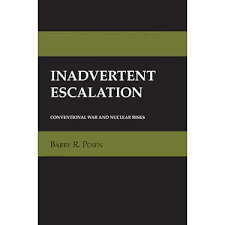
The University of Pennsylvania invited me to participate in two-day forum on nuclear weapons back in September. This is the short paper I brought. Here it is at BAS.

My core argument is that NK will go nuclear almost immediately because: 1. It faces a very intense use-it-or-lose-it dilemma. 2. It can’t hope to win conventionally. 3. Any conflict almost immediately become existential for it.

No one really quite knows what to do in response. Missile defense doesn’t work well enough to guarantee that we can shoot down all their inbounds. And sanctions can only slow NK down, not stop their nuclear march. So my suggestion is to start deconcentrating US forces on the peninsula – to more and smaller US bases – so that they are not such a juicy hostage-taking target.

But that runs directly counter to what we have been doing here for the last decade or so – concentrating US forces in a few super-bases like Camp Humphreys. That may make logistical and financial sense. But it offers huge, inviting, clustered targets of Americans for NK to threaten or strike.

And if they NKs do nukes a US base in East Asia and kill thousands of Americans, the pressure on POUTS to massively retaliate will be enormous. And if we respond by nuking NK, the potential for spiraling escalation, including possibly China is high.

Below is my original, pre-edited and more technical version of my paper:

Continue reading

My Comments to the South Korean Navy’s International Seapower Symposium: A Big SK Inter-Service Budget Fight Looms

20230608_061928000_iOS 4Without a headline defense budget hike, ROKA, ROKAF, and ROKN are going to collide over the costs of army manpower replacement, missile defense, and an aircraft carrier in the next decade. (I am second from the left in the picture.)

This was the gist of my comments at the South Korean Navy’s 16th Annual International Seapower Symposium here in Busan this month. Here is my Twitter thread on that event with some nice pictures. I also wrote up these ideas in an essay for 1945.com.

To my mind, a big new issue for the SK navy in the next 10-20 years is the Chinese naval threat to SK SLOCs through the South China Sea. Particularly, SK oil shipments from Persian Gulf through the SCS are vulnerable to a PLAN blockade if China gets upset at something South Korea does, like cooperation on missile defense with the US and Japan. China has already bullied SK on missile defense in the past.

China’s creeping control of the SCS will eventually allow it to ‘quarantine’ shipping there to punish SK, Japan, and Taiwan. The odds of this strike me as pretty high once China has de facto control down there. Any embargo will be done informally, first with fishing fleet and coast guard harassment, escalating if necessary. I am surprised more thinking is not given over to this possibility. It seems really obvious to me.

This is one reason why South Korea is thinking about building an aircraft carrier, which I support. Expecting the US to do all the heavy lifting in the SCS is cheap-riding, so SK. Japan, and others should consider maritime bulking up to help.

For SK, the problem is the expense of the carrier at the same time that its army and air force have new, expensive needs too:

    • ROKA is facing a large manpower shortage in the next twenty years bc of SK’s birthrate is super low. ROKA will likely try to fill that gap with tech like drones and armor, which is pricier than conscript infantry.
    • ROKAF faces NK’s spiraling missile program. It will need lots of missile defense and strike fighters (to hit NK missile launch sites). That too will be expensive too given just how costly THAAD and F-35s are.

These army and air force pressures will probably squeeze out the aircraft carrier – an argument I made for the Korean Institute of Maritime Strategy a few years ago (and which has turned out to be correct).

So I figure that MND will see a pretty sharp inter-service budget fight in the next decade or so unless the overall defense budget goes up. All three service branches are looking for pricey, big-ticket platforms.

My Extended Comments on Potential South Korean/Japanese Nuclearization for the Asian Leadership Conference and Foreign Policy Magazine

imageI spoke at the Asian Leadership Conference in Seoul a few weeks ago on S Korean/Japanese indigenous nuclearization and then published my basic thinking with Foreign Policy magazine on the topic a few days later.

Both of the venues required a more abbreviated presentation for time/space constraints, so I thought I would put up my full remarks here, at my own site. Here is the 2022 ALC site, and here is my original article for FP.

In brief, my argument is that the US should get out of the way to let Seoul and Tokyo make up their own mind. The US has long opposed ROK/Jpn nuclearization, but increasingly that strikes me as inappropriately hegemonic or strong-arming of them. There is a pretty strong case for SK and Japan to counter-nuclearize against China, Russia, and especially NK. I sketch that in detail after the jump, but the short version is:

1. The US is not going to exchange LA for Seoul/Tokyo. In 1961, de Gaulle asked JFK would he exchange NY for Paris. JFK waffled; de Gaulle was no idiot; he built French nukes shortly afterwards. The logic is the same here. The US is not going to fight a nuclear war solely for non-Americans. This will raise endless, irresolvable credibility debates between the US and its Asian allies. The best way to resolve that is to do what our European allies did – self-insure through indigenous nuclearization.

2. Trump will likely get elected – or ‘elected’ – in 2024, and he will ‘blow up’ the ROK alliance as he promised he would. So ROK nuclearization may happen no matter what we think. And a US retrenchment from SK would probably scare Japan so much that the whole nuclear debate there would shift substantially to the right.

There is a lot of anxiety about this step, and I share it too. So I don’t endorse SK/J nuclearization. But there is SK polling showing high interest in this, and SK is terribly exposed to NK nuclear devastation with few good options as the NKs continue to build relentlessly. (All this I cover below.) So the least we Americans can do is get out of the way and let them debate it themselves.

The original, pre-edited FP essay on this follows below the jump:

Continue reading

The Ukraine War is Teaching N Korea that Nukes Can Keep the Americans Out of Your Conflicts

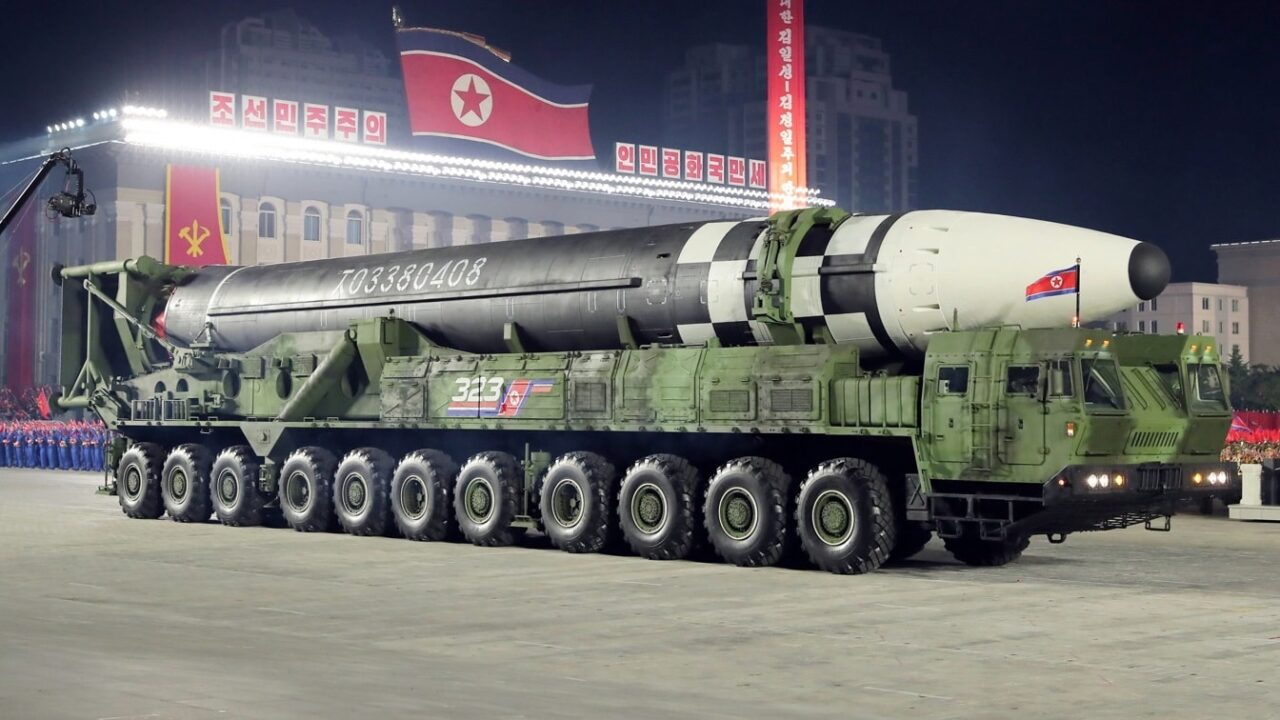
  North Korea ICBMRussia’s success at blocking NATO intervention in the Ukraine war via its nuclear weapons is a huge learning moment for North Korea. This is a re-post of an essay I wrote at 1945.com after the recent missile test.
Usually we say that NK wants nukes on missiles for:

1) Deterrence and Defense: to keep the Americans from ever striking NK, as they threatened in 1994 and 2017

2) Level the Military Playing Field: NK is too poor and technological backward to compete conventionally with SK or the US anymore. So nukes are a great equalizer.

This is true, but as we are all seeing in Ukraine, nukes are also a great way to keep the Americans at bay, to keep them from intervening in your conflict with an American ally. If Russia weren’t nuked up, it’s safe to say that NATO would be more heavily involved. And pundits have been very honest about admitting that we can’t do more, such as a no-fly zone, because we fear escalation with nuclear-armed Russia. I have argued this too.

So if you are NK, nuclear ICBMs, which give you direct deterrence with the US, are a possible way to prevent the Americans from helping SK in a conflict, just as Russian nukes are keeping us out of the Ukraine war. This is to drive wedge between the US and SK. At some point, we are going to have to reckon with this threat, and missile defense is not an answer, because it does not work well enough.

Here is my essay from 1945:

North Korea just tested a new intercontinental ballistic missile. It appears that this is Pyongyang’s longest-range missile yet. The goal, obviously, is to strike the United States if necessary. North Korea has sought, and now likely achieved, the ability to directly threaten the US mainland with substantial nuclear force.

ICBMs normally are designed to deliver a nuclear payload. North Korea first detonated a nuclear weapon in 2006. It is widely assumed that it now has several dozen nuclear warheads. North Korean supreme leader Kim Jong Un has also hinted that he wishes to develop MIRVs (multiple, independently-targetable re-entry vehicles). This would permit each ICBM to carry multiple warheads. So even if only one North Korean ICBM were to survive American missile defense, it could then still devastate multiple American cities.

Read the rest here.

South Korean President-Elect Yoon Suggested Preemptive Strikes on N Korea. There will be a Lot More of that Talk if the NKs Don’t Slow Down, which They Won’t

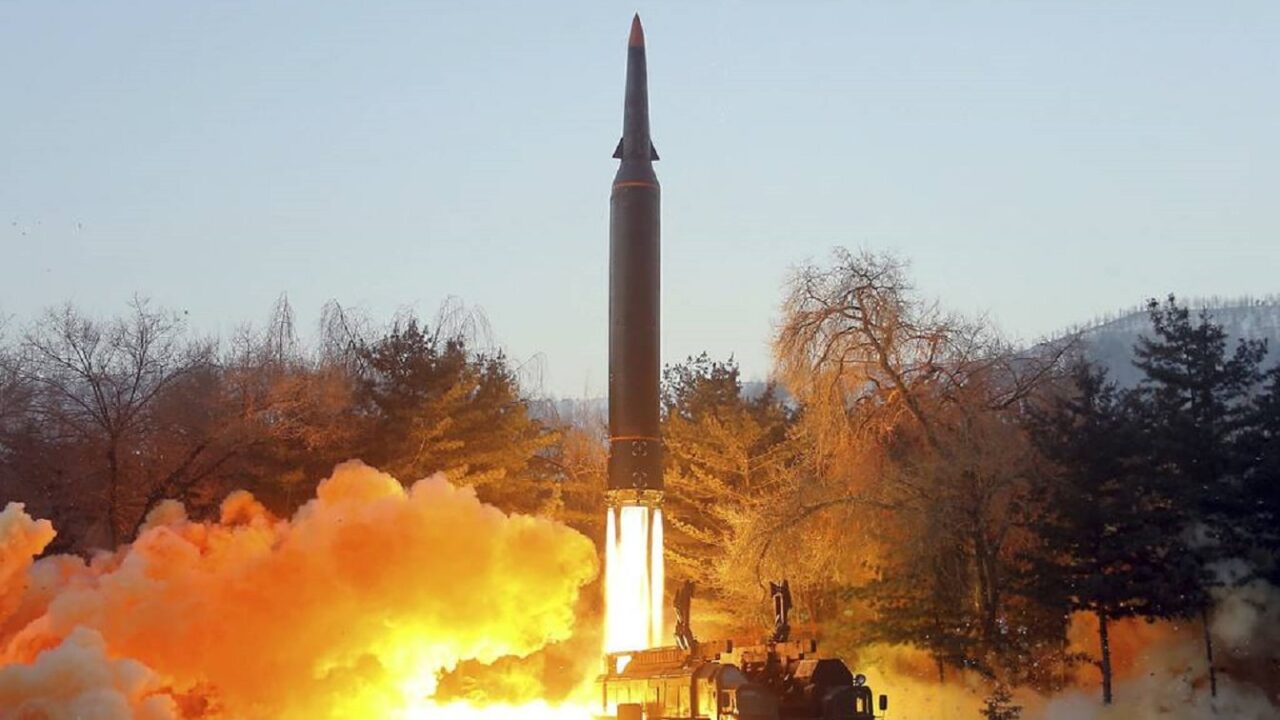
North Korean MissileThis was accepted and then withdrawn by a SK newspaper as too controversial even though the SK president himself suggested this. I don’t get that…

So I sent it to 1945.com instead. Basically the problem is that neither missile defense nor negotiations are dependable enough to protect South Korea against what is emerging as an existential threat to SK from North Korea’s spiraling missile program. Missile defense does not work well and is very expensive. Negotiations might reduce the North Korean arsenal but almost certainly not enough to eliminate the state- and society-breaking threat of the North’s nuclear missiles

Yoon’s answer is preemptive strikes on NK missile sites in event of a crisis. He got a lot criticism as a reckless war-monger earlier this year, and his suggestion is obviously hugely risky. It could provoke the very war it is trying to defend against. But he is ‘thinking the unthinkable’ as they used to say. Presidents must think about this stuff; that’s Yoon’s job, and if you don’t like his answer, come up with something else.

North Korea increasingly has the ability to rapidly devastate South Korea. The North Korean missile program is mature – more missiles, faster, longer-range, more easily fueled, more maneuverable, and so on. Its nuclear program is maturing too. Kim Jong Un now wants to develop tactical nuclear warheads and MIRVs. And this frightening arsenal is unsupervised. There are no inspectors, no NPT, no IAEA.

So yes, let’s keep talking. And yes, let’s keep throwing money at missile defense and pray it works. But when your facing an orwellian tyranny right next door who has aggressively threatened you for decades, you inevitably start thinking about options which might otherwise seem extreme.

Here’s that 1945 essay:

South Korea’s Debate over Preemption is the Inevitable Result of North Korea’s Rapid Missilization – As a presidential candidate, South Korean President-Elect Yoon Seok-Yeol suggested that South Korea might need to preemptively strike North Korea because of its spiraling missile development. This was criticized as provoking the very conflict it seeks to avoid. Obviously, no one but the most belligerent hawks seeks confrontation with North Korea. A second Korean War would be devasting, which Yoon clearly knows. Instead, Yoon is identifying, correctly, a growing strategic threat to South Korea – one which might become genuinely existential if left unchecked.

The North Korean Missile Challenge:

The conventional inter-Korean stalemate is deadlocked on the ground. In fact, North Korea is gradually losing that stand-off as American and South Korean technological prowess outstrip its large but antiquated conventional forces. The North knows this too. It has therefore invested for decades in nuclear weapons and missiles to deliver them. These capabilities help it level the playing field.

Please read the rest here.

Bombing North Korea would be a War of Choice

Image result for north korea airstrike

This essay is a re-post of a piece I wrote earlier this month for The National Interest. It is an extension of the arguments a made earlier in the month, that North Korea is not in fact an existential threat to the United States. And that wonderfully scary photo is courtesy, naturally, of the Chosun Ilbo.

In brief, my argument is that the US has the ability to survive a North Korean nuclear attack, and therefore, we do not need to threat-inflate North Korea into some state-breaking threat to the United States. It is not. North Korea is dangerous enough without scaring the crap out of people unnecessarily. Killing a lot of Americans is not the same thing as bringing down the Constitution, and too many Trump officials are eliding that critical distinction. Strategic bombing has yet to bring down a country, and there is no reason to think the US is different. We do not need to bomb North Korea because it is on the cusp of destroying the American way of life. It could not do that even if it wanted to, which it does not. So an air campaign would still be a war of choice, no matter how much fire-breathing rhetoric you hear from Trump, Dan Coats, or Bolton.

The full essay follows the jump.

North Korean Nukes are almost Certainly for Deterrence and Defense

8114998_origThis is a local re-post of an essay I wrote for The National Interest this week.

I feel like a broken record. I keep saying this – they’re not going to use them offensively, we don’t need to airstrike (at least not yet), we have learned to live with Russian, Chinese, and Pakistani nuclear missilization, the North Korean leadership is rational enough to know that using these things against a democracy would bring extraordinary retaliation. So yes, it really, really sucks that North Korea has these weapons, but we can adapt, as we have to other countries’ nuclear missilization. We don’t HAVE to start a potentially huge regional war over them right now. If we must, we always can. But let’s not get carried away that North Korea is going to nuke the US out of the blue, so we should airstrike them right now. That is HIGHLY unlikely.

But journalists keep asking me if we’re going to/should bomb North Korea, and US officials keep saying stuff like this. So here we go again:

Continue reading

More on NK Nukes: It took the Cuban Missile Crisis before the US Adapted to Soviet Nuclear Deterrence

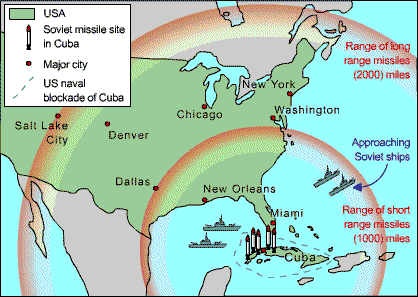
9e67b42f03919f5ba59a4be37287fcb8dd8f17e0This is a re-post of something I wrote last month for The National Interest on US adaption to other countries’ nuclearization. In short, we adapted badly at first – Cuba – and then learned to live with proliferation even though we didn’t like it and did the best we could to halt it.

A repeat of the Cuban Missile Crisis over North Korea is what I fear most from the US toward North Korea in the next five or ten years. We will decide that North Korea is too batty and gangsterish to trust with nuclear weapons, and we’ll pick a fight. How the North Koreans will react – will they believe China will stand with them? – nobody knows. The Soviets felt that missilizing Cuba evened the score with the US which could easily strike the USSR at the time. The North will think the same – that they are entitled to nuclear deterrence for national security, which perception a Cuban-style crisis will reinforce in them. Then will come a showdown.

But most people agree North Korea will never give  up its nukes, and most people also agree that North Korea is quite rational. So it is quite unlikely that North Korea will launch a nuclear ICBM at the US without provocation. It sucks that North Korea has nukes, but we have learned to live with Soviet/Russian, Chinese, and Pakistani nukes. The big question is can we live with NK nukes when so many Americans seem to think the North Koreans are insane.

The full essay follows the jump:

Continue reading

There will be No US Airstrike on N Korea; SK will Veto it

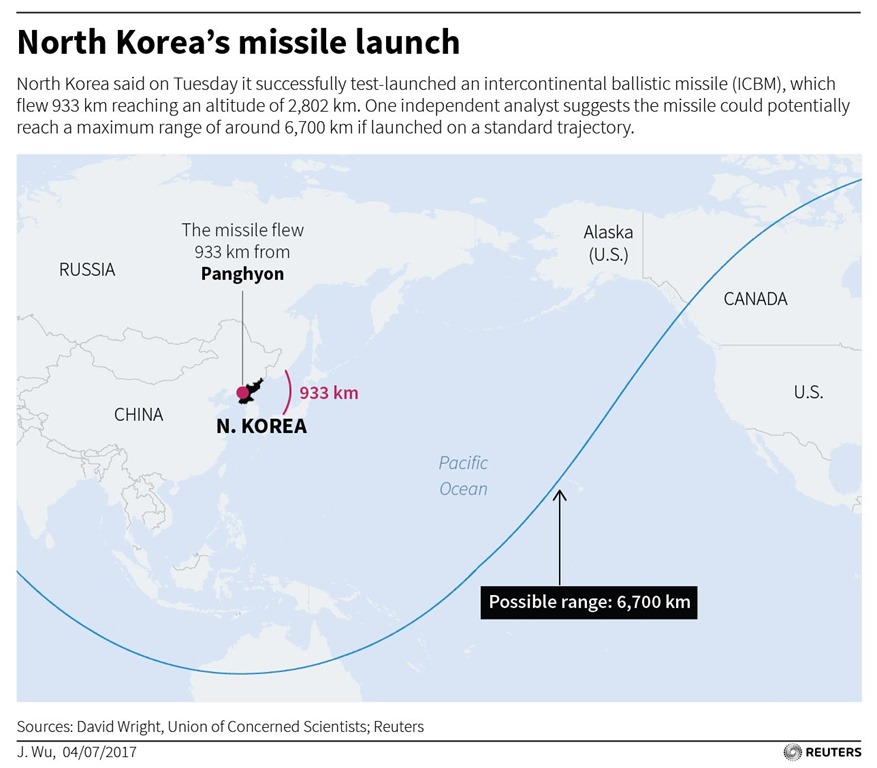
northkorea-missiles-reuters-graphicThis is a local re-post of a piece I just wrote for the Lowy Institute. Mostly I wrote this as a response to all the cable news chatter we’ve been hearing all year about how the US should consider air-striking North Korea. I have been saying for awhile that we won’t do it and that US policy-makers should  stop bluffing something they’re never going to do.

There are lots of reasons why bombing North Korea is a terrible idea. But there’s one obvious reason we won’t do it, and that’s because South Korea will never approve. South Korea would bear the brunt of any Nork retaliation, and we can’t very very jeopardize hundreds of thousands of people without asking them first. And Moon Jae-In, the president of South Korea will never agree. He is well-established dove on North Korea supportive of engagement for 20 years now. He’s extremely unlikely to suddenly embrace a course he’s fought against almost his entire career, and certainly not for a belligerent, posturing buffoon like Donald Trump. So let’s all come back to reality and start thinking about what will work – missile defense, China, sanctions, perhaps negotiation. But bombing is ‘off the table’ for at least 5 years (the duration of Moon’s presidential term). That’s an easy prediction.

The full essay follows the jump.

Continue reading

There’s a Lot of North Korean Alarmism

BN-SY909_31Zmp_TOP_20170415020347This is a local re-post of a piece I just wrote for The National Interest. Basically my concern here is the regular over-reaction in the West to almost anything military North Korea does. Yes, I am a hawk on Pyongyang; and yes, I worry about the missile program as much as anyone. But I am always amazed at how much hyperbole North Korea can elicit from otherwise smart people who should know better. The missile in pic above got dubbed ‘franken-missile’ – exactly the kind of unnecessarily heated rhetoric that just scares the s*** of people but not much more. But I guess when folks in this area have to worry about what Dennis Rodman thinks, you have to allow them to lose their mind once in awhile.

The full essay follows the jump:

Continue reading