North Korea 2017: What Did We Learn? That We Can’t Bluster/Threaten Them into De-Nuclearization

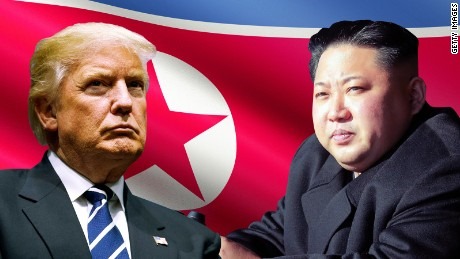
170809143550-mobapp-trump-jungun-north-korea-flag-02-large-169

Sorry for the long hiatus. The holidays were pretty busy and exhausting.

This is a local re-post of something I wrote The National Interest late last year. I like these end-of-the-year retrospectives and predictions. So here is a look back at all the craziness around North Korea in 2017.

The most obvious new element is an American president talking to the world’s most dangerous state like a petulant man-child. Honestly, Trump just made everything worse, and his rhetoric almost certainly convinced the Kimist elite that going for nukes was wise.

The other big thing I think is how the debate over responding to North Korea is increasingly cutting out the doves. North Korea with nuclear weapons is such a scary prospect that it is side-lining engagers and powering the hawks in the debate. Increasingly the debate is an intra-mural one among the hawks, between moderates (where I’d put myself), who are wary of strikes and at least open to talks even though we know the Norks will gimmick them, and ultras like Trump or Nikki Haley who genuinely seem to want to strike. The real question in the US debate now is whether the moderate hawks, with an assist from the doves, can restrain the ultras from attacking North Korea this year.

The full essay follows the jump…

Continue reading

Korea 2017 Year in Review: The Presidential Impeachment was Actually the Biggest Story

Image result for korea 2017 impeachment

This is a local rep-post of a piece I just wrote for the Lowy Institute. I like these sort of retrospective, end-of-the-year pieces.

Basically I argue that the impeachment of former President Park Geun Hye was the biggest story of the year. Yes, Trump sucks up all the oxygen in the room, but who even knows if he means all his threats? But completing a full impeachment cycle is a pretty rare event in the history of democracy. And the Koreans did it with no violence or civic rupture. That is pretty impressive. But yes, I did then list North Korea and Trump as otherwise the big stories of the year.

The full essay follows the jump:

2017 was a rollercoaster year on the Korean peninsula. The South Koreans impeached their president. The North Koreans tested dozens of rockets, including intercontinental ballistic missiles. The American president threatened war repeatedly, possible nuclear war, against the North. And some random dorky foreigner in Korea got famous, because his cute little kids wandered into the frame while he was on TV. Honestly, why didn’t they fire that guy? It was quite a year.

For all the bluster and threats of war, I would nonetheless rate the impeachment of the South Korean president as the most important event. North Korean war scares are, as disturbing as it is to say it, pretty common, while a completed democratic impeachment is actually quite rare.

1. The Impeachment of South Korean President Park Geun-Hye

With several months of distance from the upheaval of the winter protests against Park, the impeachment trial, the new election, and all the attendant drama, it is now pretty clear that Park Geun-Hye’s circle was grossly corrupt, and that she, by extension, did not really deserve to remain in office. There are diehards who are convinced it was a ‘communist’ conspiracy. The South Korean right is disturbingly comfortable with mccarthyite attacks on liberal opponents, and there is an Alex Jones-style conspiracy fringe here. But it is otherwise pretty widely accepted that Park’s confidant, Choi Soon-Sil, grossly abused her access to the president and had far too much influence over Park.

Choi was often compared to Rasputin. Choi’s father had a quasi-religious influence over Park since her youth, and Choi seemed to ‘inherit’ that. Choi in turn abused it, particularly on Park’s ascension to the presidency, enriching both herself and her cronies. It was undeniable sleazy and embarrassing, and as more and more details came out, Park’s approval rating fell to an astonishing 6% at one point. Has any chief executive in a modern democracy ever fallen that low?

There is much debate about whether Park herself knew about all the corruption. But like Ronald Reagan’s ignorance defense during the Iran-Contra affair, this too represents a gross dereliction of duty. President Park was either blithely unaware of what was happening right under her nose among her closest companions and staff, or covered it up, Nixon-style.

Eight months out now from all the controversy, my own sense is the former, while most of the Koreans I know seem to think the former. Park, it strikes me, was more incompetent than dastardly. Her behavior throughout her presidency suggested she was constantly overwhelmed by the scope of her office. On missile defense, North Korea policy, or the sinking of the Sewol ferry, she was adrift, and the rumors from her staff regarding her (low) intelligence were harsh. We will likely never know.

2. North Korean Missile Tests.

North Korea conducted twenty separate missile provocations in 2017, involving dozens of missiles, from short-range Scud-style launches to full-blown ICBMs designed to strike the continental United States. This was the fastest test tempo ever. For all Donald Trump’s pettiness, his ‘rocket man’ nickname for Kim Jong Un is not wrong.

One of these tests overflew Japan, prompting the commencement of civil air defense drills. (Although in a society whose median age is 47, they likely will not work well given the 8 minute warning time the Japanese will have.) Others have sought to demonstrate a capability to strike the United States. November 29’s test seems to have been accepted as that breakthrough.

Much of the debate over the weapons turns on whether the North intends to use them offensively. It is widely accepted that nuclear weapons give North Korea a potent shield against US-led regime-change against Pyongyang. After the Western removals of Saddam Hussein, Slobodan Milosevic, and Moammar Kadaffi, that is an understandable goal, however regrettable for us. There is a defense and deterrence logic here which all can grasp.

We may dislike it, but it is in fact quite rational for a state like North Korea to pursue these weapons. It is poor and backward. It is loathed by much of the world as a freakish cold war relic. It is surrounded by enemies, or frenemies like China eager to exploit it instrumentally, but it has no real friends. When international relations theorist Ken Waltz spoke of ‘internal balancing,’ North Korean nuking up against such a tough neighborhood despite its poverty is exactly what he had in mind. Friendless, encircled, dysfunctional, and poor, North Korea is, in Victor Cha’s words, the ‘impossible state.’ In such circumstances, nuclear weapons are in fact an excellent choice. Not only for security, but they can be proliferated for cash and used as gangsterish shake-down instruments as well.

Hawkish fears of North Korean aggression in the vein of the old saw that ‘nuclear weapons make the world safe for World War II’ strike me as over-wrought. Even if North Korea could successfully ‘de-couple’ the US from South Korea, it could likely still not defeat South Korea. The terrible health of that recent defector, who was a relatively privileged border card, is suggestive. And even if the North somehow managed to win, it would struggle enormously to occupy and integrate a modern state of free people twice its size into its ossified framework.

3. Trump’s Fire and Fury

Throughout the year, Trump’s erratic and explosive commentary raised tension in ways not seen before. No previous American president had ever threatened to ‘totally destroy North Korea’ or threw around casual war threats – the ‘armada, ‘fire and fury.’ Trump, in his impatience to distinguish himself from his predecessor, claimed ‘strategic patience’ to be over. All this created a momentum to strike North Korea – enough that South Korean President Moon Jae-In felt it necessary to publicly declare to the National Assembly, just days before Trump’s arrival, that no war could take place against North Korea with the South’s assent.

And curiously, Trump blinked. When he also spoke to the National Assembly, he forsook the best chance he had to lay out a case for war to the South Korean government and public. Instead he fell back on bromides about South Korea’s self-evident moral superiority and the need for ‘maximum pressure.’ In fact, there is little difference between that and strategic patience – alliances, deterrence and defense, missile defense, sanctions, etc. Similarly, after the November 29 ICBM test in which North Korea triumphantly declared it could strike the US, Trump said little more than ‘we’ll take care of it,’ likely because he know realizes that no one believes his bizarre threats anymore and that war in the region would be a catastrophe laid at his feet.

South Korea came through these multiple challenges remarkably well. It completed a full impeachment cycle without violence or civil upheaval. Few democracies have ever done that. It similarly held the line on the North’s bullying despite a new liberal president whom conservatives relentlessly criticize as too dovish. And for all the anxiety about Donald Trump’s warmongering – or it just reality TV star blather? – the US president finally seems to have realized what South Koreans and the analyst community have known for years: There is no obvious solution to North Korea; if there were, it would have been tried long ago; and war is a terrible option. Now if only they could find a way get rid of that hack BBC Dad guy…

Is Trump Baiting Kim Jong Un?

Image result for trump kim

This is a local re-post of something I wrote a few weeks ago for The National Interest. It pivots off of the argument I made last month as well, that this is the weirdest North Korean crisis ever. Not necessarily the most dangerous – the ax-murder incident might still be at the top – but rather the strangest. And you thought Dennis Rodman was the weirdest low the North Korean debate could hit. How wrong you were.

The reason of course is Trump’s mad ad-libbing over these last months, and his downright bizarre commentary in general about east Asia. It’s worth remembering that his frightening comments like ‘fire and fury’ and ‘totally destroy’ were just thrown out off the cuff with no vetting by Trumps’ natsec team. So we’re backing into a war because Trump does not how to take direction from experts. John Kelly tried to ground him and Trump, like some petulant teenager, won’t have it – purposefully ignores his staff recommendations just to spite them. Surreal…

The full essay follows the jump.

Get Real: We’re Not Going to ‘Totally Destroy’ North Korea. We’re Going to Manage It

Image result for management north korea

This is a local re-post of an essay I published earlier this month at The National Interest.

President Trump’s outlandish UN speech was yet another national embarrassment, and his threat to ‘totally destroy’ another country verges on a war crime. And it’s not in our interest to do that anyway, so let’s start thinking practically about how we’re going to manage this mess.

My TNI essay below argues that we need to try to manage North Korea, rather than seek some final solution, because North Korea is persistent whether we like it or not, and because it is a nuclear weapons state whether we like it or not. That sucks. But I don’t see what other choice we have. Bombing North Korea is a terrible idea for reasons I’ve been saying all year on this website. Talking to North Korea and getting a real deal that they’ll stick to, like JCPOA, would great. But they flim-flam us so much, and so many hawks in the US and South Korea are unwilling to negotiate seriously with the North (remember that Congressional Republicans helped undercut the Agreed Framework; it wasn’t just Nork cheating which undid it), that I doubt talks will go anywhere. So we’re left muddling through. Did I say already that this sucks?

So what does ‘management’ mean? Recognizing that we can’t sole every problem as we want and that bad stuff we just have to live with, like NK nuclear weapons. They are lots of smaller things we can do – sanctions, going after NK money in Chinese banks, missile defense, pruning NK’s diplomatic/money-raising global network, continuing to bang away on China to take this more seriously, and so on. So please, can President Trump and Nicki Haley stop talking like Dr. Strangelove so that the rest of us can get back to the problem of what we can realistically do about North Korea?

The full essay follows the jump:

Continue reading

Bombing North Korea would be a War of Choice

Image result for north korea airstrike

This essay is a re-post of a piece I wrote earlier this month for The National Interest. It is an extension of the arguments a made earlier in the month, that North Korea is not in fact an existential threat to the United States. And that wonderfully scary photo is courtesy, naturally, of the Chosun Ilbo.

In brief, my argument is that the US has the ability to survive a North Korean nuclear attack, and therefore, we do not need to threat-inflate North Korea into some state-breaking threat to the United States. It is not. North Korea is dangerous enough without scaring the crap out of people unnecessarily. Killing a lot of Americans is not the same thing as bringing down the Constitution, and too many Trump officials are eliding that critical distinction. Strategic bombing has yet to bring down a country, and there is no reason to think the US is different. We do not need to bomb North Korea because it is on the cusp of destroying the American way of life. It could not do that even if it wanted to, which it does not. So an air campaign would still be a war of choice, no matter how much fire-breathing rhetoric you hear from Trump, Dan Coats, or Bolton.

The full essay follows the jump.

North Korean Nukes are almost Certainly for Deterrence and Defense

8114998_origThis is a local re-post of an essay I wrote for The National Interest this week.

I feel like a broken record. I keep saying this – they’re not going to use them offensively, we don’t need to airstrike (at least not yet), we have learned to live with Russian, Chinese, and Pakistani nuclear missilization, the North Korean leadership is rational enough to know that using these things against a democracy would bring extraordinary retaliation. So yes, it really, really sucks that North Korea has these weapons, but we can adapt, as we have to other countries’ nuclear missilization. We don’t HAVE to start a potentially huge regional war over them right now. If we must, we always can. But let’s not get carried away that North Korea is going to nuke the US out of the blue, so we should airstrike them right now. That is HIGHLY unlikely.

But journalists keep asking me if we’re going to/should bomb North Korea, and US officials keep saying stuff like this. So here we go again:

Continue reading

More on NK Nukes: It took the Cuban Missile Crisis before the US Adapted to Soviet Nuclear Deterrence

9e67b42f03919f5ba59a4be37287fcb8dd8f17e0This is a re-post of something I wrote last month for The National Interest on US adaption to other countries’ nuclearization. In short, we adapted badly at first – Cuba – and then learned to live with proliferation even though we didn’t like it and did the best we could to halt it.

A repeat of the Cuban Missile Crisis over North Korea is what I fear most from the US toward North Korea in the next five or ten years. We will decide that North Korea is too batty and gangsterish to trust with nuclear weapons, and we’ll pick a fight. How the North Koreans will react – will they believe China will stand with them? – nobody knows. The Soviets felt that missilizing Cuba evened the score with the US which could easily strike the USSR at the time. The North will think the same – that they are entitled to nuclear deterrence for national security, which perception a Cuban-style crisis will reinforce in them. Then will come a showdown.

But most people agree North Korea will never give  up its nukes, and most people also agree that North Korea is quite rational. So it is quite unlikely that North Korea will launch a nuclear ICBM at the US without provocation. It sucks that North Korea has nukes, but we have learned to live with Soviet/Russian, Chinese, and Pakistani nukes. The big question is can we live with NK nukes when so many Americans seem to think the North Koreans are insane.

The full essay follows the jump:

Continue reading

There will be No US Airstrike on N Korea; SK will Veto it

northkorea-missiles-reuters-graphicThis is a local re-post of a piece I just wrote for the Lowy Institute. Mostly I wrote this as a response to all the cable news chatter we’ve been hearing all year about how the US should consider air-striking North Korea. I have been saying for awhile that we won’t do it and that US policy-makers should  stop bluffing something they’re never going to do.

There are lots of reasons why bombing North Korea is a terrible idea. But there’s one obvious reason we won’t do it, and that’s because South Korea will never approve. South Korea would bear the brunt of any Nork retaliation, and we can’t very very jeopardize hundreds of thousands of people without asking them first. And Moon Jae-In, the president of South Korea will never agree. He is well-established dove on North Korea supportive of engagement for 20 years now. He’s extremely unlikely to suddenly embrace a course he’s fought against almost his entire career, and certainly not for a belligerent, posturing buffoon like Donald Trump. So let’s all come back to reality and start thinking about what will work – missile defense, China, sanctions, perhaps negotiation. But bombing is ‘off the table’ for at least 5 years (the duration of Moon’s presidential term). That’s an easy prediction.

The full essay follows the jump.

Continue reading

Let’s be Careful about Calling the North Korean ICBM a ‘Game Changer’

north-korea-koreas-tensionsThis is a local re-post of an essay I just wrote for the National Interest on the most recent missile launch, marketed as an ICBM.

My concern is the increasing discussion of airstrikes and military options against the North. This is hugely risky, and every time we say things like ‘we have crossed a red-line’ or ‘this is a game changer,’ we get one step closer to a war. No, not airstrikes. A war. Because any air campaign against North Korea would be so long and violent, it would be indistinguishable from a war. So before you listen to cable news hawks all week telling you that we have to strike North Korea, consider all the likely costs including a possible Sino-US shooting war. Here is my tweet storm griping about all the loose, irresponsible language NK provocations unleash.

So no, I am not suddenly a dove on North Korea. I want sanctions, missile defense, and more discussion with China. And I know talks won’t work. But we need to keep a calmer, less alarmist rhetorical environment so that we don’t ignite something we won’t be able to control.

The essay follows the jump:

Continue reading

There’s a Lot of North Korean Alarmism

BN-SY909_31Zmp_TOP_20170415020347This is a local re-post of a piece I just wrote for The National Interest. Basically my concern here is the regular over-reaction in the West to almost anything military North Korea does. Yes, I am a hawk on Pyongyang; and yes, I worry about the missile program as much as anyone. But I am always amazed at how much hyperbole North Korea can elicit from otherwise smart people who should know better. The missile in pic above got dubbed ‘franken-missile’ – exactly the kind of unnecessarily heated rhetoric that just scares the s*** of people but not much more. But I guess when folks in this area have to worry about what Dennis Rodman thinks, you have to allow them to lose their mind once in awhile.

The full essay follows the jump:

Continue reading