Part one is here.
Last week, I spoke at a KIDA discussion of the Korean peninsula post-Cheonan. In brief I argued that there was no ‘post-Cheonan’ world as the SK right was hoping for. South Koreans are unwilling to risk war. There is no desire to hit back for the Cheonan sinking, because escalation might lead to a war in which South Koreans believe their wealthy democracy will get trashed and then burdened with Northern reconstruction.
But there is another specific reason why there is no response. SK’s hands are tied by the extreme vulnerability of its major population centers to NK retaliation. Specifically, following the above map of Korea’s provinces and cities, Seoul has 10.464 million; Gyeonggi province around it, filled with Seoul’s suburbs, has 11.549 million, and Incheon has 2.767 million. Busan by contrast has just 3.566 million. Korea’s total population is 48.875 million. (Those numbers come from a colleague at PNU’s Department of Public Policy and Management.) Worse yet, Busan’s population is shrinking, and Incheon’s is growing. So this means that 50% of Korea’s population lives within 50 miles of the DMZ, and 30% lives within just 35 miles.
NK knows this, and in order to hold SK hostage against any Southern retaliation for incidents like the Cheonan, it has stationed something like 10-20k artillery and rockets at the DMZ closest to this massive urban agglomeration in northwest SK. In effect then, half of the SK population is a massive city-hostage to NK, and it is only worsening because of Incheon’s rapid new growth.
In game scenarios of a second Korean war, the first six hours are decisive. NK knows that it will likely lose the war, and that its assets will be quickly eroded by allied air power. That is, in the first few hours, a primary SK-US bombing target will be all those rockets and canon at the DMZ. Nonetheless, almost everyone thinks that the KPA will be able to get off enough shells and rockets to effectively devastate the Seoul-Gyeonggi-Incheon area. Given that Koreans mostly live in high-rise apartment buildings, some with 60+ stories, the result would be hundreds of World Trade Center collapses. I live in such a high-rise; I can’t imagine that it could realistically withstand a Scud missile or two. 2500 live in my building alone. Consider that all across Gyeonggi, and you have a holocaust.
Note too, that all this can occur without Northern nuclear use. Essentially,the early hours of a war would a race between allied air and ground power to hit all those Northern emplacements before they fire. Like the old Cold War logic facing the the US and USSR, NK faces an extreme ‘use-it-or-lose-it’ dilemma. For this reason, the DPRK has repeatedly threatened to turn Seoul into a ‘sea of fire.’ This huge threat to SK’s extremely vulnerable northwest urban centers is the primary reason why the North never suffers military retaliation for attacks such as the 1976 tree-cutting incident or the 1987 KAL bombing.
So what to do? To me it seems rather obvious – the gradual de-centralization of SK’s population (and government and economy) from the northwest. Strangely, I have found almost nothing in the IR-national security literature on SK defense recommending or even discussing this choice. Yet when I suggested it last week at KIDA, multiple SK and US analysts and officers approached me afterwards to discuss the idea. Should Korea’s population be spread more equitably around the peninsula and further south from the DMZ, this would open new strike-back options after incidents like the Cheonan.
There are several objections worth rebutting now.
1. It would be expensive. Ok. Sure. But so is all the ROK defense spending that goes into protecting the northwest already.
2. It would take forever. Yes, this is true. But the stalemate with NK is now entering its seventh decade. To our great surprise, NK has withstood the end of the CW, the collapse of Soviet support, the death of Kim Il Sung, and the famines of the 90s. Rather than taking a perpetually short-term attitude toward NK – when will it just collapse so we can get on with reconstruction? – a better approach might be to consider strategies to win a drawn-out stalemate, which is already what this conflict is anyway. Consider that if decentralization had started in 1990 how much better the post-Cheonan options would be.
3. When NK collapses, this will have been a huge waste of money. Not necessarily, because there are regional growth and national equity reasons also in support of decentralization. Ie, the ROK is already far too centralized in one place (Seoul). Koreans outside of Seoul even call it the ‘Seoul-Republic.’ Like France, SK is wildly unbalanced with one city starving the rest of the country for capital, human talent, government attention, etc. (One sees this quickly living, as I do, in the ‘provinces,’ like Pusan.) Even if NK collapses, it would be healthier for SK to look more like Germany, Canada, or the US, with multiple large cities competing with each other for national resources and talent.
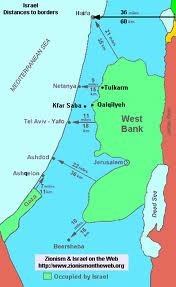
4. Forced population transfer are illiberal and wrong in a democracy. This is the strongest argument. Clearly decentralization would happen most rapidly if it were coerced, but this is, correctly, intolerable. But the government could create lots of incentives short of force. It could move the seat of the ROKG out of Seoul for starters. Brazil did this – for regional equity purposes – in 1960; and West Germany put its capital in sleepy little Bonn, because West Berlin was just too exposed. Israel doesn’t let too many people live near the borders with Gaza and Lebanon. So there is democratic precedent. Also, the Korean government intervenes in the economy all the time to help companies with subsidies and what not. How about directing some of that money outside of the northwest? But I agree it would be tricky; eminent domain, even for national security, would be tough when millions of people are involved.
_____________________________________________________
UPDATED:
This was linked heavily at Lawyers, Guns and Money and the Progressive Realist (h/t Charli Carpenter). Here is a response to the criticims raised in the comments:
“Let me try to answer a few of the objections proposed:
1. ‘You can’t just move cities.’ Perhaps, but that misstates my suggestion. Seoul is very old city with strong emotional roots in Korean national identity. It will not move. But it can shrink. Its postwar explosion into a megalopolis is a direct result of (reversible) policy choices – including the government’s susbsidization of mega-firms (chaebol), huge infrastructure projects like the Incheon airport, and most importantly, the legacy of authoritarian political centralization. Like most dictators, SK’s pre-democratic generals centralized almost everything (in Seoul) in order to more easily control the state. This legacy survived and worsened, gradually depopulating Korea’s other major cities (Pusan, Daegu, Dajeon) as everyone now wants to ‘move up’ (the local term) to Seoul. It has become a vacuum that hoovers up talent relentlessly and starves the rest of the country, and it is actually getting worse now, not better: Pusan, the second city, is shrinking and aging, while Incehon, right next to Seoul, is booming. (This has slowly become a bigger issue in Korean politics in the last two decades as the imbalance between Seoul and the rest has become genuinely extreme. The ‘Sejong City’ project aims to move the capital, although the local argument for rebalancing away from Seoul is made mostly for regional equity, not national security, purposes.) In short, Seoul’s centrality relfects historical path-dependence that can be reversed by new policy choices, although Seoul-based elites in almost all fields oppose this as a major inconvenience.
2. ‘It is illiberal to move them.’ Yes, it is, but a) deomcracies make such calculations all the time, b) living next to NK is vastly more disruptive than refusing to move for the development of a mall or something, and c) I don’t endorse coercion but incentivization. The West Germans imposed all sorts of restrictions on the residents of West Berlin that didn’t apply elsewhere, and Israel too uses zoning codes and such all the time for political purposes. SK already prevents people from living even closer to the DMZ. Also, Korea, unlike Western states, embraces state-led development and expects the state to do these sorts of things. Americans find ’eminent domain’ a culturally unacceptable intrusion on personal freedom, but I bet if you polled Koreans you wouldn’t get nearly that sort of anger. The role of the state in Korean life is much greater, subtler, and desired than it is in the US. Further, all sorts of places are deemed off-limits for residence for national security reasons in many countries. Finally, it hardly strikes me as ‘residential fascism’ or something to encourage people not to live right next door to a super-dangerous enemy. Indeed, I am rather amazed that SK never did anything to halt this decades ago. The scale, not the legality, strikes me as the real problem. There are just so many people in Seoul and Kyeonggi; any serious plan to encourage relocation would take forever and cost mountains of money. On top of the demographic movement would be the further costs of an economic and political shift. It seems ridiculously expensive when the money could be spent on so much else. But if unwinding the already-exising over-population would be hard, the government could still take steps to prevent it from worsening in the future, as it is doing right now (point 1 above).
3. ‘Can’t we just protect them by destroying the weapons targeted at them?‘ This is what US Forces in Korea (USFK) hope, and they will tell you that in the first few hours of a war, they are going to fly hundreds of sorties to get the canon and artillery. In response to this NK has put, by some estimates 20,000 artillery and rockets at the nearby DMZ as a counter. I have not meet any analyst here – military or cilivian, Korean or America – who believes that allied air power could get them all without several hours (minimum) of bombing runs. Given that most Koreans live in closely clustered high rises, not dispersed homes, you only one need one or two shells or rockets to kill 2000 people. The referent image should be the hundreds of World Trade Center towers clustered tightly in an area smaller than Rhode Island collapsing under a rain of shells. You don’t more than a few hours of Northern shelling to create a holocaust.
4. ‘Can civil defense protect them?‘ Probably not. First, Seoul/Kyeonggi’s transportation network would be dwarfed by the scale. Seoul traffic is already some of the worst in Asia. The subways are bursting during rush hour. The dilemma is similar to New Orleans’ one road out during Katrina. 2. The area around Seoul is hilly and rugged. 75% of the Korean population lives on only 25% of its landmass (that’s one reason we all live in enormous apartment towers). There is simply no where close to Seoul to handle the scale of movement unless you had many weeks to disperse them all over the peninsula. Finally, as I said in the orignal blogpost (above), NK artillery at the DMZ faces a severe ‘use-it-or-lose-it’ dilemma: once the war starts, allied air power is going to hammer these sites relentlessly. So if you start moving people out of Gyeonggi preemptively in a slow-moving crisis (like summer 1914, or right now in Korea?), you are signaling to the North to strike first before its deterrent evaporates.
For all these reasons, it seems to me that there is no short-term answer, but that a medium-term policy incentivizing residence and investment elsewhere is the way to go. That should probably include decentralization of authority to Korea’s provinces, the movement of the capital to either Sejong City or Daejeon (because they are in the geographic middle of the country [and not Busan, because it is too far away]), and the subsidization of economic development outside of the northwest.”