Does the US Need a Long-Term Exit from the Middle East?: 1. Afghanistan

158px-Flag_of_Afghanistan_svg

Part 2 is here; Part 3 is here.

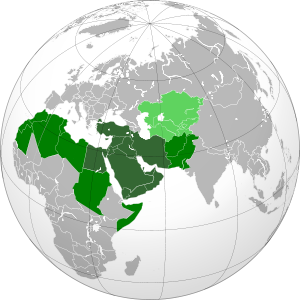
This week I am putting up my thoughts on accepting a ‘defeat’ in the Greater Middle East (at least for a little while); cutting our losses; and a long-term exit from a region that is consuming US power at a remarkably frightening rate. My ‘rah-rah’ instincts are to stay and ‘win’ and my blogging to date has supported the GWoT pretty strongly, but increasingly the parallels of Afghanistan to Vietnam linger in my head. It’s hard not to see this debate like those of the Johnson administration in 1964-65. The risks of staying and draining US power, especially in the face of rising Asia, increasingly worry me. Perhaps living in Asia and seeing how wealthy they are all getting, while we run all over the ME, has instilled greater fear in me of US overstretch. The GWoT needs to end soon, or at least we need to find a far less expensive way to fight it.

The intellectual drivers of this rethink are all the good punditry that has emerged in the last 2 months of the Obama review. (This time has been an excellent public participatory debate on the republic’s foreign policy. Let’s hope this style recurs. It is downright revelatory and democratic compared to W.) Particularly influential on me have been Walt, Kaplan, and Greenwald. Walt’s constant and intelligent blogging at FP has really forced me to rethink how unlikely, unnecessary, and costly a counterinsurgency ‘victory’ would be, and the importance of husbanding US power for other concerns (Asia). Kaplan convinced me that we are helping others a lot more than ourselves. And Greenwald convinced me that my own thinking on US geopolitical problems too easily slides to the standard US ‘foreign policy community’ response of more force, more intervention, more effort. If all you read all day is stuff from think-tanks and policy institutes like Brookings, Rand, or the Council of Foreign Relations, you’d think the US should be the world’s first problem solver. But Walt is probably right that that is recipe for overstretch, and Greenwald is probably right that that puts a lot of blood on US hands.

So I am going wobbly on Afghanistan first:

Like Friedman and Kupchan, I am starting to think this is a bridge too far – at least right now. I am not so sure, but the costs of this thing seem pretty high, and likelihood of failure too, and it is not clear how much the US needs a victory in Afghanistan defined by a decade of nation-building (the McChrystal approach). Why my change of heart?

1. US finances are a mess, even worse than usual, and US unemployment just broke 10%. This constraint is worsening as the budget outlook worsens. It should condition ALL new foreign policy outlays, especially those involving the military, as wars usually out-cost expectations. A major counterinsurgency ramp-up may be the ‘imperial’ indulgence that pushes the US into a financial crisis. Think about the parallel of Johnson’s expensive Vietnam build-up and the costs it brought in the 70s.

2. The US partner in Afghanistan is really bad. Karzai is so obviously corrupt now. The stolen election may be the last straw. US troops are now in the bizarre position of tacitly protecting warlords, as well as the drug growers who supply opium in the US. How can we win if the government is a lost cause? Isn’t that oxymoronic?

3. The US Army is badly overstretched by any reasonable measure. Recruitment is problematic. Gear has worn down faster in hard conditions of Afghanistan (and Iraq) than expected. The Army and Marines need some pretty serious institutional downtime to rebuild capacities and absorb GWoT lessons.

4. International cooperation on Afghanistan is pathetic; this is a coalition of the unwilling. The Europeans are wholly disinterested. They just want to come home. Obama can’t get anything more from them than W got. America’s Asian allies (Japan, SK, Australia) are not enthusiastic at all. Korea will go, but they will be non-combat forces. Japan won’t go, and is even probably going to stop its Indian Ocean refueling operation. Australia won’t go either. Not even the UN can really function in Afghanistan now either after last week’s bombing. And Pakistan’s role is downright pernicious.

If this sounds like I am flip-flopping, that is somewhat correct. Try here for my argument 2 months ago in favor of the Afghan COIN. I am genuinely unsure of the right course – as is Obama apparently, so at least I am in good company.

Under-Institutionalization in Asia

Asean

This is an article proposal for the Asian Studies Conference Japan. A friend works there; its a good outfit. You should take a look.

Proposal: “It is a commonplace in research on international security and economics in Asia to call for greater, thicker institutionalization similar to the Organization for Security and Cooperation in Europe or the European Union. Not just East Asia, but most of the continent is comparatively poorly institutionalized. The Six Party talks on North Korea collapsed rather than evolve into a hoped-for ‘Northeast Asian Concert.’ The Association of South East Asian Nations is weak, having failed to coordinate well against either the Asian Financial Crisis or the Great Recession. ASEAN spin-offs like the ASEAN Regional Forum or Asia-Pacific Economic Cooperation (APEC) have done little. In South Asia, the South Asian Association for Regional Cooperation has essentially been sidelined by, rather than help to alleviate, the Indo-Pakistan competition. In the Middle East, the Gulf Cooperation Council is a self-protection club for monarchs, not a multilateral forum for dispute resolution or integration. This paper investigates today why even Africa is today even more institutionalized than Asia, especially East Asia. Repeated calls for thicker institutions fail for reasons local elites are loathe to admit. Deep divisions over territory, religion, ideology, and memory divide states across Asia. Territorial issues like Dokdo/Takeshima, Kashmir, or the West Bank are similar across the continent. Historical issues like the conflicts over Japanese colonialism or Israeli behavior are similar as well.  Accelerating democratization will only worsen these divides as entrepreneurial politicians fire populism for electoral and legitimacy gain. Despite regular academic calls to institutionalize Asian security, this – much less security communities as we see in Europe and the Western Hemisphere – is unlikely.”

I could cut out the bit on SE Asia, South Asia, and the Middle East, and only focus on NE Asia. But it strikes me that security institutionalization across ALL of Asia is pretty bad.

I am pretty pessimistic on institutionalization out here. Those who say that Asia’s future is Europe’s past seem right to me. East Asians just don’t seem ready to really build a serious multilateral forum. They just don’t like each other enough. It is pretty politically incorrect to say that, but things like the EU, NAFTA, or the OSCE require a modicum of good will and shared values among the participants. Simply trading for greater profit is not enough. SK and Japan, and Taiwan and China trade, but they still loathe each other. As long as my Korean students tell me they are ready to go to war over Dokdo (!) and they watch Japanobic movies like this, then you can forget an Asian or East Asian Union. South Asia too isn’t ready; the Indo-Pakistan conflict – including its talibanic addendum in Afghanistan – paralyzes everything. And it hardly needs to be said that regional integration is utopian in the ME.

It took the Europeans 3-4 centuries of bloody brutal conflict before they agreed to seek security through integration and cooperation rather than domination. You’d think after Asia’s violent 20th century, they would have learned that too. I guess not. As another western scholar out here said to me in extreme irony, ‘they’re just one more good war away.’ Sad but true, perhaps?

Why Muddling Through with NK is the Only Option

seoulskyline2

This is a letter to the editor of Foreign Affairs. In the endless blizzard of commentary on what to do about NK, I thought this recent essay was excellent.

“Three of Andrei Lankov’s arguments – “Changing North Korea” (Nov/Dec 2009) – deserve expansion.

First, doves miss that the Kim regime is highly unlikely to meaningfully denuclearize – ever. The regime unprecedently starved its own people to get to here. Without nuclear weapons, it becomes a fourth world outcast state ignored by everyone, a social catastrophe in the Confucian worldview. Given the radical dysfunction of its economy, shilling, again and again, its nuclear weapons for assistance is central to economic survival. As Lankov correctly notes, economic liberalization is impossible, because NK would go the way of the East Germany, not China. There is no final deal waiting to be clinched by a kinder, gentler administration in Washington or Seoul. Kim’s response to Obama’s election was a nuclear blast. Endless bargaining and threatening for favors is the foreign policy objective of NK.

Second, hawks overestimate the utility of pressure or coercion on NK. It is already so isolated, that further sanctions mean little. The NK regime has already acclimated itself to a level of poverty, brutality, and isolation that might have frightened even Saddam Hussein under sanction in the 1990s. But so long as personal goodies for the regime elite come from the China connection, further sanctions will only punish the population.

More importantly, Seoul is badly exposed to extreme NK retaliation, even without nuclear weapons. This obvious fact is widely under-remarked. The Seoul National Capital Area (greater Seoul) contains a staggering one-half of SK’s population (25 million), and it lies just 30-40 miles from the DMZ. South Hwanghae, the nearest NK province, has 10-20,000 rocket launchers and artillery tubes pointed southward. It is simply impossible for allied air power to indentify and destroy them all. In a war, Seoul would be, as NK regularly promises, a ‘sea of fire.’ Given high population density, Seoul residents live vertically in high, concentrated apartment blocks. 9/11 demonstrated the potential of explosive projectiles colliding with non-hardened skyscrapers. Imagine a repeat of the World Trade Center collapse dozens of times; NK shelling would kill tens of thousands of civilians in minutes.

No US commander or SK administration is willing to run this risk. NK knows this. And the problem is only worsening. Seoul exercises a role akin to Paris over the rest of France. Paltry decentralization efforts have failed, and neither the national nor municipal government has tried to slow its expansion for national security purposes. Despite Seoul’s enormous size, it is still getting bigger, as everyone seeks to ‘move up’ to Seoul. The next largest metropolitan area is great Busan with 4 million people, but it is contracting due to the out-migration to Seoul. The urban-sprawling (both up and out) national capital is a proximate city-hostage gift to NK negotiators

Third, Lankov generously underplays the low interest in SK for unification. As with West Germans by the 1980s, SK youth increasingly see the internal border as a real one. NK refugees in the South are an invisible and isolated population. As SK has grown into a consumer society and trading state, its population’s willingness to sacrifice for unification, much less war for it, has diminished dramatically.

The three constraints are nearly immovable, and Lankov is right to demand strategies that accept, rather than ignore, them.”

What the Europeans Might Learn from Korea about Free-Riding on US Power

nato-EU_preview south-korea-flag

For almost 40 years, since the Nixon doctrine, the US has complained that its allies free-ride on its power. The US does heavy lifting like fighting in Afghanistan or building a huge and costly military against the USSR. The Europeans enjoy the benefits, without providing much for the costs. Stephen Walt has made this argument in IR theory, as has Robert Kagan more popularly. Kagan particularly is the best-known proponent of the idea that the EU is ‘post-modern’ and focuses on soft power. By contrast the Russians are playing the ‘modern’ nation-state game of power politics in Eastern Europe, and the Middle East is ‘pre-modern’ insofar as supranational identities (Arabism, Islam) and sub-national identities (tribes and clans) contest the state and make state function very difficult. I like to think of Europe as an ally for the US and concerned about terrorism, Russian misbehavior, N Korea, etc., but it increasingly looks like Kagan is right. My thoughts are here and here.

This well-worn argument strikes me as wrong though in Korea. I am repeatedly impressed at Korea’s willingness to go along with US military ventures for the sake of global public goods provision. I go to conferences a lot here and constantly hear about the US as a ‘strategic partner’ for Korea, and that Korea must move into things like peacekeeping. My students genuinely seem to be aware of what the US provides here and that Korea should make a reciprocating effort. Consider the last line of this Korean op-ed about the current ‘what to do in Afghanistan’ debate: “The Korean government has to consider its obligations as a responsible member of the international society and find a way to help reduce the suffering of the people of Afghanistan from a humanitarian point of view.” Find something like that in European op-ed.

It is true that the Koreans went to Iraq, because they need the US against N Korea. And Poland signed up because of Russia. France and Germany have the luxury of Poland as their front-yard, so they can play hard-to-get. But it is also clear that ‘old Europe’ just doesn’t want to contribute to collective goods that much any more. Their defense spending is atrociously, irresponsibly low; only 5 out of 28 NATO members meet the ‘required’ NATO defense spending minimum of 2% of GDP (see Table 3 of this NATO 2009 defense spending report). Germany, supposedly a great power, spends just 1.3%. They like US power when things get hairy, but they are quite content to free-ride otherwise. Bush was a gift to western Europe in that his belligerence allowed them to duck the war on terror. But now Obama can’t get them to contribute either, and he was supposed to initiate a new era. European restrictions on troop behavior in Afghanistan mean too many European troops are just glorified policemen. Consider the ridiculous German reaction to the civilian deaths of a recent anti-Taliban airstrike. The deaths, of course, are regrettable, but ‘collateral damage’ is ‘normal’ in war and permissable under international law. But now the Germans want to leave. It is a European luxury to say ‘we can’t participate in any dirty operations at all.’ That just bucks the burden and blood to the US. The Europeans can retain their moral purity while enjoying the benefits the US military gives by trying to win (whatever that means) in Afghanistan. It is very poor form and smacks of deep selfishness.

By contrast, I find Koreans far more understanding about the costs of global order maintenance. Maybe this is because they live next to NK and every male has to serve in the military. But I find a moral shame at the idea of Korean free-riding that I do not when I talk to Europeans. The Europeans I meet here (a lot inevitably, because foreigners in Korea clump together) are quite content with the Der Spiegel-Le Monde image of the US as imperialist bully, and when I mention NATO obligations, I might as well be talking about space travel. The idea that European NATO members are treaty-obliged to help in Afghanistan (they are – Article 5 of the Washington Treaty was invoked after 9/11) falls on tone-deaf ears. For shame! The Europeans are natural US allies, because of high cultural and political similarity, and Islamic radicals target all of us. Yet Koreans seem to realize better the costs of the US commitment in the war on terror, and they feel some sense that the should help. I find this reversal stunning and disappointing.

A ‘Confucian Long Peace’ among East Asian States (2): Probably Not…

east_asia

(For part one of this post, click here.)

1. I am skeptical, because shared cultural bases have rarely stopped conflict in other areas. Instead, they often seem to encourage it, as various states claim leadership of the cultural space as a whole. Every Continental would-be hegemon from Charles V to Hitler said they were ‘uniting Europe.’ Further, we usually save our worst fury and anger for dissenting insiders, not outsiders. So Plutarch and Thucydides both noted somewhere that the ancient Greeks, despite their shared culture, were far more zealous in destroying each other than uniting against their common foes, the Persian, Macedonians, and Romans. Hedley Bull and the EU framers argue that European ideals and perhaps Christianity provide a shared cultural base for a ‘European society,’ but Christendom hardly stopped the Europeans from fighting bitterly to dominate each other, particularly over which form of Latin Christianity was right. Today, the Arab state system shows the same problems. Supposedly united by common language, culture, and religion, the Arab states have vied brutally against each other, frequently recruiting outsiders like the US or USSR to help them defeat local rivals.

Now, one can argue that Confucianism has special or unique war-reducing or –dampening properties, but that needs a lot of research and detailed process tracing rooted in specific examples of conflict averted by appeals to shared values. A far simpler answer is to say that China was a regional unipole (i.e., huge, when others were small), and therefore war against it was pointless. IR strongly believes this logic explains the current global Long Peace; war against the US unipole today is fruitless. So why not simply apply the logic to the regional level? Chinese preponderance made war in classical Confucian Asia less likely, because China’s opponents never stood a chance and so never tried. Following that causal logic, we should speak of a Chinese hegemonic peace, not a cultural Confucian peace.

2. The idea of a Confucian long peace stumps IR, because we aren’t really sure what to do with ‘culture’ as an explanation for outcomes. In fact, social science in general dislikes ‘culture,’ because it feels like a cop-out reason when you’ve got nothing else. If you can’t explain something otherwise, say it is ‘just their culture.’ So if I don’t know why Russians like vodka, the Irish like Guiness, and the Koreans like soju, then it is just ‘cultural preference.’ But that is awfully soft. It does not actually tell me much; it provides no account of mechanisms and choices. Besides, lots of so-called cultural artifacts actually have functional roots. For example, the Jewish and Islamic prohibitions on pork are rooted in the possibility of contracting trichinosis from flesh that might quickly sour and rot in the sun of the ME. Social science prefers such rationalist explanations. Actor X does Y, because there is some tangible material benefit. Maybe Confucian Asia will bandwagon with China for cultural reasons, but the causal map for this behavior feels soft, especially in contrast the explanatory clarity of the regional unipolarity thesis.

For examples of culture’s softness, look at the other three systems I noted with multiple states functioning within a shared culture (Greeks, Christian Europeans, and Arabs). They did not enjoy any war-reducing affects from common culture. In fact, the evidence from psychology points the other way: we tend to save our harshest opprobrium and violence for lapsed insiders (national traitors, religious heretics) than outsiders who are comfortably relegated as ‘barbarians.’ This was Plutarch and Thucydides’ tragic insight, e.g., on the ancient Greeks.

3. If there was a Confucian peace, I don’t think it is coming back. Kang does. He thinks China’s EA neighbors will accept some amount of Chinese hierarchy; that is why they are not balancing against China now. I don’t buy it. Koreans and Japanese strike me as way too nationalistic today to accept that. If anything, the Koreans and Japanese look down on the Chinese as culturally inferior. Koreans will tell you that the Chinese will eat anything (scorpions, beetles) and that Korea should ‘mediate’ China to the West. Sizeable chunks of Japan still think its imperialism liberated Asia from the West and brought modernity. EA states today are just way too nationalized now. Just like the nationalization and de-arabization of contemporary ME states that sets them against each other despite shared culture, EA states may share a vague Confucian background unity, but vague is all it is. EA is far from the level of cultural sharing and trust that undergird a project like the EU. And remember that the Europeans had to destroy each other for 400 years before they decided to live with each other. If no one is balancing against China today, as Kang says, then, 1. they can avoid it, because the US is still around to reassure everyone, and 2, they are certainly hedging against China, if not openly balancing it. No one in Asia is openly running with China, not even NK. This nationalization of EA states is why Samuel Huntington’s proposed Confucian civilizational bloc never really ignited local opinion here; it was based on the Sinco-centric past, which although attractive perhaps as a route to peace today, no longer exists. Asians will have to do the hard work of forging institutions to build trust; culture is not enough…

A ‘Confucian Long Peace’ among East Asian States (1): Does Shared Culture Stop War?

confucius 2

(For part 2 of this post, click here.)

This article is an excellent introduction to the tangle of East Asian security problems today. Chung-in Moon and Seung-won Suh lay out all the nasty problems of territory, nationalism, and historical imperialism that make EA a powderkeg. There is a running debate in IR theory about how peaceful EA actually is. A lot of it focuses on China. Aaron Friedberg and John Mearsheimer worry that China’s growing strength sets it on a collision course with other Asian states, and eventually the US. David Kang thinks that China’s claim to a ‘peaceful rise’ is real. He notes that for all the sound and fury in EA about nationalism or territorial disputes, there is no serious anti-Chinese coalition forming, nor has their been a major war out here since Vietnam and Cambodia in the 70s. This is a historically and theoretically rich debate; you should read about it if you can.

But I want to focus on remarks by Moon and Suh about how peaceful Asia’s IR was before the arrival of the West. The issue of today’s security dilemmas and tensions in Asia are hyperresearched. Everyone out here goes to one conference after another about Asian security. (I will attend 6 by year’s end, with 2 more scheduled already for next year.) But the counterpoint between Asia and Europe’s earlier history is far more fascinating, because no one ever talks about it. There is a vague argument that while European states were destroying themselves in early modern warfare, Asian states were getting along reasonably well under a Chinese umbrella of soft hegemony. Moon and Suh use the terms ‘long peace’ and ‘Confucian peace’ to describe EA IR until the late 19th C. This is woefully underresearched; there is a great dissertation here.

The “Long Peace” is an uncontroversial idea in IR theory. It says that it is pretty remarkable that there has been no global general war or systemic conflict since WWII. That was the last time all the big global powers lined up on one side or the other and destroyed one another. We are now in the 64th year of the Long Peace. And that does seem like quite an achievement… from a Eurocentric view of the world system. Kang has written a lot to convince me that actually Asian IR was a lot more peaceful than European IR before the Europeans arrived in force in the late 19th C and brought the strict state sovereignty system with them. Kang, Moon, and Suh all suggest that East Asia was a characterized by a much longer (as in centuries) “Confucian Peace.”

The deep cultural and historical details of the confucian peace really need to be researched a  lot more. But here is what I pull from Moon, Suh, and Kang. The ‘confucian’ peace suggests that nations/states in the confucian zone (that means China, Japan, Korea and Vietnam) shared a lot of values and cultural similarity. This sharing acted to slow the march to war; that is shared Confucianism has a war-dampening effect. The specific causal mechanisms are Confucianism’s emphasis on 1. respect for the older and more educated, 2. social harmony, and 3. social hierarchy.  China, as the oldest, most culturally ‘advanced’ state in the region, enjoyed formal superiority to Korea, Japan and Vietnam, but allowed them substantial informal leeway. War violated harmony and order and showed disrespect to the older brother (China). Think of this as ‘feudalism that works’ (unlike in Europe where vassals routinely rebelled). So causal arrow goes from shared culture to the specific war-dampening cultural aspects of Confucianism to peace. Someone needs to write a good IR history of this idea and whether or not it was really true. I have 3 criticisms: Go To Part 2.

Time for Indecision on Afghanistan

afghanistan-map

The growing pressure for a ‘big’ decision on Afghanistan is misguided. The neo-cons and other hawkish elements are raising the temperature on this unnecessarily by suggesting that Obama must go all in soon, or the Democrats will be responsible for losing another war. Slow down there, Tom Clancy. There is a case for muddling through also, not just leaving or going all in.

There is growing evidence that a big rush to judgment and commitment on Afghanistan is unnecessary. (Read Fred Kaplan’s last few columns.) I found this article by AJ Rossmiller most persuasive against the fallacy that Obama has to make One BIG Momentous Decision that will determine his whole first term. Rossmiller wisely suggests that there is actually no big need to ramp up huge forces there right now, with all the costs and commitments that come with a build-up. Muddling through is working pretty well.

It seems to me that the push to have one big decision is really a rhetorical strategy by Afghan surge supporters. By talking this way, they seek to create the view that if O doesn’t make a huge choice RIGHT NOW, all could be lost. This framing of the decision is designed to push him into the surge, by making it look like he is giving up if he doesn’t pile in. Better to lock in Obama on Afghanistan now, early, before he learns too much and starts to hedge.

The model for such a decision-making approach is Kennedy and the Bay of Pigs, and LBJ on Vietnam after Pleiku. A new, unsure president gets pushed into a big war-making effort by a collection of advisors with deep stakes in the military-industrial approach to conflict. As a Salon blogger put it, LBJ probably should have listened to Norman Mailer (!) instead of Bundy or McNamara. I wouldn’t go that far, but the point is that these ‘strategic reviews’ recycle the usual suspects. Even better is Greenwald’s powerful column that the ‘foreign policy community’ as an industry has a vested interest in imperial overstretch and war as a tool of conflict resolution. I particularly like Greenwald’s identification that whenever you ring up Rand or the Kagans, the answer is more military action. Hah! Money quote:

As Foreign Policy‘s Marc Lynch notes:

“The ‘strategic review’ brought together a dozen smart (mostly) think-tankers with little expertise in Afghanistan but a general track record of supporting calls for more troops and a new counter-insurgency strategy.  They set up shop in Afghanistan for a month working in close coordination with Gen. McChrystal, and emerged with a well-written, closely argued warning that the situation is dire and a call for more troops and a new counter-insurgency strategy. Shocking.”

The link he provides is to this list of think tank ’experts’ who worked on McChrystal’s review, including the standard group of America’s war-justifying theorists:  the Kagans, a Brookings representative, Anthony Cordesman, someone from Rand, etc. etc.  What would a group of people like that ever recommend other than continued and escalated war?  It’s what they do.  You wind them up and they spout theories to justify war.  That’s the function of America’s Foreign Policy Community.

The model for going ‘all in’ of course is the Bush surge in Iraq. But there was hardly a decision-making ‘process’ with W, understood as a careful weighing of options and competing views. You knew W would not leave, but double-down instead: Iraq was the signature issue of his presidency in by 2007; he was obsessed with machismo and mistook bulheadedness for toughness; and no arguments were going to dissuade Bush, because the ‘decider’ was a ‘gut player,’ not a listener. There was no real debate; W blew off the Iraq Study Group and rolled the dice. Nor do we know if it was the surge that helped stabilize Iraq. A lot suggests it was the change in strategy from warfighting to COIN, as well as the the shady and mundane pay-off of Sunni insurgents. In short, it may not have been Bush’s heroic insight into the war, but simply handing bags of $100 bills to Sunni gunmen that helped quiet Iraq.

Six weeks ago, I argued to give McChrystal a chance on COIN in Afghanistan. I am not arguing now for the offshore CT approach, but rather for a little more muddling through. I still think we should stay in Afghanistan with a heavier footprint than VP Biden would like. But my concern here is to avoid pushing Obama into one great, over-heated ‘ALL OR NOTHING!’ decision. Framing the decision that way basically blackmails him into making the choice those framing the debate this way want him to make, ie, the big build-up.

‘Birthers’ and the Requirement of Documentation

2009-07-24-obamabirthcertificate-thumb One of the great disappointments of my time in the US this summer was the silliness and extremism of the Republican reaction to Obama’s defeat. Instead of playing a constructive role as an opposition party, it is descending into lunacy – G Beck called Obama a racist; health means enforced abortion; Palin declared Obamacare ‘downright evil.’ This is bad for the GOP and, in the medium-term, for the country also.

Instead of taking its big defeats in 2006 and 08 as cause for a major rethink, the party and the conservative movement seem to have concluded that further movement to the right is the answer. This is also bad for the country, in that the medium-term implosion of the opposition party in a two-party system removes a critical check & balance from the system. Perhaps the most idiotic, self-destructive reaction is the birther movement. A plurality of Republicans believe Obama is not a citizen.

About the only thing I can think of to defend the birther position is that proper documentation is a broad problem in the US. There is no national ID card. SS cards do not come with a picture on it. State driver’s licenses implicitly function as our nationwide ID, but they differ widely across the 50 states, SS numbers can be removed, religiously devout are sometimes permitted to cover their faces, and many people simply do not have one. Finally, of course, document fraud is growing problem, because 20 million illegal immigrants live in the US creating massive demand for a black market in faked paperwork.

My sense is that improving US systems of ID is the meaningful take away from the birther controversy; the rest is bizarro conspiracy theory flim-flam. So, yes, Obama should have a birth certificate to prove he is a US citizen, but so should every other candidate for political office in the US. Indeed, it seems to me quite natural that anyone declaring candidacy for an office in the US should be required to show proper ID. I certainly hope that is required! I am always amazed that when I voted in the US, that I was not required to show any form of ID; I would always bring my driver’s license just in case.

That is probably the real lesson from the birther flap. It is born of the confusion over proper ID in the US and the huge presence of illegals in country. Yes, it channels the long history of rightist paranoia in US history. But it also says that the US should probably have a national ID card as most countries do. That card would be required for most public functions – voting, candidacy, driving, court appearances, etc.

Finally, in a rich irony, it is the right that has long blocked a national ID scheme. Exactly the kinds of righties who make up the birthers – radical libertarians, militia types, NRA members – are also the most vehement opponents of a national ID card, because it is seen as a step toward tyranny and government tracking of weapons ownership. So you can’t say Obama lacks his paperwork, when you think too much paperwork is the beginning of world government.

Korean ID addendum: Korea goes too far the other way with an ID card. When you buy stuff on the internet from Korean analogues to Amazon, you need to punch in your national ID. So if you order a book or movie from the internet, it is tagged to your national ID number with an e-vendor. Kinda creepy…

Giving Kim Jong-Il the Nobel Peace Prize would have Done more Good

Greetings%20Earthlings

I agree with just about everybody else in the blogosphere that Obama did not deserve it. As many have noted, he has not done anything really. I also concur with the emerging center and center-left conventional wisdom that he should have declined it. The US Right will certainly pick this up as confirmation that Obama is just a celebrity, more interested in placating Europhilic cosmopolitan elites than defending Sarah Palin’s ‘real America.’ Fox can be counted on to get a week or so out of bashing ‘arugula-eating, latte-sipping, Mapplethorpe-loving bicoastal elites who like to be liked in France.’ You’ve already heard that story from Coulter & Co. for years, but Obama offers them ammunition when he revels in the glow of post-modern euros. He should have ducked this one. More importantly, he should do something.

The other obvious insight is that giving this to Obama does not really promote peace in the future. Maybe the Nobel committee is trying to bind/blackmail him into not bombing Iran or paying the US back dues to the UN. But basically, this is an award for not being George W. Bush. Far more useful to actually improving peace would have been to award it to those struggling to overturn or moderate some of the world’s worst regimes. Andrew Sullivan suggested some of the Iranian dissidents. A friend thought Morgan Tsvangirai. I thought perhaps some of those Russian journalists who get killed for reporting on Chechnya. The point of these choices – besides the obvious fact that they deserve it and O does not – is that the Prize might actually help their causes significantly. These dissidents need resources to press on and international press coverage to make sure they are not killed by the regimes they challenge. Tsvangirai, e.g., is almost certainly only still alive, because he garners so much western attention. The Prize would bring powerful moral credibility to those desperately in need of it.

But you want to know what Kim Jong-Il has to do with it. The Dear Leader’s greatest fear now is execution in post-unification South Korean courts. Survival, not juche, is the real ‘ideology’ of the regime. Kim basically wants to survive to die warm and secure in his bed, like his dad. As Hobbes famously said in the Leviathan, he fears not death, which is inevitable, but a violent death. He does not want to got the way of Mussolini, Ceauşescu, or Saddam Hussein. And before he goes, Kim wants to party for a few more decades. He loves the movies, the booze, and the ‘joy brigades.’

Because of his fear of hanging in a South Korean prison, he holds on to NK as best he can. So why not make a deal with him? The Nobel committee already gave the Peace Prize to Yasir Arafat. How about a secret deal to give it to Kim in exchange for an opening of NK? If Kim had a peace prize in hand, the SK government would certainly never execute him.

If this sounds pretty far-fetched, recall how damaged the Nobel Peace Prize’s credibility already is. If Yasir can get one and Gandhi can’t, who cares if Kim gets one? If it helps convince him he won’t get executed, then so much the better…

The ‘War on Terror’ is not over just because We don’t use that Expression Anymore

6a00d83451bab869e20120a525c27d970c-800wi

The above silliness is what happens when you pretend Obama’s charisma can stop the GWoT.

If you have read this blog even a few times, you know I thought Bush was a pretty poor president. He got lots of things wrong, and the country is much worse off after W than before. But flagging the post-9/11 anti-terrorism campaign as the ‘Global War on Terror’ was a good rhetorical move, and the expression should kept, if only because no one else has come up with a good alternative – one that rings of the scope, focus, and moral weight of ‘GWoT.’

Getting the GWoT rolling was a success. Getting other states to take terrorism seriously in the wake of 9/11 was foreign policy success. There is no doubt that Islamic jihadists are targeting the US. OBL and the rest believe this is a clash of civilizations. They believe Islam is encircled by non-believers, and they will fight to defend the faith. Americans are the primary threat to it. Bush, for all his flaws, realized this. And he did realize that the enemy is dispersed around the umma. This will be a large, multi-front problem for awhile. That does not mean it must be ‘WWIV,’ but it does mean that terrorism, specifically Islamic terrorism, is the most important national security threat to the US and the West in general for the next decade. (China could change that if she goes belligerent, but so far she is following the rules pretty well.)

None of that brief analysis is very controversial anymore. And the term ‘GWoT’ captured this pretty well. It is a bit indelicate as a term of art. But still it captured the essence of the current struggle pretty well.

So I am disappointed at the continuing, almost ideological unwillingness of the Obama people to utter this concept. I know they loathe W, and I suppose they think the expression simply alienates the rest of the world. But it did bring clarity about this contest to the US population and rally them to sacrifice and commitment. And it does help strategists build ideas within it as a conceptual frame about the future of US foreign policy. (For a good example, see Thomas Barnett’s Pentagon’s New Map.)

Further, it strikes me as willful blindness: the war on terror is past because we just don’t talk that way anymore. Really? The war on terror is over just because W is out of 0ffice and McCain lost? Obama can’t even close Guantanamo or untangle the torture mess. And the jihadists don’t care at all if Obama is black or lived in a Moslem country. You can’t end the war on terrorism with a linguistic sleight of hand; antiwestern terrorism will not be slowed, just because we don’t say it anymore. This strikes me as a rhetorical arrogance, but then the Obama people seem to lay so much emphasis on his ability as a communicator.

In short, it seemed like a pretty good term to nail down an elusive problem and an even more elusive response. Yes, it is open-ended expression, suggesting war that could go and on with no end in sight. But there is not really much else to put in its place. Condolezza Rice once suggested the ‘campaign against global extremism’ or something awkward like that, but that got nowhere. And after 8 months, Obama and H Clinton still have no kinder, gentler replacement. I still use the expression when I teach, even though the new administration does not, because I’ve got nothing else that works so well.

So come on already. Admit that we are still in this thing, even if the O people want to fight it a different way.