Unknown's avatar

About Robert E Kelly

I am a professor of political science at Pusan National University. I write mostly on international relations in East Asia.

The Latest Bogus North Korean Peace Offering

images

Once again, North Korea asked for a peace treaty last week to formally end the bizarre stand-off on the DMZ. This was the topic of my weekly radio chat on Busan’s English language radio station. As you might imagine, every tremor from the North is felt in the South, no matter how small or gimmicky. The CW is that last week’s offer was not serious. Both the US and SK quickly rejected it. But nevertheless, it is amazing to see how ‘keyed in’ SK is to NK. That must be a great, albeit perverse, joy to Pyongyang. Whenever they want to make a fuss, they have a captive audience in the South who will jump whenever they pull the strings. His own country may be falling apart, but at least Kim can keep South Koreans jittery and jumpy year-in, year-out. Awful. In fact, there is probably a good master’s thesis in there about how states in a highly integrated region have massive side-effects (lateral pressure) on each other. Think about how inter-linked where Europe’s militaries before World War I. Once one mobilized in 1914, everyone else had to. It is the same here.

The interview below is mostly a review of how we got here. The inter-Korean border is the most militarized in the world, and the most irregular. The DMZ is technically an armistice space, not a border. (And it’s downright surreal to visit.) Legally, the war is still on. But no one really quite knows what that means. In practice of course, it means that the SK and US militaries are on a hair-trigger. The UN has long since been sidelined.

I don’t buy it at all that last week’s treaty offer was serious. My best guess is that now that NK has demonstrated that it is a nuclear weapons state, it is on a charm offensive. As I argued on air, I think NK is pursuing an ‘Indian strategy’ on nuclearization. The US told India not to go for nukes in the late 90s. They did anyway. The US and the other nuclear states complained and sanctioned for awhile, but after a few years, everyone just gave up. India hung tough, and eventually, it came back into international society with no serious damage for nuclearization and a nice new toy to prove it is a great power.

I think the same bargaining logic is occurring here. NK has changed the ‘facts on the ground.’ It is now a nuclear weapons states. It can now reconfigure the ‘status quo’ in any negotiation to include its nukes. The US will see the status quo ante is the baselines, but NK will not, and the reality of its functioning nukes will implicitly change the game. As always, NK proves to astonishingly successful and canny at brinksmanship.

__________________________________________________________________________

Petra:

So last week, North Korea suggested a peace treaty be brokered to officially end the Korean War.

REK:

That’s right. North Korea is really struggling under the weight of sanctions imposed by the United Nations. A lot of experts think North Korea is desperate.

Petra:

I see. Why do we need a peace treaty at all? The war is long since over…

REK:

That’s right. The active, shooting war ended in 1953, but amazingly, a formal treaty was never signed. Technically North and South Korea are still in a state of war. What exists today between them is simply a pause, what we technically call an armistice. But this has never actually been formalized in a signed document. So it would be technically legal for both sides to start shooting again.

Petra:

Yes, that’s right. So why don’t they?

REK:

Well, by 1953, everyone was exhausted from the war. Everyone wanted the peace, and over time, the armistice hardened into this long-term stalemate that we see today at the demilitarized zone. Indeed, the inter-Korean border and its strange war-like status is unique in world politics. Not even the two Germanies in the Cold War had this sort of relationship. In Korea, neither side has wanted a formal treaty, because neither side wants to officially recognize the other. Both claim to be the legitimate government of the whole Korean peninsula, so the war devolved into this unfinished stalemate. As I said, it’s a strange, unprecedented situation.

Petra:

So why is North Korea proposing a peace treaty now? What does this mean?

REK:

The North Koreans have sought a treaty for about 15 years now. In the early 90s, North Korea was badly hurt by major changes, including the withdrawal of Soviet support, China’s diplomatic recognition of South Korea, and the death of Kim Il Sung. Then of course came the brutal famine. Given all this difficulty, Pyongyang has repeatedly tried to get a peace treaty to bolster its own existence. North Korea has basically lost the race with South Korea, and it is desperate to get the US and South Korea to recognize it officially. Pyongyang fears that the continuing stalemate is helping to slowly destroy the country. A peace treaty would open the door for aid money.

Petra:

So why did the US and South Korea so quickly reject the offer last week?

REK:

Two reason. First, US official policy is that North Korea must negotiate with South Korea primarily, and North Korea has not made clear if the peace treaty would include South Korea. Excluding South Korea from Northern diplomacy is a longtime Northern trick. It prefers to negotiate directly with the US. The second reason is nuclear weapons. Last year, the North clearly demonstrated to the world that it is a nuclear weapons state. But the US and South Korea do not want to recognize that nuclearization. So any progress on the peace treaty is linked to denuclearization.

Petra:

Is that likely?

REK:

Quite honestly, I don’t think so. North Korea has endured staggering levels of poverty and deprivation to get nuclear weapons. Even as its people starved, the regime continued nuclear development, and 2009 was a banner year in which all that work came to fruition. After so much hardship it is almost unimaginable that the North will go back – unless there were some kind of amazing deal of aid and support from the US, South Korea, and perhaps Japan. But this is terribly unlikely.

Petra:

The North already know most of your argument about giving up its nukes right?

REK:

We think so. It is terribly hard to read Northern intentions, but US secretaries of state have been saying basically the same thing for almost twenty years now.

Petra:

So why are they proposing the peace treaty now if they already know it is unlikely to advance?

REK:

Again, no one knows for sure, but probably because of the weight of UN sanctions on the regime. Last year, after the nuclear test definitively proved North Korea was a nuclear power, the US, South Korea, and Japan pushed a tough set of trade and economic sanctions though the UN. These newest sanctions more than ever target the foreign enterprises and wealth of the North Korean elite. The sanctions are beginning to bite not just the long-suffering population, but also the ruling clique, especially the military, and that is dangerous for Kim Jong Il.

Petra:

So the treaty is just a trick or a gimmick?

REK:

No, I don’t think so. They genuinely want it, because they are so fearful of the South’s superior economic and military power. North Korea faces a perpetual legitimacy crisis, because South Korea is so obviously more successful and happy. Few Koreans would choose to live in North over South Korea, so the regime desperately wants Southern recognition and money.

Petra:

Bu nuclear weapons make that so much harder to achieve.

REK:

It does, which is why the decision to nuclearize is somewhat puzzling. I think the nukes are to prove that even though North Korea is economic inferior to South Korea, it is military superior. I think the regime hoped that it could stall and obscure the negotiations long enough to get nuclear weapons, and then the US – and South Korea and Japan – would be forced to recognize its nuclear status.

Petra:

So the negotiations would ‘reset’ after the achievement of nuclear weapons…

REK:

That is exactly right. Before nuclearization, North Korea’s cards in its poker game with the South were weaker. But now, the nukes are huge new ace. I think North Korea wanted to mimic the success of India with nuclearization in the 1990s.

Petra:

What happened there?

REK:

Well, the US told India not to pursue nukes. They did anyway – to have the global prestige of being a nuclear power. The US responded with sanctions, but not really with much commitment. A few years later, America gave up, and its normal relationship with India resumed. In other words, India hung tough through a few years of US-led sanctions, but eventually the US dropped the issue. So India got to keep its nuclear power, and have its relations with America.

Petra:

And North Korea is trying to do the same?

REK:

Basically yes. They know the US and South Korea are furious over the nukes, but they guess that if they can weather that dislike for a few years, they will be able to keep them, just like India. The peace treaty is just a way to signal that they are nice now they achieved nuclear weapons.

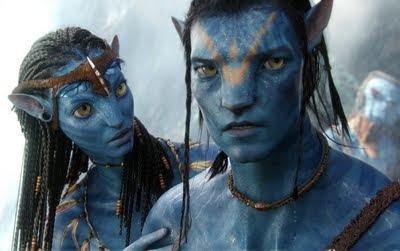
“Avatar”: Blue Ewoks Save the Amazon from Blackwater Inc.

avatar

I have seen it twice now, both times in 3D. The following contains spoilers.

1. Its technical prowess is undeniable. For all the hype, I do think that Cameron has revolutionized the action movie. Note that I do not say films in general. 3D will help action, and to a lesser extent, horror and children’s, films, but I doubt it will add much to dramas or comedies. Consider if you think the Godfather, Airplane!, Schindler’s List, or Casablanca  would be much better in 3D. I don’t really think so. On the other hand, think of the chariot race in Ben-Hur in 3D. Now that would be something! So I think we should give credit to Cameron for his revolution. But we should also realize that its best impact will be limited in scope. This revolution is not on par with the transfer from silent to spoken films in the 30s, but rather more on the level with the move from frontal stereo to surround sound that began in the 80s.

2. Cameron also deserves credit for integrating 3D in a non-gimmicky way. Back in the 80s, 3D was tried, but it was always cheesy. Third films in bad series showed up with titles like Jaws 3-D or Friday the 13th 3-D, but usually the only thing 3D was a gimmick like a spear flying straight out at the screen. To Cameron’s credit, his 3D is integrated throughout to generate a richer, more immersive  environment for the viewer. In that way, he has matured the technology, which is now over 30 years old. That too is major feat, especially given the decadence of CGI in the last decade or so. CGI is now so ubiquitous, that it enables laziness. Cameron has helped return CGI to an exciting enhancement to a movie, rather than a replacement for it (300, Star Wars prequels, Matrix sequels). Cameron’s visual advance in technique rivals the the size of the steps forward made by Star Wars (1977), Terminator 2, and Jurassic Park. Visually, this film is the most important advance since Return of the King.

3. But the story… It is so politically correct postcolonial/environmental, that you just writhe in its painful predictability (kinda like Kingdom of Heaven with its blessedly pleasant Muslims and wretchedly imperialist Christians – yawn.) Indeed, in my second viewer, I found myself rooting for the “Sky People” just to upset the all-too-comfortable and easy PC moralism of it all. And there is no doubt that the bad-guy mercenary is the most enjoyable character in the movie. In the same way Lawrence Olivier or Darth Vader were the most fun to watch in Spartacus  and Star Wars, here you can’t help but love the watching the bad guy marine drink coffee in his ship (hah! ripped straight out of Apocalypse Now), while his machines wipes out the beautiful, harmonious, nature-loving, athletic Californians, I mean, Ewoks, I mean Navi! I wish they had made him a smoker too.

If you make a farce of tragedy, it becomes comedy. The Navi are so wonderful, that you kinda want to see them get smacked around. You’re not as muscular and virile and beautiful as they are; you’re sitting in that theater right now with a half-gallon of popcorn in one hand and a 64-ounce gulper of Jolt cola in the other. And how come they don’t commit human sacrifice like the Aztecs? The point is that if your story simply recites platitudes with no moral complexity, then its easy to ignore. Hollywood usually does this from the right actually. Usually Hollywood movies are unthinking vehicles for US patriotism (Michael Bay, Rambo, e.g.), but movies like Avatar and Kingdom of Heaven show you just how easy it is for the left too. By contrast, consider a difficult movie like Apocalypto, whose moral categories are all mixed up for the viewer and is consequently a richer, more challenging intellectual experience.

4. The best political reviews I read of the film are here, here, and here. Cameron deserves all the criticism IMO, from both right and left. Ironically, both the left and the right are correct about the film. Most of the political commentary I have read on the film is excellent – rapidly deconstructing its facile morality and easy ‘white messiah’ storyline, which is just ripped-off from Dances with Wolves and the Last Samurai.

5. Conservatives found it a simplistic story of PC platitudes: nature=good, technology=bad; white people=destructive rationalists, native peoples=harmonious pantheists; fossil fuels=bad, crying after the hunt=good. The blue people are a hodge-podge of the Vietnamese, Native Americans, and the Ewoks; the bad guys are a cross between Blackwater and Caterpillar; and Cameron even gives you throwaway references to the GWoT with dialogue about shock-and-awe or martyrdom. Too easy!

6. The left finds it a white man’s guilt trip, only without much of pain of actually being like the oppressed indigenous people. So the main character can find how good and wholesome and nature-loving  the natives are, and he can play at being one of them. But if it gets too weird, he can always go back and get his legs fixed. So he can pretend he is a native, in order to assuage his guilt for destroying the Amazon, I mean Endor, I mean Pandora!, but he doesn’t actually really want to be oppressed like real Native Americans, so he can always head back to his white body. This is the fantasy of a rich white man living an highly technologized culture about what it might be like to give all that up. The reality of course would be if Cameron moved onto a contemporary US Indian reservation and confronted the problems of cultural dislocation, alcoholism, and poverty. But who wants that? Better to fantasize about riding dragons and hooking up with the hot native babe. Ridiculous.

7. Avatar is strange film to review given the wildly unbalanced mix of revolutionary style and banal substance. On the upside, I think it is the most important film of 2009, although obviously not the best. Everyone should see it. It’s the most important step-forward in visual presentation since Lord of the Rings, if not Jurassic Park, and 3D is coming to home theater this year. I do agree with Cameron that this is the future of visual entertainment (look for it in video games too soon), albeit for only for certain genres of film. On the downside, Avatar proves once again the long-standing rule that no amount of razzle-dazzle can cover an abysmal story. For all the money Transformers 2 or Phantom Menace made, I don’t know anyone who really likes them. By contrast think how great were Hitchcock’s one-room drama Rope or Linklater’s let’s-just-walk-around-Paris couplet Before Sunrise and Before Sunset. I think the latter cost maybe a million dollars, but I’d rather re-watch that than Avatar.

Why Korea is going (back) to Afghanistan, or how Middle Powers get Muscled by their Patrons

_46638147_soldier_getty

So Korea will head back to Afghanistan this summer. I spoke on this today in my radio slot on Busan’s English language station. The transcript is below.

The obvious question is why. The provincial reconstruction team Korea will send is pretty small. They won’t be able to do much. They won’t be in a particularly dangerous part of the country. And the Korean public is awfully skeptical.

So why go? The short answer is because the US wants Korea to go; they are part of the ally round-up of the Obama administration to reach McChrystal’s 40,000 soldier figure for counterinsurgency in Afghanistan. Korea’s geopolitics are awful. It is surrounded by 3 larger powers with whom it has terrible relations, plus bizarro North Korea. So SK is terribly dependent on the US to help it maintain its autonomy in such a bad neighborhood. And the US has repeatedly (ab)used this asymmetric dependence to push Korea into things it doesn’t want to do.

It’s also a nice way for Korea to strut its stuff as an emerging global player – something Koreans desperately want to be.

But I don’t think Koreans are ready for the blowback that comes with participation in the GWoT. As Greenwald and Walt have both noted repeatedly, it is ridiculous to assume that if you kill Muslims in the ‘war,’ they won’t hit back – e.g., in the Christmas bombing attempt. Koreans have already been targeted in the GWoT. The more Korea gets sucked into this thing, the more they will be targeted.

Further, Korea is an increasingly Christian society. Islamic radicals have traditionally avoided Asian religions. They worry about ‘backward’ monotheisms (Christians and Jews haven’t ‘updated’ to Mohammed, the last and definitive prophet of the God of Abraham) and polytheistic irreligion (i.e., Hinduism). But the more metaphysical/non-theistic faiths of East Asia don’t really activate them. Look at Malaysia, whose large minority of Buddhists have never been targeted. But as Korea christianizes (due to heavy proselytization here), expect the al Qaeda types to start eyeing it, especially if its soldiers use force in Muslim countries.

__________________________________________________________________

TRANSCRIPT

BUSAN E-FM

MONDAY, 8 AM

January 11, 2010

Petra:

So in the last few weeks, the government has agreed to redeploy Korean forces to Afghanistan, but not very many. So why is this important?

REK:

You’re right that the numbers are small – less than 500 people – in what we call a provincial reconstruction team. But it is important for Korea for at least three big reasons – beyond the obvious costs and risks to personnel.

Petra:

And those reasons are what?

REK:

First, Korea has almost no record of overseas force deployments. The Republic did send a few peacekeepers to East Timor and Iraq, but these were very controversial. Under the left-leaning Kim and Roh administrations, the Korean government disagreed badly with the US over Middle East policy, and one way to show that displeasure was avoid overseas deployments

Petra:

So why is Korea going to Afghanistan now then?

REK:

The conservative Lee administration wants a more mature, or ‘global,’ profile for Korea. President Lee wants Koreans to become accustomed to thinking of themselves globally, and peacekeeping is a part of that role. If Korea is to cut a larger role on the global stage – a deeply held Korean political goal – then it must also carry more of the burden. For the same reason, Korea is expanding its foreign aid programming.

Petra:

Ok. So what are the other reasons Korea is going?

REK:

Sure. The second big reason is because the US is asking Korea to go. Before President Lee, the Korean government was distancing itself from the US. President Roh particularly liked to use his flirtation with China to tweak the Bush administration. President Bush was deeply unpopular in Korea, as was the Iraq war.

Petra:

So President Lee is trying to mend fences with America by sending us to Afghanistan?

REK:

Basically, yes. President Lee is staunchly pro-American in a way his predecessors were not. Unlike South Korea’s drift toward China earlier in the decade, President Lee is strongly committed to returning the US alliance to centrality in Korean foreign policy…

Petra:

And going to Afghanistan is way to show that.

REK:

Exactly.

Petra:

You said there was a third big issue stemming from this deployment.

REK:

Yes, as Korea’s global profile and global intervention accelerate, it will eventually become a target of those forces that resent globalization, global governance, and the United States.

Petra:

I don’t understand.

REK:

Sorry. If Korea joins world politics more explicitly, if it moves beyond simply East Asia – its regional home for decades – then eventually it will encounter the turbulence of big international relations issues, such as terrorism or piracy.

Petra:

That’s right. I have heard before about Korean aid workers killed in the Middle East.

REK:

And Koreans have been increasingly pulled into the problem of Somali piracy.

Petra:

So what does this mean for Korean foreign policy?

REK:

Well, on the one hand, it means that Korean is increasingly becoming a mature global player. Its foreign policy is no longer dominated solely by North Korea. This is a deep desire of the current Lee administration – to pull South Korea out of the local ‘ghetto’ of peninsular politics, where everything in Korean foreign policy is dominated by erratic Pyongyang. President Lee and most Koreans want Korea accepted globally – as a wealthy, prestigious, functional, responsible democracy.

Petra:

And going to Afghanistan shows that. I get it. But you sound like you see a downside.

REK:

Yes, there is. The more Korea gets pulled into the US-led war on terror, the more likely Koreans are to become targets too.

Petra:

That’s unfortunate. Why?

REK:

Well, for two reasons. One, Korea is a US ally. And al Qaeda and similar groups target not only Americans but close allies, like Great Britain, too. Second, Korea has a growing Christian population.

Petra:

Why is that important?

REK:

Because for al Qaeda, the war on terror is really a clash of civilizations or a religious conflict. Islamic radicals are, in their mind, defending the faith against aggressive, imperialistic Christians, Jews, and to a lesser extent Hindus.

Petra:

But Korea’s heritage is mostly Buddhist and Confucian.

REK:

That’s right. Which is why East Asia has generally been spared the effects of 9/11. Islamic radicalism is just not as worried about Asian religions. But as Korea’s Christian population expands, and as its role in the war on terror expands also, al Qaeda attacks on Koreans are more likely.

Petra:

Those are the costs of global profile for Korea?

REK:

Yup.

Petra:

Do you think it’s worth it?

REK:

I don’t know, and I worry sometimes that Koreans don’t know either. Koreans are so concerned to achieve global status, that they haven’t really thought too much about its costs. You know, it’s not so bad to be the Austrias or the Canadas of the world.

Petra:

Is that what Korea is in East Aisa?

REK:

Kind of. And it could be if you wanted it that way. I even wrote a paper once saying that Korea might consider trying to be like Finland, instead of Japan – small, rich, and neutral – with lots of good skiing.

Petra:

But that’s not really what Koreans want right now, is it? So off we go to Afghanistan.

REK:

Basically, yes. You have decided to be an American ally, and so you get pulled into stuff like this.

2010 Asian Security Predictions

FASI

This is always a useful exercise, if only to see how wrong you are next year. So let me go on record.

These are in no particular order.

1. There will be some kind of power-sharing deal in Iran before the end of the year.

Why: Andrew Sullivan’s superb coverage suggests to me that the regime is increasingly facing a mobilized population pushing for something like a color revolution. Given the the regime is divided too – which is a strong hallmark that it may lose the gathering contest – it seems highly unlikely the troika dictatorship of Ahmedinijad & cronies, the clerics, and the Basij can survive entirely intact. The won’t be swinging from the lamposts, but look for something shaky and transitional like Zimbabwe’s messy on-again-off-again coalition government.

2. Israel will not bomb Iran.

Why: I have always found this possibility wildly overrated. The logistics are atrocious, the military value is mixed at best (b/c Iran has de-concentrated its nuclear program, unlike Iraq’s Osarik), the Americans oppose it, the Palestinians will go ballistic, it would save the mullahs from the own currently rebelling people.

3. Japan will disappoint everyone in Asia by doing more of the same – more moral confusion over WWII guilt and wasteful government spending that does nothing meaningful to reverse its decline.

Why: The DJP did not really get elected to change things, but more to make the status quo work again. The Japanese growth model was great until 1988, and then the Japanese locomotive just went off the rails. But I’ve seen no evidence of the socio-cultural revolution in attitudes toward consumption, education style, the construction industry, lifetime employment, government debt, etc. that means the Japanese public actually wants to reform Japanese social structures.  In fact, Hatoyama wants to roll back the one big change of the LDP in the last 20 years – the privatization of postal service cum government slush fund. On education, e.g., various Japanese figures have said for decades that the Asian mandarin system of memorization is rigorous and suffocating. (Koreans say the same.) But nothing has happened.

As for the apology tour everyone in Asia wants from Hatoyama? Forget it. Again, there is no public opinion data from Japan that suggests that Japanese really want a Willy Brandt-style Asienpolitik to heal wounds with China and Korea. East Asians still retain 19th C notions of race, and the Japanese are still tempted by the rightist spin on WWII that it saved Asia from white imperialism and brought modernity to Korea, China, and SE Asia. If Japan really apologizes – particularly to Koreans on whom they look down as weaker and backward – then a central myth in the conservative pantheon of Japanese race and history will shatter. The Japanese elderly and conservatives are not even close accepting this normative shift; there’d be riots in the streets.

4. North Korea won’t change at all.

Why: If there is one thing we all seem to expect all the time, but never happens, it’s this. Everyone has predicted the implosion of North since the early 1990s. The end of Soviet aid, the Chinese recognition of SK, the death of Kim Il Sung, the weakness of the playboy son Kim Jong Il, the famine, the placement on the axis of evil, Jong Il’s stroke – all were supposed to bring the much-prophesied end.

I see only one faint shred of evidence of movement –the pushback on the currency reform of December 2009. The regime sought to reign in private markets – emergent as an alternate food source after the 1990s famine – by dramatically shrinking the money supply. There has been resistance, especially in the Chinese border regions. But that Kim felt that he could simply roll back 10 years of under-the-radar marketization suggests how strongly the regime feels it is entrenched.

5. The US drawdown from Iraq will be softened, hedged and qualified to be a lot smaller than Obama seemed to promise.

Why: If there is one thing post-Saddam Iraq has always needed, its more US troops, not less. I agree that we seem to have turned a corner there. But Thomas Ricks seems worried, and I think he scoped Iraq’s problems better than anyone, including DoD under Bush. We are supposed to leave by August 31, 2010, but are they taking down those mega-bases we put up? Are the contractors pulling up stakes? If more contractors simply fill the US hole, isn’t that cheating? A fairer way to put it is that the US will be there in a different capacity – training, protecting, arming, flying, fighting (semi-publicly and less though) – kinda like the way we stayed in Vietnam even after Nixon and Laird declared Vietnamization. So, I will agree that US combat troops will shrink somewhat, but the US presence will stay massive, and I bet that combat troops will hang on for awhile under various escape-hatch provisions about ‘conditions on the ground’ and what not.

2010 Predictions for Korea on the Radio

Busan e-FM


One of my nice new gigs in 2010 in Busan is a role as a ‘foreign affairs expert’ – please don’t laugh too much 🙂 – on a local English radio station. It is kinda flattering to be asked. The show is “Morning Wave” on Busan’s English language radio station. I speak on Monday mornings for about 8 minutes.

Today was my first contribution. I made a couple of quick predictions about Korea in 2010. The transcript is below. But here is the condensed version:

1. Korea will grow well, having sloughed off the Great Recession with little trouble.

Korea is a fairly small economy globally, even regionally. But it is fairly advanced, and it is a top 15 economy in GDP size. It is quite impressive how well Korea moved through the Great Recession. Unemployment did not spike. There was no capital flight, as there was in 1997. The contrast with the US is striking. There was a little nervousness last year, and the currency slipped for about 8 months as everyone sprinted to the dollar haven, but that’s it. Things never really got un-normal, in contrast to the West. There were not huge banking collapses, etc. So in 2009 things rolled along pretty smoothly, and they should in 2010.

2. The Korea-US free trade deal won’t go through.

What a shame. Just about every business and political official I know in Korea, from both countries, want the FTA to go through. But I don’t see any movement at all from the Democrats in Congress. The Great Recession stirred up all the old protectionist impulses of the Democratic Party. Hillary and Obama even competed to undo NAFTA. Amazing! The Democrats still haven’t made their peace with NAFTA 20 years later, so I see no trade deals at all going through this year. This is too bad, as the conservative Korean president could probably push the FTA through the legislature here if US movement was likely. Ironically that hurts us, the South Korean consumer more, because South Korea is a much more protected, and smaller, economy. Price differentials between foreign and domestic products are marked. The deal actually matters more here, but the US Congress cares more.

3. North Korea won’t change a bit.

NK is odd in so many ways. It is a closed to being a failed state, yet extraordinary stable for a stalinist hole. Everyone is terribly desperate to find change in NK. We look ceaselessly for any shred of movement, especially the doves who thought that putting it on the axis of evil was a mistake and that the sunshine policy was a good idea. But 10 years after sunshine, little has changed. NK is still the same awful repressive place it was, only now it is has nukes. We should stop predicting that NK is going to imminently collapse and strategize on those grounds, and we should start accepting that it has learned from the fall of communism in Europe and is going to hang around for awhile.

4. Japan won’t really come around on Korea.

This is probably the biggest disappointment coming to Koreans in 2009. The new, leftish Democratic Party of Japan government has really raised hopes in Korea for a meaningful apology (finally) over Japanese colonialism in Korea (1910-45) and a pro-Korean (naturally) settlement of a territorial issue (the Liancourt Rocks). The Lee government is even trying to finagle a Japanese Imperial visit. But I am with Jennifer Lind on this: the Japanese are just not there yet. The public doesn’t really care much about Korea, although Koreans care a great deal about Japan. Korean opinion is a nuisance most don’t care about; most voters want good relations with the US and China, which would compel Korea to come around anyway. But for the one group in Japan that really does think about Korea, it is firmly against the apology. Korea is ground zero for all the old rightist pretensions in Japan about WWII – that was defending Asia against the whites, that brought modernity to backward places, etc. To admit that Japanese was simply a rapacious colonialist here would definitively strip the Japanese right of a deep prejudice about Japan’s ‘proper’ place in Asia history. It will take more than the election of Hatoyama to get the Japanese to climb down from that one. But at least he is not visiting the Yasukuni shrine. That’s progress.


_____________________________________________

TRANSCRIPT:

Petra (the host):

Hello everyone and welcome to …..

Today we have a new foreign affairs contributor at Busan e-FM. Dr. Robert Kelly teaches in the Political Science and Diplomacy Department at Pusan National University. He came to Korea about 18 months ago.

So good morning Professor Kelly. Please, tell us a little about yourself.

REK:

Good morning Petra. Let me first start by thanking you and the producers here at e-FM for inviting me. It’s an honor to speak on Busan’s only English radio station.

As for me, I am a professor of international relations at Pusan National University. I grew up in the US. I am originally from the city Cleveland in the state of Ohio. Cleveland lies about midway between New York City and Chicago, on the south coast of Lake Erie.

One of my areas of study is the foreign policy and political economy of northeast Asia, so I am happy to join the Busan e-FM team in that capacity.

Petra:

Well, we’re happy to have you, and we hope are enjoying living in Korea.

REK:

I am indeed. I enjoy Korea very much. And Busan is wonderful place to live; the city is very vibrant and enjoyable.

Petra:

That’s great to hear.

So let’s turn now a bit to the future. It is the first full week in 2010. Would you like to hazard any big predictions about Korea or East Asia in the coming year? We can always check up on them next year to see how you did.

REK:

Sure. Well, first, I would say, looking ahead, that Korea’s economy will almost certainly be a growth leader in Asia in 2010 – after China of course. Korea has done a remarkable job bouncing back from the nasty recession of the last 18 months. Economists are now calling this the ‘Great Recession.’ Korea’s performance through the Great Recession has in fact been extremely instructive, and it has justified many of the Seoul’s policies since the last big economic crisis in 1997-98, the Asian Financial Crisis.

Petra:

That’s reassuring to hear. What did we do right that helped so much this time around?

REK:

Well, first, Korea’s growth is a lot more balanced now than it was a decade ago. In the 1990s, the large chaebol conglomerates like SK or Samsung represented a larger share of Korea’s economy. So when they had trouble, the whole Korean economy got in trouble too. They were, in the language of today’s Great Recession, ‘too big to fail.’ Today, small and medium enterprises are healthier and more diversified in Korea’s economy. This gives Korea some insurance if chaebol exports fall, as they briefly did last year.

Petra:

What else?

REK:

Korea’s economy is also cleaner and more transparent than it was. Before the elections of the 1990s, Korea’s biggest companies had preferential and politicized access to national budget. This helped spur the reckless borrowing of the 1990s that fed the Asian financial crisis. This time around however, Korea’s biggest companies are more exposed to financial accounting standards, so there are no hidden ‘toxic assets,’ as in the US. In fact, it is ironic, that just as Korea learned and implemented good lessons from its 1990s crisis, the US ignored those same lessons, and we are seeing the fallout today. American unemployment is over 10%; Korea’s is somewhere around 4%. That is quite an achievement.

Petra:

Hmm. It sounds like it. So much for Korea’s economy. I like those reassuring words. What about Korean foreign policy? There are a lot of big issues coming up, right? Like the FTA with the US, North Korean nuclear weapons, a reconciliation with Japan…

REK:

Yes, that’s right. 2010 has the potential to be a big year for the Republic of Korea. But here my predictions are gloomier.

First, on the FTA with the US, I must say that I cannot see it passing. The Korean National Assembly could probably be pushed into ratifying it, if the Blue House really thought the US was going to move on the treaty too. But quite honestly, this is unlikely. The American Democrats control both parts of the US Congress, as well as the White House. For several decades, the Democrats have been skeptical of the economic benefits of globalization, and I see no shift in that attitude. It is unlikely the US Congress will ratify the FTA.

Petra:

But I thought the business communities in both Korea and the US really support the deal?

REK:

That’s right. They do. But that is just not enough. Globalization and trade are met with a lot of skepticism in the US right now, even towards close partners in Europe and Asia, like Korea. So I think the probability is low, and that means higher prices for all of us.

Petra:

How about North Korea? Our previous foreign affairs expert, Brian Myers of Dongseo University, was pretty skeptical.

REK:

I am afraid I am too. Brian is right about most things North Korean. I share his pessimism.

Of course, we all hope for change in North Korea, but the regime has remained remarkably impervious to reform or renewal. Despite 20 years of hardship, including a brutal famine and Kim Jong Il’s stroke, the regime continues to hang on. I see no reason to expect that to change. In fact, the North’s nuclear weapons only serve to strengthen the government in this difficult period. So I see meaningful movement on the nuclear question as almost impossible. To me, the government’s repression and its nuclear weapons go hand-in-hand.

Petra:

How unfortunate. How about Japan? President Lee extended an invitation to the Japanese emperor to come to Korea. That would be quite a breakthrough.

REK:

Your third issue – Korea’s relations with Japan – is the most likely for progress, but again I am pretty pessimistic. What Korea really wants from Japan is a sincere, heartfelt apology for the colonial period of 1910-1945, and an admission that Dodko is, in fact, Korean, territory.

I don’t see either as likely. Just in the last two weeks, another round of Japanese textbook reform missed the chance to narrow the distance. The election of the Democratic Party of Japan is a major event. It has promised better relations with Japan’s neighbors, and above all, that means Korea.  But any apology,  much less an imperial visit, will require a major shift in Japanese popular attitudes toward Korea. An election is simply not enough. And right now, the Japanese persist in old attitudes toward Korea, as a dependent or a little brother. Its apologies continue to be mixed and half-hearted. And they seem unable to formally relinquish claims to Dokdo, even though they already have in substance.

Petra:

How gloomy for your first day on our show! Why did we invite you here? Can you at least close out with something positive?

REK:

Sure, I think the biggest under-appreciated international story in Northeast Asia is enduring peace. For all today’s troubles with China’s growth, Japan’s historical ambivalence, and North Korea’s nukes, East Asia is more peaceful now than it has been in centuries, and wealthier and more contented too. This is a huge achievement – bigger even than Yuna Kim. No one wants to jeopardize that, so one happy prediction for 2010 is the continuation of military peace and of economic growth, both in Korea and the region. This is a good time to live in East Asia. Enjoy it.

Happy New Year


AsianSecurity Blog needed a break these last few weeks. Blogging well is a lot harder than I originally thought. And given the topics covered – nukes, North Korean repression, terrorism – it can be fairly depressing too. It is tough to come up with something smart and creative 2 or 3 times a week. Looking back at the last 9 months, I have written a book’s length worth of posts. For any of you thinking about graduate school or other sustained professional writing careers, serious blogging is good way to accustom yourself to serious, regular writing.

See you all next year. Enjoy the goofy vid. It’s a lighter take on the one of the worst aspects of security in Asia.

Merry Christmas – Is Christmas Any Different in Korea? Not Really…


Merry Christmas, all. I hope Santa brings you a Red Ryder BB gun.


As for a Korean Kristmas, there isn’t much difference. The holiday is not as big here. Korea is only about 20-25% Christian. And actually, the muted size of the festivities more appropriately matches Christmas’ relative importance (somewhat low) in the Christian calendar. As in the US, Christmas has been overtaken by commercialism. It’s all about tacky plastic decorations and the most decorations you see are in the stores, not in domiciles.

I was the only one to put up Christmas decorations in my office. I couldn’t find a live tree either – a crushing blow, that. All the Christmas specials you know aren’t on TV or at the DVD store. And about the only Christmas movies Koreans really like are the Home Alone films.

On a more serious, culture studies note, it might interest you to note that Santa is interpreted here as a Caucasian. The race of Jesus has been an issue of dispute occasionally – see the first few minutes of Ali for an sharp look at the impact of a white Jesus on the young Cassuis Clay. But there is not such tussle over Santa here.

TV Review: The Best Pop Culture Translation of the War on Terror is… Battlestar Galactica?!

bsgemblem

It’s Christmas week, so here is something lighter than usual…

And yes, you read that title right.

Lots of people get their beliefs about big issues from pop-culture, a social fact wildly underappreciated in social science. Witness the stunning impact of “24” on US popular attitudes to terrorism. And of all the shows and movies I have seen about the GWoT since 9/11, none of them capture the tensions as well as the new Battlestar Galatica. This is not a replacement for actually reading something, but it was political TV entertainment with brain, and that strikes me as awful rare. I just watched it on DVD. The show really flies off the rails midway through season 3, but the first few seasons are much sharper than I expected regarding the GWoT.

In the show, a human people from a far away planet are being pursued across space by a mechanical race (the Cylons) which they created but who then turned on them. The creators used this plot, which was so bad in the first show in 1978, to build an extended metaphor about the US in the War on Terrorism. I found this remarkably clever, particularly given American science fiction’s preference for silly CGI space alien stories like Avatar. Here are a few good parallels:

1. The humans repeatedly face extreme and realistic trade-offs that result in mass fatalities. Usually GWoT movies and TV soft pedal ethically awkward choices by establishing one character as the bad guy, whose death will wrap up the morality of the story easily (see the bloodthirsty Christian prince in Kingdom of Heaven or the sleazy bad guys of 24). In BSG, some humans are sacrificed for the good of the greater number. Civilians are left behind to die; soldiers shoot civilians; defenseless enemies are butchered. No one leaves the show morally excused or pure and therefore easy for US viewers to identify this.

2. The torture debate runs throughout the show. Cylon prisoners are abused, beaten, even raped. And even more realistically, sometimes torture is shown to work, sometimes not. And in one episode, a prisoner released from torture promptly kills her guard – very believable and very uncomfortable punishment for doign the right thing. The Cylons too torture their prisoners. It’s blood and pain all around, which pretty much sums up the US flirtation with torture as a tool of national policy.

3. The shows nicely demonstrates the tension between civil and military command during wartime. At two points, there are military putsches and martial law – basically Chalmers Johnson’s fear about the direction of the Bush presidency.

4. Lots of decisions are made under conditions of extremely poor information. The show abounds in the moral dilemmas of ‘what if’ scenarios that leave more bodies behind. At one point, the civilian president and military second-in-command decide to assassinate the military first-in-command, because she is promoting torture and military dictatorship.

5. The show also channels the GWoT paranoia about sleeper cells. The Cylons have agents that look exactly look humans. This captures exactly the fear of Muslims in the West who seem just like us until something like the London bombing or Ft. Hood shooting happens. Inevitably after these things happen, neighbors always say, ‘they seemed like such nice young men, so normal.’ The show makes strong use of the paranoia this creates, and it shows the splits and divisions among the humans that such paranoia creates.

6. The most obvious parallel, which is probably overdone by the producers, is to make the Cylons crusading monotheists and the humans polytheists. It is almost too easy to see the Cylons as Islamic jihadis. But again, the show gets good intellectual mileage out of the issue of religious tolerance, and the show has multiple characters who invoke God to justify extreme behavior.

7. The show also displays well the long-term stress that constant war places on democracy. The humans slowly become more regimented. Their democracy is constantly under threat of military intervention justified as wartime necessity. The soldiers are constantly tempted by jingoism and strut. The parallels to barracks democracies like Israel and South Korea are rich, and arguably the show was warning against the drift of the Bush administration.

8. There are lots of subtle digs at the Bush people. One leadership character prefers a standing desk and authorizes torture – nice a Donald Rumsfeld reference. The president of the humans undergoes a religious conversion.

9. The show does have flaws. Like too much science fiction, the core audience is young male, so the show abounds in ridiculously out-of-place sexy women. The CGI is mixed. The show has the same military obsession with people in uniform that so much US TV and film has. Like so many US war films, there is a great deal of macho military posturing, saluting, and barking, but at least there is some critical perspective. But this adulation of the military values also reflects the Bush-era GWoT.

This is vastly superior to 24 and other GWoT junk like Stealth or Lord of the Rings 3. The moral dilemmas are sharply defined, the choices available are usually bad, and the ‘right’ moral choice is rarely clearly apparent. The same kinds of cost-benefit analyses under stress and poor information that characterize political decision-making during war are regularly displayed. I found this a breadth of fresh air after laboring through the action-movie and easy morality idiocy of 24.

Should the US Pull Out of South Korea (2): No

USFK

(Part one of this post, in favor of leaving, is here.)

US SecDef Gates recently reaffirmed in very strong language the US commitment to Korean security. This served as a catalyst to extensive discussions among my colleagues about the value of the US commitment to SK. This is part 2 of the debate. My own thinking tilts toward the opinions in this post.

So here is why we should stay:

1. If we leave, everyone in Asia will read it as a sign that we are weak and that we are leaving Asia generally. Yes, this is the credibility argument straight out of the Vietnam, Iraq, and Afghanistan debates. But the world sees US power today as wavering; we are the tottering giant, especially in Asia. If we leave during the GWoT, that image will be confirmed, and the Chinese will push hard in Asia. A US departure will touch off an arms race as regional uncertainty rises. Asia is not where Europe or Latin America are in terms of regional amity. The US presence is more needed in this region, and it earns the US the friendship of the local democracies. It is hard to see how a spiraling arms race, as Japan and China openly start competing for regional leadership, plus perhaps India and China, would help the US. The US could very well be pulled back in later. A US departure from Korea (and Japan next?) will be read as a clear victory for China in the Sino-US regional competition.

2. It also means that the US will lose SK as an ally, because without the troops, they’ll feel, rightfully, that the US abandoned them. It would be nice to assure SK security without the ground forces, but US infantry on the ground (the USFK logo above) sends a much greater signal of commitment than air and sea power. SK will slide into China’s orbit if the US leaves. It’s already edging that way now. If America bails, it loses them. It is correct that SK no longer needs us to win a second Korean war though. So after unification, US retrenchment from Asia would be more possible and likely. But if America sticks with the Koreans through these difficult times, it will have them as good allies long into the future. Consider how loyal Kuwait and Germany are to the US because of historical goodwill. When Korea finally does unify – and it will happen as the post-Cold War North is in a permanent economic and legitimacy crisis – the Koreans will be deeply grateful if the US is here, or deeply resentful, and likely very pro-Chinese, if the US is not.

3. Unless the US demobilizes the troops of USFK, it must to rebase them somewhere else. That will require money, construction, hassle, etc. So long as the Koreans are paying for them – and they are, somewhat – and so long as they have Korean popular assent – and they do (USFK is not hated as US forces in Iraq are, e.g.) – then why withdraw them? They are not seen as occupiers; their establishments are already in place; the locals do not mind (too much) their presence.

4. Finally, DoD is restructuring USFK so that the bulk of any warfighting will fall of the ROKA. The primary US contribution to a second Korean war will be airpower. The ROKN already outguns the NK navy significantly, and the US ground presence here (28.5k) is too small to be really meaningful against the NK army (1.1 million). In other words, the costs to the US military in lives and dollars is shrinking. The US is dumping most of the burden on the locals, and Koreans generally seem to accept that this is really their responsibility.


So rather than leave, the US should continue to push South Koreans to pay a lot more under the USFK Status of Forces Agreement. This is renegotiated every 2 or 3 years, and SK’s portion of the burden has regularly. Right now, as best I can determine, SK pay about 47% of the (USFK) bill. For an OECD economy, that is low. So we could probably squeeze them for more, as Walt would recommend, but I don’t think we should leave.

Should the US Pull Out of South Korea? (1): Yes

 korea_beef_protest(1)

(See Part 2, in oppostion of withdrawal, here.)

Last month US SecDef Gates pledged the most formal statement yet of US “extended deterrence” to South Korea in history. Extended deterrence is an IR theory term. A country deters aggression against itself by a powerful military. A strong military drives up the costs of conquering a country, and so it deters aggression. During the Cold War, the US extended its deterrence to its weak and exposed allies. Countries like West Germany and South Korea could not withstand a communist onslaught alone, so the US pledged to defend them by extending its security umbrella. Such ‘collective security’ made everyone safer against the communists. In Korea, this has always included the use of nuclear weapons, as Gates made clear again  week.

The US Forces in Korea (USFK) total about 28,500 men. The are stationed north of Seoul by the DMZ, although they are being slowly withdrawn south of the DMZ to Pyeongtaek. Elsewhere, I have argued that this shift implies a loosening of the US commitment to SK. And lots of smart people – Bruce Cumings, Selig Harrison, and Brian Myers – have argued that the US should leave SK altogether. Chalmers Johnson said the US refusal to withdraw from Asian bases after the Cold War helped convince him the US had become an empire.

So here is the debate as I see it. Here are the reasons to leave:

1. In terms of raw US national interest, the value of the Korean alliance has decline dramatically. The Cold War is over, so the original rationale of US extended deterrence here is gone. Even if NK invaded SK and won, i.e., if the peninsula were reunified on communist terms, it would not matter that much to US security. Japan and China would still be around to balance/contain a communist united Korea. This is essentially the retrenchment argument. The Soviets were a genuine global threat that required a global US response. No one in world politics today poses such a threat – not China, NK, or Islamism. The US is a very secure great power – safe behind two oceans, a large nuclear arsenal, and the world’s most capable conventional military. Walt makes this argument regularly at Foreign Policy.

2. A more ‘moral,’ or altruistic approach would grapple with the social fact of South Korea’s long-term friendship with the US. It has stood by us for a long time as a reliable ally. It is a friend. It has participated in the coalitions of the willing in both Iraq and Afghanistan, even though it didn’t really want to go. Compared the to Europeans, the Koreans take their alliance commitment to the US very seriously. But even by this reckoning, we could arguably leave SK without great loss. SK has clearly won the intra-Korean competition. NK would lose a war with SK, even without US help. In a presentation I saw last moth in a conference at Changwon National University, my friend James Strohmaier of Pukyong National University presented this powerful graph of per capita GDP in the North and South. SK is purple; NK is blue. Obviously the race is over:

image

NK’s military, while large, is badly behind the South in technology. No one I have heard here thinks NK could win, even with the use of its nukes. So if SK can win this thing all by itself, what is the point of the US staying?