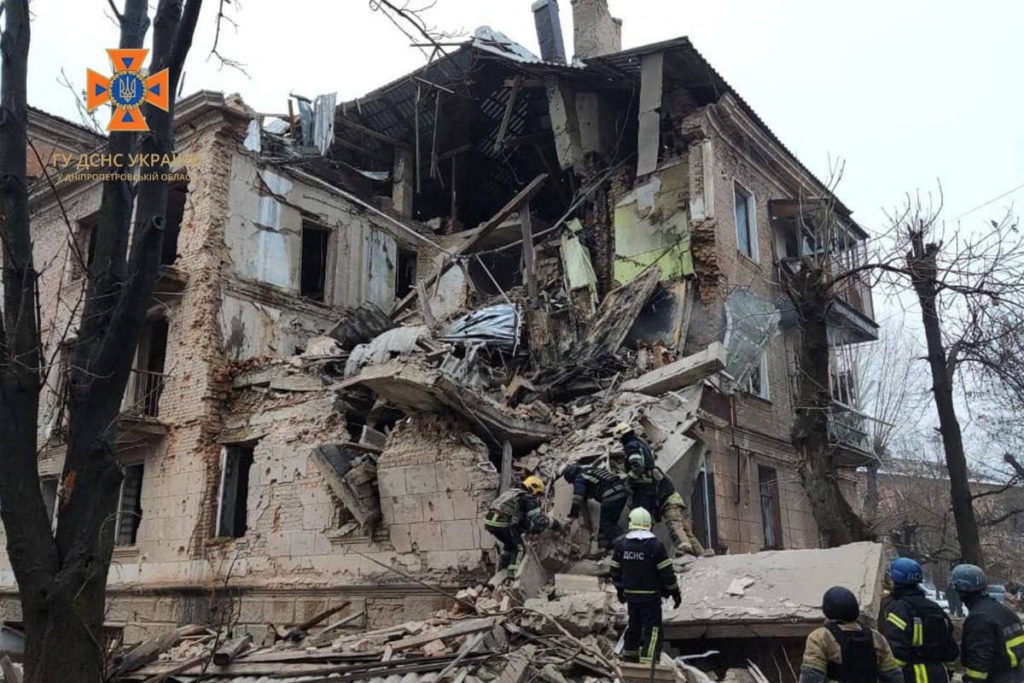
South Korean President-Elect Yoon Suggested Preemptive Strikes on N Korea. There will be a Lot More of that Talk if the NKs Don’t Slow Down, which They Won’t

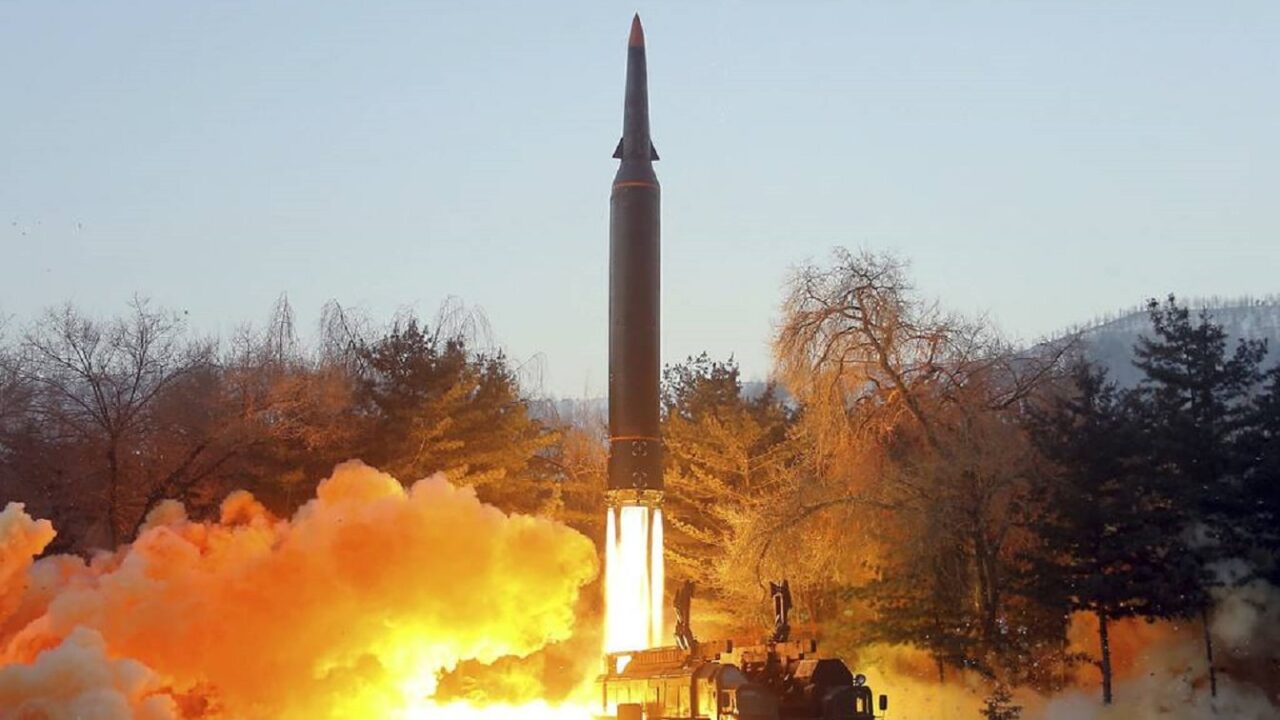
North Korean MissileThis was accepted and then withdrawn by a SK newspaper as too controversial even though the SK president himself suggested this. I don’t get that…
So I sent it to 1945.com instead. Basically the problem is that neither missile defense nor negotiations are dependable enough to protect South Korea against what is emerging as an existential threat to SK from North Korea’s spiraling missile program. Missile defense does not work well and is very expensive. Negotiations might reduce the North Korean arsenal but almost certainly not enough to eliminate the state- and society-breaking threat of the North’s nuclear missiles

Yoon’s answer is preemptive strikes on NK missile sites in event of a crisis. He got a lot criticism as a reckless war-monger earlier this year, and his suggestion is obviously hugely risky. It could provoke the very war it is trying to defend against. But he is ‘thinking the unthinkable’ as they used to say. Presidents must think about this stuff; that’s Yoon’s job, and if you don’t like his answer, come up with something else.

North Korea increasingly has the ability to rapidly devastate South Korea. The North Korean missile program is mature – more missiles, faster, longer-range, more easily fueled, more maneuverable, and so on. Its nuclear program is maturing too. Kim Jong Un now wants to develop tactical nuclear warheads and MIRVs. And this frightening arsenal is unsupervised. There are no inspectors, no NPT, no IAEA.

So yes, let’s keep talking. And yes, let’s keep throwing money at missile defense and pray it works. But when your facing an orwellian tyranny right next door who has aggressively threatened you for decades, you inevitably start thinking about options which might otherwise seem extreme.

Here’s that 1945 essay:

South Korea’s Debate over Preemption is the Inevitable Result of North Korea’s Rapid Missilization – As a presidential candidate, South Korean President-Elect Yoon Seok-Yeol suggested that South Korea might need to preemptively strike North Korea because of its spiraling missile development. This was criticized as provoking the very conflict it seeks to avoid. Obviously, no one but the most belligerent hawks seeks confrontation with North Korea. A second Korean War would be devasting, which Yoon clearly knows. Instead, Yoon is identifying, correctly, a growing strategic threat to South Korea – one which might become genuinely existential if left unchecked.

The North Korean Missile Challenge:

The conventional inter-Korean stalemate is deadlocked on the ground. In fact, North Korea is gradually losing that stand-off as American and South Korean technological prowess outstrip its large but antiquated conventional forces. The North knows this too. It has therefore invested for decades in nuclear weapons and missiles to deliver them. These capabilities help it level the playing field.

Please read the rest here.

The Ukraine War is a Stalemate. What if Putin Escalates to Try to Win?

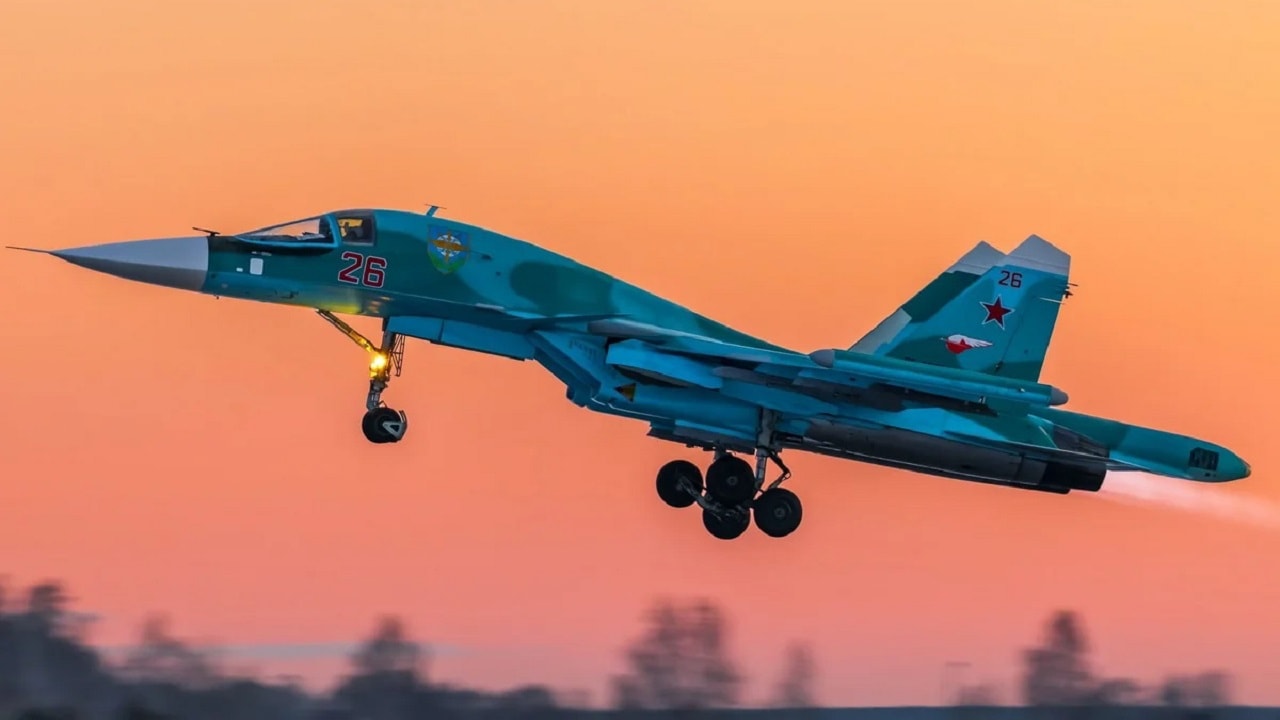
Russia Su-34Russia is not going to win unless it escalates. So what do we do if it uses a really horrific weapon?
This is a re-post of a column I wrote recently for 1945.com. When I wrote it, it still looked like Russia would win by sheer weight. As we come up on April, a Russian victory is increasingly unlikely. The Russian military, as structured, is too heavy, too poorly supplied, too corrupt, and too reliant of sheer firepower to win.

By winning, I mean something like Russia’s original war aims – replacing the Ukrainian leadership, annihilating its military, or taking territory (Donbas, the Black Sea coast). If you define down ‘winning’ to mean just blowing the place to hell, I guess Russia is ‘winning.’

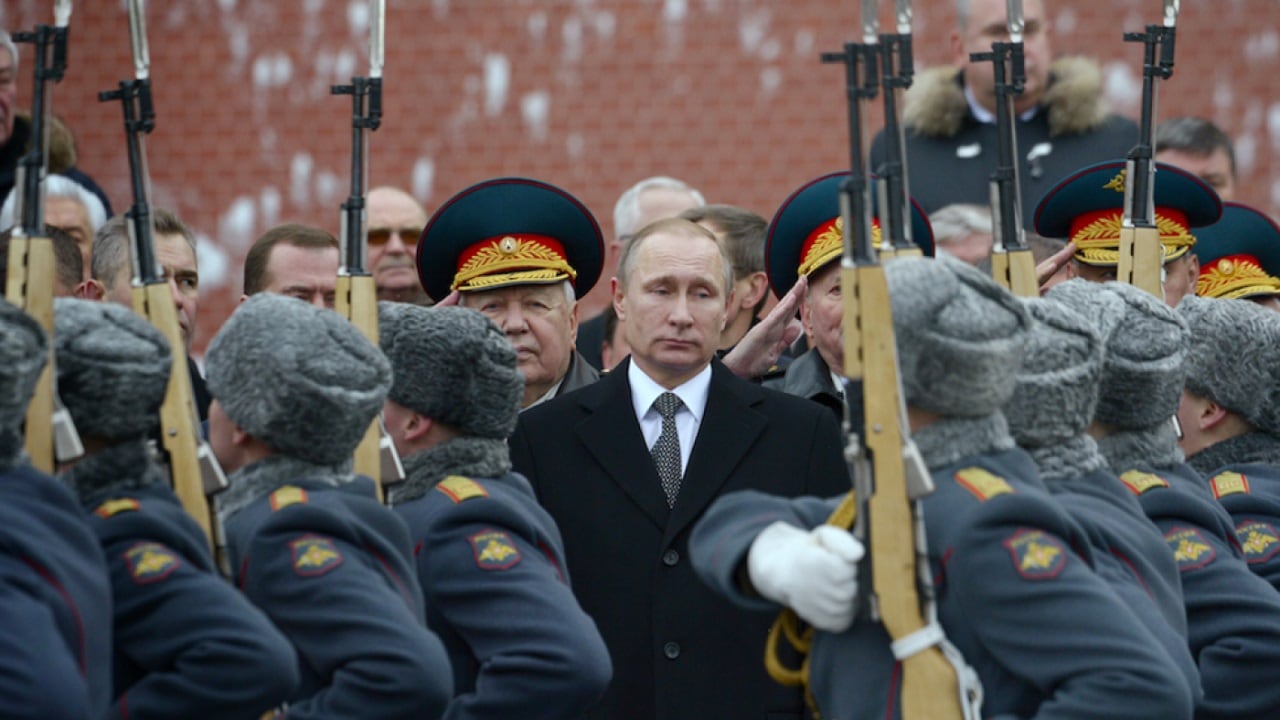
But Putin has tied his legacy to this war; he’s macho, self-possessed, and desperate for Russia to be ranked as a great, consequential power in world politics. He is likely to escalate to try to win rather than withdraw, even as this war reduces Russia’s claim to great power status even more.

So what do we do if Russia uses a chemical or even tactical nuclear weapon to break the battlefield stalemate? The pressure from the Western public to do something in response would be overwhelming. At minimum, I think much of the objection to a no-fly zone would dissipate. That, in turn, would become a low-intensity NATO-Russian shooting war with the ever-present possibility of it spiraling out of control.

We need to start thinking, now, what we would do if Russia uses non-conventional weapons in a desperate bid to win. Naturally, all our options are bad. Here’s that 1945 essay:

The war in Ukraine is devolving into a grind of limited, costly Russian advances and ferocious Ukrainian counterattacks. It still looks as if Russia will win – if only because it will relentlessly pound Ukrainian cities with artillery – but there is now a reasonable chance Ukraine will fight Russia to a stalemate.

It is now painfully clear that Russia expected a blitzkrieg victory, a quick, in-and-out invasion similar to its ten-day war in Georgia in 2008. A modernized, high-tech Russian military was to roll over a poorly-armed and -trained Ukrainian army fighting for a weak state with low public legitimacy. The plan was, apparently, to impose a Russian stooge in the place of Ukrainian President Volodymyr Zelensky and then go home before the West could organize a response.

Read the rest here.

Why Hasn’t the ‘Imminent’ Russian Invasion of Ukraine Happened? Likely bc Putin – and the Russian Military especially – Fear a Quagmire, Worsened by Decades of Putin’s Own Misrule

UkraineThis is a re-post of an essay I recently wrote for 1945.com. Putin still hasn’t pulled the trigger on a Ukraine invasion, almost two months into this ‘imminent’ crisis. That increasingly prompts the question, why? What’s the delay?
The answer, I bet, is that Russia just can’t afford a quagmire war like it (barely) could in the 1980s in Afghanistan, in great part because of how badly Putin himself has misgoverned the country. To stay in power, he has run down Russian power, turning the country into a hugely corrupt, stagnant petro-dictatorship.

A country like that just can’t handle the stresses or costs of a ‘forever war.’ Stupid, unwinnable wars are expensive and generate lots of domestic stress. The US struggled to contain the dislocations generated by the Vietnam, Iraq, and Afghanistan Wars. The USSR’s disastrous counter-insurgency in Afghanistan in the 1980s helped brought the country down. Putin – with far less national power at his disposal, ironically because of his own catastrophic misrule of Russia – now faces a war which could shake his regime at home if it turns into a quagmire.

To be sure, it still seems like Putin will invade. If I had to guess, he will. Staging all those force in the cold is costing him a fortune. If he backs down know, he’ll think he looks like a wimp. And Putin loves macho posturing, so he’ll probably just invade to prove what a tough guy he is after getting trolled so much by the Biden administration.

But since he is still shilly-shallying, I’d say he is starting to realize that an invasion would a huge disaster for Russia. It does have the size and weight anymore for even a limited operation like this. That’s Gangster Putin’s own fault and a delicious irony we should all enjoy.

Here’s that 1945.com essay:

A Russian invasion of Ukraine has appeared imminent for almost two months now. Yet it has not happened, and the window for it is closing. When the spring rains hit in the next month or so, maneuver warfare on the Eurasian plain will be substantially harder. Armored and tracked vehicles will struggle in the mud. Also, maintaining a large force in staging locations at high readiness is expensive, especially in the cold. Russian troops must be fed and housed in the field in temporary facilities at cost. In short, if Russian President Vladimir Putin wants to invade Ukraine, it must be soon. And yet he has not.

Read the rest here.

Don’t Bet on a Biden Breakthrough with North Korea – but Trump was Never Serious about it Anyway

ABCDEFGHIJK

This is a re-post of an essay I wrote last month for The National Interest, but since Biden just became president, this seems like a good time to put it up here.

The short version is that America’s North Korea policy options are poor, so now that the adults are back in charge, US policy toward North Korea will probably snap-back to pre-Trump form. Trump tried all sorts of hijinks – threatening war, then cozying up to Kim Jong Un – but none of it was ever serious and all of it failed, because Trump was buffoonish dilettante.

And yes, the status quo with NK is bad, but the options are worse – war or appeasement, basically – so this is why the containment and deterrence of North Korea has basically been our North Korea policy for decades even though no one likes it. I figure that is what is coming back now.

The full essay follows the jump:

American North Korea Policy under the Next President 2: Trump – He will just Drop North Korea

Biden calls North Korean leader a 'thug' but says he'd meet Kim if  denuclearization is agreed - Pacific - Stripes

This is the second part of a series for The National Interest on North Korea policy under the next president. Here is my first essay on Biden and North Korea.

I am of the school that says Trump’s outreach to North Korea was a great big nothingburger. More dovish analysts will tell you that there was a window there for a few years (2018-2019) to forge a deal. I don’t buy that, mostly because of Trump himself – his laziness, disinterest, unwillingness to prepare, and so on.

Instead I think Trump went into this solely for the symbolic imagery and a Nobel Peace Prize. Obama won a Nobel. Trump loathes Obama, so he had to get one too. I think it’s really as simple as that. That’s why there was no deal. The Trump team had not thought through the concessions which would be necessary to strike a deal. The North Koreans were going to ask for way more than just sanctions relief. Trump had nothing greater to offer – and bureaucratic resistance at home would have fought a serious concession like a US drawdown.

So my prediction for Trump and North Korea in a second Trump term is that he will do nothing. Trump has the pictures he wanted. He won’t get a Nobel, and he won’t fight the battles in Washington to offer concessions which NK might actually go for.

The full essay follows the jump:

American North Korea Policy under the Next President 1: Biden–Traditional Washington Hawkishness

North Korea lashes out at Joe Biden - CNN Video

This is a re-post of an essay I wrote for The National Interest recently. They’re running a good symposium on North Korea policy in the next presidential term: how would Trump and Biden differ? This was my submission on a possible Biden victory. My submission Trump is here.

Biden was the easier one to write. Biden is a pretty establishmentarian guy. He respects the foreign policy community. And as Obama’s vice president, we have his foreign policy thinking from that period too.

So it’s not too hard to predict that Biden will revert to a fairly traditional Washington hawkish approach – no more summits or public praising of Kim; working with allies; emphasizing sanctions enforcement and China. If this sounds really unimaginative – the same kind of old-hat you’ve heard from every hawkish North Korea analyst (including me) for decades – then you are right! It is the same old story, but that’s because our options on North Korea are terrible.

For all of Trump’s threats in 2017 and blandishments in 2018-19, he got nothing out of the North Koreans. Neither has SK President Moon Jae-In’s Sunshine Policy redux. So if it’s back to the future with Biden, I am not opposed to that.

The full essay follows the jump:

Trump’s Impeachment is Good for US Foreign Policy

RTX74MJ5-1024x683

This essay is a local re-post of my essay for the Lowy Institute for this month.

In brief, I argue that Trump, for all his bluster and chaos, has not actually moved the US foreign policy consensus that much. So if he is impeached, we’ll likely get a ‘snap-back’ to more traditional liberal internationalist positions. That would broadly be a good thing, but for the over-interventionism of the traditional foreign policy community. Trump’s departure would mean the end of idiocy like undercutting the World Trade Organization or the Universal Postal Union, attacking US allies, throwing friends like the Kurds under the bus, and cozying up to dictators like Kim Jong Un.

Trump is too uninformed, impulsive, and erratic to represent any kind of meaningful critique of foreign policy liberalism. Some of his supporters try, but it’s most been in vain. There’s no coherent Trump Doctrine, just whatever suits his fancy or serves his political purposes at the time. Nor has Trump created an alternative foreign policy community to the current one. As POTUS, Trump is hugely influential in that community, but he’s leaving no lasting mark because he’s too incoherent and, well, dumb. So if he’s impeached, it’s back to what was, because there is no serious Trumpian alternative.

The full essay follows the jump:

Continue reading

GOP Post-Iraq Foreign Policy Incoherence: Still Making Belligerent, Aggressive Threats, but Unwilling to Follow Through

Image result for angry trump

This is a local re-post of an essay I wrote a few weeks ago for the Lowy Institute. The argument is right there in the title: the GOP wants to keep talking like hyper-belligerent, threats-against-everyone neocons or Jacksonian America Firsters, but GOP voters don’t want anymore wars. So Trump’s rhetoric comes off hollow: he’s threatened war on North Korea, Syria, Venezuela, and Iran. But his voters are very opposed to more wars now. That is one of the ways Trump beat his GOP rivals. He denounced stupid wars. But GOP rhetoric hasn’t caught up to the base’s shift, and Trump is such a blowhard that he can’t help but make outlandish threats.

The result is that the GOP now sanctions everyone. It looks tough about avoids war. But in reality, GOP foreign policy looks increasingly incoherent. All threats and no follow through makes the US look like a paper tiger or just confused.

The full essay follows the jump:

Without Strategic Change, a Korean Peace Treaty would be a Formality

Image result for korean peace treaty

This is a repost of an essay I wrote for The National Interest a couple weeks ago. The gist of it is that there a lot more hurdles to a Korean War peace treaty than many people realize. That is why it hasn’t happened yet even though it seems pretty intuitive, if not obvious, given that the war has been de facto over sine 1953.

The two big reasons are:

1. A peace treaty potentially undercuts the legal ground for the UN/US structure in South Korea. This, most have long thought, is a big reason the North wants it. If there is formal peace in Korea, what is the US military still doing there? The South Korean left might accept this logic, but the right will not. This is why SK President Moon Jae-In can’t get this idea past his own people. There is not enough consensus for it.

2. A peace treaty may well violate the South Korean constitution, which denies North Korea’s existence. Moon may not even be allowed to sign such a document, which is pointless without SK participation. Worse though is that a peace treaty formalizes and locks-in the division of Korea indefinitely. Again, the South Korean left and SK youth may not mind that, but I don’t think that is enough for the South to formally surrender unification on Southern terms. That woo would be another huge political fight.

The full essay follows the jump:

Would Unified Korea Keep the North’s Nuclear Weapons? Perhaps to Pursue a Neutralist Foreign Policy

Image result for north korea nuclear weaponsThis is a local re-print of an essay I published at The National Interest a few weeks ago.

The basic idea is that a unified Korea, even one unified under Southern leadership, has much stronger incentives to keep the North’s nukes than most people seem to think.

Generally, everyone seems to think that a UROK (united Republic of Korea) will give up its weapons to the American or, maybe, the Chinese. Or maybe destroy them. But keeping them would be a great way to keep a UROK out of the looming great power contention in northeast Asia between the US, China, Japan, and Russia.

If you are tiny Korea – the shrimp among whales – you want to stay out of the way when these big boys fight. That will be tough given Korea’s geography right in the middle, but nukes would be a really great way nonetheless to insist.

Also, nukes are a great way to defend sovereignty generally against all interlopers, even if there is no regional hot war. Even after France became friends with Germany after WWII, it still built nukes to make sure Germany never invaded it again. A UROK would almost certainly think the same way about its neighbors given their history kicking Korea around and manipulating it.

I am not sure. A UROK still allied to the US would come under a lot of pressure to denuclearize. But the probability of retention is way higher than most people think.

The full essay is after the break.

Continue reading