Thickening Russia-Korea Ties is a Good Move for South Korea

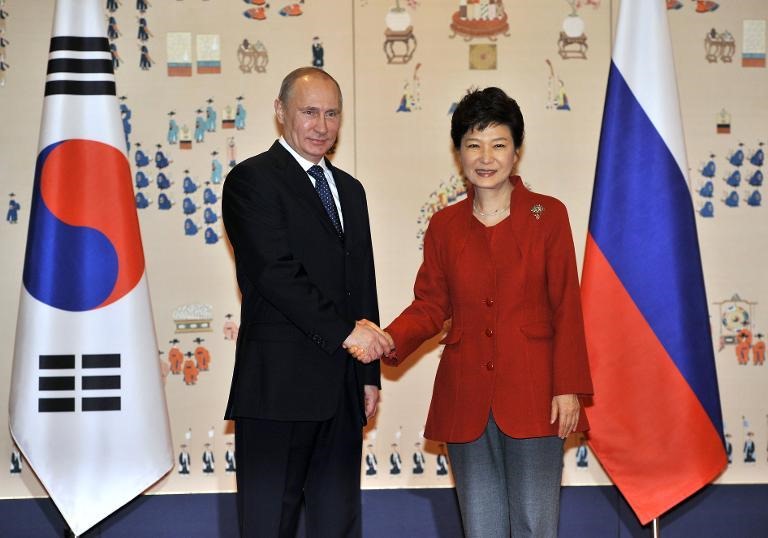
b00cacd510614f87ea3a79ff18f43d62f9ea1dd2I wrote a quick piece for Newsweek Korea this week on Vladimir Putin’s trip to South Korea. Find the Korean web version here. Below is the translation.

In brief, I argue that a relationship with Russia is good for South Korea. Because SK is both relatively small and encircled, its foreign policy is dominated by just a few states. The problem is that SK can’t/won’t reach out to NK or Japan, so it is basically stuck between the US and China. So pulling in the Russians is a nice way to get SK some room to maneuver in its tight neighborhood. That is sure to annoy the Americans, but if you’re a S Korean, it’s a wise choice. That is the real value of the trip for SK, while for Russia, it bolsters its fading Asian relevance. Also, while I think President Park has really blown it over Japan, this was a smart choice against the Chinese and the Americans – maybe the best thing she’s done on foreign policy yet.

If it seems like I’m emphasizing geopolitics over economics, that’s because I don’t buy this ‘New Silk Road’ bit – where SK and Russian traffic would move through a guaranteed rail/road corridor in NK – for one minute. Does anyone really believe NK will respect transit rights, giving up lucrative shake-down opportunities on the movement of fuel, goods, tourists, and so on? No way. Look at how Pyongyang uses Kaesong for whatever blackmail/hostage-taking purposes it has in mind. NK is a such a black hole for international norms, that SK and Russia might as well connect by a ‘chunnel’ before relying on NK respect for transit rights.

Continue reading →

My July Diplomat Essay: The Korean ‘OPCON’ Soap Opera Rolls on – Hint: just drop it

Thank you for waiting out my summer break. I need summers to get some writing done, but inevitably I didn’t get nearly what I needed to wrapped up. Should you ever hear that argument that college professors slack, because we only teach 2/2 or 3/3, you ought to try writing for these journals. Just read this. That is why we don’t teach 30 hours a week. 

But I am still writing for The Diplomat, a gig I really enjoy. Here is my piece from August on the endless soap opera of the transfer of wartime operational control (‘OPCON’) from the US to the Republic of Korea. (The pic is the US SecDef and SK DefMin.) Why the RoK would even want OPCON back, before unification, is beyond me. It’s a perfect opportunity to buckpass to the superpower security guarantor. And in fact, that is sorta the way the Korean debate is going; they increasingly don’t want it back. Also, it seems pretty clear now that the Koreans aren’t really ready. Too many officers have been playing golf or whatever instead of getting ROKA specs and procedures up to snuff. Anyway, my own sense is to just drop it, because the US and RoK are just going to re-build a version of CFC (Combined Forces Command) that does all the same stuff but is just a little less ‘joint.’ I don’t really see the point then in ending OPCON. If you’re a real mil-tech expert, please tell me in the comments why a new ‘CFC light’ is better than the current arrangement? 

The essay starts after the jump.

Continue reading →

Admit it: South Korean President Lee Myung-Bak Was Pretty Good

PD*26038004

So President Lee has been out of office for a bit now, and the retrospection will begin soon. And while he left with really low approval ratings, I always thought that was pretty unfair. I am pretty sure history will be kinder to him than the SK public was during his tenure. Particularly the growing critique on the South Korea left that current President Park Geun-Hye’s many staffing gaffes means she is out of her depth also suggests that LMB was at least ready and professionalized enough for the responsibilities of the office. The essay below is a longer version of an op-ed I wrote for the JoongAng Daily.

In passing, I should say that yes, I am aware that this is the sort of column that drives folks like Glenn Greenwald, whom I really admire, up the wall. If you’re convinced, like my students, that I’m a conservative pretending to be a moderate, here’s your evidence. Call it shameless right-wing hackery, sycophantic shilling for the powerful, craven attention-seeking, but it’s also true: Lee Myung Bak was a lot better than most Koreans give him credit for and is probably Korea’s best president in its democratic history.

Continue reading →

My ‘Newsweek Japan’ Story on Korea’s Regional Foreign Policy: Being an Encircled Middle Power Sucks

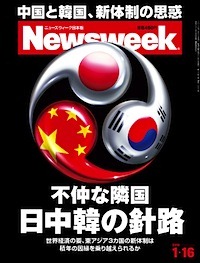
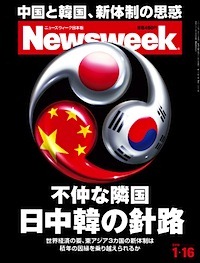
Newsweek 3rd coverNewsweek Japan asked me to contribute an essay on Korean foreign policy for a special issue on current Northeast Asian tension. I also wrote the introductory essay for this special issue. There is one essay each on Japan, China, and Korea; mine is the Korean one. So this is a nice laymen’s review without too much fatiguing jargon. This was originally published in January, so this translation is late, but the points still hold.

In brief I argue that Korea’s foreign policy is driven by its geography. Korea is a middle power surrounded by three great powers, plus the most orwellian state in history. That position really, really sucks. The US alliance helps buttress Korea sovereignty in that tight neighborhood, but China’s rise is unbalancing everything, especially calculations for unification. Once again, there are no hyperlinks, because it was intended for print. Here we go:

“On December 19, Korea elected a new president, Park Geun-Hye. Park comes from the conservative New Frontier Party. The current president, Lee Myung-Bak, is also a conservative. Park will be inaugurated in late February. Her campaign presented her as more ‘dovish’ on foreign policy than Lee, but she represents greater continuity than her opponent, particularly regarding North Korea.

Korea’s foreign policy is heavily-driven by its geography. It is an encircled middle power that has frequently struggled to defend its autonomy against its much larger neighbors. And since World War II, it has faced the most orwellian country in history in a harsh stand-off that dominates Korean foreign policy. An opening of North Korea, leading to eventual reunification, is the central policy issue of every Korean administration. Beyond that, Korea’s central relations are with the United States, China, and Japan. All three structure Korea’s neighborhood and will significantly influence unification.

Continue reading →

My ‘Newsweek Japan’ Cover Story on the post-1979 ‘Asian Peace’ & Economic Miracle

Newsweek 3rd coverNewsweek Japan asked me to write an introductory essay for its January 16 special issue on tension in Northeast Asia (cover story to the left). I should have put this up 4 months ago, but I forgot and the arguments are still valid. Anyway, here is the link in Japanese, but I thought it would be useful to publish the original, untranslated version as well. (If you actually want the Japanese language version, email me for it please.)

The essay argues that Northeast Asia has benefited enormously from an ‘Asian peace’ in the last 35 years. All the remarkable growth in China and South Korea (as well as India and Southeast Asia) would not have happened without it. So fighting over some empty rocks (Liancourt Rocks, Pinnacle Islands) is a terrible idea. And for political scientists, the current Sino-Japanese tension is a good test of the hypothesis that economic interdependence brings peace. It’s fascinating to watch China especially try to figure out just how much economic gain to forego in pushing Japan over the Pinnacle Islands.

This was intended for their print edition, so there are no hyperlinks included in the text. Here we go:

“1979 was an important year in modern East Asia. It captures two of the region’s most important trends. It was the year of both the last serious military conflict between two East Asian countries – a Sino-Vietnamese border war – and the start of China’s capitalist modernization under Deng Xiaoping. These moments usefully frame the following thirty-four years: much of Asia has gotten substantially wealthier, and no major conflicts have broken out to upset that upward economic swing. This magnificent regional achievement has catapulted Asia, particularly East Asia, into the center of world politics.

Continue reading →

Final Iraq Post – from the Archives: My 2007 Essay in Support of the Iraq Surge

iraq_multiple_fatality_bombings_by_type

Back when I was at Ohio State University in graduate school, I was solicited by a friend to write for a start-up journal in political science, the OSU Journal of Politics and International Affairs. My essay is no longer findable through their website – their archive doesn’t go back to the first issue – but my essay at the time was on the surge debate. Given that I’ve been talking about Iraq for the last month here, I thought I’d put this up; it’s not available elsewhere anymore. This is the unaltered text from the spring 2007. I feel like I did pretty well actually. I still agree with most of what I wrote 6 years ago in the midst of the war’s worst days:

“One Last Chance in Iraq for a Sustainable War on Terror

The sense that the United States is losing the war (or more precisely, the peace) in Iraq is palpable. The cable news networks are filled with images of burning cars and markets. The Bush administration seems almost paralyzed – reciting only bromides about freedom and democracy as the long-predicted post-sovereignty civil war seems already to have begun. New York Times pundits like Paul Krugman and Thomas Friedman increasing see a negotiated, half-and-half, ‘at-least-its-better-than-Saddam’ outcome as the most likely scenario. Centrist/liberal supporters of the war, like the Economist and the New Republic are publishing a flurry of criticism that we are ‘losing the peace’ despite having won the war. Even conservatives like the Wall Street Journal and the Weekly Standard, stalwart defenders of the war, have backed away from higher hopes of a democratic, liberal Iraq which the President outlined.

But the growing Iraqi withdrawal debate is wrong-headed. The pullout mooted by such diverse figures as Senator Charles Hagel, Jon Stewart, and Cindy Sheehan would be catastrophic, and our growing national fantasy with its imminence is hazardous. It creates an unreal expectation that ignores the probable post-withdrawal bloodbath, emboldens the insurgents to hang tough, gives false comfort to military families especially, and tempts the Democrats to abdicate responsible policy input for cheap political shots.

Continue reading →

Guest Post – Tom Nichols: “Bob Kelly was Wrong (and Right) about the Iraq War”

imagesCAI6BD5TI am happy to invite my friend Tom Nichols to guest-post about the continuing Iraq War debate. Tom responded so substantially to my original post series on the war (one, two, three), that I invited him to provide a longer write-up. Tom is a professor of National Security Affairs at the U.S. Naval War College and an adjunct professor in the Harvard Extension School. His blog can be found here, his twitter here. His opinions of course are his own, so whenever he says I’m wrong, you probably shouldn’t listen… REK

I’ve been reading Bob’s thoughts – cogent as always – on the 10th anniversary of Iraq. I reject Bob’s exploration of the “culpability” of the IR field for providing any kind of intellectual infrastructure for the war, mostly because I don’t think anyone in Washington, then or now, listens to us, and for good reason. Joe Nye long ago lamented that lack of influence elsewhere, and others agree (by “others” I mean “me”). So I won’t rehearse it here.

Bob and I sort of agree that the outcome of the war doesn’t say much about the prescience of at least some of the war’s opponents: there were people whose default position was almost any exercise of U.S. power is likely to be bad, and they don’t get points for being right by accident.

Continue reading →

Iraq 10 Years Later (3): Why the Neocon Theory behind the War Failed

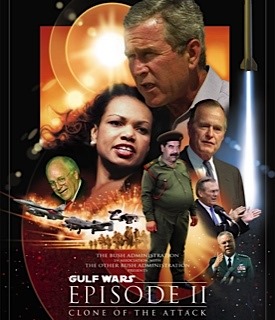
gulf_war_poster1

Here are part one and two of this post.

The arguments below expand on my second recent JoongAng Daily op-ed on the Iraq war.

My first post on the Iraq War asked if academic IR had any responsibility to slow the march to war.

The second tried to formulate what the   neoconservative theory of the war was, because many of us, in retrospect of a conflict gone so badly, desperately want to un-remember that there really was a logic to the war, that it was at least somewhat intellectually defensible, and that a lot of us believed it. We may want to retroactively exculpate ourselves by suggesting it was just W the cowboy acting ridiculous, or a neocon hijacking of the policy process, or Halliburton oil imperialism, and all the other reasons so popular on the left. And some of that is true of course.

But it ducks the crucial point that the war was popular until it flew wildly off-the-rails, which in turn revealed the staggering incompetence of the Bush administration to act on the neocon logic the country had embraced by March 2003. In short, I argued that the Iraq invasion was not about WMD, preemption, or democracy, although that rationale was played up in the wake of the failure to find WMD. The real neocon goal was to scare the daylights out of the Arabs and their elites by punching one of their worst regimes in the face, thereby showing what was coming to rest of the region unless it cleaned up its act, i.e., crack down on salafism and liberalize so as to defuse the cultural extremism that lead to 9/11. (Read Ajami saying in January 2003 that the war is ‘to modernize the Arabs;’ that’s about as a good a pre-war summary of this logic as you’ll get.)

So what went wrong?

Continue reading →

Iraq 10 Years Later (2): What was the Neocon Theory behind the War?

Learn-About-the-Iraq-War-300x210

This post is in three parts; here are one and three. I published a laymen version of the following arguments (part two) in my recent JoongAng Daily op-ed.

My first thoughts on the war’s ten year anniversary are here. There I asked if there was any defensible theory behind the war, anything that might explain what why we launched the war, because weapons of mass destruction were not really the reason. Paul Wolfowitz notoriously admitted they were just a pretext to rally the country behind the invasion. And it wasn’t really about pre-emption either; Iraq was hardly a looming military threat in 2003. So here’s my guess of the real neoconservative logic. I should say up front, I do not endorse this rationale. I’m just trying to lay it out what I think neocons were saying to each other in 2002:

The Iraq invasion was to serve two purposes. 1) It was to be a demonstration strike against the Arabs. Gulf anti-western pathologies lead to 9/11, so the Iraq invasion was a warning to Arabs, and Muslims generally, to never to attack the US like that again. As Cheney put it in the film W, ‘don’t ever f— with us again.’ 2) It was to be a hammer strike to break the frozen, horribly dysfunctional Arab political status quo which generated those pathologies; this would force the region toward democracy it would never attain on its own. This thinking was summarized in the widely used expression at the time, ‘drain the swamp.’

A lot of people will (and did) accuse the neocons of orientalism, racism, and US hegemonic arrogance. Nevertheless I’ve always thought this neocon argument was somewhat convincing to most Americans, especially the GOP. I’ve always thought it was the horribly botched execution of the war (‘fiasco’), not the idea itself of ‘draining the swamp,’ that cost the invasion American public opinion support. I also don’t think the neocon argument was ever properly made to the US public, probably because it sounds both orientalist and hubristic. This is not the sort of argument the Bush administration could make out loud; WMD was much easier to sell and far more direct, as Wolfowitz noted. But I think if you read neocons like Kristol, Krauthammer, Gerecht, or Podhoretz, as well as high profile area experts like Thomas Friedman, Fareed Zakaria, or Bernard Lewis, or the right-wing thinks-tanks that supported the war (AEI, Heritage, Foundation for Defense of Democracies), this is what you heard. (For example: this, this, this, this, or this). I once participated in the FDDs’ terrorism fellowship program, and this was pretty much the line we got.

So you may not like the argument, but at least there is one. The war cannot just be dismissed as US imperialism, an oil grab, or a PNAC/neocon cabal, which I think was too often the default position on the left, especially in Europe, during the war. Opponents should rebut this and not just stick to deriding W the swaggering cowboy, fun as that may be.

Continue reading →

Iraq 10 Years Later (1): How Culpable is Academic International Relations?

300px-UStanks_baghdad_2003

This post is in three parts. Here are two and three.

I’ve been thinking a lot about the war this month. I’ll be teaching it in the next few weeks at school because of the decade anniversary (March 20). To my mind, it is the most important geopolitical event, for the US, possibly the planet, since the USSR’s collapse. It also pre-occupies me to this day, because I initially supported it, and didn’t really turn against it until 2008/09. I had students who told me, late in the war, that I was the only instructor they knew who still supported the invasion. Finally, I gave in, and accepted the by-then conventional wisdom that the war was a ‘fiasco.’ I will argue in my next post in a few days, that there was in fact an at least minimally defensible argument for the war, but the execution of it was so awful, disorganized, mismanaged, and incompetent, that any moral justification was lost in the sea of blood and torture we unleashed.

The whole episode became just shameful, and regularly teaching and conferencing with non-Americans these last few years has made this so painfully clear. My students particularly are just bewildered to the point of incredulity. Again and again, the basic thought behind the questions is, ‘what the hell happened to you people? 9/11 made you lose your minds there?’ *sigh* (NB: when Asians ask me about guns in the US, the ‘what the hell is wrong with you people?’ bafflement is the same.)

Hence, the post title purposefully implies that the invasion was a bad idea. But to be fair, that should be the first question: what, if any, arguments at this point can be mustered to defend the war? IR should try to answer this seriously, because I’m all but positive that the journalistic debate will be not be driven by the state of Iraq or US foreign policy today, but by the high personal reputational costs faced by so many pundits supportive of the war. It would not surprise me at all if folks like the Kagans, Krauthammer, or Thomas Friedman miraculously found that the war was worth it after all. McNamara-style mea culpas only happen at the end of a career (so I give Sullivan and Fukuyama credit for theirs on Iraq). But academic international relations (IR) should be more honest than that.

Continue reading →