My Comments to BBC TV about yesterday’s North Korean Nuclear Test

That would be the finest academic haircut in all of Asia… 😦


I spoke this morning on BBC’s Asia Business Report on the North Korean nuclear test. My quick take is:

Yes, it was a terrible idea, but no, it is not surprising. Nuclearization takes time and ‘practice,’ so these sorts of tests are expectable. This one was about half the yield (size) of the weapon dropped on Hiroshima, so they’re getting pretty good at this now. I’m continually astonished at how a near-third world state under heavy embargo nonetheless pulls this off. Wow. What are we missing?

Yes, there’ll probably by a UN resolution, but no, it won’t have any real bite. The reason is China. There’s a near consensus now in North Korea studies that China is the key here. China is the reason sanctions don’t work – because the Chinese don’t enforce them. And it is China that politically enables these childish North Korean stunts by not attaching any real costs of aid or diplomacy to them. That said, one of the reasons for all these NK hijinks is to keep the Chinese out of their business. We all assume the nukes are aimed at Seoul, Tokyo, and LA, but they’re also a nice deterrent to Chinese domination. The nukes signal that even though NK is now an economic satellite of China, it will never be a political one. NK will not become China’s East Germany.

The real question for the future then, is how the democracies among the Six Parties (SK, Japan, the US) can walk China back from support of NK. How do we get China to stop obsessing about retaining NK as a ‘buffer’ against the democracies? How do we get Beijing comfortable with Southern-led unification? When that happens, then Beijing will drift from the North, and the possibility of collapse becomes much more real. But that is probably one to two decades away. Yes, this drama will go on and on and on…

For my travelogue on my trip to North Korea, go here.

The video is simply my phone recording our home TV, so the quality is not so hot. Also, if you’re wondering my eyes are wandering all over the place, it’s because BBC does not provide the image back to the interviewee when you’re on Skype with them. So I am sitting there just looking at nothing – my desktop maybe – trying to find something to do with my eyes. Ah well…
On Vacation for awhile – Here’s Some New Year’s Reading – See you in March

I break from blogging twice a year, but try to compile a good list of relevant articles I’ve found over the past few months. See you in about a month. Enjoy:

August

The Atlantic runs lots of good stuff on NK it seems to me: this on how NK impossibly continues to survive and this on how just about every NK watcher has wrongfully predicted its collapse.

Mixin Pei’s important piece on why China’s rise is overrated. My own sense of this is that Pei will be proven right in the next 10-15 years, but not sooner. China’s demographic, ecological, and corruption caps strike as growing worse, not better.

A nice piece from the FT on Korea’s biggest company – too bad no one wants to plumb the far-too-close relations between the chaebol and the ROKG Continue reading →

Abe’s Election, and why Korea should Not Worry (too much)

abe

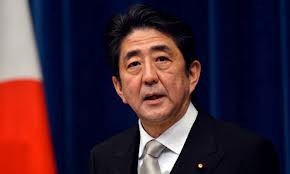
Seoul English radio asked me to speak last month on Shinzo Abe’s return as Japanese prime minister. (Here is the program I speak on several times a month, and I will be on again tonight at 7:45 pm KST.) I didn’t get a chance to put up my thoughts on Abe earlier, so here we go.

Abe is fairly controversial, because he’s a nationalist and made the wrong noises in the past about Japan’s war crimes in WWII. But I also think he is tactically smart enough to avoid openly provoking the Koreas and China on that. Watch for whether or not he moves to alter the Kono Declaration. That is the big benchmark to focus on. Unfortunately Abe has grumbled about changing it, but I don’t think he will. Similarly, while he has visited the Yasukuni Shrine, he did not do so when he prime minister before. So my sense is he’s reasonable intelligent on these issues, even if the Japanese right continues to be disturbingly unreconstructed about the war. But at least Abe’s trying to talk with Korea again after the implosion of relations last year. That’s a big of progress.

Anyway, the interview follows the jump.

Continue reading →

Korean Foreign Policy Year in Review 2012: So Many Grievances… (UPDATED in response)

dodko

(I updated/lengthened the last section, after the jump, to respond to some of the criticisms made.)

Daniel Tudor, the Korean correspondent of the Economist (full disclosure: we are friends), just wrote a book on South Korea where he argues that Korea, despite all its success, is a discontented society. This is exactly right. (Here is a good review of the book.) Despite growing rapidly in just a generation, and capturing some global profile with things like ‘Gangnam Style’ or well-known products like Samsung gizmos, Koreans continue to have wildly unrealistic expectations of global interest in their small, linguistically unique (and difficult to learn) country culturally similar to enormous China. This generates constant geopolitical disappointment, per Tudor, and outsized sensitivities over foreign criticism – e.g., the widespread urban legend here that no Korean has yet won a Nobel Prize, because the committee is staffed by anti-Korean racists, or read this.

Four events in 2012 really seemed to capture the chip on the national shoulder, which ideally would serve to recommend a little modesty instead of yet more nationalistic grievance (but that won’t happen):

The Olympics: Some KOC official said on TV that Korea needs to ‘improve its Olympic diplomacy’ (whatever that means), even though it won a huge haul of medals for a country so small. India has more than 1 in 7 of the people on the planet, while Korea has .007%, but I guess the fifth highest pull of golds and ninth highest overall was a conspiracy of the Anti-Korean Olympics or  something. What is it with the endless chip on the shoulder? As Evan Ramstad put it, Korean officials once again had to come off sounding arriviste and aggrieved, rather than balanced and modern:

“Even so, a government sports official could be counted upon to again declare that South Korea was at last among the world’s great nations instead of recognizing that it has been there for awhile now. Second Vice Culture Minister Kim Yong-hwan was quoted in local media saying the performance in London meant that South Korea could “join the ranks of advanced nations in terms of sports and culture” and “has leapt into a higher level not only in the field of sports but also in culture and arts.”

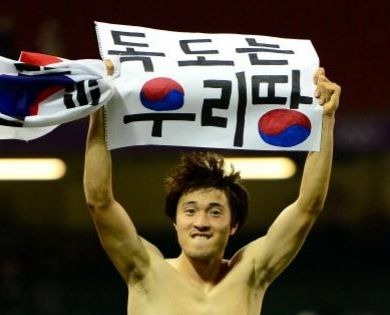
And we had to spoil the Olympics too, with tiresome Dokdo posturing too (pic above).  That the placard violated the apolitical Olympic spirit is obvoious, but no major Korean figure came forward to denounce that action. *Sigh*

Continue reading →

My ‘Newsweek Japan’ Cover Story on the Agenda for Korea’s Next Prez

Newsweek cover 2

Newsweek Japan asked me for a long-form essay on the challenges facing the new Korean president-elect for its December 26, 2012 issue (cover story to the left). Here is the link in Japanese, but I thought it would be useful to publish the original, untranslated version as well. (If you actually want the Japanese language version, email me for it please.)

The essay was actually written up before the outcome (a Park Geun-Hye victory) was known, but the argument still applies. In brief, I argue that Korea is drifting leftward. The young in Korea want chaebol reform and less political elitism at home, and abroad they want a foreign policy both less hawkish on North Korea and less influenced by the United States. In fact, if Korea weren’t aging so extremely fast, this agenda would have won. But Korea’s demography is now so skewed that ‘missing’ youth voters due to Korea’s super-low birthrate probably cost Moon Jae-In the election. (Not surprisingly, the Korean news is already reporting on youth action against against free bus fair for the elderly, because they ‘stole’ the election.) Nevertheless, the generational split is real, and the right would be foolish to govern against future voters’ wishes in the name of aging voters who will naturally pass away. Hence my prediction that Park will govern as a centrist not a conservative.

Regular readers of this blog will see themes I have emphasized before. This was intended for their print edition, so there are no hyperlinks included in the text. Here we go:

“On December 19, South Korea will have its sixth democratic election since the end of military rule in 1987. The main candidates are Park Geun-Hye of the conservative New Frontier Party and Moon Jae-In of the liberal Democratic United Party. Park is expected to win, as Moon has run a poorly organized campaign and the Korean left has split. Ahn Chul-Soo, a popular reformist liberal candidate, dropped out late in the race and only weakly endorsed Moon, while a far-left party, the Unified Progressives, has stayed in the race. All this will fragment the left’s vote, likely throwing the election to Park.

Continue reading →

My ‘Foreign Affairs’ Piece on the Korean Election – Longer, Fuller Version

Election pics 008

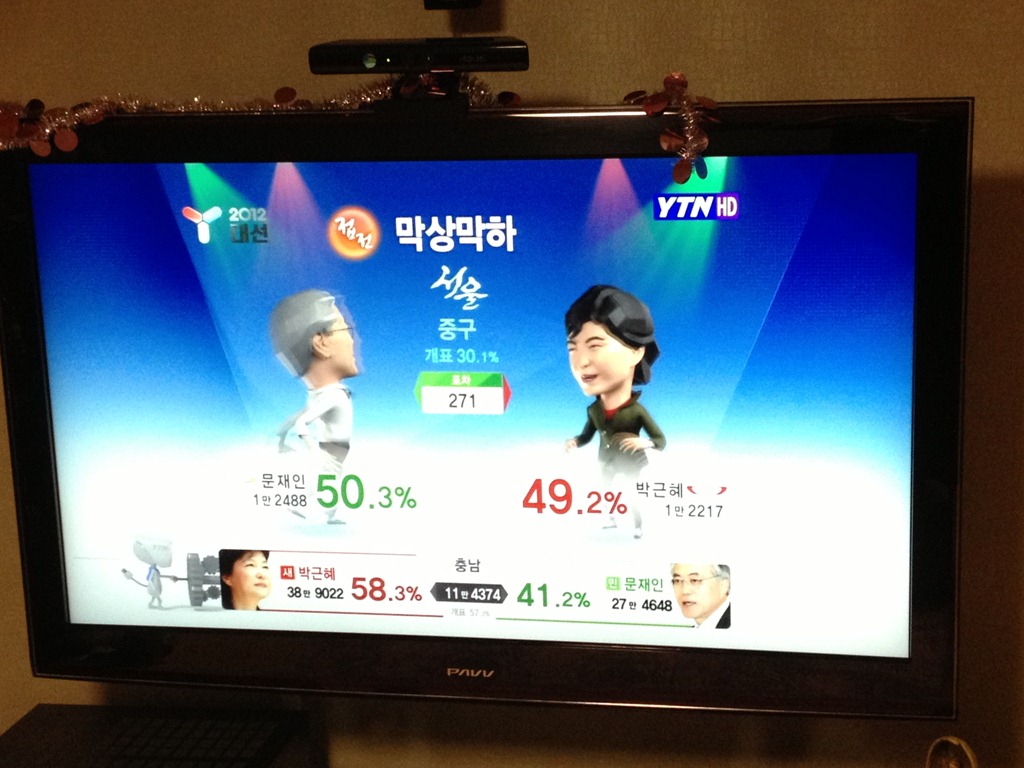
This pic is from the TV election coverage on the Korean version of CNN. That would be the two main candidates (the liberal Moon Jae-In on the left, and conservative Park Geun-Hye, who won, on the right) as dancing electronic cartoon avatars. Yes, they do look like boogying Nintendo Miis, and yes, they are the most bizarre, hysterical election graphics I have ever seen. Who says political science is boring?

So Foreign Affairs solicited me for a ‘snapshot’ essay on the Korean election. Here is the link, but I also thought it might be useful to post my first draft which is fuller:

“South Korea’s next presidential election will occur on December 19. The main candidates are Park Geun-Hye of the conservative New Frontier (Sae Nuri) party and Moon Jae-In of the liberal Democratic United Party (DUP). A third, unaffiliated liberal candidate, Ahn Chul-Soo, dropped out in late November. Ahn had no clear party identification, which was part of his attraction, although he was broadly center-left. A former hi-tech entrepreneur and professor, he was popular with the young who feel alienated by the closed, oligarchic character of Korean politics and for much of the year, he outpolled Moon. Because he and Moon were splitting the anti-Park liberal vote, they tried to merge their campaigns. But Ahn’s hasty, somewhat bitter withdrawal speech implied that old-style, backroom politics by the DUP had pushed him out. Post-withdrawal polls showed Park picked up around one-fifth of Ahn voters, a very strong showing.

Continue reading →

What does South Korea Want from the US Election? the Status Quo

Barack-Obama-with-Lee-Myu-008

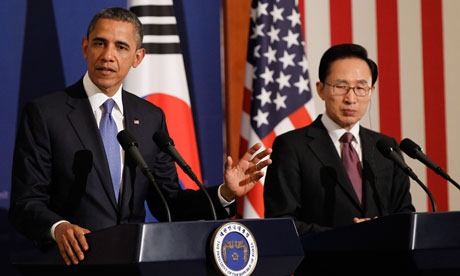
The Diplomat asked me for a short piece on what South Korea would like from the new US president, as part of a general forum – including Shen Dingli from Fudan on China and Adam Lockyer from Sydney on Australia – on Asia and the US election. I have reprinted my essay below, and here is the whole forum. It’s worth a read, and Lockyer’s disbelief at tea party rhetoric should once again be a wake-up call that American global leadership is not an entitlement of our ‘exceptionalism,’ but something we must earn through seriousness and responsibility. I’d like to thank Zachary Keck for soliciting my participation:

1. At the elite level, the ROKG (Republic of Korea government) probably wants a standard reaffirmation of the US- Korea alliance from whomever wins.

My sense from the media and my students and colleagues is that South Koreans are not really paying much attention to the US presidential race. (Neocons take note of such treachery!) Neither Romney nor Obama have much to say except for typical boilerplate on SK – defending freedom, resisting tyranny, close friend of America, yawn. In fact, I am not sure SK’s even been mentioned. And no one likes NK, so that is an easy issue to posture on too. (In fact, I am surprised Romney didn’t take the opportunity in the chest-thumping third presidential debate to accuse Obama of appeasing NK.)

Continue reading →

3rd Presidential Debate, Foreigner Version: If you’re not an American, you’re Mentally Ill or something

Warning! The lyrics are explicit – but the movie is hysterical


Did anyone else find the third presidential debate just appallingly narcissistic and self-congratulatory? Good lord. Good thing America is around to show you bubble-headed foreigners the way to freedom. I could run through all the offensive, ‘America-is-tasked-with-upholding-the-mantle-of-liberty’ patronizing condescension, but why bother? (Nexon does a nice job here.) I told my students to watch it, and in retrospect, maybe I shouldn’t have. It was so embarrassing, and in class this week I kept trying to explain why we talk down to the rest of the world like this while my students rolled their eyes in disgust.

I keep saying this – running around the world telling people how exceptional and bound-to-lead we are is a great way to alienate the planet and convince them of exactly the opposite – to not to follow us. We’d have a much easier time with the world if we could back off the blustery, Fox News nationalism and actually speak maturely. But Americans couldn’t give a damn about the rest of the world, no matter how much we posture about our world historic role to lead it. Our ODA totals are disgrace for a coutnry as wealthy as we are. We don’t learn languages much. The only time we worry about casualties in the war on terror is when they are own; our clear disinterest for all the collateral damage we have done since 9/11 speak volumes to the rest of the planet.

So instead, here is the debate foreigners heard:

Continue reading →

VP Debate once again tells Asia & the World that all We care about is the Middle East

Yes, it’s partisan, but it’s a somewhat useful deconstruction


First, I included the above video to reference a point I tried to make last week – that Romney flip-flopped so much in the first debate that I no longer have any idea what he thinks about the big issues of campaign. I just wish I knew wth Romney wants to do with the presidency. There has to be some purpose, some reason to vote for him, and I can’t find it. Someone tell me in a few coherent, specifics-laden paragraphs why I should vote for him? Not why Obama is a bad president – I know that already – but why Romney should be president. Honestly, I don’t know, which makes his presidential run look like a vanity project or something.

Second, did anyone else think that the vice-presidential debate once again broadcast to the world that our foreign policy is dominated by the Middle East? It was all about Iran, Syria, Libya, and Afghanistan. Obviously, these are all important places and issues. But it doesn’t take a lot of foreign policy training to know that Russia’s ever-more erratic course under Czar Putin, a possible euro-EU meltdown, or China are a lot more important to the US’ future than a bunch of small, poor fractured states in the Middle East. But no, let’s argue once again about Israel, Iran, terrorism, Iraq…  Good grief. There are other issues out there!

Continue reading →

Going to IQMR – Some Summer Asian Security Reading – Back in August

CQRM

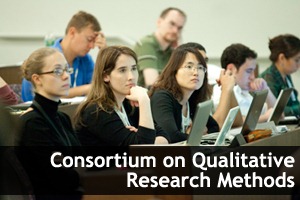
I am off to the Institute for Qualitative and and Multi-Method Research for their summer training at Syracuse University. Take a look at the syllabus. Whoa. ‘Can you spell ‘Bayesian hermeneutics’ correctly, little Johnny? No? Me neither!’ But the preparation looks great for qualitative-types like me. I must thank Colin Elman and Andrew Bennett for taking me. The people in that pic look so much more lucid and intelligent than me, that I think they must have read the wrong file or something. I hope they don’t bust me playing ‘Halo’ in the back there…

If debating multicollinearity doesn’t sound like fun (yeah, I don’t really know what it means either, but I think it’s bad), then here is my regular list of good reads from the last few months before I go on break:

Continue reading →