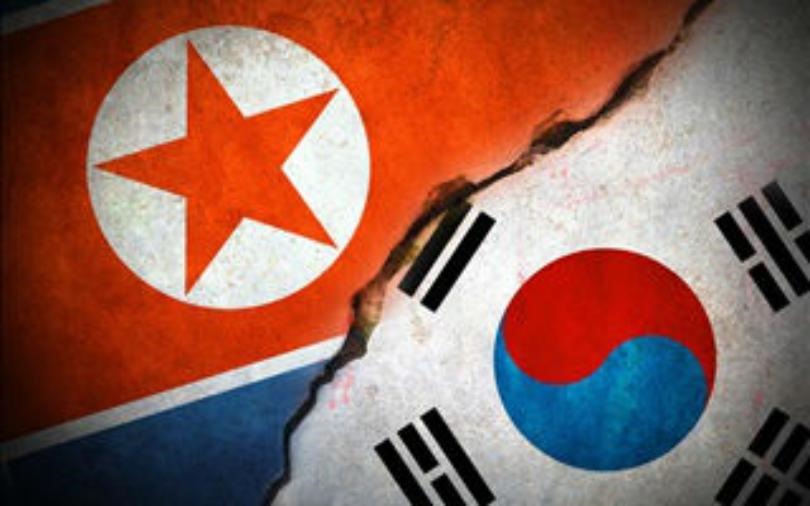
A Korean Deal Based on Flattering Trump as a Useful Idiot will Not Hold

This is a local re-post of a piece I wrote for the Lowy Institute a few weeks ago.

Basically I wrote this in disgust at how Trump is falling all over himself about Kim Jong Un. I do not oppose a deal with North Korea, as my critics keep saying. Rather, I deeply distrust Trump’s motives. He isn’t doing this for peace in Korea or because he cares about the US position in Asia or the well-being of people out here. In fact, he’s not even doing it for the American national interest. He’s doing it because the leaders of North and South Korea are flattering him.

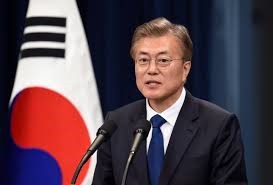
It’s appalling that Trump can’t see this. He hasn’t gotten anything serious out of North Korea, but apparently he loves Kim Jong Un, probably because Kim called him ‘Your Excellency’ in one of his letters. And Moon is playing Trump so badly – Nobel Peace Prize! – it’s embarrassing. Last year Trump was a jerk and called Moon an appeaser of NK. So this year, Moon is the tail wagging the dog. Moon has figured out that he can go around the hawkish US natsec bureaucracy, which distrusts him, and go straight to Trump. Flatter Trump enough, and he’ll agree to anything.

It’s gross, and it won’t hold anyway, because Trump is fickle and stroking his ego is not the same as building institutional support in the US for a deal.

The essay follows the jump:
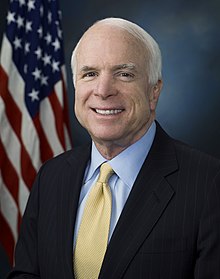
Some Late Thoughts on John McCain

Image result for john mccain

I was on vacation there for awhile, and while I wrote the following after the senator’s death, I did not post it here back then. I know everyone is talking about Kavanaugh and Trump’s ‘very, very large brain’ right now, but I wanted to put this up before it fades.

In short, I think McCain was a reasonably ok senator who was celebrated so heavily mostly as a rebuke to Trump rather than for his actual record in the Senate. No one questions McCain’s patriotism or commitment to America. The real issue was his foreign policy judgment, which quite honestly, became increasingly belligerent and risk-taking, if not openly militaristic, after 9/11. McCain, like Lindsey Graham, Robert Kagan, and too many other neocons, simply refused to learn from the disasters of the Bush administration – and that these disasters opened the door to a charlatan like Trump. But he is obviously head-and-shoulders above Trump, and that matters. RIP.

The full essay follows the jump:

Continue reading →

Singapore Summit: The Trump Show Goes to North Korea

Image result for The trump show

This is a local re-post of an essay I wrote earlier this week for The New York Review of Books.

I haven’t blogged here in awhile, because I am so busy. Last weekend, I went to the Shangri-La Dialogue (reflections here). Today I am flying down to Singapore to provide analysis for BBC for the Trump-Kim summit. Two weeks after that, I am going to the Jeju Peace Forum. So sorry. Also, I am slowly gravitating toward Twitter more for my commentary. Please go there.

This NYRB essay focuses on the extraordinarily chaotic ‘process’ of Trump foreign policy-making applied to the North Korean case. The short version is that there is scarcely a process at all. Trump agreed to the North Korea summit 45 minutes after it was broadly suggested to him by the South Korean government. He has since done none preparation, and Bolton has all but abjured what NSA’s are supposed to do.

So now, we are basically going into this blind. It’s a Trumpian crap-shoot, and no one really knows the outcome will be, because no one knows what Trump will say, or worse what he will give up for his ‘win’ for the fall midterms. Call it this whole mess of reality TV affectations + incompetence + unprofessionalism the ‘Trump Show.’

My guess, the summit will be a nothingburger. The strategic and ideological divisions between the two sides are too wide for such a tight timetable, and Trump is way too checked-out from the details of nuclear missiles to seriously bargain the issue. Even Trump is now saying it’s just a ‘get to know each other’ meeting, which is default win for the Norks, because the get the photo-ops. So wait, why are we even doing this now?

In short, we should have cancelled long before, but now it is too late. And Rodman, Gorka, and Hannity are coming too, just to make sure this whole thing is a gonzo Trump Show entertainment-not-reality joke. Whatever…

The full essay follows the jump:

More on Why I Don’t Think the North Koreans will Carry Real Costs/Risk for Unification

Korea tensions1This is a local repost of something I wrote for the Lowy Institute in January. It is sort of a sequel to my last post. Across these two posts, my point is to argue that North Korea is basically a status quo state and won’t carry serious costs for unification.

I got a lot of heat on Twitter for suggesting this. Hawks were displeased. Josh Stanton particularly had a smart comeback.

So let me try again. Yes, ideally the North Koreans want national unity. In fact, maximally, they may even want socialism. But that’s not what matters. What we care about is what they will sacrifice for, not their ideal wants. We’re looking for satisficing, not maximizing, behavior here.

So what are the North Koreans sacrificing for? Where are they carrying costs and taking risks? A couple obvious areas: 1. Nukes. 2. Luxury imports. Neither of these really advance a unification agenda. Nukes are a defensive weapon in practice, because of their extraordinary deterrent value. And all the counterfeiting, money in Chinese banks, and general sanctions-busting is either to smuggle in luxuries for elites or to promote the nuclear missile program. What North Korea is not doing is launching war-risking strategic provocations, no matter how much crazy stuff they say. (Why we listen much to North Korea when they lie and exaggerate so much never ceases to amaze me.)

Like all other states, they firstly want to survive, and they are in a pretty hostile neighborhood. Before we get carried away that nukes have empowered them to overrun the peninsula, let’s start with what we can prove: the elite their wants to hang on – because they don’t want to die on the run or in South Korean jails – and prosper – hence all the sanctions-running and criminality.

However I do agree with Josh, that the nukes open up a lot of opportunities to blackmail South Korea, bully it into semi-permanent subsidization of the North, and otherwise try to cow it. But that is not unification. It’s subsidization – endless, condition-less South Korean cash is what they want. Not unity.

The full essay follows the jump…

North Korea’s Goals are Limited: It couldn’t Absorb S Korea even if it Won a War

Image result for north korea invasion

This is a local re-posting of an article I wrote for The National Interest last week.

Basically, I am continuing to bush back on all this insane talk that we are on the verge of a conflict, can’t live with a nuclear North Korea, and are imminently threatened with a North Korean nuclear strike. None of that is true, and all the alarmism from the bomb-them-now ultras is just making this all worse.

So to keep the wingers happy, here is a worst case scenario, in which North Korea somehow levers the US out of the region AND defeats South Korea on the battlefield. This is already so unlikely that the ultras should be somewhat embarrassed we have to game this out, but fine, whatevs. And what happens after the supposedly long-sought unification under the Kims? The implosion of North Korea, because there is no way it could manage a hugely expensive, widely resisted, easily corrupted occupation even bigger than US post-Civil War Reconstruction. So forget it. Unification would blow-up the North’s extremely unique and rigid system. They don’t want it. (What they do want is a pseudo-confederation that gets South Korea paying their bills semi-permanently without actually having to change politically, but that’s for another column.)

The essay follows the jump…

The North Korea Travel Ban is Probably a Good Idea at this point

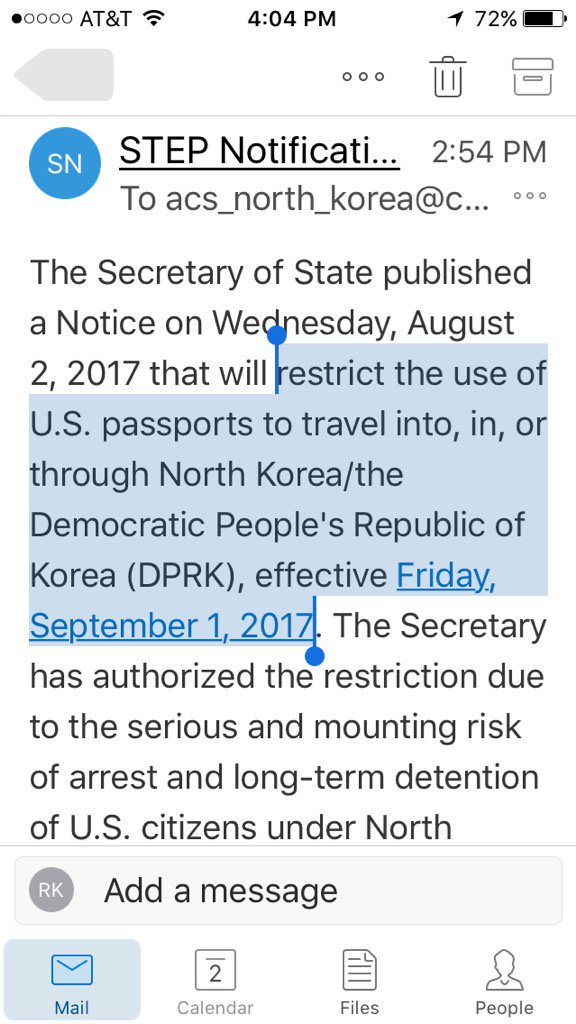
This is a repost of an essay I wrote for the Lowy Institute recently on the travel ban preventing Americans from going to North Korea as of September 1 this year. The picture is the US State Department mailer to this effect from a few days ago on my iPhone.

Basically my argument is that the ban is a good idea at this point given how many foreigners Kim Jong Un seems to be snatching during his reign. The numbers have gone up, and although I went to North Korea as a tourist myself and have recommended it in the past, I no longer do so, especially for Americans. It’s just way too dangerous now.

Otto Warmbier’s death is the last straw, as I figure it was for Tillerson. At the time of his death, I thought a travel ban might well be the next step. I still find it curious that Kim Jong Un did not let Warmbier leave earlier. The tourist trade brings in needed dollars, and Pyongyang is already complaining about the US halt. They easily could have let him go when he fell into a coma and then just pretextually snatched the next idiot US tourist who drank too much to replace Warmbier. But they held onto him to the point where they’re responsible for his death. Pointless. Just shows once again how awful North Korea really is.

My full essay on the travel ban follows the jump:

Continue reading →

US-South Korea Alliance Survived Presidential Partisan Differences Before

download

This is a local re-post of an op-ed I wrote this month for The National Interest. There’s been a minor freak-out on the right since Moon Jae In got elected. He’s a communist; he’s gonna sell out SK to Pyongyang; the alliance with America might break. Good grief. Enough with the hyperventilating. Even if he was a communist at heart, he couldn’t govern that way because he only won 41% of the vote. He doesn’t have the political space to govern as some far lefty. And realistically, he’s just a social democrat: he wants to raises taxes, expand the public sector labor force, and clean up the air. That’s hardly a marxist revolution.

I do think that there is a possibility of a real split at the top though. It is easy to see Trump and Moon loathing one another. So this essay notes how previous US and SK presidents of different political beliefs stumbled through. The short version is that there is a lot of depth to the US-SK alliance. So much actually, that it almost makes presidential changes irrelevant, which is not exactly democratic if you think about it. But the point is, that the alliance will likely survive.

The full essay follows the jump:

Continue reading →

My New York Times Op-Ed: A North Korea “Agenda for SK’s New Leader”

09kelly-inyt-master768

This is a local re-post of an op-ed I wrote last week for The New York Times.

Basically it is four suggestions to President Moon on dealing with North Korea. They are (mildly) hawkish arguments of the sort I routinely make here, including all my favorite hobby horses – talks are a shell game, move the capital, spend more on defense, bang away at China to cut off North Korea, and start treating Japan like a liberal democratic ally instead of a potential imperialist. Naturally a dovish liberal like Moon will adopt all these. Hooray! I anticipate a Blue House call any day now…

Regular readers have seen all this before, but it’s still pretty cool to get into The New York Times though. I figure this will be the most read thing I ever write, so I rolled out arguments I know well rather than something really new. The full essay follows the jump.

Continue reading →

Cancelling TPP, Protectionism Not Necessary for a Restrained Foreign Policy

Image result for tpp

This is a local re-post of an essay I wrote for The National Interest a few weeks ago. Basically I argue that a restrained political and military foreign policy does not imply an isolationist or protectionist economic foreign policy.

This strikes me as an important distinction. There is a lot talk that Trump’s election implies a less interventionist foreign policy, that the white working class doesn’t want to fight neocon wars anymore. I am sympathetic to that. But a greater caution in military choices does not have an economic correlate of withdrawing from free trade, or picking foolish fights with allies. Restraint is neither economic protectionism, nor bashing allies Trump-style. Those tow together are more like isolationism.

As I say on this site regularly, the concern of foreign policy ‘restrainers’ is not to abandon American allies, but to get them to take their own defense more seriously. But I see no reason to extend that to trade. Greater protectionism will simply drive up prices for the white working class at Walmart, while re-shoring a few jobs at most. Recall that it is technology that wiped out smokestack jobs in the Midwest, not China. Worse, protectionism has a powerful long-term negative impact on security. States which seal themselves off start to fall behind technologically. That impacts military tech too, as one can see in the communist states during the Cold War. It is critical for American military pre-eminence that it remain a free-trade economy that regularly absorbs the most recent technologies, no matter how much dislocation they bring, no matter where they come from.

The full essay follows the jump:

Continue reading →

Obama did about as well in E Asia as could be Expected: One Last Defense of Strategic Patience

I know the only thing people want to talk about now is Trump, but here is a parting review of Obama in Asia. I wrote this a few weeks ago for the Lowy Institute. All in all, I’d say he did about as well as you could expect.

Yes, he didn’t prevent North Korea from getting a nuclear weapon and missile, but no one knows how to do that barring kinetic action which is off the table because of South Korea’s ridiculous decision to place its capital, and allow it to flourish, just 30 miles from the border. And no he didn’t slow China’s rise, but no president could do that without kinetic action either. And that’s even crazier than bombing North Korea.

There are no good solutions to our challenges out here, just as there were none to communist power in the 1950s. Hawks calling for ‘toughness’ and ‘leadership’ should remember that rollback was a catastrophe (in the Korean War) that almost ignited WWIII. We then settled for ‘hanging tough’ until communist power imploded, which it did. The contemporary Asian analogue of hanging tough is Obama’s ‘strategic patience.’ Everyone criticized it, but no one has a better option that isn’t hugely risky. So stop complaining about strategic patience until you’ve got a better, genuinely workable idea.

The full essay follows the jump.

Continue reading →