 Russia is bogged down in a war it can’t win. A weaker-than-expected Ukrainian spring offensive does not change that. Russia’s still lacks a path to victory which remotely justifies the costs and isolation of the war, even if it manages to hang onto some Ukrainian territory.
The leaks strongly suggest that Ukraine’s offensives this year will be last successful than last year’s. Ukraine lacks the heavy and precise weaponry its needs (shame on us for dragging our feet on that stuff), and it has suffered tremendous casualties. This is unfortunate. I always thought hopes that Ukraine would win by the end of this calendar year were too optimistic. The war will likely last into next year at least.
But this doesn’t get Russia off the hook. It is still tied down in a costly, unwinnable quagmire. Even if the lines do not change much this year, Ukraine will not give up. It will fight a protracted, defense-in-depth, semi-insurgency conflict if necessary, biting at the Russians for years, looking for opportunities to strike; not allowing the Russians to withdraw; not allowing its conquered areas to be developed, exploited, or populate; not allowing Russia to escape from sanctions and isolation. A model here is the failed Japanese invasion of China in 1937. The Imperial Japanese Army could win battles but not the war, and conflict degenerated into a long, unwinnable slog which drained Japanese resources for no clear gain compared to the growing costs, including diplomatic isolation and sanction.
I have some other recent thoughts on the Ukraine war at 1945.com:
1. Russia Probably Can’t Win without Substantial Chinese Assistance. Excerpt:
The Russian spring offensive in Ukraine already appears to be running out of steam. No less than the President of Ukraine himself recently visited the frontlines’ most contested sector – the city of Bakhmut. Volodymyr Zelensky is known for his courage – he stayed in Kiev last February as the Russians marched on it. But visiting Bakhmut, against which the Russians have thrown the weight of their forces this spring, would be remarkably risky if the chances of Russian breakthrough were genuine.
Zelensky also felt secure enough this month to receive the Japanese prime minister in Kiev, at the same time Chinese President Xi Jinping visited Russian President Putin in Moscow. And certainly the frontlines have not moved much. Russia was supposed to come off the winter refreshed and restocked, capable once again of major offensive action. This has not been the case. There have been no armored punches threatening a breakthrough, no wide-front advances threatening to overstretch Ukrainian reserves.
Instead, Russia is doing again what it has done since last summer – targeting a few small cities in the east with massive, human-wave infantry assaults, while randomly terror-shelling Ukrainian cities. The former has resulted in high casualties and small advances, while the latter continues to alienate world opinion for pointlessly killing noncombatants. This is not a winning strategy, and if this is the best Putin has after just a year of war, it is unclear how expects to win if the war drags on as it appears it will.
2. Russian Nukes in Belarus are just another Saber-Rattling Gimmick by Putin. There is No Remotely Cost-Beneficial Scenario for Putin to Use Nukes in Ukraine or Against NATO. Excerpt:
Russian President Vladimir Putin plans to station tactical nuclear weapons in Belarus, Russia’s eastern neighbor. Belarus also borders Ukraine’s north, and Putin wants Minsk to participate more openly in his war against their shared neighbor. Belarusian dictator Alexander Lukashenko has acted warily with respect to Russia’s invasion, but he depends on Russian assistance to stay in power, especially after Putin helped him fight off mass protests in 2020. Lukashenko probably has little choice but to assent to the deployment of Russian nukes on his country’s territory.
Belarus also borders NATO countries. Putin’s emplacement of these weapons is likely meant as an oblique threat to the West. It fits Putin’s regular habit of talking up Russian nuclear weapons to unnerve Ukraine’s Western supporters. The tactic makes sense. Russian conventional power has embarrassed itself in Ukraine. Its army has struggled, and most of the world had expected a quick victory for Russian forces. Putin invokes Russia’s nukes to compensate. He has a long history of such bravado.
Putin’s Western sympathizers, who have talked up the possibility of World War III for over a year, will argue again that this deployment means we are sliding toward a global conflagration. But they are probably wrong. It remains unclear how invoking nukes will help Putin win a limited conventional war.
3. Russia’s Apathetic Response to Finland’s NATO Accession should End the ‘NATO-Expansion-Caused-War’ Argument.
It is widely understood now that Russian President Vladimir Putin blundered badly in his invasion of Ukraine. He planned the war as a fait accompli blitzkrieg. The whole thing would end in a week or two. Putin would re-organize post-Soviet space in one swift stroke. NATO would be caught off guard and scared about further Russian moves. China would be impressed at Putin’s audacity, helping to off-set the unbalanced economic relationship between the two countries. The world would once again be impressed by Putin the master strategist.
Instead, the war has turned into an expensive, embarrassing, debilitating calamity. Russia may still win in the minimal sense of holding onto some conquered territory. But in every other important aspect, the war has been a disaster, and it is getting worse, not better.
Economically, the sanctions placed on Russia because of the war are pummeling its GDP. Politically, Russia is mostly alone. China and India have not supported the sanctions but otherwise kept their distance. Militarily, the war has turned into a stalemate, tilting slowly toward the Ukrainians. Russia has taken no new territory in a year. Ukraine has launched two successful offensives since then, and another is expected later this spring. And now, strategically, Russia has just suffered another set-back. Finland has joined NATO.

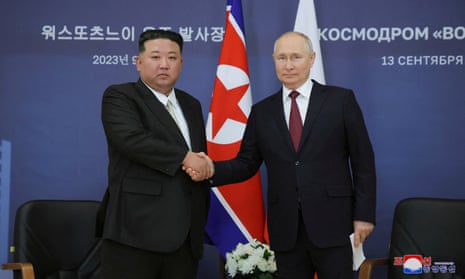 Vladimir Putin and Kim Jong Un are gangsters who rule over mafia states. No wonder they get along famously. Like recognizes like.
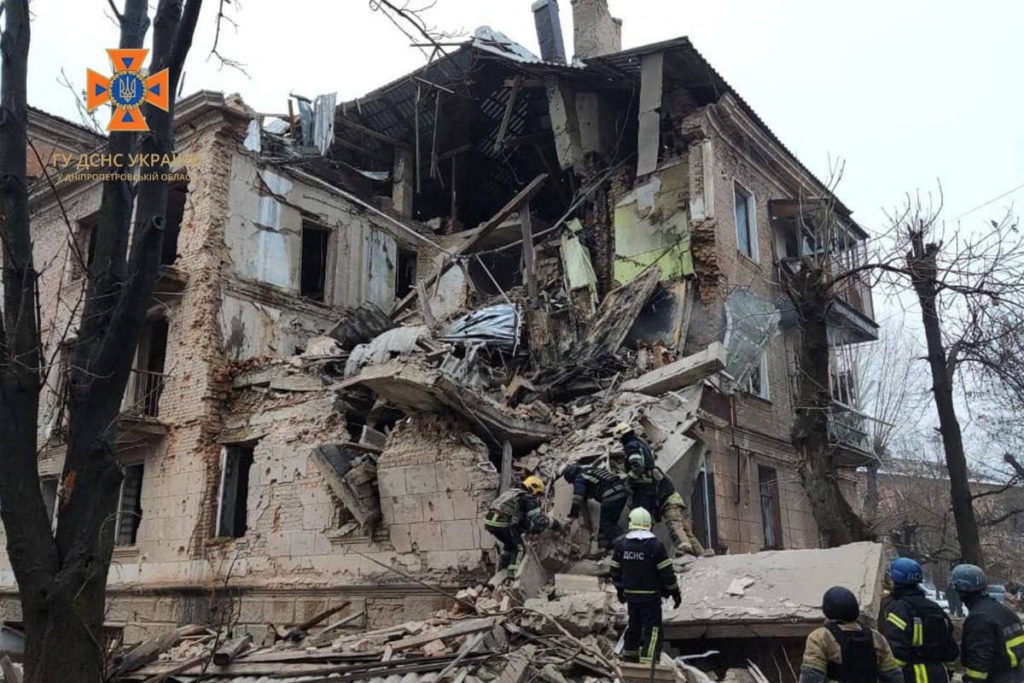
 I do think there was a theory for the war, but the neocons did not elaborate it well and it did not convince the public. Hence the emphasis on WMD instead.
 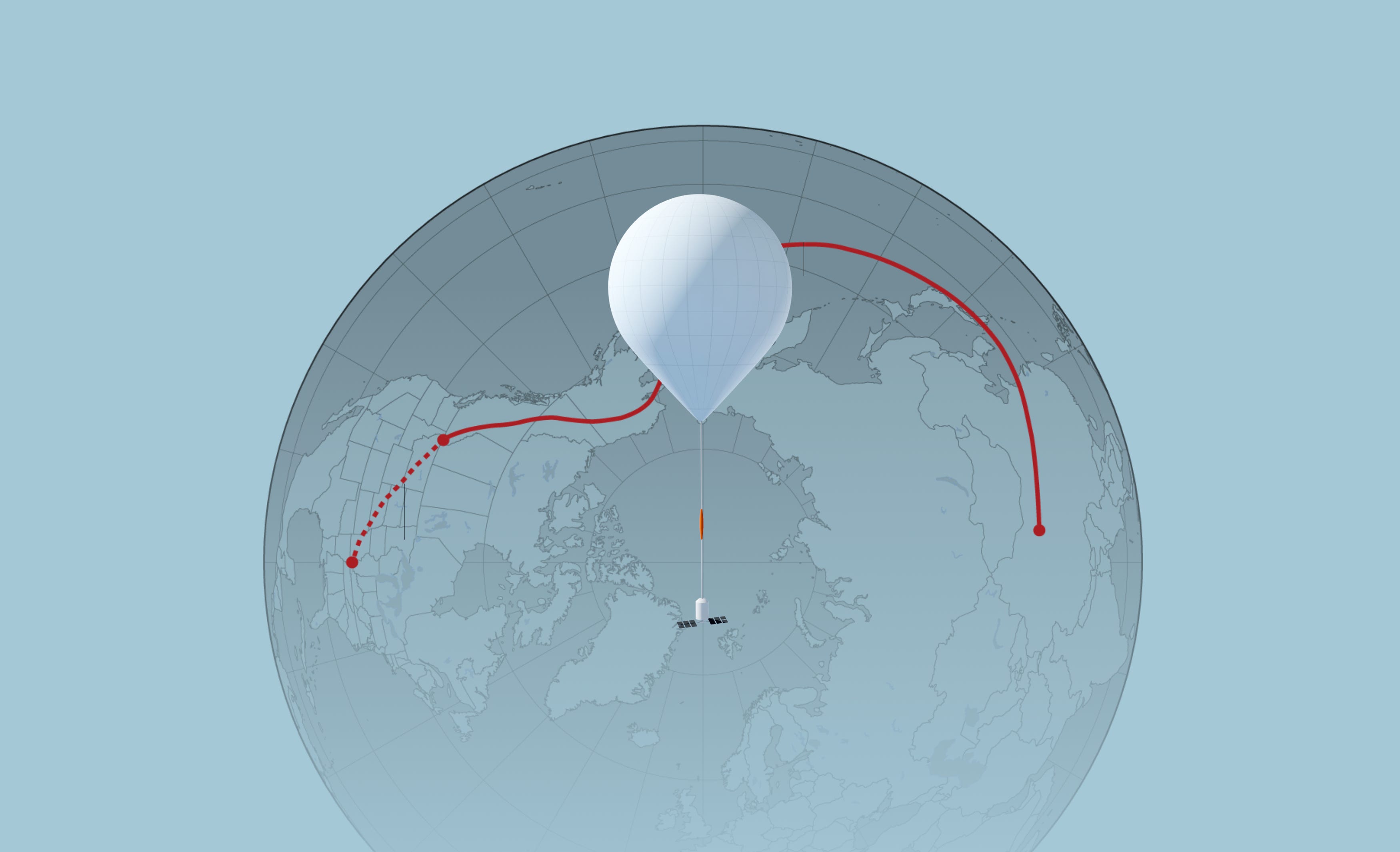 The GOP’s response was grossly exaggerated and hypocritical. Yes, the balloon was bad, but it did not nearly justify MAGA’s weeks of fear-mongering and alarmism.


 Robert E Kelly