If the EU Steps Up (which it won’t), then Ukraine Need Not Undermine the US Pivot to Asia

ChinaThis is a re-post of an essay I wrote for 1945.com a few days ago. My argument is an expansion of what I complained about a few days ago: Europe, not the US, should be leading on Ukraine.

Yes, the US can do it, but that Europe can’t take care of security issues of medium-range right on its own doorstep is just embarrassing. It raises the obvious opportunity cost that deeper US involvement in Europe undercuts the pivot.

I am little skeptical of this overrating this fear, as I say in the essay, because the US spends so much on national security – the Defense Department budget, plus all the other defense spending we don’t run through DoD in order to make its budget look smaller than it actually is. That aggregate number is around 1 trillion USD, which should be enough to confront both Russia and China (especially given Russian weakness), except for open war with both simultaneously.

So we shouldn’t get carried away that Ukraine will stop the American re-balance against China. Biden is pretty clearly avoiding a major commitment to Ukraine to prevent this outcome.

But still, it is long overdue for the Europeans to get organized on common defense, especially when they complain about the US ignoring their opinions on issues like Iraq or Afghanistan. That’s what happens when you don’t spend on defense and implicitly expect the Americans to do the heavy lifting.

In fact, the an ideal world would be an integrated European Union defense identity which acted as a second liberal superpower, confronting Russia and Islamic radicalism in its region, while the US confronted China. What a huge advancement of liberal and democratic values that would be! But that’s decades away if ever…

Anyway, here is that 1945 essay:

As the Ukraine crisis heats up, its impact on the US effort to re-balance to Asia, specifically against China, has arisen. The consensus is that, for the most part, a renewed US focus on European security will pull US resources and policy-maker attention away from Asia and back toward Europe. In a similar manner, the US has hitherto struggled to focus on East Asia, as China took off in the last two decades, because of the war on terror. Yet China is of far greater import to the US in the coming decades than either Eastern Europe or the greater Middle East. On that, there is near consensus in the foreign policy community now.

The rest is available here.

Yes, Ukraine is a Crisis, but Mostly Limited to Eastern Europe and EU Ineffectiveness; Don’t Read it onto East Asia

UkraineThis is a re-up of a column I wrote for 1945.com recently. I find the hyperbole in Western media on Ukraine exhausting. As with the Afghanistan withdrawal commentary last August, the usual suspects of blob neocons and hyperventilating journalists are going bananas that nothing less than world order is on the line in Ukraine! Did you know we even have to fight a war with Russia? Did you know that war has been ‘imminent’ for, um, the last six weeks? *sigh*

All this is wrong, just like it was wrong last summer when the ‘it’s always the 1930s!’ crowd engaged in the same histrionics over Biden’s Afghan withdrawal. Here are two Twitter threads by me – on Ukraine and Afghanistan – about the neocon-blob-industrial complex’ impulse to read every challenge to the US everywhere in the most apocalyptic terms possible.

So yes, Ukraine is a crisis, but a limited one. It’s not going to bring down NATO or the EU or democracy and so on. And no, it’s not going to encourage China to attack Taiwan. Deterrence doesn’t work that way. It’s far more nuanced and local than whether or not a US president is seen as ‘strong’ or ‘weak,’ which is such a flexible, subjective criterion anyway, that it is analytically pretty useless. Not everything is about the US president’s reputation for toughness, and that US analysts so often come back to this point just shows you their parochialism: they don’t know much about the rest of the world so they read everything through the US politics lens they know. Bleh.

The real geopolitical take-away from the Ukraine mess is – besides the obvious looming  catastrophe for Ukraine and, somewhat also, for Russia – is the pathetic impotence of the Europeans on their own security even on their doorstep. Good grief. Anytime the Europeans want to step up and take responsibility for their own affairs would be great. Paul Poast and I have a piece coming in Foreign Affairs about US allies’ free-riding, and Ukraine is illustrating our argument every day.

Anyway, here is that 1945 essay:

Ukraine is a serious, but limited, crisis. For the Ukrainians living near Russia’s potential invasion points, the possibility of serious violence looms. And for Ukraine’s fledgling, unsteady democracy, such an invasion would be a disaster. Even Russia grey zone warfare – a mixed attempt at subversion and bullying without opening invading the country – would be terrible. It would set Ukrainian democracy back a decade or more, corrupt the government, and likely split the country. Russia clearly has the ability to enforce its will on Ukraine in the short-term, and there is little the West can do about it barring the risk of major escalation.

Read the rest here.

The Ukraine Mess is about Putin’s Post-Imperial Hangover, Not NATO Expansion, ‘Weak’ Biden, etc…

RussiaThis is a re-up of an essay I wrote recently for 1945.com about Ukraine. I say badly what Cheryl Rofer and Francis Fukuyama say much better than me, namely that:

Russia would probably not have respected Eastern European sovereignty had NATO not expanded, so it is a red herring to blame NATO expansion for Putin’s current bullying of Ukraine. Realists and restrainers have been arguing this for a while, including Stephen Walt who summarizes it all nicely here:

Had the United States and its European allies not succumbed to hubris, wishful thinking, and liberal idealism and relied instead on realism’s core insights, the present crisis would not have occurred. Indeed, Russia would probably never have seized Crimea, and Ukraine would be safer today. The world is paying a high price for relying on a flawed theory of world politics.

The idea that Russia wouldn’t be bullying Ukraine without NATO expansion turns on two highly contestable ‘realist’ assumptions, it seems to me:

1. It somehow was a ‘liberal illusion’ (Walt) to pull Eastern Europe into NATO when we had the chance.

Wait, isn’t it also realist to grab a power advantage when one has the chance? Why is it liberal fluffery to bring a huge swathe of sympathetic states into the Western community, improving Western power, when given the chance? Realists say the West took advantage of Russian weakness to expand NATO, as if realist paradigmatic priors of perilous, self-help anarchy suggest we should have left Eastern Europe unaligned. But that’s wrong; realism says the opposite: we should have – and did – screw the Russians when we had the chance, because, hey, anarchy is a tough, dog-eat-dog world and grabbing a big advantage at low cost (Russia was weak and the threat of conflict was low) is exactly what egoistic states do. (I dislike this argument myself. I supported expansion for more liberal reasons, because the Eastern European states so obviously wanted to join. My point rather, is it’s hardly ‘realist’ to pass over a huge, possibly one-time, opportunity to improve Western power.)

2. Russian behavior toward Eastern Europe would be more restrained, more liberal, and less neo-imperial had NATO not expanded.

Does anyone really believe this? Consider Russia’s long history of dominating and bullying its ‘near-abroad’ neighbors. Consider Putin’s obviously revanchist temperament and huge, chip-on-his-shoulder imperial hangover. He clearly misses the Soviet Union and its influence in the world and insatiably craves the perception of parity with the US. I suppose it’s possible Putin would have behaved better, but I’d say the counterfactual that he’d be bullying non-aligned Poland or the Baltics right now – with Ukraine already subverted and controlled – is just as credible if not more.

Anyway, here’s that 1945 essay:

A Russian invasion of Ukraine would be a disaster for Russia. It would obviously also be a disaster for the Ukrainian population, but geopolitically it is hard to see how Russian President Vladimir Putin would escape either the international isolation which would ensue, or win the war itself with manageable costs.

Read the rest here.

Why did Kim Jong-Un Suddenly Bail on his Moscow Trip? B/c NK’s ‘Policy Process’ is more like a Factional Mosh-Pit

Putin, Chinese President Xi Jinping watch the parade in Moscow.

You don’t see Kim Jong Un in there do you?

This is a re-post of an essay I wrote for the Lowy Institute a few weeks ago on why Kim Jong UN of North Korea suddenly decided not to go to Moscow.

Everyone wants to know why Kim Jong-Un decided, out of the blue, not to got to Moscow for the WWII Victory Day celebration despite months of it being talked up. So here’s my theory – North Korea policy process isn’t a process at all. It’s more like a mosh-pit of competing interest groups and factions trying to control major decisions like this. So randomness, like sudden cancellation of this visit or the UN Secretary-General visit this week, is just built-in. Even if North Korea wanted to be less erratic and more predictable, it probably couldn’t be, because of the way it is governed.

The rest of the argument follows the jump.

Continue reading

My October Diplomat Essay: Russia between Empire and Modernity

Bt5OjLdCYAA4N0n

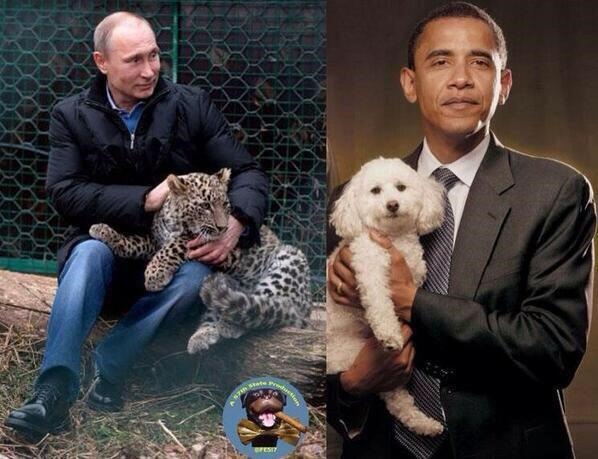
This is a re-up of an essay I just wrote for the Diplomat (posted here). And that image to the left comes from this famous (notorious, really) tweet. If that doesn’t capture the values clash between Putin and modernity – real men have tigers as pets, while Obama is a well-dressed wus – I don’t know what would. If you ever wondered where feminism in the study of international relations came from, there you go.

Russia is a bit outside my normal purview, but I’ve always had a running interest. I studied Russian in grad school and spent a few summers there learning the language. I enjoyed it a lot and like to think I am sympathetic. Like a lot of post-Soviet analysts, I find it tragic how badly misgoverned Russia has been for so long – literally back to Ivan the Terrible. Russia has so much human capital; if only it was governed properly, it could be a serious emerging market player like China. But instead its one megalomaniac czar after another – whether they be imperial, Soviet, or Putin – wrecking the economy for their own vanity and nationalist unwillingness to accommodate the West.

Putin would rather posture and bluster like a bully on the school parking lot than whip Russia into shape. Everyone knows what’s needed – real elections, press freedom, an anti-corruption campaign, and so on. But I guess if Western analysts say these things, the ‘Russian’ way for Putin must be to do the opposite. So we’re back to 19th century ‘Dostoyevskyan’ images of Russia as an Orthodox, anti-western nationalist power with a unique mission (read it for yourself, then compare it to Alexander Nevsky). That may sate the ideological cravings for global status of Russia’s nationalists, but it won’t help Russia rival the West in the medium-term, will scare non-Russians along Russia’s borders, especially Muslims, and will not impress Beijing, which long ago learned how to profit from globalization and capitalism (while corruption is destroying Russia).

Here’s that essay after the jump:

My Diplomat Essay for May: ‘No, Crimea is Not a Model for Aggression in Asia’

The essay below is a local reprint of my essay for the Diplomat magazine this month.

The motivation was a lot of the panicky response in Asia after the Crimea annexation that something like that might happen in East Asia. I don’t really see that at all, to be honest. Sure Asia is dangerous – that China-Vietnam spat right now  is pretty hairy – but remember that East Asian conflicts are mostly over open, unpopulated sea-spaces whose economic value is minor or unproven. China taking the Paracels or Spratlys is not exactly an Anschluss. Is it bad? Of course. Should China be resisted? Absolutely. But China is not nearly as paranoid and thuggish – at least internationally – as Putin. So yes, if we have to contain China we can. I’ve argued that myself – so please don’t tell me I’m some panda-loving hippy. But we don’t need to rush to cast Crimea as some big lesson for Asia. Rising, prestige-accruing China is not declining, angry Russia, and the local circumstances – most obviously the lack of any Chinese irredentist claims – are pretty different.

Here’s that essay:

“Since the invasion of Crimea, there has been a lot of panicked talk that the annexation is re-defining international relations, violating established international law, throwing the post-WWII/post-Cold War order in Europe into chaos, and so on. Putin has been analogized to Hitler by no less than Hillary Clinton, and both Zbigniew Brzezinski and Madeleine Albright were quick to bring up the specter of the 1938 Munich conference. There has been a steady drum-beat from US conservatives that Obama is weak, appeasing, lacks resolve, and so on.

Some of this is true. Certainly ethnic irredentism smacks of Hitler’s ploy at Munich, but the implication of the ‘Munich analogy’ is that this is but a first step, unseen by weak, appeasing western statesmen, toward future invasions. This is almost certainly not true for Putin. The US and NATO are vastly more powerful than Russia, and without the rest of the old Soviet empire, there is no possible way Putin could launch a second cold war against an expanded NATO. Putin’s thuggery is more a local challenge to the European order and the European Union, a desperation move from panic and paranoia. We should not lose perspective.

So out of hand did this hawkish exaggeration of Crimea become, that a backlash set-in. Micha Zenko noted the obviously hypocrisy of US officials suddenly praising international rules and sovereign non-interference. Fred Kaplan noted how NATO does in fact retain the ability to defend itself. And Fareed Zakaria usefully reminded everyone that the ‘Long Peace’ and gradual decline in war violence are in fact real secular trends not debunked by one event.

This essay is a part of this response literature, but focused on Asia, where there has been a flurry of similarly exaggerated suggestion that Crimea could be a model of local aggression (here, here, and here – or here for the most egregious on Obama’s ‘capitulation’ in Asia). Unsurprisingly, much of this focuses on China, moving to take either the Senkaku/Diayou Islands or a strip of northern North Korea (the latter has been kicked around in the South Korean press). But much of this is hyperbole, some of it rather irresponsible. And a lot of it feels like US neoconservatives and defense hawks using Crimea as a political cudgel against a president they dislike and defense budget cuts they detest. Crimeas are apparently like Pleiku streetcars – wait long enough and you can always circle back to preferred arguments.

But it is far too early and the Crimean situation probably too unique for these conjectures. By way of illustration, consider this ‘what Crimea means for Asia’ piece by my friend Brad Glosserman of the influential Center for Strategic and International Studies. Brad argues:

1. Putin took Crimea, ergo realism is the ‘coin of realm in foreign policy’ and liberal theories on the decline of war are wrong. This is too simple. Crimea is one event; it has resulted in few casualties; it seems likely, in spite of the rigged poll, that a majority of Crimeans would prefer to belong to Russia; it is not at all clear that Russia’s army could sustain a serious occupation of even eastern Ukraine; a full-scale invasion would galvanize NATO overnight, and so on. By contrast, liberal theories of international politics continue to explain a lot – most obviously the very large democratic security community that reaches from eastern Europe all the way west and south to parts of east Asia and Australia. One event does not buck this well-documented trend.

2. ‘National identity matters’ in Asia. But few Asianists said it didn’t. It is well-known that Asian regionalism has broadly failed; that Asian elites and populations are statist and nationalist; that Asia is not going to integrate along EU lines, and so on. Realism does indeed have reasonable analytical purchase in Asia, but that does not mean realism can explain the above mentioned security community very well, or that east Asian statism means conflict. East Asia has been at peace since 1979, but realists and hawks have been predicting war there since the end of the Cold War. The Asian peace may be a ‘cold peace’ but has proven surprisingly durable. These inaccurate predictions should be admitted by those who want to ramp up the pivot and expect a major Sino-US competition.

3. China abstained on the UN Security Council Crimea vote; it is balancing the West with Russia. This is also too fast and a little slippery. China’s behavior on Senkaku is not as aggressive as the conventional wisdom suggests. China is extraordinarily dependent on Western export markets. There is little undisputed evidence that China and Russia are meaningfully working together. China probably abstained at the UN for the same reason everyone else is keeping their powder dry on Crimea: no one really knows what Putin is up to; no one knows how far he intends to push. Crimea was a big surprise to everyone, including to the hawks who are now claiming it is the natural outcome of Obama’s weakness.

4. Crimea could be a template for conflict in Asia, because it too has territorial disputes. This massages the regional differences too much. First, to even call Crimea a ‘model’ of conflict is to accord it far too much significance too soon. (To be fair, Brad does not actually use that term, but much of the Crimea-Asia writing in the last two months pushes in this direction.) Second, Asia’s territorial problems are not irredentism which underlay both the Munich and Crimean annexations. I know of no Chinese irredentist claims in East Asia; no one in China speaks of ‘liberating’ ethnic Chinese in Southeast Asia, for example. (Taiwan might be considered Chinese irredentism if one really stretches the category, but that has long been a well-known issue.) Curiously, the only serious irredentist possibility in east Asia I can think of is Korean claims on northeast China. Korean history books teach that early Korean kingdoms stretched far north of the Yalu, and China and Korea have fallen into historiographic spats on this. But I know of no serious Korean politicians demanding Chinese territorial concessions there.

5. The move into Crimea means the US should re-double the Asian pivot. In fact, it likely says the opposite – that the US might be looking at a sustained stand-off with the Russians that will pull US resources into eastern Europe. Much of the security writing on East Asia assumes that the US is a source of stability and that Chinese power is a rising threat. This may indeed turn out to be the case, but it is also true that Asia has not had a major inter-state conflict since 1979 (China’s brief invasion of Vietnam). An alternative literature notes that Asian military expenditures are not nearly as high as US hawks would have you think and that Asia is much more stable than we realize. It may be that Asia under a bland, developmentalist Chinese oligarchy is more stable than eastern Europe menaced by a clownish, paranoid, prestige-seeking Putin. Again, we should not judge so rapidly. Particularly, we must be careful not cast China too quickly into the role of the regional villain like Germany 1914 or the USSR 1945. That is not clear yet.

The realist-hawk-neocon take on east Asia may indeed turn out to be right (this is probably the best statement of that case). But it is far too early to jump to large conclusions on Crimea’s ‘demonstration effect’ in Asia. China has a very long and well-known record of defending sovereignty. It is likely that the Chinese are upset with Putin’s open violation with this principle. They likely abstained on the Crimea vote to avoid giving the West a ‘win’, but it would be an extraordinary volte-face in Chinese foreign policy if Beijing were to suddenly endorse the rewrite of borders by force. Senkaku and the South China Sea dispute are not strong counter-evidence either. Both are nearly empty maritime spaces. China’s claims on them are indeed capacious and should be resisted, but they are far less threatening than Crimea, which was the annexation of a developed, populated land-space. Again, Asia’s cold-peace, while cold, may be more stable than we usually think.

So if Crimea encourages US allies in Asia to take their own defense a little more seriously, then so much the better. But there is little evidence to date that China (or anyone else in Asia) has picked up a ‘Crimea model.’ Conversely, there is a lot of evidence that US hawks and neoconservatives deeply dislike Obama, remain strongly committed to US hegemony, and will use events to support that. Let’s go a little more slowly…”

My December Newsweek Japan Essay: Japan as a Unique Bulwark to Chinese Hegemony in Asia

5766_p

I recently joined Newsweek Japan in a more official capacity as a regular contributor. I am pleased to do so, as I increasingly think that Japan is the primary bulwark to Chinese hegemony in Asia. So more and more, my research interest is drifting toward the Sino-Japanese competition as weightier than the inter-Korean competition.

In that vein, I wrote the following story for the current volume of Newsweek Japan. In brief, I argue that only Japan has the strength to really block China’s rise to hegemony in east Asia. Russia is too weak, especially out here. India just can’t seem to get its act together (I used to push India really hard as an obstacle, but it just doesn’t seem up to it.) I am a skeptic of the US pivot, and sheer distance alone means the US need not confront China unless it wants to. The US will never be under a Chinese ‘Monroe Doctrine’ as Asia might be in the future. That leaves Japan as a unique bulwark – a front-line state with the wealth and state/bureaucratic capacity to give China a real run for its money. Indeed, one way to see the current tension is as another round of Sino-Japanese competition for Asian leadership going back to the mid-19th century. (As always, I’d love to hear from the Japan mil-tech guys on all this.)

Elsewhere I have argued that China’s rise to hegemony is unlikely, in part because I think Japan will vigorously balance China. (Indeed, it probably is already.) So this essay is an expansion of that previous argument. The essay follows the jump.

Continue reading

Thickening Russia-Korea Ties is a Good Move for South Korea

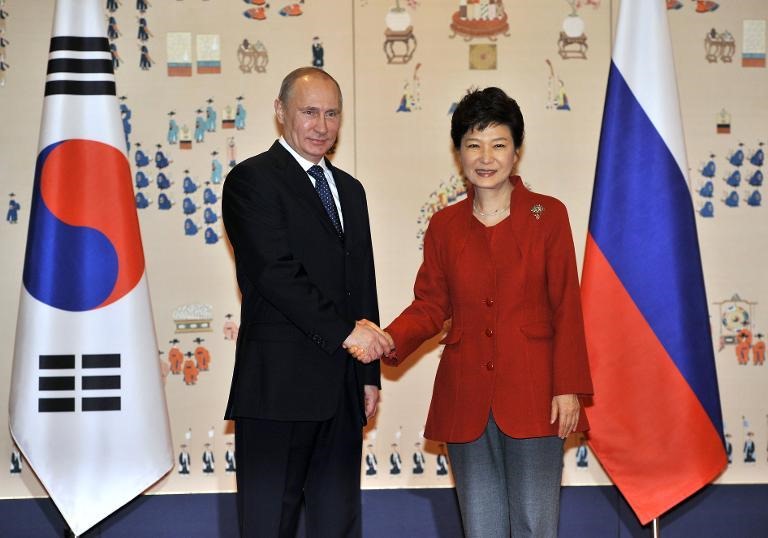
b00cacd510614f87ea3a79ff18f43d62f9ea1dd2I wrote a quick piece for Newsweek Korea this week on Vladimir Putin’s trip to South Korea. Find the Korean web version here. Below is the translation.

In brief, I argue that a relationship with Russia is good for South Korea. Because SK is both relatively small and encircled, its foreign policy is dominated by just a few states. The problem is that SK can’t/won’t reach out to NK or Japan, so it is basically stuck between the US and China. So pulling in the Russians is a nice way to get SK some room to maneuver in its tight neighborhood. That is sure to annoy the Americans, but if you’re a S Korean, it’s a wise choice. That is the real value of the trip for SK, while for Russia, it bolsters its fading Asian relevance. Also, while I think President Park has really blown it over Japan, this was a smart choice against the Chinese and the Americans – maybe the best thing she’s done on foreign policy yet.

If it seems like I’m emphasizing geopolitics over economics, that’s because I don’t buy this ‘New Silk Road’ bit – where SK and Russian traffic would move through a guaranteed rail/road corridor in NK – for one minute. Does anyone really believe NK will respect transit rights, giving up lucrative shake-down opportunities on the movement of fuel, goods, tourists, and so on? No way. Look at how Pyongyang uses Kaesong for whatever blackmail/hostage-taking purposes it has in mind. NK is a such a black hole for international norms, that SK and Russia might as well connect by a ‘chunnel’ before relying on NK respect for transit rights.

Continue reading

My November Diplomat Essay: China & Russia are Not Displacing the US bc of the Syria Deal

sep-3-2013-syria-s-leader-assad

This is a re-up of my monthly column for The Diplomat for November. Here is the original. I must say I don’t find the comments to be particularly helpful over there, so please give me your thoughts.

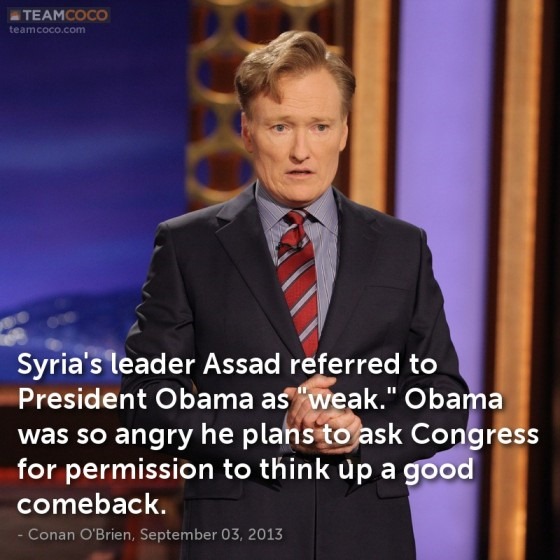
My primary argument is that the media is far too shallow in judging “US decline” on passing issues of minor relevance to the lineaments of American power. Remember two months ago, when Obama ‘had’ to act in Syria, even against Congress? That his very presidency was in peril, that American would be perceived as weak and lacking credibility? And now, no one is talking about that. Or then there was the idea that Obama missing APEC amounted to handing Asia to a bullying one-party state with a bad human rights record and no allies ‘rising China’? Good grief. Enough alarmism. Only the vanity of elites who think the very fate of the world hangs on their choices would lead one to believe that some missed meetings and airstrikes will change the balance of power. It won’t.

Always remember that Asian states need the US a lot more than the US needs them. US regional allies need us to hold back China, and even China needs us to buy all their exports and provide a savings safe haven. Sure, we benefit from cheap Asian exports and lending, but that’s a lot less important. The relationship is very asymmetric, and those who tell you otherwise are trying to cover the weakness of many Asian states and their desperation for US attention with bravado that America ‘needs’ Asia. That’s bunk. As I have been trying to argue on this blog for awhile, if they don’t want us in Asia, it’s no big deal for US security, and it’s an economic blow far worse for them than it is for us. And this is getting even more asymmetric as the US becomes energy independent because of fracking – so have fun fixing the Middle East, China! The US Founders identified the luxury of US distance from Eurasia long ago, so forgot all these hyperventilating Asian columnists (Kishore Mahbubani being the most obvious) who resent that America can be a lot more insouciant about Asia than vice versa. *natch Smile

Here’s that essay:

Continue reading

USC-CSIS Conference on Korean Unification (3): DPRK ‘Sovereignty’ is a Sino-Russian Fig-Leaf to Slow Unification and Check US Power

New_KSI_Banner_3

Here are part one and part two of this post. I spoke last Tuesday at a USC-CSIS conference on Korean unification. I learned a lot, and it was very good. If you’re interested in unification, start here with the primary report on which the conference was based. The principal investigators said a final wrap-up report will come at some point, and I’ll put up that link when it arrives.

My comments below are on the papers presented on Tuesday about neighboring states’ reactions to Korean unification. These papers aren’t publicly posted yet, so all the comments might not make sense. But in the interest of completism, I’m putting this up to round out my thinking on this excellent unification project. (For my earlier thoughts on dealing with NK, try this; for my travelogue of my trip to the DPRK, try this.)

My big beef with these sorts of conferences on NK – I go to a lot – is that inevitably outsiders, especially Chinese scholars, start laying down all sorts of guidelines, restrictions, parameters, etc. for unification, as if it’s our right to muck around in this thing. I can understand the national interest in doing so. But we shouldn’t have the temerity to try to legitimate our muddying of the waters in what is really an internal family affair. It would also help a lot if the Chinese would stop talking (not so much at this conference, but definitely at others I’ve gone to) about how Korea needs to respect its wishes, because China is big and important now, post-2008 Olympics. I heard one guy once even say that China is now the ‘veto-player’ on unification. That’s true of course in realist sense, but that sorta cockiness infuriates Koreans who’ve really soured on China in the last decade. I see the same kind of emergent Chinese bullying on unification that Southeast Asian littoral states see on the South China Sea. So I try to call that out whenever it seems necessary.

Anyway, here on my thoughts on Japan, Russia, and China’s role in this thing.