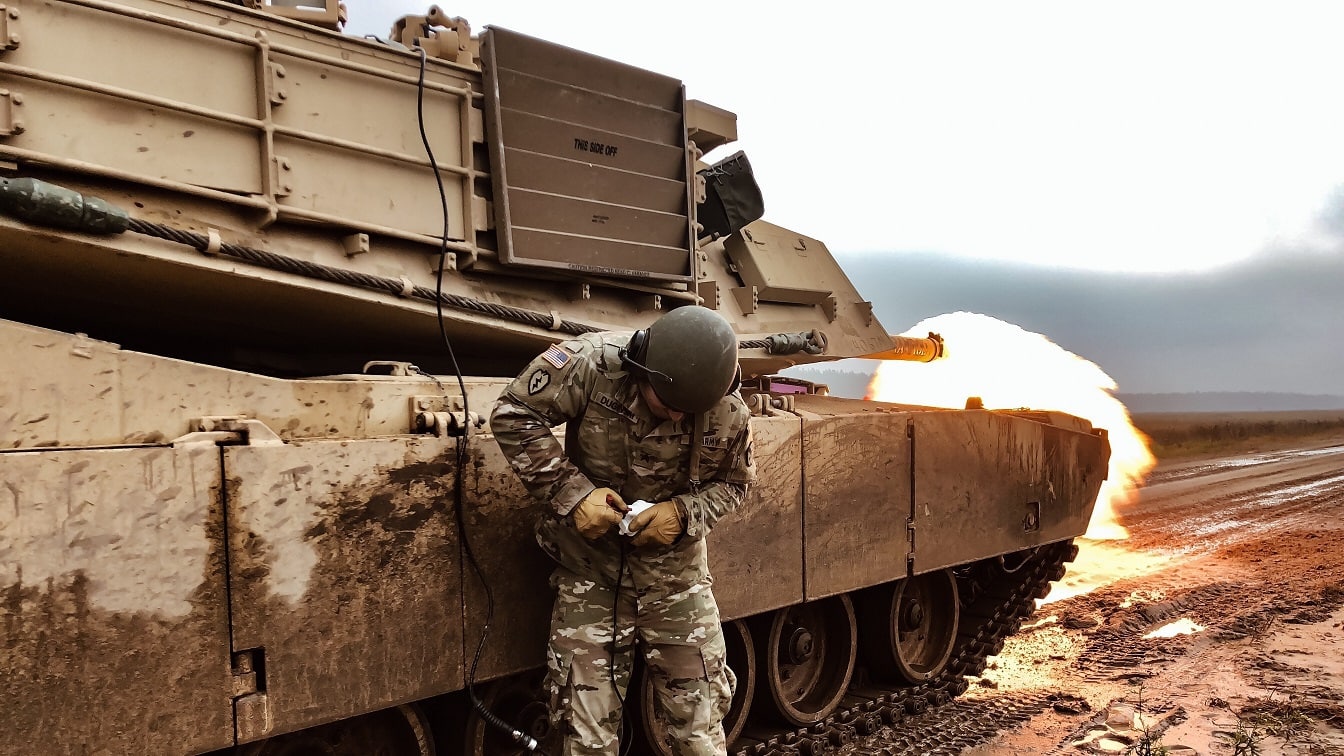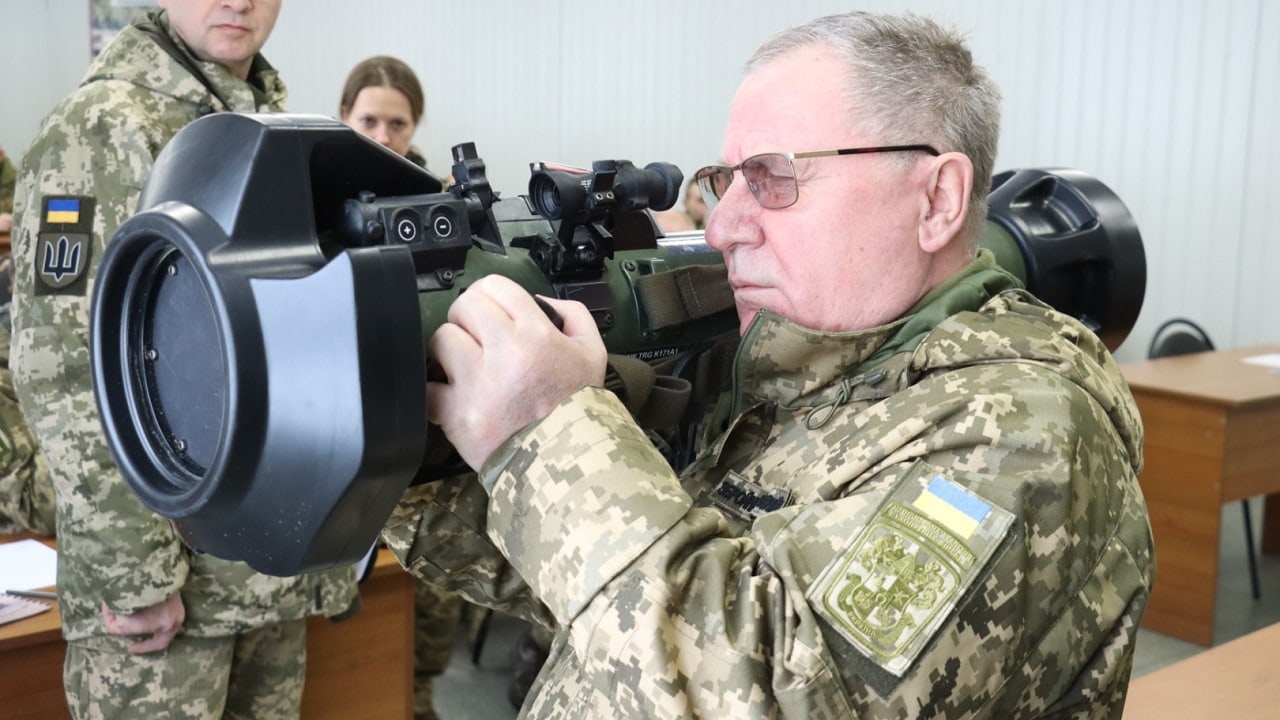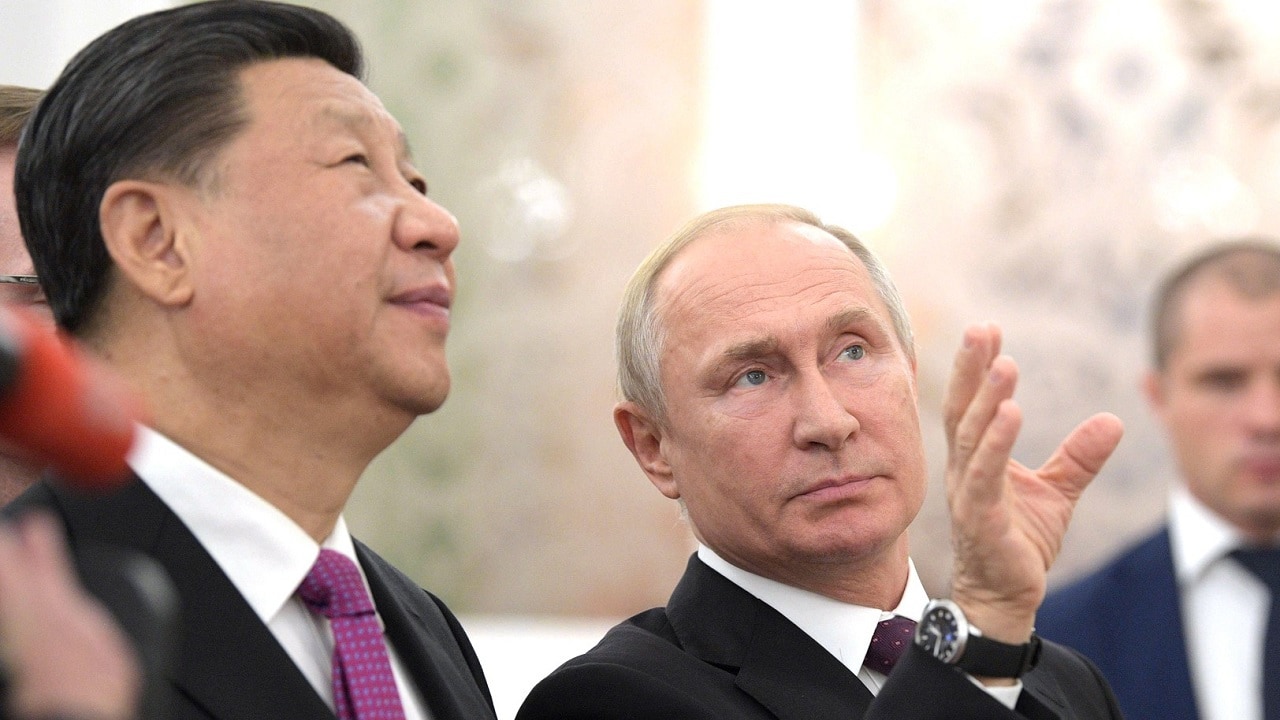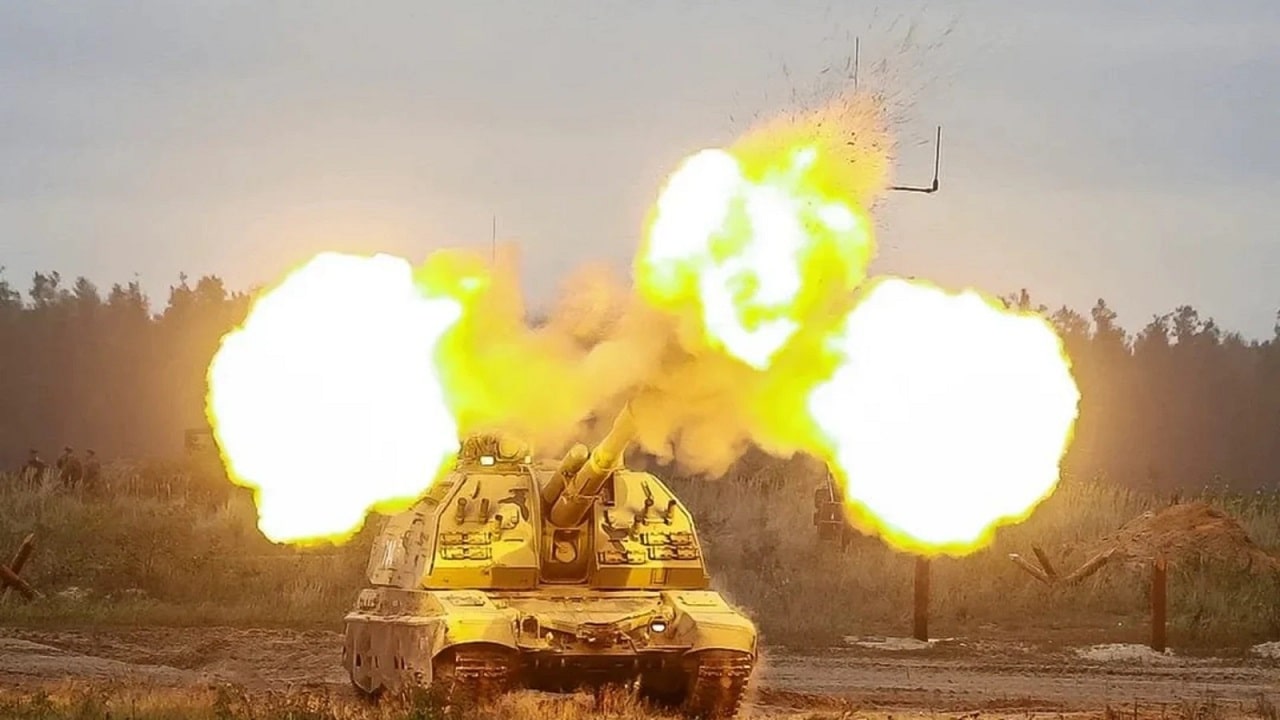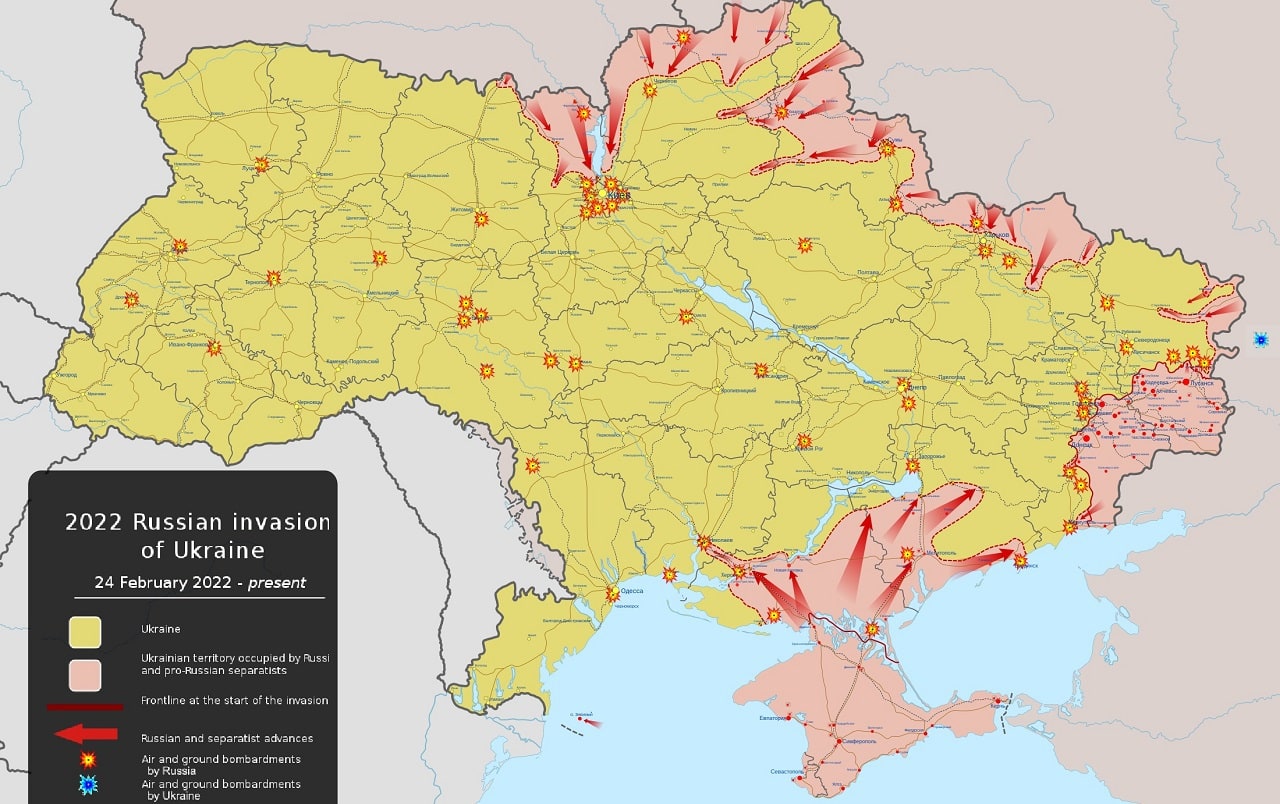
More on Sanctions against Russia: Yes, Sanctions are Blunt and Limited, but Our Options are Limited; a No-Fly Zone would be very Risky

SanctionsThis is a re-post of something I wrote recently at 1945.com on sanctioning Russia. It pulls from Twitter debates on Russian sanctions I’ve gotten tangled up in (here, here, here).

So everybody agrees that sanctions are a blunt tool. And everybody also agrees that sanctions don’t ‘work’ if you insist that they should achieve some enormous goal like pushing Russia out of Ukraine or denuclearizing North Korea. And it’s probably true that the US particularly overuses sanctions. And finally, it’s common to blame sanctions for humanitarian impacts (although I’d argue that’s more because of internal allocative decisions in the target states, but that’s a debate for another time).

So everybody agrees they kinda suck. So why do we do them? Because they are often a middle option between dovish diplomacy and the hawkish use of force:

Diplomacy is ideal, and in some cases like the Iran deal, it appears to have worked. Trump dumping that deal for sanctions was a mistake. But in tough cases like NK WMD or Russia’s invasion of Ukraine, diplomacy seems like too weak a response. NK has a long history of gaming talks to buy time to build its WMD, and it’s pretty clear in Ukraine that Russia is seeking a battlefield solution. So yes, let’s keep talking, but tougher cases probably require a bit of steel in the glove.

The use of force is too much steel in the glove though in most cases. An no-fly zone over Ukraine is a step toward NATO-Russian war, as just about everyone now grasps. Denuclearizing NK by force would likely start another war.

So yeah, sanctions are unsatisfying, but we wind up there, because other options are often worse. Here is that 1945 essay:

The Limits on Sanctions against Russia – The Russian invasion of Ukraine is bogging down. Russia’s poor tactical performance and severe logistical snarls have surprised much of the world, including Putin himself apparently. The Ukrainians are fighting better and harder than expected. Ukraine’s civilian population is rising up. We have all seen videos of regular Ukrainians yelling at Russian soldiers or making Molotov cocktails.

This war is not the blitzkrieg Putin hoped for. Ukraine will not consensually join a Russian sphere of influence. Resistance is widespread, and Russia will need to leave an occupation army for some time if it hopes to solidify its gains. Hence, even if the Ukrainian military is defeated on the battlefield – which is still probable –a Ukrainian insurgency seems likely.

Please read the rest here.

Reflexively Applying the 1938 Munich Analogy to Ukraine – and Every Other Conflict – Just Shows You Need to Read More History and Watch Less TV

MunichThis is a re-post of an essay I just wrote for 1945.com.

I find it intellectually exhausting how often we use WWII analogies to analyze military conflicts. Particularly Americans seem to be obsessed with re-playing 1938 and the Munich conference again and again, with a foreign opponent – communists, Saddam Hussein, Osama bin Laden, the Taliban, Putin – as Hitler and a ‘weak’ US president as Neville Chamberlain.

I have long suspected that the commonplace use of Munich is because:

a) Everybody knows some basic history of WWII, if only from the movies

b) Linking anything to the Nazis automatically raises the stakes and demands attention for your argument

c) the Munich Analogy abets laziness by Americanizing foreign conflicts. The entire discussion devolves into  a debate about whether the US president is weak/Chamberlain or strong/Churchill. So you don’t need to learn anything about the conflict, and all these reporters with no training in strategic studies can still talk about these conflicts like they know what they’re talking about.

But there are lots of conflicts out there which might serve as better models of the current Ukraine war, such as Soviet-Finnish War or the Soviet invasion of Afghanistan. So before you start in with the worn-out Hitler Channel WWII analogies, go read more.

Here’s the 1945.com essay:

The world is rallying around Ukraine in the war. Indeed, it is remarkable just how much the Ukrainian side has dominated the battle for global public opinion. Even Russian President Vladimir Putin, seemingly trapped in an autocrat’s information bubble, appears to realize that now. Because the war is so overtly aggressivetanks rolling across borders in Europe – the media’s analogies to Adolf Hitler’s aggressive war in Europe were probably inevitable.

Please read the rest here.

Ukraine: We Won’t Put Up a No-Fly Zone, but We do have Other Options: Sanctions, Weapons/Ammo Assistance, Humanitarian Aid, even Foreign Volunteers

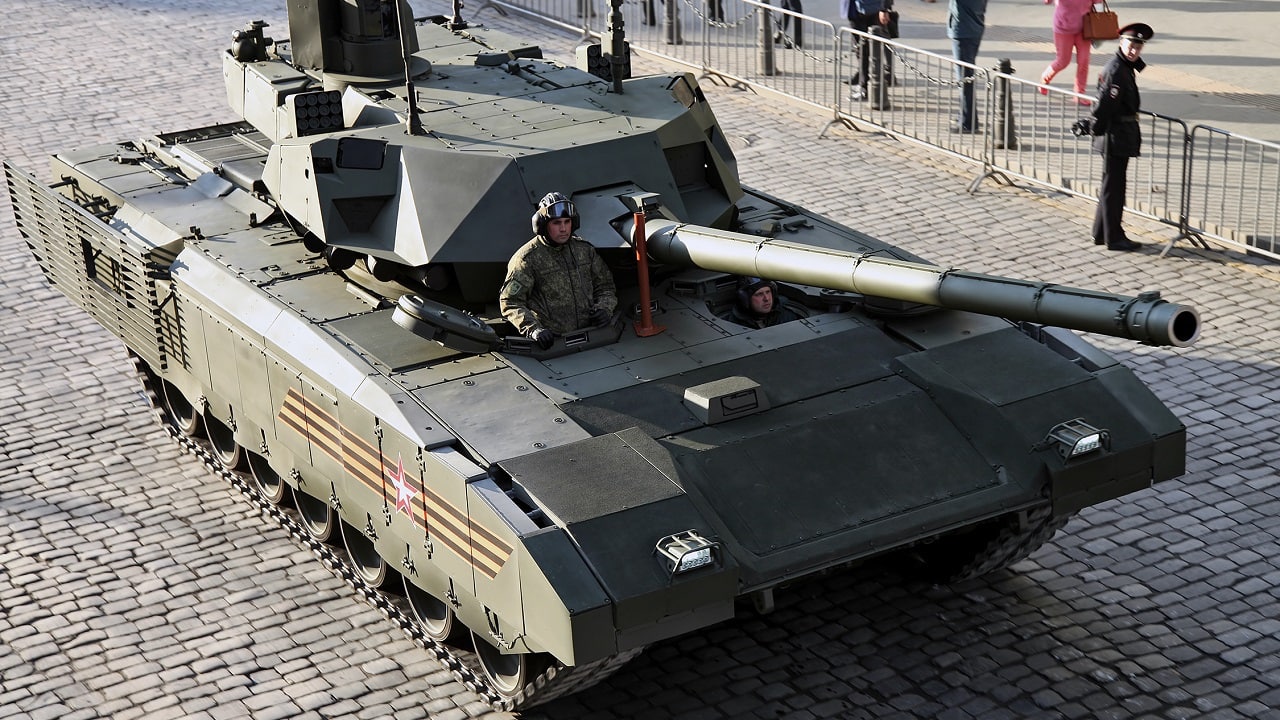
Russia T-80 TanksSorry for not posting for awhile. I have commented heavily on the war on Twitter. Please follow me there. I have also been writing a lot of columns on the war for 1945.com this week. Go here.

This post is a re-up of something I wrote for 1945 this week. Basically I argue that we should stop focusing on whether or not to establish a non-fly zone (NFZ). We are not going to do that. It is way to dangerous. I know the Ukrainians want an NFZ, and we want to help them, but risks of spiraling, kinetic exchanges between NATO and Russia are just too great.

Enforcing an NFZ would require NATO to shoot down Russian planes and helicopters, or at minimum target air defense on the ground. Russian operators would die. NATO pilots would too as the Russians shot back. Pressure would rise on both sides to respond elsewhere and with greater force. That escalation risk is scary. Both are nuclear-armed with large militaries. That constrains us.

Perhaps if the behavior of Russian forces in Ukraine really becomes terrible and extreme, we will reconsider. But that strikes me as a unlikely at the moment. Putin is a gangster, but he’s not Hitler. He also has a strategic interest in not levelling Ukraine and igniting an insurgency in response to occupier brutality.

I would also point out that NATO publics do not want to risk a war with Russia even if you do.

But we can, and are, sending lots of weapons, ammunition, and humanitarian aid, effectively funding and equipping the Ukrainian war effort as the Ukrainians themselves fight it. Sanctions will push up the price of the war for Russia. Even foreign volunteers are now going there.

Here’s that 1945 essay:

Ukraine’s resistance to Russia is genuinely heroic. People around the world have been moved by the inspiring imagery on social media. Ukrainian President Volodymyr Zelensky has become a global celebrity overnight. In this passionate moment, there have been widespread calls for the West to do more.

This is tempting of course. The NATO alliance sits right across the border. Ukraine borders three NATO members. That enormous convoy of Russian armored vehicles north of Kyiv is an attractive target, and Ukraine does not appear to have enough assets to strike it. Zelensky has asked for NATO to impose a no-fly zone over Ukraine. Strategically, this makes sense for the Ukrainians. Russian airpower substantially outguns the Ukrainian side. The incompetence displayed on the Russian side this week will likely slowly give way. The sheer weight of Russian power will likely be brought to bear in the coming month. Ukraine will still probably lose the conflict – even if the likelihood of that is lower than we thought last week.

Read the rest here.

Why Hasn’t the ‘Imminent’ Russian Invasion of Ukraine Happened? Likely bc Putin – and the Russian Military especially – Fear a Quagmire, Worsened by Decades of Putin’s Own Misrule

UkraineThis is a re-post of an essay I recently wrote for 1945.com. Putin still hasn’t pulled the trigger on a Ukraine invasion, almost two months into this ‘imminent’ crisis. That increasingly prompts the question, why? What’s the delay?

The answer, I bet, is that Russia just can’t afford a quagmire war like it (barely) could in the 1980s in Afghanistan, in great part because of how badly Putin himself has misgoverned the country. To stay in power, he has run down Russian power, turning the country into a hugely corrupt, stagnant petro-dictatorship.

A country like that just can’t handle the stresses or costs of a ‘forever war.’ Stupid, unwinnable wars are expensive and generate lots of domestic stress. The US struggled to contain the dislocations generated by the Vietnam, Iraq, and Afghanistan Wars. The USSR’s disastrous counter-insurgency in Afghanistan in the 1980s helped brought the country down. Putin – with far less national power at his disposal, ironically because of his own catastrophic misrule of Russia – now faces a war which could shake his regime at home if it turns into a quagmire.

To be sure, it still seems like Putin will invade. If I had to guess, he will. Staging all those force in the cold is costing him a fortune. If he backs down know, he’ll think he looks like a wimp. And Putin loves macho posturing, so he’ll probably just invade to prove what a tough guy he is after getting trolled so much by the Biden administration.

But since he is still shilly-shallying, I’d say he is starting to realize that an invasion would a huge disaster for Russia. It does have the size and weight anymore for even a limited operation like this. That’s Gangster Putin’s own fault and a delicious irony we should all enjoy.

Here’s that 1945.com essay:

A Russian invasion of Ukraine has appeared imminent for almost two months now. Yet it has not happened, and the window for it is closing. When the spring rains hit in the next month or so, maneuver warfare on the Eurasian plain will be substantially harder. Armored and tracked vehicles will struggle in the mud. Also, maintaining a large force in staging locations at high readiness is expensive, especially in the cold. Russian troops must be fed and housed in the field in temporary facilities at cost. In short, if Russian President Vladimir Putin wants to invade Ukraine, it must be soon. And yet he has not.

Read the rest here.

If the EU Steps Up (which it won’t), then Ukraine Need Not Undermine the US Pivot to Asia

ChinaThis is a re-post of an essay I wrote for 1945.com a few days ago. My argument is an expansion of what I complained about a few days ago: Europe, not the US, should be leading on Ukraine.

Yes, the US can do it, but that Europe can’t take care of security issues of medium-range right on its own doorstep is just embarrassing. It raises the obvious opportunity cost that deeper US involvement in Europe undercuts the pivot.

I am little skeptical of this overrating this fear, as I say in the essay, because the US spends so much on national security – the Defense Department budget, plus all the other defense spending we don’t run through DoD in order to make its budget look smaller than it actually is. That aggregate number is around 1 trillion USD, which should be enough to confront both Russia and China (especially given Russian weakness), except for open war with both simultaneously.

So we shouldn’t get carried away that Ukraine will stop the American re-balance against China. Biden is pretty clearly avoiding a major commitment to Ukraine to prevent this outcome.

But still, it is long overdue for the Europeans to get organized on common defense, especially when they complain about the US ignoring their opinions on issues like Iraq or Afghanistan. That’s what happens when you don’t spend on defense and implicitly expect the Americans to do the heavy lifting.

In fact, the an ideal world would be an integrated European Union defense identity which acted as a second liberal superpower, confronting Russia and Islamic radicalism in its region, while the US confronted China. What a huge advancement of liberal and democratic values that would be! But that’s decades away if ever…

Anyway, here is that 1945 essay:

As the Ukraine crisis heats up, its impact on the US effort to re-balance to Asia, specifically against China, has arisen. The consensus is that, for the most part, a renewed US focus on European security will pull US resources and policy-maker attention away from Asia and back toward Europe. In a similar manner, the US has hitherto struggled to focus on East Asia, as China took off in the last two decades, because of the war on terror. Yet China is of far greater import to the US in the coming decades than either Eastern Europe or the greater Middle East. On that, there is near consensus in the foreign policy community now.

The rest is available here.

Yes, Ukraine is a Crisis, but Mostly Limited to Eastern Europe and EU Ineffectiveness; Don’t Read it onto East Asia

UkraineThis is a re-up of a column I wrote for 1945.com recently. I find the hyperbole in Western media on Ukraine exhausting. As with the Afghanistan withdrawal commentary last August, the usual suspects of blob neocons and hyperventilating journalists are going bananas that nothing less than world order is on the line in Ukraine! Did you know we even have to fight a war with Russia? Did you know that war has been ‘imminent’ for, um, the last six weeks? *sigh*

All this is wrong, just like it was wrong last summer when the ‘it’s always the 1930s!’ crowd engaged in the same histrionics over Biden’s Afghan withdrawal. Here are two Twitter threads by me – on Ukraine and Afghanistan – about the neocon-blob-industrial complex’ impulse to read every challenge to the US everywhere in the most apocalyptic terms possible.

So yes, Ukraine is a crisis, but a limited one. It’s not going to bring down NATO or the EU or democracy and so on. And no, it’s not going to encourage China to attack Taiwan. Deterrence doesn’t work that way. It’s far more nuanced and local than whether or not a US president is seen as ‘strong’ or ‘weak,’ which is such a flexible, subjective criterion anyway, that it is analytically pretty useless. Not everything is about the US president’s reputation for toughness, and that US analysts so often come back to this point just shows you their parochialism: they don’t know much about the rest of the world so they read everything through the US politics lens they know. Bleh.

The real geopolitical take-away from the Ukraine mess is – besides the obvious looming  catastrophe for Ukraine and, somewhat also, for Russia – is the pathetic impotence of the Europeans on their own security even on their doorstep. Good grief. Anytime the Europeans want to step up and take responsibility for their own affairs would be great. Paul Poast and I have a piece coming in Foreign Affairs about US allies’ free-riding, and Ukraine is illustrating our argument every day.

Anyway, here is that 1945 essay:

Ukraine is a serious, but limited, crisis. For the Ukrainians living near Russia’s potential invasion points, the possibility of serious violence looms. And for Ukraine’s fledgling, unsteady democracy, such an invasion would be a disaster. Even Russia grey zone warfare – a mixed attempt at subversion and bullying without opening invading the country – would be terrible. It would set Ukrainian democracy back a decade or more, corrupt the government, and likely split the country. Russia clearly has the ability to enforce its will on Ukraine in the short-term, and there is little the West can do about it barring the risk of major escalation.

Read the rest here.

The Ukraine Mess is about Putin’s Post-Imperial Hangover, Not NATO Expansion, ‘Weak’ Biden, etc…

RussiaThis is a re-up of an essay I wrote recently for 1945.com about Ukraine. I say badly what Cheryl Rofer and Francis Fukuyama say much better than me, namely that:

Russia would probably not have respected Eastern European sovereignty had NATO not expanded, so it is a red herring to blame NATO expansion for Putin’s current bullying of Ukraine. Realists and restrainers have been arguing this for a while, including Stephen Walt who summarizes it all nicely here:

Had the United States and its European allies not succumbed to hubris, wishful thinking, and liberal idealism and relied instead on realism’s core insights, the present crisis would not have occurred. Indeed, Russia would probably never have seized Crimea, and Ukraine would be safer today. The world is paying a high price for relying on a flawed theory of world politics.

The idea that Russia wouldn’t be bullying Ukraine without NATO expansion turns on two highly contestable ‘realist’ assumptions, it seems to me:

1. It somehow was a ‘liberal illusion’ (Walt) to pull Eastern Europe into NATO when we had the chance.

Wait, isn’t it also realist to grab a power advantage when one has the chance? Why is it liberal fluffery to bring a huge swathe of sympathetic states into the Western community, improving Western power, when given the chance? Realists say the West took advantage of Russian weakness to expand NATO, as if realist paradigmatic priors of perilous, self-help anarchy suggest we should have left Eastern Europe unaligned. But that’s wrong; realism says the opposite: we should have – and did – screw the Russians when we had the chance, because, hey, anarchy is a tough, dog-eat-dog world and grabbing a big advantage at low cost (Russia was weak and the threat of conflict was low) is exactly what egoistic states do. (I dislike this argument myself. I supported expansion for more liberal reasons, because the Eastern European states so obviously wanted to join. My point rather, is it’s hardly ‘realist’ to pass over a huge, possibly one-time, opportunity to improve Western power.)

2. Russian behavior toward Eastern Europe would be more restrained, more liberal, and less neo-imperial had NATO not expanded.

Does anyone really believe this? Consider Russia’s long history of dominating and bullying its ‘near-abroad’ neighbors. Consider Putin’s obviously revanchist temperament and huge, chip-on-his-shoulder imperial hangover. He clearly misses the Soviet Union and its influence in the world and insatiably craves the perception of parity with the US. I suppose it’s possible Putin would have behaved better, but I’d say the counterfactual that he’d be bullying non-aligned Poland or the Baltics right now – with Ukraine already subverted and controlled – is just as credible if not more.

Anyway, here’s that 1945 essay:

A Russian invasion of Ukraine would be a disaster for Russia. It would obviously also be a disaster for the Ukrainian population, but geopolitically it is hard to see how Russian President Vladimir Putin would escape either the international isolation which would ensue, or win the war itself with manageable costs.

Read the rest here.

The Inter-Korean Stand-Off Needs Political Resolutions, Not ‘Peace’

U.S.-South Korea AllianceThis is a re-up of an essay I wrote a few weeks ago at 1945.com on the debate over an ‘end of war’ declaration in Korea. The debate has passed, but it was pretty hot in December and January, when Moon was pushing pretty hard for it.

My big concern about the end-of-war declaration was that no really knew what it means. If it were a treaty, it would be called a treaty and would be binding. But since it is not, would it be binding? No one really knows.

It is highly unlikely that North Korea would alter its behavior because of it, so I think the drive behind was: A) Moon’s desire for some kind of legacy after 5 years of hyperbolic but failed diplomacy with the North, and B) grounds for the activist left in South Korea to say that the US and UN should leave South Korea and that UN sanctions should be rolled back

If the South Koreans want us to leave, then of course we should. But I wish Moon’s coalition were more honest about why they sought this thing. The Biden administration dragged its feet until Moon finally dropped it. It is painfully obvious that Biden does not trust Moon after he played Trump (to meet Kim by suggesting he’d win a Nobel) and is just waiting for the next POTROK.

Here’s that essay:

As the presidency of Moon Jae-In in South Korea winds down, Moon has pushed hard for an ‘end of war declaration’ (EoW) over the still legally unfinished Korean War. Last week, I argued in this magazine that this declaration is curious approach. The inter-Korean armistice is pretty stable, and when it is broken, it is North Korea which does the breaking through its frequent border provocations. Also, legally, no one really knows what this declaration would do. A treaty is the well-established tool for ending wars; an EoW declaration is a diplomatic neologism. It is not clear if this declaration is intended to replace the armistice or a potential treaty, or supplement them in some unknown way. Or perhaps it is just symbolism.

For the rest, do here please.

Getting Back to Updating My Website Here – Sorry – Here’s a Piece on Why the Proposed Korean ‘End of War’ Declaration is Kinda Pointless

I neglected my website here in the second half of 2021. Sorry. I was really busy rushing three articles into submission before the end of the year. Two got accepted, at:

Foreign Affairs (with a friend), on US alliances and the ostensible damage Trump did to them, which actually didn’t happen, because no US ally bolted or even hedged the US, because they’re just unwilling to absorb the domestic adjustment costs of really de-linking from the US even if Trump is a total jerk to them,

Korean Observer, on North Korea sanctions and why they are a good idea even though everyone hates them apparently at the conferences in South Korea.

These are scheduled for publication in the Q1 and Q2 journal volumes respectively. I’ll post the original, pre-edited versions so that my/full ideas are out there, but probably not till after the published version has been out for awhile.

On this site, I will try to start posting more, with links to my op-eds and other writings. I will also update the ‘What I am Reading’ section to keep better track of what I think readers ought to read themselves.

I started writing for 1945.com last month, so a lot of these posts will be of the short essays I write for them.

Finally, I find myself ‘micro-blogging’ at Twitter more than using this website. So please follow me there if you are interested in a more regular stream of my thoughts on northeast Asian security and US politics.

So my first piece for 1945, from a month ago, was on the ridiculous ‘end of war’ declaration idea floated by the Moon administration. Moon pushed hard for it last year, but nothing came of it, and it’s faded away. Why? Because no one what it was since it was not a treaty. Would it bind North Korea? Would Pyongyang stop its long history of provocations along the inter-Korean border if the US and SK signed it? Would NK cap its WMD programs or retrench the KPA from the DMZ? Of course not. So why would we sign it?

Anyway, here it is:

As South Korean President Moon Jae In enters the final months of his presidency, he has pushed hard for an ‘end of war declaration’ (EoW), ostensibly to conclude the legally unfinished Korean War (1950-53). There has been extensive discussion of this idea, including at thismagazine. ‘EoW declaration’ is a curious locution – in Korean too (종전선언) – because wars traditionally end with a treaty (also a different word in Korean – 조약). The Korean War was paused in mid-1953 by an armistice. That armistice has never been upgraded to a treaty. It is unclear if Moon’s declaration is supposed to replace that armistice, supplement it, be a ‘semi-treaty’ of some sort, or is just symbolic.

For the rest, go here, please.