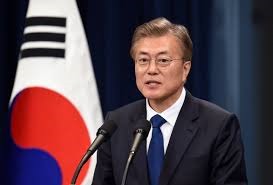
If South Korea Wants a Cold War with Japan, Trump Won’t Stop It

shutterstock_1042795348This is a re-post of an essay I wrote a few weeks ago for the Lowy Institute. I am also happy to say that I was translated into Japanese, here.

So everyone knows that South Korea and Japan are having another spat – this time over compensation of Korean forced labor during the Imperial period. Korean courts have opened the door for lawsuits, while Japan continues to insist that all such claims were resolved at the time of normalization treaty. Korean officials I’ve talked with tell me that there is nothing the government can do. This is coming from the courts. I find that highly unlikely given the extreme presidentialization of the South Korean constitutional order and regular POTROK flouting of checks-and-balances.

But my concern here is that the  South Korean push on Japan on yet another issue will not lead to pushback. Trump doesn’t care about this stuff. He’s racist, dislikes allies, and gets most animated when telling them to pay more. SK conservatives, who have traditionally slowed the march to a precipice with Japan, are out of power. And Abe is burned out on this issue (‘Korea fatigue’).

So if the South Korean left genuinely wants a breach with Japan, and a slide into a cold war over Dokdo/Takeshima, Sea of Japan/East Sea, comfort women, labor reparations, and so on, then they’ll get it this time. This is very worrisome, but also a ‘useful’ social science natural experiment moment: we will learn just how far the South Korean left is willing to go on Japan, because the traditional brakes are not there this time.

The full essay follows the jump…

Continue reading →

Annihilation without Representation: Do S Korea & Japan have a Veto over Action against N Korea?

ct-trump-mexico-phone-call-20170201

This is a local re-post of an essay I wrote for The National Interest this month. The TNI editors gave it the very helpful title, “The True Danger of the North Korea Crisis: It Could Cost American Its Allies.” That is exactly right. If the US strikes North Korea without getting the consent of South Korea and Japan, they will exit the alliance. Why stay when your ally jeopardizes potentially millions of your citizens and doesn’t even get your permission? And this would have a huge demonstration effect on other US allies too. Now you know that Trump thinks you’re expendable. Why would you stay?

So to me, that is the big question going forward: Will Trump even bother to call the South Koreans and Japanese before he strikes? He couldn’t be bothered to appoint an ambassador to South Korea, and presidenting is pretty hard. So hey, why bother? Fox and Friends is on…

The full essay is below the jump:

Bombing North Korea would be a War of Choice

Image result for north korea airstrike

This essay is a re-post of a piece I wrote earlier this month for The National Interest. It is an extension of the arguments a made earlier in the month, that North Korea is not in fact an existential threat to the United States. And that wonderfully scary photo is courtesy, naturally, of the Chosun Ilbo.

In brief, my argument is that the US has the ability to survive a North Korean nuclear attack, and therefore, we do not need to threat-inflate North Korea into some state-breaking threat to the United States. It is not. North Korea is dangerous enough without scaring the crap out of people unnecessarily. Killing a lot of Americans is not the same thing as bringing down the Constitution, and too many Trump officials are eliding that critical distinction. Strategic bombing has yet to bring down a country, and there is no reason to think the US is different. We do not need to bomb North Korea because it is on the cusp of destroying the American way of life. It could not do that even if it wanted to, which it does not. So an air campaign would still be a war of choice, no matter how much fire-breathing rhetoric you hear from Trump, Dan Coats, or Bolton.

The full essay follows the jump.

US-South Korea Alliance Survived Presidential Partisan Differences Before

download

This is a local re-post of an op-ed I wrote this month for The National Interest. There’s been a minor freak-out on the right since Moon Jae In got elected. He’s a communist; he’s gonna sell out SK to Pyongyang; the alliance with America might break. Good grief. Enough with the hyperventilating. Even if he was a communist at heart, he couldn’t govern that way because he only won 41% of the vote. He doesn’t have the political space to govern as some far lefty. And realistically, he’s just a social democrat: he wants to raises taxes, expand the public sector labor force, and clean up the air. That’s hardly a marxist revolution.

I do think that there is a possibility of a real split at the top though. It is easy to see Trump and Moon loathing one another. So this essay notes how previous US and SK presidents of different political beliefs stumbled through. The short version is that there is a lot of depth to the US-SK alliance. So much actually, that it almost makes presidential changes irrelevant, which is not exactly democratic if you think about it. But the point is, that the alliance will likely survive.

The full essay follows the jump:

Continue reading →

Does Secretary of Defense Mattis Speak for President Trump, and Co-President Bannon?

Image result for bannon trump

This is a local re-post of an essay I wrote for the Lowy Institute earlier this month on US Secretary of Defense James Mattis’ trip to Japan and South Korea. It was your fairly typical meet-the-allies thing, but under Trump nothing is what it seems. In brief my argument is, why would US allies listen to SecDef when the president is this erratic and impressionable? What really matters, especially if Michael Flynn is on the way out, is what Steve Bannon, Trump’s very own Dr. Strangelove, thinks. Creepy. I still can’t believe this guy is POTUS.

The full essay follows the jump:

Continue reading →

Obama did about as well in E Asia as could be Expected: One Last Defense of Strategic Patience

I know the only thing people want to talk about now is Trump, but here is a parting review of Obama in Asia. I wrote this a few weeks ago for the Lowy Institute. All in all, I’d say he did about as well as you could expect.

Yes, he didn’t prevent North Korea from getting a nuclear weapon and missile, but no one knows how to do that barring kinetic action which is off the table because of South Korea’s ridiculous decision to place its capital, and allow it to flourish, just 30 miles from the border. And no he didn’t slow China’s rise, but no president could do that without kinetic action either. And that’s even crazier than bombing North Korea.

There are no good solutions to our challenges out here, just as there were none to communist power in the 1950s. Hawks calling for ‘toughness’ and ‘leadership’ should remember that rollback was a catastrophe (in the Korean War) that almost ignited WWIII. We then settled for ‘hanging tough’ until communist power imploded, which it did. The contemporary Asian analogue of hanging tough is Obama’s ‘strategic patience.’ Everyone criticized it, but no one has a better option that isn’t hugely risky. So stop complaining about strategic patience until you’ve got a better, genuinely workable idea.

The full essay follows the jump.

Continue reading →

Restraint and Burden-Sharing to Revive US Alliances, not Tear Them Down

Image result for restraint

This is a local re-post of an essay I published with The National Interest last month.

My concern is to separate the idea of greater US caution and self-discipline overseas from faux-complaint that this is ‘isolationism.’ Just because the US is more cautious in its use of force, or more demanding of its allies, doesn’t mean the US is abandoning them. Indeed, pushing them to do more, spend more, think more strategically about their own security is a way to revive US alliances, to make the US alliance framework less unipolar, richer. and more fully capable. I don’t see why this is so often derided as isolationism

Will Trump do this? Probably not. For a moment there, it seemed like he might embrace a foreign policy of restraint, but his hawkish cabinet picks and proposed DoD build-up suggest that is unlikely.

The full essay follows the jump.

Continue reading →

Year in Review, 2016: Top 5 Events of Northeast Asian Security

Image result for trump abe

If that thrilling post title doesn’t pull you away from It’s a Wonderful Life or Sound of Music, I don’t know what will.

This essay is a local re-post of my op-ed posted with the Lowy Institute this month. The pic is President-Elect Donald Trump in his first meeting with Japanese Prime Minister Shinzo Abe. It well captures what a banana republic amateur hour set will be running the US shortly, which makes Trump the number one Asian security story of the year. That is Trump with his daughter and son-in-law business partners, but no US-side translator or Japan expert, because heh, what really matters is getting Trump Tower Tokyo built…

My top 5 security events for the region in 2016 follow the jump, but honestly you’re probably a lot more interested in my picks for the worst TV show and movie of the year.

Continue reading →

US Election and Northeast Asia: Clinton’s Status Quo vs. the Great Orange Unknown

Image result for debate

This re-posts an essay I published today at the Lowy Institute. I tried to sketch a few possible futures for northeast Asia with these two candidates.

Basically it seems to me that Clinton is offering the status quo, which is intuitively attractive to Asian elites, while Trump offers who-knows-what. It is fairly established then that Asia’s democracies want Clinton to win, while its non-democracies want Trump, although honestly, I wonder if the Chinese might be having second thought given how much Trump seems to be itching for a trade war.

Trump is the interesting variable here, and his trade policies are the big unknown. Unraveling America’s alliances out here would be really hard. I doubt Trump has the stamina, focus, and attention to bureaucratic detail to tackle that. But on trade, he would enjoy a lot more sympathy, and he could really change (ie, wreak havoc) on US trade relations with Asia is he wants.

I’m just scratching the surface in this short essay. If you really want a deep dive, go to the Peterson Institute for International Economics’ blog on North Korea, which has provided a lot of such coverage in greater detail than I provide here. Go to the bottom of this post for extended commentary from Stephen Haggard and Marcus Noland.

My essay follow the jump.

Continue reading →

“The Curious Love-Hate Relationship between China and North Korea”

The following is a re-up of my monthly post for the Lowy Interpreter for June. The original is here.

The fissure between North Korea and China is widely noted, and Kim Jong Il supposedly told Madeleine Albright when she visited Pyongyang in 2000 that he’d rather have a deal with the US than with China.

That’s somewhat understandable actually. The US is too far away, both geographically and culturally to really dominate North Korea if the two managed to strike a deal. But dealing with China – right next door, bullying, opportunistic – must be tough. There’s nothing Beijing would like more than for North Korea to be like East Germany: a completely dependent, completely controlled satellite. So the North Korean nuclear program is a great idea: even as North Korea becomes an economic semi-colony of China, the nukes can prevent the loss of political sovereignty.

The full essay follows the jump.