If the EU Steps Up (which it won’t), then Ukraine Need Not Undermine the US Pivot to Asia

ChinaThis is a re-post of an essay I wrote for 1945.com a few days ago. My argument is an expansion of what I complained about a few days ago: Europe, not the US, should be leading on Ukraine.

Yes, the US can do it, but that Europe can’t take care of security issues of medium-range right on its own doorstep is just embarrassing. It raises the obvious opportunity cost that deeper US involvement in Europe undercuts the pivot.

I am little skeptical of this overrating this fear, as I say in the essay, because the US spends so much on national security – the Defense Department budget, plus all the other defense spending we don’t run through DoD in order to make its budget look smaller than it actually is. That aggregate number is around 1 trillion USD, which should be enough to confront both Russia and China (especially given Russian weakness), except for open war with both simultaneously.

So we shouldn’t get carried away that Ukraine will stop the American re-balance against China. Biden is pretty clearly avoiding a major commitment to Ukraine to prevent this outcome.

But still, it is long overdue for the Europeans to get organized on common defense, especially when they complain about the US ignoring their opinions on issues like Iraq or Afghanistan. That’s what happens when you don’t spend on defense and implicitly expect the Americans to do the heavy lifting.

In fact, the an ideal world would be an integrated European Union defense identity which acted as a second liberal superpower, confronting Russia and Islamic radicalism in its region, while the US confronted China. What a huge advancement of liberal and democratic values that would be! But that’s decades away if ever…

Anyway, here is that 1945 essay:

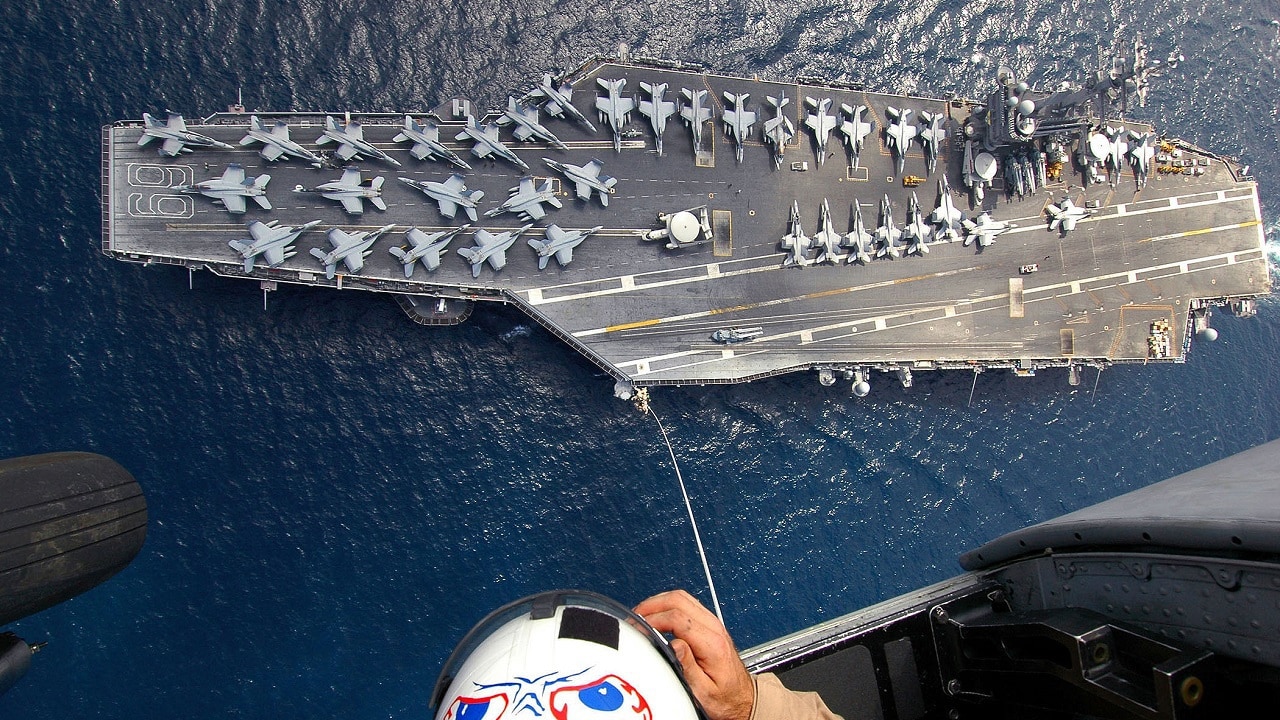
As the Ukraine crisis heats up, its impact on the US effort to re-balance to Asia, specifically against China, has arisen. The consensus is that, for the most part, a renewed US focus on European security will pull US resources and policy-maker attention away from Asia and back toward Europe. In a similar manner, the US has hitherto struggled to focus on East Asia, as China took off in the last two decades, because of the war on terror. Yet China is of far greater import to the US in the coming decades than either Eastern Europe or the greater Middle East. On that, there is near consensus in the foreign policy community now.

The rest is available here.

Yes, Ukraine is a Crisis, but Mostly Limited to Eastern Europe and EU Ineffectiveness; Don’t Read it onto East Asia

UkraineThis is a re-up of a column I wrote for 1945.com recently. I find the hyperbole in Western media on Ukraine exhausting. As with the Afghanistan withdrawal commentary last August, the usual suspects of blob neocons and hyperventilating journalists are going bananas that nothing less than world order is on the line in Ukraine! Did you know we even have to fight a war with Russia? Did you know that war has been ‘imminent’ for, um, the last six weeks? *sigh*

All this is wrong, just like it was wrong last summer when the ‘it’s always the 1930s!’ crowd engaged in the same histrionics over Biden’s Afghan withdrawal. Here are two Twitter threads by me – on Ukraine and Afghanistan – about the neocon-blob-industrial complex’ impulse to read every challenge to the US everywhere in the most apocalyptic terms possible.

So yes, Ukraine is a crisis, but a limited one. It’s not going to bring down NATO or the EU or democracy and so on. And no, it’s not going to encourage China to attack Taiwan. Deterrence doesn’t work that way. It’s far more nuanced and local than whether or not a US president is seen as ‘strong’ or ‘weak,’ which is such a flexible, subjective criterion anyway, that it is analytically pretty useless. Not everything is about the US president’s reputation for toughness, and that US analysts so often come back to this point just shows you their parochialism: they don’t know much about the rest of the world so they read everything through the US politics lens they know. Bleh.

The real geopolitical take-away from the Ukraine mess is – besides the obvious looming  catastrophe for Ukraine and, somewhat also, for Russia – is the pathetic impotence of the Europeans on their own security even on their doorstep. Good grief. Anytime the Europeans want to step up and take responsibility for their own affairs would be great. Paul Poast and I have a piece coming in Foreign Affairs about US allies’ free-riding, and Ukraine is illustrating our argument every day.

Anyway, here is that 1945 essay:

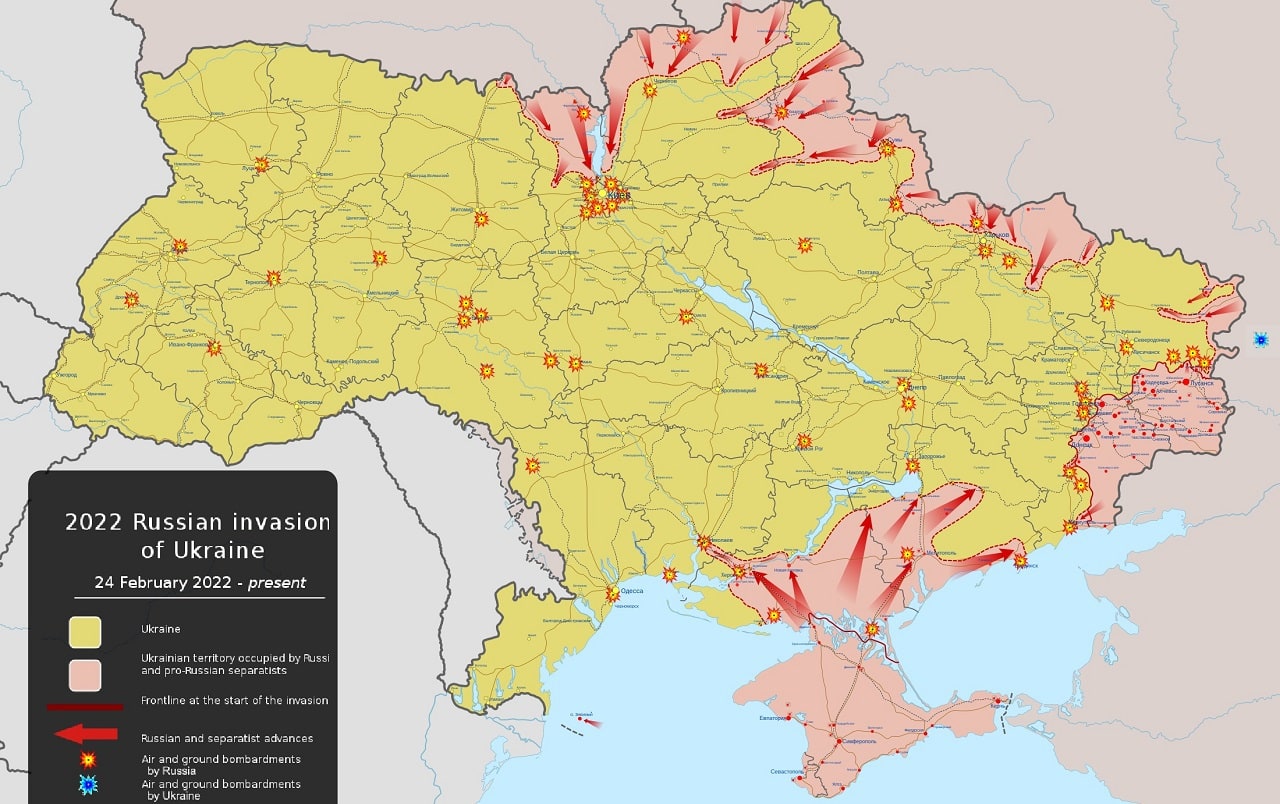
Ukraine is a serious, but limited, crisis. For the Ukrainians living near Russia’s potential invasion points, the possibility of serious violence looms. And for Ukraine’s fledgling, unsteady democracy, such an invasion would be a disaster. Even Russia grey zone warfare – a mixed attempt at subversion and bullying without opening invading the country – would be terrible. It would set Ukrainian democracy back a decade or more, corrupt the government, and likely split the country. Russia clearly has the ability to enforce its will on Ukraine in the short-term, and there is little the West can do about it barring the risk of major escalation.

Read the rest here.

The Ukraine Mess is about Putin’s Post-Imperial Hangover, Not NATO Expansion, ‘Weak’ Biden, etc…

RussiaThis is a re-up of an essay I wrote recently for 1945.com about Ukraine. I say badly what Cheryl Rofer and Francis Fukuyama say much better than me, namely that:

Russia would probably not have respected Eastern European sovereignty had NATO not expanded, so it is a red herring to blame NATO expansion for Putin’s current bullying of Ukraine. Realists and restrainers have been arguing this for a while, including Stephen Walt who summarizes it all nicely here:

Had the United States and its European allies not succumbed to hubris, wishful thinking, and liberal idealism and relied instead on realism’s core insights, the present crisis would not have occurred. Indeed, Russia would probably never have seized Crimea, and Ukraine would be safer today. The world is paying a high price for relying on a flawed theory of world politics.

The idea that Russia wouldn’t be bullying Ukraine without NATO expansion turns on two highly contestable ‘realist’ assumptions, it seems to me:

1. It somehow was a ‘liberal illusion’ (Walt) to pull Eastern Europe into NATO when we had the chance.

Wait, isn’t it also realist to grab a power advantage when one has the chance? Why is it liberal fluffery to bring a huge swathe of sympathetic states into the Western community, improving Western power, when given the chance? Realists say the West took advantage of Russian weakness to expand NATO, as if realist paradigmatic priors of perilous, self-help anarchy suggest we should have left Eastern Europe unaligned. But that’s wrong; realism says the opposite: we should have – and did – screw the Russians when we had the chance, because, hey, anarchy is a tough, dog-eat-dog world and grabbing a big advantage at low cost (Russia was weak and the threat of conflict was low) is exactly what egoistic states do. (I dislike this argument myself. I supported expansion for more liberal reasons, because the Eastern European states so obviously wanted to join. My point rather, is it’s hardly ‘realist’ to pass over a huge, possibly one-time, opportunity to improve Western power.)

2. Russian behavior toward Eastern Europe would be more restrained, more liberal, and less neo-imperial had NATO not expanded.

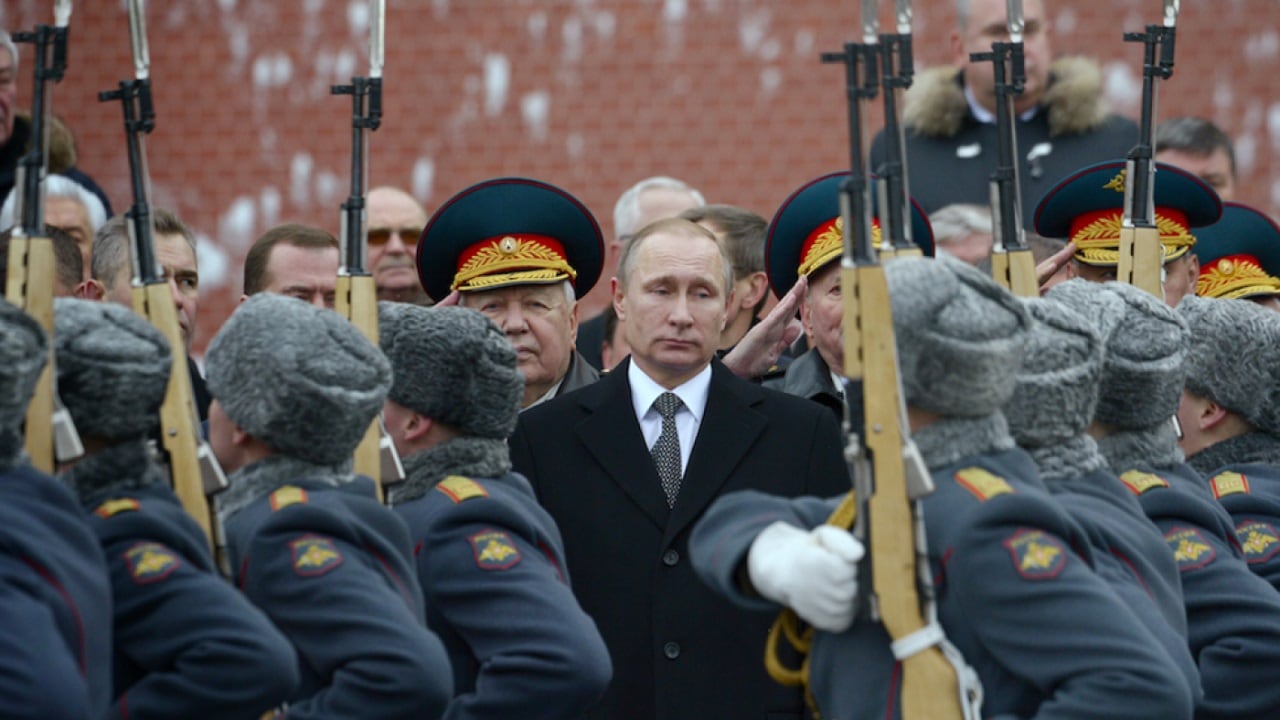
Does anyone really believe this? Consider Russia’s long history of dominating and bullying its ‘near-abroad’ neighbors. Consider Putin’s obviously revanchist temperament and huge, chip-on-his-shoulder imperial hangover. He clearly misses the Soviet Union and its influence in the world and insatiably craves the perception of parity with the US. I suppose it’s possible Putin would have behaved better, but I’d say the counterfactual that he’d be bullying non-aligned Poland or the Baltics right now – with Ukraine already subverted and controlled – is just as credible if not more.

Anyway, here’s that 1945 essay:

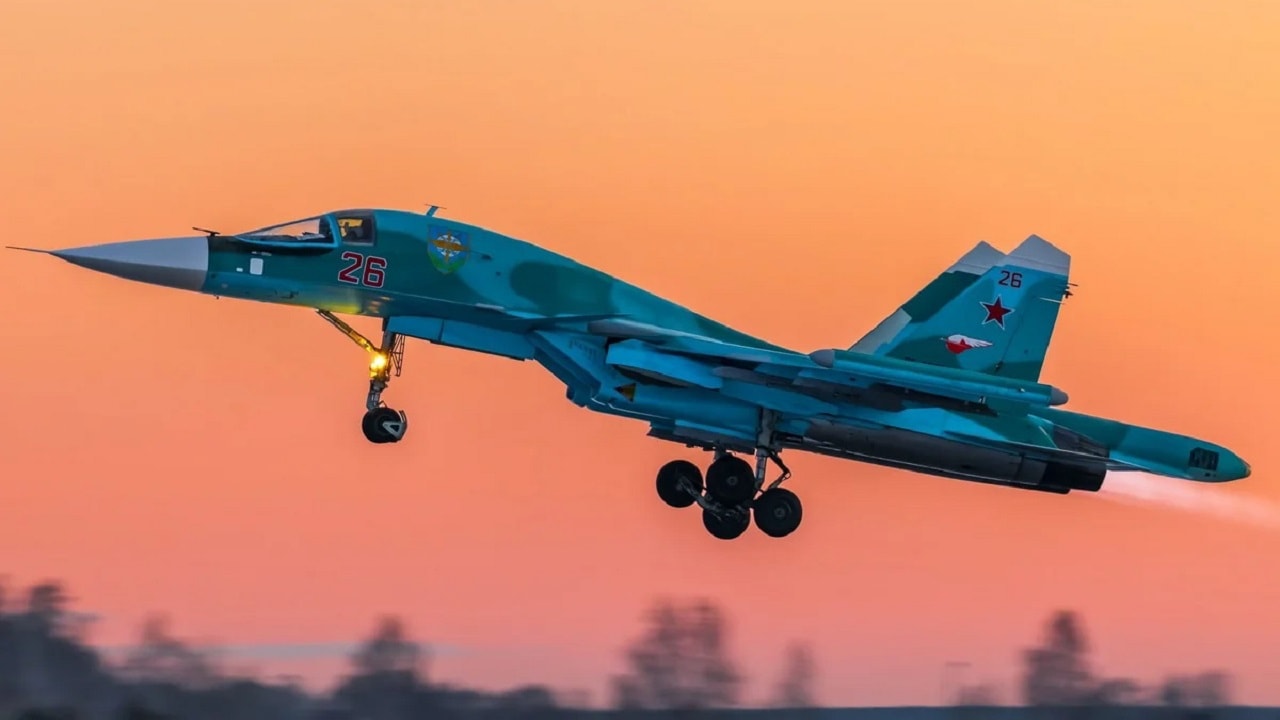
A Russian invasion of Ukraine would be a disaster for Russia. It would obviously also be a disaster for the Ukrainian population, but geopolitically it is hard to see how Russian President Vladimir Putin would escape either the international isolation which would ensue, or win the war itself with manageable costs.

Read the rest here.

The Inter-Korean Stand-Off Needs Political Resolutions, Not ‘Peace’

U.S.-South Korea AllianceThis is a re-up of an essay I wrote a few weeks ago at 1945.com on the debate over an ‘end of war’ declaration in Korea. The debate has passed, but it was pretty hot in December and January, when Moon was pushing pretty hard for it.

My big concern about the end-of-war declaration was that no really knew what it means. If it were a treaty, it would be called a treaty and would be binding. But since it is not, would it be binding? No one really knows.

It is highly unlikely that North Korea would alter its behavior because of it, so I think the drive behind was: A) Moon’s desire for some kind of legacy after 5 years of hyperbolic but failed diplomacy with the North, and B) grounds for the activist left in South Korea to say that the US and UN should leave South Korea and that UN sanctions should be rolled back

If the South Koreans want us to leave, then of course we should. But I wish Moon’s coalition were more honest about why they sought this thing. The Biden administration dragged its feet until Moon finally dropped it. It is painfully obvious that Biden does not trust Moon after he played Trump (to meet Kim by suggesting he’d win a Nobel) and is just waiting for the next POTROK.

Here’s that essay:

As the presidency of Moon Jae-In in South Korea winds down, Moon has pushed hard for an ‘end of war declaration’ (EoW) over the still legally unfinished Korean War. Last week, I argued in this magazine that this declaration is curious approach. The inter-Korean armistice is pretty stable, and when it is broken, it is North Korea which does the breaking through its frequent border provocations. Also, legally, no one really knows what this declaration would do. A treaty is the well-established tool for ending wars; an EoW declaration is a diplomatic neologism. It is not clear if this declaration is intended to replace the armistice or a potential treaty, or supplement them in some unknown way. Or perhaps it is just symbolism.

For the rest, do here please.

Getting Back to Updating My Website Here – Sorry – Here’s a Piece on Why the Proposed Korean ‘End of War’ Declaration is Kinda Pointless

I neglected my website here in the second half of 2021. Sorry. I was really busy rushing three articles into submission before the end of the year. Two got accepted, at:

Foreign Affairs (with a friend), on US alliances and the ostensible damage Trump did to them, which actually didn’t happen, because no US ally bolted or even hedged the US, because they’re just unwilling to absorb the domestic adjustment costs of really de-linking from the US even if Trump is a total jerk to them,

Korean Observer, on North Korea sanctions and why they are a good idea even though everyone hates them apparently at the conferences in South Korea.

These are scheduled for publication in the Q1 and Q2 journal volumes respectively. I’ll post the original, pre-edited versions so that my/full ideas are out there, but probably not till after the published version has been out for awhile.

On this site, I will try to start posting more, with links to my op-eds and other writings. I will also update the ‘What I am Reading’ section to keep better track of what I think readers ought to read themselves.

I started writing for 1945.com last month, so a lot of these posts will be of the short essays I write for them.

Finally, I find myself ‘micro-blogging’ at Twitter more than using this website. So please follow me there if you are interested in a more regular stream of my thoughts on northeast Asian security and US politics.

So my first piece for 1945, from a month ago, was on the ridiculous ‘end of war’ declaration idea floated by the Moon administration. Moon pushed hard for it last year, but nothing came of it, and it’s faded away. Why? Because no one what it was since it was not a treaty. Would it bind North Korea? Would Pyongyang stop its long history of provocations along the inter-Korean border if the US and SK signed it? Would NK cap its WMD programs or retrench the KPA from the DMZ? Of course not. So why would we sign it?

Anyway, here it is:

As South Korean President Moon Jae In enters the final months of his presidency, he has pushed hard for an ‘end of war declaration’ (EoW), ostensibly to conclude the legally unfinished Korean War (1950-53). There has been extensive discussion of this idea, including at thismagazine. ‘EoW declaration’ is a curious locution – in Korean too (종전선언) – because wars traditionally end with a treaty (also a different word in Korean – 조약). The Korean War was paused in mid-1953 by an armistice. That armistice has never been upgraded to a treaty. It is unclear if Moon’s declaration is supposed to replace that armistice, supplement it, be a ‘semi-treaty’ of some sort, or is just symbolic.

For the rest, go here, please.

North Korea Food Insecurity Leads to Regime Insecurity? Likely Not Unfortunately

16nkorea-1-mobileMasterAt3x

This is a re-post of an article I wrote this month for The National Interest.

The editor asked me to comment on whether North Korea’s recently announced ‘food crisis’ could lead to regime instability? The answer is probably not.

North Korea has proven remarkably resilient to the buffets of history and geopolitics. Much of this, I bet, is simply due to repression. If you are willing to eat your own children to stay in power, then you probably will. Kim Jong Il let a million of his people starve to death in the late 1990s in order to not change anything meaningful about the governance of North Korea – no opening, no aid with conditions, no nothing, even if people were literally dying in the streets.

It’s true that his son seems less openly callous and bloodthirsty. By North Korean standard, Kim Jong Un is a step up. At least he has admitted this food crisis, unlike his father’s adamant refusal during the ‘Arduous March.’

But the limits of Kim III’s ‘modern outlook’ are likely pretty narrow. He won’t change the economy to be more efficient, because he fears an unraveling akin to the USSR after perestroika. And of course, he’ll kill anyone has must to stay in power.

So after 75 years without a revolt, including a brutal famine, it is unlikely this latest round of food insecurity will lead to regime challenges. Alas…

The full essay follows the jump:

South Korea’s Very Limited Re-Opening

clip_image003This is a local repost of an essay I wrote last week for The National Interest

I wrote it in response to growing interest in the US in ‘re-opening.’ South Korea is further along the corona timeline than the West, and it dealt with corona very well. So if there is any economy ready to re-open, you would think that it is South Korea’s. Except that that is not really happening.

It’s true that restaurants are re-opened, that you can eat in them in proximity without a mask, and that masking generally is declining a bit. But not much. And most things are still closed – schools, concerts, museums, aquariums, marathons, whatever. And the government here is not talking about mass opening at all like the US discussion, especially on the right. In fact, it’s the opposite. The South Korean government keeps saying this will be a long slog, at least for the rest of the year.

The full essay follows the jump: Continue reading

Controlling Corona Meant South Korea’s Election was Not Dominated by It

Commentary: Coronavirus? Not a problem for South Korea elections ...This is a re-post of an essay I wrote for the Lowy Institute a few days ago about the recent South Korean legislative election.

This was written before the vote, so it is not a commentary on the results. My concern here instead was to illustrate that democracies can in fact run elections during this pandemic without some Wisconsin-style choice of vote-and-risk-corona or stay-home-and-forego-your-franchise. That was absurd, and the GOP’s disturbing willingness to make voting hard during a pandemic is an embarrassment bordering on authoritarianism. Here are some pics from when my wife went to vote; you can see that it was not some kind of death-trap.

For my thoughts on the results, try this and this. Basically, the right got buried and really needs to figure out what it stand for going forward besides anti-communism. Also, I am uncomfortable that this is yet another missed opportunity for a national referendum on President Moon Jae-In’s outreach to North Korea. Obviously, corona was unanticipated, but it pushed off the agenda the most important, revolutionary policy of the Moon government. That is unfortunate.

The full essay follows the jump:

Continue reading

Don’t Bet on a Biden Breakthrough with North Korea – but Trump was Never Serious about it Anyway

ABCDEFGHIJK

This is a re-post of an essay I wrote last month for The National Interest, but since Biden just became president, this seems like a good time to put it up here.

The short version is that America’s North Korea policy options are poor, so now that the adults are back in charge, US policy toward North Korea will probably snap-back to pre-Trump form. Trump tried all sorts of hijinks – threatening war, then cozying up to Kim Jong Un – but none of it was ever serious and all of it failed, because Trump was buffoonish dilettante.

And yes, the status quo with NK is bad, but the options are worse – war or appeasement, basically – so this is why the containment and deterrence of North Korea has basically been our North Korea policy for decades even though no one likes it. I figure that is what is coming back now.

The full essay follows the jump:

North Korea’s 2021 Nuclear Modernization Announcements

Kim Jong-un examines ties with S. Korea at party congress - The Korea Herald

This is a re-post of an essay I just wrote for The National Interest. I discuss the recent announcement at the 8th Workers Party to Congress to significantly modernize and expand the North’s nuclear and missile arsenal.
A lot was announced, but my inclination is to agree with Ankit Panda that the development of battlefield nuclear weapons is the most important announcement. I noted this in my comments to Ankit on Twitter: “These strike me as a battlefield leveler for NK’s military which is technologically far behind. Also South Korea is really dense in just a few places/cities, and it has a few highly vulnerable critical junctures, like the highway Route 1 running through the mountains or Busan port. Battlefield nukes would be ideal for disrupting these junctures.”

The full essay follows the jump:

Continue reading